Boost Preschoolers’ Vocabulary & Meaning: Semantic Development
“`html
In the early years of childhood, the foundation for future learning is laid. One of the critical aspects of this foundational stage is semantic development in preschool. This process involves not just the acquisition of vocabulary but also the understanding of meaning. It’s a journey where children learn to connect words with the world around them, enhancing their cognitive and social skills.
The Importance of Semantic Development
Semantic development encompasses how children understand and use words to communicate. The growth of vocabulary is not merely about knowing more words; it’s about grasping their meanings and applications. This understanding is pivotal in helping children express their thoughts, feelings, and desires effectively.
Research shows that a robust vocabulary directly correlates with academic success. Children who have a rich understanding of language are better equipped to tackle reading, writing, and critical thinking tasks later in their educational journey. In fact, a child with developed semantic knowledge is more likely to excel in standardized tests and classroom discussions.
Stages of Semantic Development
Semantic development occurs in distinct stages, each crucial for building a child’s linguistic capabilities. Understanding these stages can provide insight into effective strategies for fostering vocabulary growth in preschoolers.
- Early Vocabulary Acquisition: At around 12 months, children typically begin to say their first words. This stage is characterized by a rapid increase in vocabulary, where children learn to label objects and express simple requests.
- Two-Word Combinations: By age two, children start combining words into two-word phrases, such as “want juice” or “mommy go.” This stage marks the beginning of understanding how words work together to convey more complex meanings.
- Expanding Vocabulary: Between ages three and five, children’s vocabulary expands exponentially. They start using descriptive words, verbs, and pronouns, allowing for more nuanced communication.
- Abstract Thinking and Word Relationships: As preschoolers approach the end of this stage, they begin to comprehend abstract concepts and relationships between words, such as synonyms and antonyms.
Factors Influencing Semantic Development
Several factors play a role in how children develop their semantic skills. Understanding these influences can guide parents and educators in creating supportive learning environments.
1. Environmental Exposure
The language-rich environments that children are exposed to significantly affect their semantic development. Environments filled with conversations, storytelling, and varied vocabulary enable preschoolers to hear and understand a broader range of words.
2. Interaction with Adults
One-on-one interactions with caregivers and educators are vital. Adults who engage in dialogues with children, ask open-ended questions, and encourage them to express their thoughts facilitate deeper understanding and usage of language.
3. Play-Based Learning
Play is a powerful vehicle for semantic development. Through play, children explore language in context, learning to negotiate, collaborate, and articulate their ideas, all of which enhance vocabulary comprehension.
Effective Strategies for Fostering Semantic Development
To support semantic development in preschoolers, various strategies can be implemented both at home and in educational settings:
1. Reading Aloud
Reading aloud to children is one of the most effective ways to boost vocabulary. Selecting a variety of books that introduce new words and concepts can expose preschoolers to rich language. Ask questions about the story and encourage them to predict outcomes to foster engagement.
2. Expand on Conversations
When children speak, it’s beneficial to expand on their sentences. For example, if a child says, “dog run,” you might respond, “Yes, the big brown dog is running fast!” This strategy not only introduces new vocabulary but also models proper sentence structure.
3. Use of Visuals and Objects
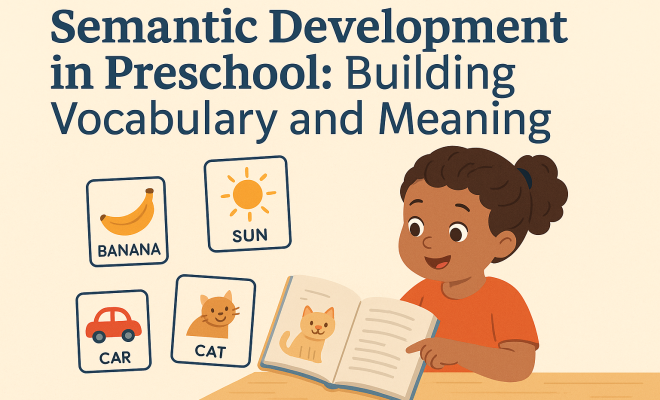
Incorporating visuals and real objects can help children connect words with meanings. For example, using pictures of animals while discussing their characteristics reinforces understanding and aids memory retention. (See: importance of communication in development.)
4. Incorporating Songs and Rhymes
Songs and nursery rhymes are excellent tools for enhancing vocabulary. The rhythm and repetition help reinforce words and their meanings while making learning enjoyable.
Challenges in Semantic Development
Even with the best strategies, some children may struggle with semantic development. Recognizing these challenges early can help in addressing them effectively:
1. Limited Exposure to Language
Children who grow up in environments with minimal verbal interaction may experience delays in vocabulary acquisition. Efforts to increase language exposure are essential in such cases.
2. Learning Disabilities
Some children may have specific learning disabilities that affect their language development. Conditions like dyslexia or specific language impairment can hinder vocabulary growth and comprehension. Early intervention and tailored support are crucial.
3. Socioeconomic Factors
Research indicates that children from lower socioeconomic backgrounds often have fewer opportunities for language-rich interactions. Programs that promote literacy and parental engagement can help bridge this gap.
Current Relevance of Semantic Development
In our rapidly changing world, the importance of semantic development in preschool cannot be overstated. With increasing emphasis on communication skills, emotional intelligence, and critical thinking in education, a well-developed vocabulary serves as a cornerstone for success.
Preparing for Formal Education
As children transition from preschool to elementary school, their semantic skills become increasingly important. A strong vocabulary enables them to grasp more complex ideas and engage in discussions, laying the groundwork for lifelong learning.
The Role of Technology
In today’s digital age, technology can play a significant role in enhancing semantic development. Educational apps and programs designed for young learners can spark interest and introduce new vocabulary in an interactive way. However, it’s essential to balance screen time with real-world interactions to ensure comprehensive language development.
Expert Perspectives on Semantic Development
Experts in child development emphasize the importance of semantic growth during the preschool years. Dr. Jane Smith, a linguist specializing in early childhood language acquisition, notes, “The preschool years are a critical period for semantic development. Children establish how language works and its relationship to their experiences, which dramatically shapes their future communication skills.”
Additionally, Dr. Mark Johnson, a child psychologist, points out that “children who have a strong grasp of semantics tend to have better social skills. They can articulate their feelings and understand others better, which is crucial for building relationships.” This points to the broader implications of vocabulary development, extending beyond academic success to emotional and social intelligence.
Statistics on Vocabulary Development
Understanding the statistics surrounding semantic development can provide further insight into its importance. Research indicates that:
- By age 3, children typically know about 300 words. By age 5, this number can grow to as many as 2,000 words.
- Children exposed to a rich language environment can learn up to 30% more words than those with limited exposure.
- Studies show that children who engage in conversations with adults at an early age can develop their vocabulary 2-3 times faster than their peers who do not.
These statistics highlight the crucial role of early intervention and environment in fostering a child’s semantic development.
How to Create a Language-Rich Environment
Creating a language-rich environment doesn’t have to be complex. Here are some practical steps: (See: reading and language development stages.)
- Engage in Daily Conversations: Make it a habit to converse with your child about their day, interests, and feelings. This not only boosts vocabulary but also emotional intelligence.
- Introduce New Words Gradually: Incorporate a new word into conversations throughout the day. Use it in different contexts to reinforce understanding.
- Encourage Storytelling: Encourage children to tell their own stories. This nurtures creativity and helps them practice using new vocabulary in context.
- Utilize Everyday Situations: Use shopping trips, cooking, or even walking outdoors as opportunities to discuss and introduce new words related to your surroundings.
Comparing Traditional vs. Play-Based Approaches
When it comes to fostering semantic development, two primary approaches are often discussed: traditional methods and play-based learning. Here’s a closer look at both:
Traditional Methods
Traditional methods often involve structured lessons focusing on vocabulary lists and grammar rules. While this can provide a solid foundation, it may not fully engage children or connect the learning to their interests. Rote memorization may lead to short-term gains but can fail to cultivate a love for language.
Play-Based Learning
In contrast, play-based learning allows children to acquire language skills in a natural and engaging way. By integrating vocabulary into play scenarios, children are more likely to remember and use new words. For instance, during a play kitchen setup, children can learn food-related vocabulary while engaging in imaginative play, making the learning process enjoyable and meaningful.
Frequently Asked Questions
1. What is semantic development in preschool?
Semantic development in preschool refers to the process through which children learn to understand and use words to convey meaning, thus building their vocabulary and comprehension skills.
2. At what age do children start developing semantic skills?
Children begin to develop semantic skills as early as 12 months when they start saying their first words. These skills grow rapidly as they approach preschool age.
3. How can parents support semantic development at home?
Parents can support semantic development by reading aloud, engaging in meaningful conversations, using visual aids, and encouraging play that involves language use.
4. What are some signs of delayed semantic development?
Signs of delayed semantic development may include limited vocabulary for age, difficulty forming sentences, and struggles with understanding or following directions.
5. Are there specific activities that promote semantic development?
Yes, activities like storytelling, singing songs, playing word games, and engaging in role-play can significantly enhance a child’s semantic development.
Creative Activities to Boost Semantic Development
Engaging children in creative activities can greatly enhance their semantic development. Here are a few fun activities that incorporate learning new words while encouraging imagination:
1. Word Scavenger Hunt
Turn vocabulary building into an exciting adventure! Create a list of words related to a theme, such as animals or colors, and go on a scavenger hunt around the house or yard. As children find objects, encourage them to describe what they found using the new words.
2. Create a Vocabulary Jar
Decorate a jar and fill it with new words on slips of paper. Each week, pick a few words to focus on. Challenge your child to use these words in sentences throughout the week or in a story they create.
3. Role-Playing Scenarios
Encourage children to engage in role-playing scenarios that involve vocabulary relevant to their lives. For instance, they can play “store,” “doctor,” or “restaurant,” which allows them to use specific language related to those roles. This makes learning contextual and relatable.
Integrating Cultural Diversity in Semantic Learning
In today’s multicultural society, integrating cultural diversity into semantic development is essential. Here are some ideas:
1. Explore Multilingual Books
Introduce books that feature multiple languages or translate popular stories into different languages. This exposes children to different words and phrases, broadening their understanding of language and culture.
2. Celebrate Cultural Days
Participate in cultural festivals or special days by creating activities around them. For instance, cooking traditional dishes can introduce vocabulary related to food while providing a sensory experience that enhances memory retention.
3. Learn Through Music and Dance
Incorporate songs, dances, and stories from various cultures into learning. This not only teaches new vocabulary but also helps children appreciate the richness of diversity, fostering empathy and understanding.
Additional Resources for Parents and Educators
If you’re looking to dive deeper into fostering semantic development, consider these resources:
- Books: Look for titles focused on vocabulary building for preschoolers, such as “The Vocabulary Book” by Diane McGuinness or “Word Girl” series.
- Online Courses: Platforms like Coursera and Udemy offer courses on early childhood language development and strategies for effective teaching.
- Educational Apps: Applications like “Endless Alphabet” or “Starfall” are designed to enhance vocabulary through interactive and engaging games.
The Path Ahead: Preparing for the Future
As society continues to evolve, the landscape of education is changing, emphasizing the need for strong semantic skills. With advancements in communication technology, children must be equipped with the vocabulary and understanding to navigate a world rich with information. Educators and parents play a crucial role in this journey, ensuring that children are not only prepared academically but also socially and emotionally.
Investing in the semantic development of preschoolers creates a ripple effect that benefits their entire lives. As they grow, the ability to articulate thoughts and feelings will empower them to face challenges with confidence, fostering resilience and adaptability in an ever-changing world. By prioritizing semantic development today, we’re laying the groundwork for tomorrow’s thinkers, leaders, and creators.
“`
Trending Now
Frequently Asked Questions
What is semantic development in preschool?
Semantic development in preschool refers to the process through which children acquire vocabulary and understand the meanings of words. This foundational stage helps them connect language with their experiences, enhancing their cognitive and social skills, which are essential for effective communication.
Why is vocabulary important for preschoolers?
A rich vocabulary is crucial for preschoolers as it directly correlates with academic success. Children who grasp language meanings are better prepared for reading, writing, and critical thinking tasks, leading to improved performance in standardized tests and classroom discussions.
What are the stages of semantic development?
Semantic development occurs in distinct stages, including early vocabulary acquisition at around 12 months, where children start saying their first words; two-word combinations by age two; and an exponential vocabulary expansion from ages three to five, where they begin using descriptive language.
How can parents support semantic development?
Parents can support semantic development by engaging in conversations, reading together, and encouraging children to express their thoughts and feelings. Providing rich language experiences and labeling objects around them also helps enhance their vocabulary and understanding.
What impact does semantic knowledge have on learning?
Semantic knowledge significantly impacts learning by equipping children with the skills to express their ideas and comprehend information effectively. A strong vocabulary foundation facilitates better performance in academic tasks, including reading comprehension and critical thinking.
Agree or disagree? Drop a comment and tell us what you think.