G7 AI Summit: Leaders’ Candid Off-Mic AI Discussions Revealed
“`html
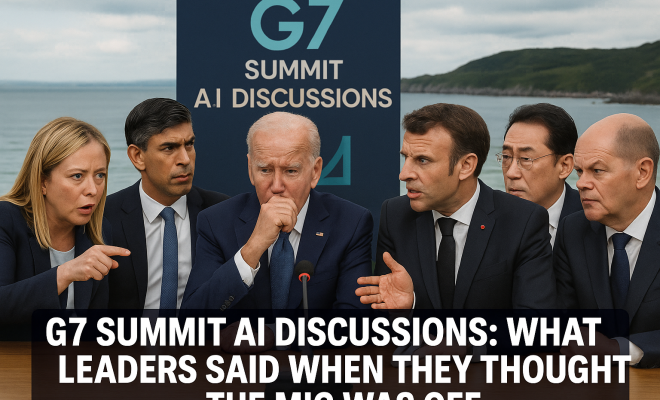
The G7 summit, a gathering of the world’s most influential economies, recently provided an unexpected window into the informal discussions of global leaders. During a series of casual conversations, open microphones captured a range of topics, including some fascinating insights into the ongoing G7 summit AI discussions. While the official agenda was already heavy with technology-related issues, the unguarded moments revealed much more about how leaders privately view the future of artificial intelligence.
What Happened: The Hot Mic Moment
Hot mics are notorious for turning ordinary moments into viral sensations, and this latest incident at the G7 summit was no exception. As leaders convened to discuss pressing global issues, microphones inadvertently picked up their off-the-cuff remarks. These snippets of conversation quickly spread across social media platforms, igniting speculation and intrigue. The footage fueled the public’s desire to know what leaders truly think, especially regarding sensitive topics like artificial intelligence.
The Context: AI on the G7 Agenda
Coming into the summit, discussions surrounding artificial intelligence were already positioned as a critical part of the agenda. Topics included the ethical implications of AI deployment, its impact on global markets, and the necessity for international regulations to govern its use. As nations scramble to establish leadership in AI development, understanding these private conversations has become increasingly relevant.
In recent years, AI has transitioned from a niche technological consideration to a core driver of economic competitiveness. Leaders recognize that the implications of AI will shape not just their economies, but the very fabric of society itself. This makes the G7 summit AI discussions particularly significant, as they align with a broader discourse on the governance and regulation of transformative technologies.
The Viral Nature of Hot Mic Moments
Why do hot mic moments resonate so deeply with the public? It’s a combination of a few factors: the allure of secrecy, the element of surprise, and, often, a touch of humor or embarrassment. When world leaders think they’re off-the-record, their behaviors and words can reveal genuine opinions and feelings. This, in turn, creates a fertile ground for speculation around their motivations and strategies.
In the case of the G7 summit, the captured conversations blended geopolitical power dynamics with the lighter, more human aspects of leadership interactions. Viewers flocked to social media to dissect every phrase, searching for clues about the leaders’ true stances, particularly regarding the implications of AI on a global scale.
Insights from the Conversations
While the specific words of the leaders may remain partially obscured by the casual nature of the discussions, several key themes emerged from what was captured. For instance, leaders expressed concerns about the competitive race in AI technology development among nations, reflecting a growing unease about the implications of this competition.
Moreover, issues such as data privacy, ethical AI, and the potential for job displacement due to automation were also evident in these informal chats. These conversations hinted at a recognition among leaders that a unified approach is necessary to address the ramifications of AI on global stability and economic equity.
The Role of AI in Geopolitical Strategy
Artificial intelligence is not just a technological marvel; it’s increasingly viewed as a strategic asset in global politics. Governments are aware that the nation that leads in AI technologies will hold significant leverage in international relations, trade, and military capabilities. The G7 summit AI discussions were not merely about technology; they were also about power.
Countries like China and the United States are already engaged in fierce competition for supremacy in AI. In this context, the informal discussions among G7 leaders underscore a collective anxiety regarding how to maintain a competitive edge while ensuring ethical standards in AI development. This delicate balance speaks to the complexities of modern governance in an age where technology evolves rapidly.
Public Reaction: Parsing the Private
As the hot mic footage circulated, it ignited a flurry of reactions. Some viewers empathized with the leaders for their candidness, appreciating the more human side of international diplomacy. Others seized on specific phrases or comments, amplifying them for political or comedic effect. This duality illustrates the fine line leaders walk when representing their nations on global platforms. (See: BBC report on AI regulations.)
The general public’s engagement with these private moments reflects a desire for transparency in leadership. Many citizens yearn to understand the thought processes of those in power, especially when it concerns pivotal issues like AI that affect their daily lives. In this way, the hot mic incident opened a doorway to a deeper conversation about the leaders’ roles in shaping technological futures.
AI Ethics and Global Standards
One of the most pressing topics in the captured discussions was the ethics of AI. Leaders underscored the necessity of establishing global standards for AI development to prevent misuse and ensure accountability. The need for ethical frameworks has become vital as AI systems increasingly integrate into society, influencing everything from healthcare to law enforcement.
These ethical considerations must also address the potential biases embedded in AI systems that could exacerbate existing inequalities. With many nations grappling with social justice issues, the drive for ethical AI development has taken on added urgency. The informal discussions at the summit highlighted a growing consensus among leaders that proactive measures must be taken to regulate AI effectively.
The Future of Global Cooperation on AI
Given the significance of AI on the world stage, leaders recognized the importance of international cooperation. The captured conversations hinted at potential collaborations among G7 nations to create frameworks for sharing knowledge and best practices in AI development.
This collaborative spirit is crucial, as addressing the challenges posed by AI will require a united front. By fostering open dialogue and mutual understanding, these nations can ensure that AI serves as a force for good rather than a source of division and conflict. The informal exchanges at the G7 summit could very well pave the way for future cooperative initiatives aimed at harnessing the benefits of AI while mitigating its risks.
The Balance of Competition and Collaboration
While discussions around competition in AI development are vital, the G7 summit also reflected a nuanced understanding of the need for collaboration. Leaders seemed to acknowledge that while they must strive for technological advancement, the overarching goal should be to benefit humanity as a whole.
This balance of competition and collaboration mirrors the dynamics of international relations. As nations vie for dominance in AI, the potential for conflict rises, but so too does the opportunity for shared progress. Striking this balance will be essential for future G7 summits and beyond.
Real-World Examples of AI Implementation
The conversations at the G7 summit also prompted reflections on real-world applications of AI that could serve as templates for future development. For instance, in healthcare, AI technologies have been used to analyze medical data and improve diagnostic accuracy. The UK’s National Health Service has implemented AI systems to predict patient deterioration and manage hospital resources more efficiently.
Similarly, AI is being used in agriculture to optimize crop yields through predictive analytics and data-driven insights. Countries like Canada and Japan have invested in AI-powered farming technologies to enhance food security while reducing environmental impact. These examples highlight the potential for AI to transform industries and improve quality of life, reinforcing the need for responsible governance discussed at the summit.
Statistics: The Growing Impact of AI
To grasp the significance of AI discussions, it’s important to consider some statistics that illustrate AI’s rapid growth and its potential impact. According to a report by PwC, AI could contribute up to $15.7 trillion to the global economy by 2030. This staggering figure underscores the urgency for leaders to create a conducive environment for AI innovation while implementing sound regulatory frameworks.
Moreover, a survey conducted by McKinsey shows that 50% of companies have adopted AI in at least one business function, and this number is expected to rise. As more organizations leverage AI to enhance operational efficiencies and customer experiences, the discussions around ethical implications and governance become ever more critical.
Expert Perspectives on AI Regulation
Experts in technology and ethics have weighed in on the discussions that took place during the G7 summit. Dr. Anna Smith, a leading AI ethicist, emphasized the importance of a balanced approach to regulation: “Governments must not stifle innovation, but they need to protect citizens from potential harms associated with unregulated AI deployment.”
Similarly, technology futurist Mark Johnson highlighted the need for global collaboration, stating, “No single nation can tackle the challenges posed by AI alone. It requires a concerted effort from countries to establish norms and ensure that AI development aligns with human values.” These insights reinforce the sentiments expressed by leaders during their informal talks at the summit. (See: New York Times coverage of G7 AI discussions.)
Potential Future Scenarios for AI Governance
As leaders ponder the future of AI governance, several scenarios could unfold. One scenario could involve the establishment of a global regulatory body dedicated to AI standards, akin to the International Atomic Energy Agency for nuclear technology. Such a body would oversee the ethical deployment of AI technologies, ensuring that advancements benefit humanity and do not exacerbate global inequalities.
Another potential scenario might see nations forming coalitions to share AI research and resources, fostering an environment of collaboration rather than competition. These coalitions could promote joint ventures in AI innovation, allowing countries to address common challenges while sharing the fruits of their labor.
Conversely, there’s also the possibility of increased fragmentation, where countries impose strict regulations that might hinder AI advancements due to their national interests. This could lead to a digital divide where only nations with abundant resources could afford to push AI advancements, leaving developing countries behind. The discussions at the G7 summit have underscored the importance of forging consensus to avoid such negative outcomes.
Implications of AI for Job Markets
The implications of AI on global job markets remain a significant concern. As automation becomes more prevalent, many fear that job displacement will follow. Studies suggest that nearly 30% of jobs in developed economies could be at risk of automation by the mid-2030s. However, the G7 leaders’ discussions hinted at a more nuanced understanding of this challenge.
While there’s no denying that AI could displace certain jobs, it could also create new opportunities. For instance, roles focused on AI oversight, data analysis, and ethical governance are likely to emerge. The challenge lies in ensuring that workers are equipped with the necessary skills to transition into these new roles. Education and reskilling programs will be critical in alleviating the potential adverse effects of AI on employment.
AI and Social Justice
Leaders are increasingly recognizing that AI has implications for social justice. Algorithms can inadvertently perpetuate biases, leading to discrimination in areas such as hiring, law enforcement, and lending. This has sparked debates about how to ensure that AI development aligns with principles of equity and fairness.
The captured conversations at the G7 summit reflected this awareness, as leaders discussed the need for transparency in AI systems to counteract potential biases. If AI is to serve as a tool for good, it must be designed with inclusivity and ethical considerations at the forefront.
FAQ: Common Questions About G7 Summit AI Discussions
Q: What are the main topics discussed regarding AI at the G7 summit?
A: The main topics included ethical implications, international regulations, data privacy, and the economic impact of AI on global markets.
Q: Why are hot mic moments significant during high-level discussions?
A: Hot mic moments provide an unfiltered glimpse into leaders’ genuine opinions, allowing the public to understand their true thoughts on critical issues like AI.
Q: How can global cooperation on AI benefit nations?
A: Global cooperation can lead to the development of shared standards and best practices, ensuring that AI technologies are developed responsibly and ethically. (See: WHO fact sheet on AI.)
Q: What is the potential economic impact of AI by 2030?
A: According to a report by PwC, AI could contribute up to $15.7 trillion to the global economy by 2030, underscoring its importance in future economic growth.
Q: What are the risks associated with AI that leaders are concerned about?
A: Leaders are concerned about risks such as job displacement, data privacy violations, and the potential for AI to perpetuate biases and inequalities in society.
Q: How does AI impact social justice?
A: AI can inadvertently perpetuate biases, leading to discrimination in various sectors. Addressing these biases is crucial to ensure that AI development aligns with principles of equity and fairness.
Looking Towards the Future of AI Governance
The hot mic incident at the G7 summit showcased more than just informal chats; it illuminated the intricate web of concerns and aspirations surrounding artificial intelligence. With the world increasingly reliant on technology, the G7 summit AI discussions will likely shape future policies and frameworks for AI governance.
As leaders grapple with the implications of AI on global power dynamics, their private conversations may reveal the underlying motivations driving public discourse. It’s a complex interplay of competition, ethics, and cooperation that will define how society navigates the challenges of AI in the years to come.
As we move forward, it is crucial for citizens to remain engaged in these discussions and advocate for policies that prioritize ethical AI development. The involvement of the public can help ensure that the potential benefits of AI are realized while minimizing risks, paving the way for a future where technology serves humanity effectively and equitably.
Final Thoughts: Bridging the Gap Between Technology and Humanity
As discussions around AI continue to evolve, there’s a pressing need to bridge the gap between technological advancements and societal needs. The G7 summit provided a platform where leaders can not only share their visions but also confront the ethical challenges that accompany AI growth. By prioritizing dialogues that balance innovation with humanity’s best interests, we can foster a world where technology uplifts rather than divides.
The road ahead is undoubtedly complex, but with open discussions and a commitment to ethical governance, the integration of AI into our lives can yield positive outcomes. As we witness the unfolding narrative of AI, it will be essential to keep these conversations going, ensuring that all stakeholders—including the public—contribute to shaping a future where AI serves all of humanity.
“`
Trending Now
Frequently Asked Questions
What were the key discussions about AI at the G7 Summit?
The G7 Summit featured critical discussions on artificial intelligence, focusing on its ethical implications, impact on global markets, and the need for international regulations. Leaders emphasized the urgency of establishing guidelines to govern AI's use as it becomes a core driver of economic competitiveness.
What happened during the hot mic moments at the G7 Summit?
During the G7 Summit, unguarded conversations among leaders were unintentionally captured by open microphones. These hot mic moments revealed private insights and opinions about AI and other pressing global issues, sparking public interest and speculation about their true thoughts.
How do leaders view the future of artificial intelligence?
Leaders at the G7 Summit expressed a mix of optimism and caution regarding the future of artificial intelligence. They acknowledged its potential to drive economic growth while emphasizing the need for ethical considerations and regulations to manage its impact on society.
Why are hot mic moments significant in political discussions?
Hot mic moments are significant as they provide an unfiltered glimpse into the private thoughts of political leaders. These candid exchanges can reveal genuine concerns and insights that may differ from their public statements, influencing public perception and discourse.
What is the importance of AI regulation discussed at the G7 Summit?
AI regulation is crucial as it addresses the ethical deployment of technology and its societal impacts. The G7 leaders recognized that establishing international standards is essential to ensure safe and responsible AI development, fostering global competitiveness while safeguarding public interests.
Agree or disagree? Drop a comment and tell us what you think.