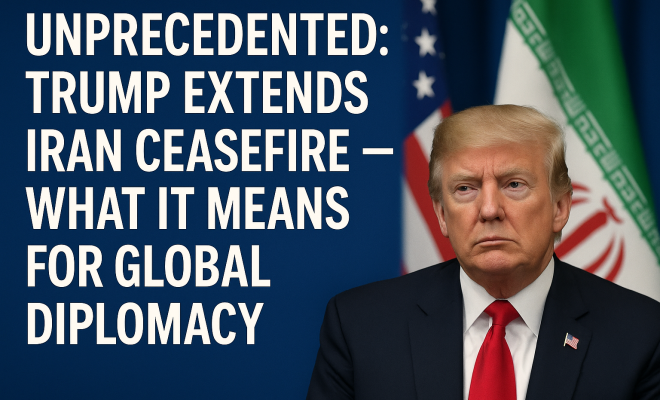
Trump Extends Iran Ceasefire: A New Era for Global Diplomacy?
“`html
Introduction: A Surprising Announcement
In a move that has caught many off guard, President Donald Trump announced a significant extension of the ceasefire with Iran, signaling a potential thaw in relations between the two nations. The announcement has triggered a flurry of reactions across social media platforms, with users eager to understand the ramifications of this unexpected diplomatic shift. As the world watches closely, the implications of the Trump Iran ceasefire could reshape the landscape of international relations.
The Context of the Ceasefire
To understand the weight of Trump’s announcement, it’s essential to look at the backdrop of tensions between the United States and Iran. For years, relations have been fraught, with incidents escalating following the U.S. withdrawal from the Joint Comprehensive Plan of Action (JCPOA) in 2018. This pivotal agreement, aimed at curbing Iran’s nuclear ambitions, had previously established a framework for dialogue and cooperation. Its collapse led to increasing hostilities, culminating in military confrontations and economic sanctions.
The ceasefire, initially announced amid rising tensions, was intended to provide a cooling-off period. Now, with Trump’s extension, the focus shifts to ongoing discussions about a new proposal. The stakes couldn’t be higher; both nations are navigating complex domestic and international landscapes that will be affected by how this situation unfolds.
Immediate International Reactions
Reactions to Trump’s announcement were swift and varied. Iran’s UN Ambassador immediately issued a formal statement, expressing cautious optimism while simultaneously reminding the world of Iran’s steadfast position on its nuclear program. This duality reflects the complex nature of Iran’s foreign policy, caught between a desire for dialogue and the need to assert its sovereignty.
Alongside Iran’s response, global leaders and analysts have weighed in on the implications of the ceasefire extension. Many see it as a potential opening for renewed dialogue, while others caution that trust between the two nations remains fragile. The extension could pave the way for negotiations, but skepticism looms large over whether substantive agreements can be reached.
The Role of Social Media
Social media has played a critical role in shaping public perception of the Trump Iran ceasefire. Platforms like Twitter and Facebook erupted with discussions ranging from deep analysis to emotional reactions, showcasing the high stakes of this international development. The hashtag #TrumpIranCeasefire trended within hours of the announcement, capturing the attention of millions.
Users are not just looking for news; they want clarity on what this ceasefire extension means for their lives, the economy, and global security. The emotional charge surrounding this issue is palpable, with many expressing both hope and anxiety about the future. Whether it’s memes poking fun at political leaders or serious discussions about war and peace, social media has become a barometer for public sentiment.
Understanding the Proposal
One of the most critical elements of Trump’s announcement is the mention of a forthcoming proposal. Details surrounding this proposal remain unclear, leading to widespread speculation. What will it entail? Will it address the core issues that have driven U.S.-Iran relations to the brink?
Experts suggest that any serious proposal would need to tackle Iran’s nuclear program, regional influence, and the ongoing human rights concerns within the country. The challenge lies in finding common ground; Trump’s administration has previously emphasized a ‘maximum pressure’ approach, while Iran continues to assert its rights under international law.
The Historical Precedent
This isn’t the first time a U.S. president has ventured into the complex world of U.S.-Iran relations. Looking back at history, previous administrations have attempted to engage with Iran, with varying degrees of success. The Obama administration’s outreach through the JCPOA serves as a significant reference point. However, the collapse of that agreement illustrates the challenges of diplomatic engagement.
Trump’s approach has been markedly different. The emphasis on sanctions and military readiness has characterized his strategy. Thus, the extension of the ceasefire is striking, as it seems to diverge from the belligerent patterns seen in earlier years of his presidency. This could reflect a shift in strategy, driven by domestic pressures or a realization of the unsustainable nature of ongoing hostilities. (See: Joint Comprehensive Plan of Action.)
Potential Implications for US-Iran Relations
The implications of the Trump Iran ceasefire extend far beyond the immediate political landscape. A successful negotiation could lead to a more stable Middle East, impacting regional allies and adversaries alike. Conversely, a failure could result in escalated tensions, leading to potential conflict.
Moreover, the outcomes of this ceasefire could influence the upcoming elections, as voters increasingly focus on foreign policy. With national security being a priority for many Americans, how Trump handles this delicate situation could determine his political future, especially as he seeks to rally support among his base.
The Geopolitical Landscape
The geopolitical landscape is incredibly complex, and the Trump Iran ceasefire is just one piece of a larger puzzle. Countries like Russia and China are watching closely, ready to leverage shifts in U.S.-Iran relations for their gain. These nations have their interests in the Middle East and could exploit any instability that rises from a failed negotiation.
Furthermore, U.S. allies in the region, especially Israel and Saudi Arabia, are likely to have strong opinions and actions regarding any rapprochement between Washington and Tehran. Their reactions could range from support, in hopes of stability, to resistance, fearing a loss of U.S. backing in countering Iranian influence.
What’s at Stake for Trump
The stakes are high for Trump personally and politically. A successful negotiation with Iran could be heralded as a major foreign policy win, contrasting sharply with the administration’s earlier hardline stances. On the flip side, a continuation of hostilities could paint the administration as ineffective in handling one of the most pressing foreign policy challenges.
Moreover, with the elections looming, Trump’s foreign policy decisions will likely play a pivotal role in shaping voter opinions. National security is a cornerstone of his platform, and the outcome of the Trump Iran ceasefire could either bolster or undermine his claims of leadership and stability.
Expert Opinions on the Ceasefire
Experts in international relations are divided on the implications of the Trump Iran ceasefire. Some suggest that this could lead to a new era of diplomacy, while others warn that it might merely be a temporary reprieve in a longer cycle of conflict. Their insights often hinge on the terms of the proposal and the willingness of both parties to engage genuinely.
In interviews, several analysts have pointed out the necessity for robust verification measures should any agreements arise. Without a framework to ensure compliance, skepticism will erode any potential trust built through negotiations. The historical distrust between the two nations looms large and will require careful management.
Future Challenges in Negotiations
As negotiations progress, several challenges are likely to arise. First, the lack of mutual trust between the U.S. and Iran poses a significant hurdle. Given the history of broken promises and perceived betrayals, both sides may approach talks with skepticism. For Iran, the fear of being manipulated or misled will be paramount, especially with many believing the U.S. could revert to its previous hardline stance at any moment.
Second, the influence of domestic politics cannot be underestimated. In Iran, hardliners may push back against any concessions made by the government, viewing them as weakness. Likewise, in the U.S., Trump faces pressure from various factions, including those who advocate for a hardline approach and those who favor diplomatic engagement. Navigating these internal pressures will be crucial for both leaders.
Comparative Analysis: Previous Ceasefires
Looking at historical ceasefires in international relations provides valuable lessons for understanding the Trump Iran ceasefire. For example, the 2015 ceasefire agreement between Israel and Hamas stood out due to its complex dynamics. Both parties had to manage their respective populations’ expectations, political pressures, and ongoing hostilities.
Another significant case is the Korean Peninsula, where multiple ceasefires and agreements have been reached over the decades. Each time, the agreements showcased the necessity of a solid verification process and clear communication channels. The failure of these agreements often stemmed from ambiguous definitions of compliance and trust issues, highlighting the importance of establishing a robust framework for any dealings involving Iran. (See: Iran health and diplomacy context.)
Statistics on Public Opinion
Public opinion plays a vital role in shaping foreign policy decisions. Recent polls indicate that a majority of Americans support diplomatic efforts to resolve conflicts, with 65% expressing a desire for negotiations rather than military action regarding Iran. However, the same polls reveal a significant divide, with 42% of respondents skeptical about Iran’s willingness to comply with any agreements.
This dichotomy illustrates the challenge for the Trump administration: balancing the expectations of an electorate that desires peace with the need to maintain a firm stance against perceived threats. Understanding where the public stands will be crucial as Trump navigates this political landscape.
Regional Impacts: A Broader Perspective
The ramifications of the Trump Iran ceasefire extend beyond U.S.-Iran relations. Neighboring countries, particularly those in the Gulf region, will be closely monitoring developments. A successful ceasefire could lead to improved relations between Iran and its Arab neighbors, many of whom have viewed Iran’s nuclear program as a direct threat.
For instance, Saudi Arabia has long been wary of Iran’s influence in Iraq, Syria, and Lebanon. Should the U.S. and Iran find common ground, it could encourage a regional dialogue to address shared concerns, potentially reducing tensions in a historically volatile area. Conversely, failure could trigger a renewed arms race, leading to heightened regional instability.
What’s Next: A Timeline of Anticipated Developments
As we await the release of more details surrounding the ceasefire proposal, a timeline of anticipated developments can provide a framework for understanding the next steps. In the coming weeks, we can expect:
- Draft Proposal Release: Experts predict that a draft proposal will be circulated within four to six weeks. This document will likely outline the key areas of focus for negotiations.
- Initial Talks: Following the proposal, initial talks between U.S. and Iranian diplomats may take place within two months, aimed at establishing a framework for broader negotiations.
- Regional Consultations: As discussions unfold, consultations with regional allies and adversaries are expected to occur, ensuring all parties are aware of potential shifts in the balance of power.
- Monitoring and Verification Framework: A significant component will be establishing a reliable monitoring framework. Experts suggest this might take several months to finalize, as both countries will need to agree on verification measures.
FAQ: Understanding the Trump Iran Ceasefire
What is the Trump Iran ceasefire?
The Trump Iran ceasefire refers to the decision by President Donald Trump to extend an existing ceasefire agreement with Iran, aimed at reducing hostilities between the two nations.
Why is this ceasefire significant?
This ceasefire is significant as it represents a potential thaw in U.S.-Iran relations after years of escalating tensions, particularly following the U.S. withdrawal from the JCPOA.
What are the main issues to be addressed in the proposal?
Experts believe the proposal will need to address Iran’s nuclear program, its regional influence, and human rights concerns, all while navigating complex domestic politics in both countries.
How have international leaders reacted to the ceasefire?
International reactions have varied, with some leaders expressing cautious optimism about potential dialogue, while others warn that trust between the United States and Iran remains tenuous.
What could happen if negotiations fail?
If negotiations fail, it could lead to renewed hostilities and potentially escalate into military conflict, further destabilizing the Middle East and impacting global security. (See: BBC coverage on U.S.-Iran relations.)
How does public opinion influence foreign policy regarding Iran?
Public opinion plays a crucial role, with a significant portion of Americans favoring diplomatic solutions over military intervention, affecting how policymakers approach negotiations with Iran.
Future Scenarios: Possible Outcomes of the Ceasefire
The potential outcomes of the Trump Iran ceasefire are varied, each carrying significant consequences for both nations and the broader international community. Here are some possible scenarios:
- Successful Negotiations: This scenario envisions the U.S. and Iran reaching a comprehensive agreement that addresses nuclear concerns, sanctions relief, and regional security. Such a development could stabilize the Middle East and improve U.S.-Iran relations, leading to increased trade and cooperation.
- Stalemate: A situation where talks lead nowhere, causing both sides to revert to previous hostilities. This could lead to further sanctions from the U.S. and military posturing from Iran, increasing the risk of conflict.
- Military Escalation: If negotiations collapse entirely, there’s a possibility of military action being taken by one side or the other. This scenario could lead to direct conflict, with far-reaching consequences not only for the region but globally, especially regarding oil supply and international trade.
Final Thoughts: The Importance of Diplomacy
The Trump Iran ceasefire represents a critical moment in international relations, highlighting the significance of diplomacy in resolving complex issues. As the world watches closely, the need for constructive dialogue has never been more apparent. The potential for peace hinges on the willingness of both nations to engage in meaningful discussions, address their grievances, and prioritize stability over conflict.
In this context, the role of international mediators could be pivotal. Countries and organizations that have a stake in Middle Eastern stability may offer to facilitate discussions, providing both a neutral ground and a framework for negotiations. This could be crucial in addressing the deep-seated issues that have historically divided the U.S. and Iran.
Ultimately, the path forward will require patience, understanding, and a commitment to diplomacy. As both nations navigate this uncertain terrain, the hope remains that this ceasefire will lead to lasting peace, benefiting not only the U.S. and Iran but also the world at large. The stakes are high, but so are the possibilities for a brighter future.
Conclusion: The Road Ahead
As the world awaits the details of the proposal following Trump’s announcement of the extension of the ceasefire with Iran, the road ahead remains uncertain. The potential for a new chapter in U.S.-Iran relations hangs in the balance, driven by complex dynamics both at home and abroad.
It’s clear that the ramifications of this diplomatic maneuver will resonate through the hearts and minds of those directly affected by the conflicts in the region. The next steps are crucial, and whether this moment marks the beginning of a meaningful dialogue or just another chapter in a long history of conflict will depend on the actions taken in the coming weeks. As we watch this unfold, one thing is certain: the implications of the Trump Iran ceasefire are profound, and its influence will be felt for years to come.
“`
Trending Now
Frequently Asked Questions
What does Trump's ceasefire extension with Iran mean?
Trump's extension of the ceasefire with Iran indicates a potential thaw in relations between the two nations. It aims to create a cooling-off period amidst ongoing tensions and may pave the way for future diplomatic discussions, especially regarding Iran's nuclear ambitions and the possibility of a new agreement.
How has Iran reacted to the ceasefire extension?
Iran's UN Ambassador expressed cautious optimism regarding the ceasefire extension, while also reaffirming Iran's commitment to its nuclear program. This reflects the intricate balance Iran maintains between seeking dialogue and asserting its sovereignty on international platforms.
What led to the tensions between the US and Iran?
Tensions between the US and Iran escalated significantly after the US withdrew from the Joint Comprehensive Plan of Action (JCPOA) in 2018. The collapse of this agreement resulted in increased hostilities, military confrontations, and economic sanctions, setting the stage for the current diplomatic landscape.
What are the implications of the Trump Iran ceasefire for global diplomacy?
The Trump Iran ceasefire has significant implications for global diplomacy as it may reshape international relations, particularly in the Middle East. The extension could influence how other nations engage with both the US and Iran, potentially leading to new diplomatic initiatives and a reevaluation of existing agreements.
What is the Joint Comprehensive Plan of Action (JCPOA)?
The Joint Comprehensive Plan of Action (JCPOA) is a landmark agreement established in 2015 between Iran and six world powers aimed at curbing Iran's nuclear program. Its collapse in 2018, following the US withdrawal, has been a major factor in the subsequent rise of tensions between Iran and the United States.
What did we miss? Let us know in the comments and join the conversation.