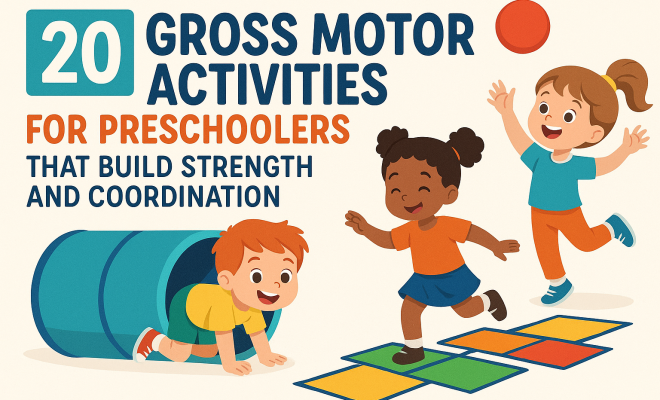
20 Fun Gross Motor Activities for Preschoolers in 2024
“`html
When it comes to early childhood development, engaging preschoolers in gross motor activities is essential. These activities not only provide a fun outlet for kids to expend their energy but also play a critical role in building physical strength, coordination, balance, and overall motor skills. This article dives into 20 exciting gross motor activities that you can easily incorporate into your preschooler’s daily routine, fostering both fun and development.
Understanding Gross Motor Skills
Before we delve into the specific activities, let’s clarify what gross motor skills are. Gross motor skills involve movements that use the large muscles in the body, which are essential for tasks such as walking, running, jumping, and climbing. These skills are crucial for everyday activities and contribute significantly to a child’s overall physical development and independence.
According to the American Academy of Pediatrics, developing gross motor skills early on can lead to improved physical fitness and social interaction as children engage in more active play. Strengthening these skills helps preschoolers achieve milestones—like riding a bike or playing sports—later in life. Therefore, incorporating various gross motor activities into their routine becomes paramount.
1. Obstacle Course Adventures
Creating an obstacle course is a fantastic way to engage preschoolers in gross motor activities. You can use pillows, boxes, hula hoops, and even furniture to create a fun and challenging course. Encourage children to crawl under tables, jump over cushions, and balance on taped lines on the floor.
This activity not only promotes physical skills but also encourages creative thinking and problem-solving as children figure out the best way to navigate through the course. Plus, you can adjust the difficulty according to their age and ability, making it suitable for various skill levels.
2. Animal Walks
Animal walks are a delightful way to get kids moving while allowing them to imitate their favorite animals. Encourage preschoolers to walk like a bear (hands and feet), hop like a frog, or waddle like a penguin. Each animal walk utilizes different muscle groups and adds an element of imaginative play.
To enhance this activity, you can turn it into a game—like a race or a follow-the-leader challenge. Not only does this improve strength and coordination, but it also boosts cardiovascular fitness and encourages social interaction.
3. Balloon Volleyball
Volleyball may sound too advanced for preschoolers, but balloon volleyball makes it accessible and fun! By using a balloon instead of a hard ball, children can practice hitting and catching without the fear of injury. Set up a simple net using string or a line on the floor to create boundaries.
Playing this game enhances hand-eye coordination while teaching teamwork and communication. It’s a perfect indoor activity that can be played in small spaces, keeping children active and engaged.
4. Dancing and Movement Games
Who doesn’t love a good dance party? Dancing is a fantastic way to get preschoolers moving while allowing them to express themselves. You can play their favorite songs and encourage them to dance freely, or introduce structured movement games like freeze dance.
Freeze dance is simple—when the music stops, children must freeze in place. This activity not only promotes rhythm and coordination but also enhances listening skills and self-regulation. Plus, it’s a joyful way to practice gross motor skills without them even realizing it!
5. Nature Scavenger Hunt
Take the learning outdoors with a nature scavenger hunt. Create a list of items for preschoolers to find, such as leaves, rocks, or flowers. Encourage them to run, jump, and climb as they explore their environment. This activity promotes gross motor skills while also fostering a sense of curiosity about nature.
The physical activity involved in searching for items helps improve strength and agility, while the exploration enhances cognitive skills. Plus, it’s an excellent opportunity for parents and caregivers to bond with their children outside.
6. Simon Says with a Twist
Simon Says is a classic game that can be adjusted to promote various gross motor skills. Instead of just asking kids to touch their toes or jump, add movements like hopping on one foot, spinning in circles, or doing a silly dance. This twist keeps the game fresh and engaging.
As children follow the commands, they practice balance, coordination, and strength. Encouraging them to come up with their own movements to call out can also boost creativity and leadership skills. (See: CDC milestones for child development.)
7. Parachute Play
Using a large parachute can transform playtime into a collaborative and physically engaging experience. Gather a group of children to hold the edges and create waves, bounce balls on top, or lift it high in the air. This activity builds upper body strength and coordination.
The social aspect of working together to keep the parachute afloat enhances communication skills and teaches teamwork. It’s also a great way to develop rhythm and timing as everyone synchronizes their movements.
8. Hopscotch Fun
Hopscotch is a timeless game that encourages children to practice hopping, jumping, and balancing. You can use chalk to draw a hopscotch grid on the sidewalk or use tape to create a grid indoors. Kids can take turns hopping through the squares while practicing their coordination.
To make it more challenging, you can add variations, such as hopping on one foot or using different movements for each square. This simple game can provide hours of entertainment while reinforcing gross motor skills.
9. Tricycle or Bicycle Riding
Riding tricycles or bicycles is a fantastic gross motor activity that gives preschoolers a sense of freedom while enhancing their physical strength and coordination. If you have access to a safe outdoor space, encourage your child to practice riding. Start on flat surfaces before introducing gentle hills or turning corners.
Bicycle riding develops balance and coordination as children learn to steer and pedal. It’s also a great way to introduce concepts of safety, following rules, and sharing space with others. Plus, it’s a fun way to get some fresh air and enjoy the outdoors!
10. Balancing Activities
Balance is a crucial component of gross motor skills. Incorporate balancing activities like walking on a balance beam, standing on one foot, or walking along a line drawn on the ground. You can use various objects like logs or balance boards to make it even more exciting.
Balancing tasks improve core strength, coordination, and focus. Consider incorporating challenges, such as reaching for objects while balancing or adding movement elements like arm swings to make the activities more engaging.
11. Jumping Games
Jumping activities are fantastic for building leg strength and improving coordination. Simple games like jump rope or using a mini trampoline can be very effective. Set up jumping challenges, such as how far they can jump or how many jumps they can do in a minute.
To incorporate more variety, you could combine jumping with other movements, like jumping and then spinning or clapping. This not only makes it fun but also encourages the development of rhythm and timing.
12. Gardening Activities
Gardening may not be the first thing that comes to mind when thinking about gross motor activities for preschoolers, but it’s a fantastic way to get them moving. Involving children in planting, digging, and watering encourages a variety of physical movements.
From bending and stretching to carrying tools and seeds, gardening promotes strength and coordination. It also teaches responsibility and patience as they watch their plants grow. Plus, the sensory experience of soil, water, and plants can deepen their connection with nature.
13. Ball Games
Ball games offer endless opportunities for gross motor skill development. Activities like throwing, catching, kicking, and rolling a ball help improve hand-eye coordination and balance. You can set up games like soccer, basketball, or simply play catch with a soft ball.
The skills learned through these games translate into various sports and physical activities later in life. It also fosters teamwork and communication, especially when playing in groups. Encourage friendly competition, but also emphasize the importance of fair play and supporting each other. (apps for motor skills)
14. Freeze Tag
Freeze tag is a classic game that combines running and strategy, making it a great gross motor activity. One person is “it” and must chase the others. If tagged, players must freeze in place until another player unfreezes them by crawling under their legs.
This game promotes agility, quick thinking, and cardiovascular fitness. The excitement of being chased keeps preschoolers engaged and active, while the unfreezing element encourages teamwork and cooperation. (See: NIH on physical development in children.)
15. Bubble Popping
Bubbles are a simple yet effective way to encourage movement. Blow bubbles and let preschoolers run, jump, and stretch to pop them. This activity improves coordination and gross motor skills while adding an element of playful fun.
To add variety, consider using different bubble sizes and shapes. You can even challenge children to pop bubbles in specific ways, such as hopping or balancing on one foot while they try to burst them. It’s a fantastic way to get them moving without them realizing they’re exercising!
16. Climbing Activities
Climbing structures play a vital role in developing gross motor skills. Whether it’s outdoor playgrounds, climbing walls, or even furniture at home, climbing encourages strength and coordination. Supervise your preschoolers as they explore different climbing challenges, ensuring they do so safely.
Introduce them to various climbing techniques—like climbing up and sliding down, or navigating through tunnels. These activities contribute to building confidence, physical strength, and problem-solving skills as children figure out how to navigate obstacles.
17. Skipping and Galloping
Skipping and galloping are two fun and effective gross motor activities that enhance coordination and rhythm. Teach preschoolers the basic techniques of skipping and galloping, and encourage them to practice during playtime. Create a mini dance party using these movements to add a touch of excitement.
As they learn, emphasize the importance of timing and balance. You can even incorporate music to make it a joyful experience. Adding variations, such as skipping backward, can also enhance the challenge and keep children engaged.
18. Scarf Dancing
Scarf dancing is a creative way to combine movement with artistic expression. Provide each child with a scarf and play music while encouraging them to dance freely, using their scarves to enhance their movements. This activity promotes coordination, balance, and rhythm.
Consider introducing specific movements, such as swirling the scarf, tossing it in the air, or creating shapes. Scarf dancing not only enhances gross motor skills but also encourages creativity and self-expression.
19. Water Play
Water play is not just refreshing; it’s also a fantastic way to involve gross motor skills. Set up water tables, pools, or even use buckets and cups for pouring activities. Children can splash, pour, and scoop, engaging various muscles while having fun.
This activity boosts hand-eye coordination and fine motor skills while also encouraging social interaction. You can incorporate challenges, such as transferring water from one container to another, to keep them engaged and active.
20. Yoga for Kids
Yoga isn’t just for adults; it’s a wonderful activity for preschoolers too. Introduce simple yoga poses that help improve flexibility, balance, and strength. Use fun names for the poses, like “tree,” “cat,” or “downward dog,” to keep them engaged.
Yoga encourages mindfulness and body awareness, helping children learn to control their movements. Create a playful environment where they can explore different poses through storytelling or imaginative play, reinforcing their motor skills while promoting relaxation and focus.
Conclusion: The Importance of Gross Motor Activities for Preschoolers
Incorporating gross motor activities for preschoolers into their daily routine is vital for their physical and cognitive development. These activities not only help build strength and coordination but also foster social skills, creativity, and self-confidence. From fun outdoor adventures to imaginative indoor play, the opportunities are endless. Related reading: best educational toys.
Engaging in these activities as a family not only enhances the child’s development but also creates cherished memories. So grab some props, head outdoors, and make movement a joyful part of your preschooler’s life!
Benefits of Gross Motor Activities
Engaging in gross motor activities has numerous benefits for preschoolers. Physically, these activities help build muscle strength, improve coordination, and enhance overall fitness levels. Mentally, they foster cognitive development as children learn to follow instructions, solve problems, and make decisions. Socially, these activities encourage teamwork, communication, and sharing as kids play together and learn to cooperate.
Statistics show that children who participate in regular physical activities are more likely to maintain a healthy weight and develop better social skills. According to the Centers for Disease Control and Prevention (CDC), only 24% of children ages 2 to 5 get the recommended amount of physical activity for their age group, which is at least 3 hours of active play each day. Incorporating gross motor activities into preschoolers’ routines can significantly help in addressing this gap.
How to Adapt Activities for Different Skill Levels
It’s essential to consider individual skill levels when planning gross motor activities. Some children may excel in running and jumping, while others may struggle with balance or coordination. Here are a few tips to adapt activities:
- Modify Equipment: Use softer balls for throwing and catching, or smaller hoops for jumping through to accommodate children’s varying abilities.
- Change the Environment: Create a safer, more accessible space for children to practice. Soft mats or grass can help reduce the risk of injury during activities like jumping or climbing.
- Provide Assistance: For children needing extra support, guide them through the movements or participate alongside them to build confidence.
- Encourage Peer Support: Pair children with different skill levels together so they can help and learn from each other, fostering teamwork and empathy.
Incorporating Technology in Gross Motor Activities
In today’s tech-savvy world, you might wonder how technology can play a role in gross motor activities. There are various apps and interactive games designed to get kids moving. For example, dance video games encourage children to follow movements on the screen, enhancing their coordination and rhythm while providing a fun, engaging way to exercise.
Moreover, many educational platforms include videos that guide kids through various physical activities, such as yoga sessions or dance classes. While technology should never replace physical play, it can serve as a great supplement to keep children excited about movement.
Frequently Asked Questions (FAQ)
What age group is best suited for gross motor activities?
Gross motor activities are suitable for children aged 2 to 5 years old, as this is a critical period for developing gross motor skills. Tailoring activities to their developmental stage ensures engagement and helps them achieve their physical milestones.
How can I encourage my child to participate in gross motor activities?
Make activities fun and engaging! Use games, music, and themes that interest your child. Join in on the fun to model and encourage participation. You can also set up play dates with peers to promote social interaction and motivation.
How much time should preschoolers spend on gross motor activities each day?
The CDC recommends that children aged 2 to 5 engage in at least 3 hours of active play each day. This can include a mix of structured activities and free play, allowing them to explore movement at their own pace.
Are there safety considerations to keep in mind for gross motor activities?
Absolutely! Always supervise children during activities to prevent injuries. Ensure the play area is safe and free of hazards, and choose appropriate equipment for their age and skill level. When introducing new activities, explain the rules and ensure children understand how to participate safely.
Can gross motor activities benefit children with disabilities?
Yes, gross motor activities can be adapted for children with disabilities to promote participation and engagement. Modifications may include using adaptive equipment or simplifying tasks to accommodate individual needs. Consulting with a specialist can also provide tailored strategies to enhance their experience.
Conclusion: Embracing Movement
Incorporating gross motor activities for preschoolers into their daily lives is not just about exercise; it’s about creating a foundation for a healthy, active lifestyle. By making movement enjoyable and accessible, you’ll help nurture not only their physical abilities but also their confidence and social skills. So get creative, have fun, and watch your little ones grow stronger and more capable every day!
“`
Trending Now
- the complete explanation
- our breakdown of “using bloom’s taxonomy to write better learning objectives for lesson plans”
- our breakdown of “piaget’s conservation tasks: simple activities to assess your preschooler’s cognitive development”
- read the full story
Frequently Asked Questions
What are gross motor activities for preschoolers?
Gross motor activities for preschoolers involve exercises that engage large muscle groups to enhance physical skills like walking, running, jumping, and climbing. These activities help children develop strength, coordination, and balance, which are essential for their overall motor skills and independence.
Why are gross motor skills important for preschoolers?
Gross motor skills are crucial for preschoolers as they contribute to physical fitness, social interaction, and the ability to participate in active play. Developing these skills early on helps children achieve future milestones, such as riding a bike or playing sports.
How can I create a gross motor activity at home?
You can create a gross motor activity at home by setting up an obstacle course using household items like pillows, boxes, and hula hoops. Encourage your child to crawl, jump, and balance through the course, adjusting the difficulty based on their age and ability.
What are some examples of gross motor activities for kids?
Examples of gross motor activities for kids include obstacle courses, animal walks, jumping rope, playing tag, and dancing. These activities promote physical activity and help children improve their coordination, balance, and overall motor skills.
How do gross motor activities benefit preschool development?
Gross motor activities benefit preschool development by enhancing physical strength, coordination, and balance. They also encourage social interaction and creative problem-solving, contributing to a child's overall growth and readiness for future physical challenges.
What did we miss? Let us know in the comments and join the conversation.