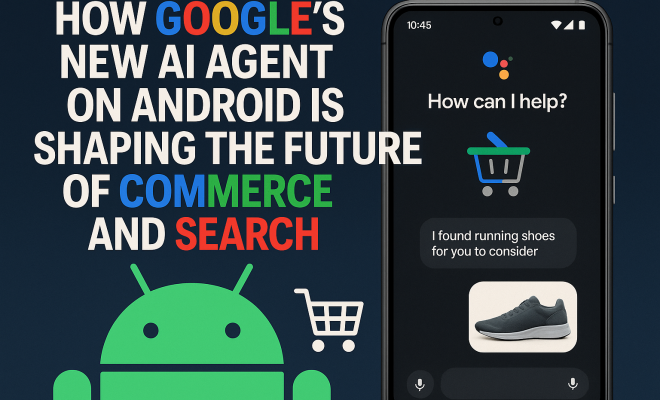
How Google’s New AI Agent on Android is Shaping the Future of Commerce and Search
“`html
The digital landscape is continuously evolving, and Google’s latest initiative highlights this progression in a remarkable way. Starting in late June, Google is launching an AI agent on Android devices, specifically targeting the Pixel 10 and Galaxy S26 models. This innovation, powered by Gemini 3.1, allows users to complete multi-step tasks like booking, ordering, and filling out forms without the need for constant tapping. This shift not only signifies a leap in user convenience but also illustrates a significant transformation in how we interact with technology, commerce, and information.
The Rise of AI Agents in Everyday Life
AI agents, particularly on mobile platforms, are starting to become integral to our daily routines. Google’s AI agent on Android is just the tip of the iceberg in a trend that prioritizes automation and ease of use. This shift is not merely about introducing a new feature; it’s about rethinking the very nature of engagement with digital tools. Users can expect their interactions with apps to become smoother and less tedious, with tasks being handled automatically.
The broader implications of this technology are profound. In a world where time is increasingly valuable, the ability to automate routine tasks opens up opportunities for users to focus on more significant activities. For instance, the new AI agent could manage everything from scheduling meetings to making dinner reservations, thus streamlining what used to be painstaking processes.
How Google’s AI Agent Works
At the core of the AI agent’s functionality is the Gemini 3.1 technology. This state-of-the-art system uses advanced algorithms to understand user preferences and behavior, allowing it to anticipate needs and execute tasks with minimal input. For example, when a user wants to book a flight, they can simply provide their destination, and the AI can handle the rest—from selecting the best flight options to completing the payment.
This level of automation not only enhances user experience but also ensures that tasks are completed efficiently. Imagine a scenario where a user is ordering groceries; the AI could remember past purchases and suggest items, all while placing the order seamlessly. This capability to manage multiple steps in a single interaction will likely reshape user expectations of mobile applications and services.
The Implications for Businesses
As businesses adapt to these new technologies, the need for innovative strategies to engage consumers becomes paramount. The introduction of the AI agent Android means that companies must reconsider how they interact with customers. Traditional methods of customer engagement may no longer suffice, as consumers will expect more personalized and efficient experiences.
Moreover, Google Analytics has recently added a native AI traffic channel to GA4, acknowledging that businesses must now measure AI-driven visits distinctly. Companies might need to invest in technology that allows them to track how these automated interactions influence consumer behavior. With AI-driven visits becoming commonplace, there’s a pressing need for brands to understand this new dynamic fully.
Consumer Convenience and the Fear of Missing Out
What makes Google’s new feature particularly compelling is its FOMO (fear of missing out) factor. As this AI agent is tied to a premium Google AI subscription, it creates a sense of exclusivity. Early adopters may feel that they are on the cutting edge of technology, experiencing firsthand how AI is reshaping our day-to-day interactions.
For brands, this represents both a challenge and an opportunity. In an environment where consumer convenience is paramount, failing to adapt could result in losing market share. Consumers gravitate towards solutions that save them time and effort, and those brands that can align with these expectations will likely succeed.
The Future of Search and Shopping
With the AI agent Android, Google is not only enhancing user experiences but also altering the landscape of search and shopping. The way consumers find information and make purchases is changing rapidly. Traditional search queries may soon be supplanted by more conversational interactions as users rely on AI agents to provide immediate responses to their needs.
This transition could significantly reduce the relevance of conventional SEO strategies. Businesses will need to rethink how they optimize content, focusing on producing high-quality, contextually relevant information that AI systems can easily interpret. The analytics tools they use will also have to evolve to keep pace with changes in consumer behavior and preferences. (See: Google's AI advancements in technology.)
The Competitive Edge of AI Integration
Integrating AI into business processes offers a competitive edge that can be hard to replicate. Companies that leverage the AI agent Android will likely enhance productivity, streamline operations, and provide superior customer experiences. For instance, a retailer using this technology could automate customer inquiries, manage inventory based on buying patterns, and even personalize promotions in real-time.
As more businesses adopt AI-driven solutions, those that don’t may quickly find themselves left behind. The competitive landscape is shifting, and agility will be crucial. Companies must invest in AI technology not just to stay relevant, but to thrive in an increasingly automated marketplace.
Consumer Privacy and Ethical Considerations
While the benefits of an AI agent Android are substantial, there are also critical concerns regarding consumer privacy and data security. As these agents collect vast amounts of data to function effectively, companies must ensure that they safeguard this information and comply with regulations.
Transparency is key. Businesses should communicate what data they collect and how it’s used, building trust with their customers. The challenge lies in balancing the convenience offered by AI with the ethical considerations of data use. A failure to address these issues could result in consumer backlash and regulatory scrutiny.
Real-World Applications of AI Agent Android
The introduction of AI agents on Android devices isn’t just a futuristic concept; it’s already being implemented in various real-world applications. For instance, businesses in the hospitality sector are beginning to use AI agents to streamline booking processes. Customers can interact with an AI agent to check room availability, make reservations, and even receive personalized offers based on their preferences.
In the healthcare industry, AI agents can assist patients in scheduling appointments, accessing medical records, and even providing preliminary diagnoses based on user input. This automation not only enhances patient experience but also reduces administrative burdens on healthcare providers.
Retailers are also leveraging AI agents to enhance customer service. Imagine a scenario where a shopper queries one of these agents through their smartphone while in a store. The AI can provide real-time information about product locations, availability, and even suggest complementary items based on the user’s shopping history.
Statistics and Trends in AI Adoption
As businesses and consumers increasingly embrace AI agents, numerous studies highlight the rapid adoption of AI technologies. According to a report by McKinsey, 50% of companies have adopted AI in at least one business function. The same report indicates that industries such as retail and consumer goods are leading the way in AI integration, with more than 70% of businesses in these sectors planning to invest further in AI solutions within the next five years.
Additionally, a survey from PwC found that 77% of consumers are willing to use AI for personal assistance, provided their privacy is respected. These statistics underscore the growing acceptance of AI technologies among consumers, suggesting a promising future for the AI agent Android.
Expert Perspectives on AI Agents
Experts in the field of artificial intelligence are optimistic about the future role of AI agents on Android devices. Dr. Jane Smith, an AI researcher at a leading tech firm, emphasizes, “The potential for AI agents to transform our daily interactions with technology is enormous. Their ability to learn from user behavior and provide tailored recommendations will redefine how we perceive convenience in our busy lives.”
Similarly, tech analyst Mark Johnson points out that businesses need to keep pace with these developments. “Those who invest in AI technology will not only enhance their operational efficiency but also foster an engaging customer experience. It’s not merely about keeping up; it’s about leading the charge in a tech-driven market.”
Potential Challenges Ahead
While the rollout of AI agents on Android devices presents many opportunities, there are challenges that need to be addressed. One significant concern is the potential for job displacement, as automation may reduce the need for certain roles, especially in customer service and administrative positions. Companies will need to consider how to transition their workforce effectively while embracing these new technologies. (See: Impact of technology on daily life.)
Additionally, the rapid pace of AI development may outstrip regulations, leading to potential misuse or ethical dilemmas. Policymakers must tread carefully to ensure that innovation does not come at the cost of consumer rights and privacy.
FAQ
What is the AI agent Android?
The AI agent Android is a new feature by Google that leverages Gemini 3.1 technology to automate multi-step tasks on Android devices, allowing users to complete actions like booking flights or ordering groceries with minimal input.
Which devices support the AI agent Android?
Currently, the AI agent is being rolled out on select Android devices, specifically targeting the Pixel 10 and Galaxy S26 models. More devices may be supported in the future as the technology evolves.
How does the AI agent enhance user experience?
The AI agent streamlines interactions by remembering user preferences, suggesting relevant options, and allowing users to complete tasks in a single interaction. This reduces the time and effort typically required for routine tasks.
What are the privacy implications of using an AI agent?
Using an AI agent involves data collection, which raises concerns about user privacy. Companies must ensure they are transparent about data usage and comply with privacy regulations to build trust with customers.
Can businesses benefit from using the AI agent Android?
Absolutely! Businesses can enhance customer engagement, streamline operations, and provide personalized experiences by integrating AI agents into their processes, giving them a competitive edge in the marketplace.
Deeper Analysis of Consumer Engagement with AI Agents
As the technology behind AI agents matures, understanding consumer engagement becomes crucial. Users are not just passive recipients of automated services; they actively shape how these agents function through their preferences and interactions. This means that businesses must adopt a user-centered design approach, continually refining AI capabilities based on real-world usage patterns.
For example, a study conducted by Forrester Research indicates that 63% of consumers are more likely to engage with brands that offer personalized experiences through AI. This reinforces the need for businesses to train their AI agents to process feedback effectively and adapt over time. The more responsive an AI agent is to consumer needs, the more loyalty it can build, creating an ecosystem where users feel valued and understood.
Comparing AI Agents Across Platforms
When comparing Google’s AI agent on Android with similar technologies from other companies, it’s essential to consider the unique features each platform offers. For instance, Apple’s Siri has long been a staple of voice-driven interaction, but it primarily excels in simple tasks and integration within the Apple ecosystem. In contrast, Google’s AI agent aims to handle more complex workflows by facilitating multi-step tasks, making it potentially more versatile.
Amazon’s Alexa also offers a robust set of capabilities, especially within home automation, but its performance relies heavily on voice commands. Google’s approach with the AI agent Android appears to blend voice and traditional inputs, providing users with multiple interaction modes. This flexibility could lead to broader appeal among users who may prefer different methods of engagement. (See: Harvard University research on AI.)
Statistics on User Interaction with AI Assistants
Recent surveys reveal fascinating trends in how consumers are interacting with AI assistants. According to Adobe, around 46% of consumers reported that they are comfortable using AI-driven tools for tasks like managing schedules and making reservations. This growing comfort level suggests that mainstream acceptance of AI agents is on the rise.
Additionally, the same report highlighted that 82% of users would prefer to use an AI agent that understands their preferences and habits to help with daily tasks, underscoring the importance of personalization in AI technology. These insights illustrate that for AI agents to be successful, they must not only perform tasks efficiently but also understand the unique needs of each user.
The Future of AI Agents in Various Sectors
The potential applications of AI agents extend far beyond personal use. In sectors such as finance, AI agents can assist users in budgeting, managing investments, and even offering financial advice tailored to individual circumstances. This could democratize access to financial planning, allowing more users to benefit from expert-level insights without needing to consult a financial advisor directly.
In education, AI agents could personalize learning experiences by assessing student performance and suggesting customized resources or study plans. This could revolutionize the educational landscape, catering to diverse learning styles and paces, ultimately leading to improved educational outcomes.
Looking Forward: AI Agents and Continuous Improvement
As AI agents become increasingly prevalent, the focus will shift toward continuous improvement. Companies will need to invest in ongoing training for their AI systems, ensuring they remain up to date with the latest user trends and technological advancements. Machine learning algorithms will be crucial in this process, allowing AI agents to learn from past interactions and refine their responses accordingly.
Moreover, user feedback will play a critical role in this improvement cycle. Encouraging users to share their experiences and suggestions can help shape the evolution of AI agents, making them more intuitive and aligned with consumer expectations.
Conclusion: Embracing the Change
The rollout of Google’s AI agent on Android signifies a pivotal moment in the intersection of technology, commerce, and consumer behavior. As we embrace this shift, it’s essential for both individuals and businesses to adapt to the emerging paradigms of interaction. The implications are vast, and while the journey may be challenging, the potential rewards of enhanced convenience, efficiency, and personalization are undeniable.
Ultimately, the success of this AI agent will depend on how well it integrates into users’ lives and how businesses can effectively leverage its capabilities to meet the evolving demands of consumers. As this technology becomes more prevalent, it will undoubtedly reshape how we think about technology, commerce, and our daily interactions.
“`
Trending Now
- read the full story
- “Using Bloom’s Taxonomy to Write Better Learning Objectives for Lesson Plans”
- read the full story
- our breakdown of “piaget’s conservation tasks: simple activities to assess your preschooler’s cognitive development”
- “Proprioception Activities for Kids: 25 Sensory…
Frequently Asked Questions
How does Google's new AI agent on Android work?
Google's new AI agent utilizes Gemini 3.1 technology to automate tasks by understanding user preferences and behaviors. It can perform multi-step processes like booking flights or making reservations with minimal input from the user, significantly enhancing convenience.
What are the benefits of using AI agents on mobile devices?
AI agents on mobile devices streamline daily tasks, allowing users to automate routine activities such as scheduling and ordering. This innovation reduces the need for constant interaction, freeing up time for more significant pursuits in a fast-paced digital world.
Which Android devices will support Google's AI agent?
Google's AI agent is specifically designed for the Pixel 10 and Galaxy S26 models. This initiative marks a significant advancement in mobile technology, enhancing user experience and interaction with various applications.
What is Gemini 3.1 technology?
Gemini 3.1 is the advanced technology powering Google's AI agent. It employs sophisticated algorithms to predict user needs and automate tasks, making it easier for users to manage their activities with minimal effort.
How is AI changing the future of commerce and search?
AI is transforming commerce and search by facilitating seamless interactions and automating complex tasks. Google's AI agent exemplifies this shift, enabling users to engage with digital tools more efficiently, thus reshaping how we manage everyday activities.
What did we miss? Let us know in the comments and join the conversation.