“How to Support a Child with Dyscalculia in a Mainstream Math Classroom”
“`html
When it comes to education, every child deserves the opportunity to succeed, regardless of the challenges they may face. For children with dyscalculia, a specific learning disorder affecting mathematical skills, traditional classroom settings can pose significant hurdles. Understanding how to effectively support a child with dyscalculia in a mainstream math classroom is crucial for parents, teachers, and peers alike. This article delves into practical strategies, insights, and resources to foster an inclusive learning environment where children with dyscalculia can thrive.
1. Understanding Dyscalculia: The Basics
Dyscalculia, often referred to as a “math learning disability,” affects an individual’s ability to understand numbers, manipulate mathematical concepts, and perform calculations. It’s estimated that between 3% to 6% of the population has dyscalculia, making it a prevalent yet often misunderstood condition. Unlike dyslexia, which primarily affects reading skills, dyscalculia is specifically tied to numerical understanding and spatial reasoning.
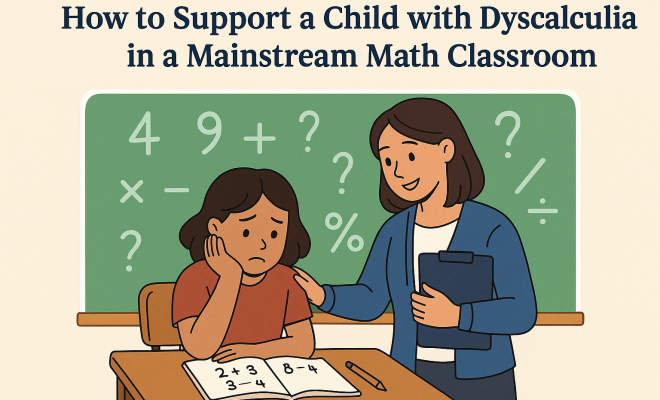
Children with dyscalculia may struggle with basic math concepts, such as counting, number recognition, and understanding relationships between numbers. They might find it challenging to grasp ideas like place value or time. These difficulties can lead to frustration, low self-esteem, and a negative association with math. Recognizing these challenges is the first step in providing effective support.
2. Creating a Supportive Classroom Environment
One of the most effective ways of supporting a child with dyscalculia is through creating an inclusive classroom environment. This means fostering a culture of respect and understanding among students. Teachers should educate classmates about dyscalculia so that they can empathize with their peers who may struggle with math.
Utilizing visual aids, manipulatives, and alternative forms of assessment can also create a more supportive atmosphere. For example, incorporating visual representations of math problems, like diagrams or charts, can help children with dyscalculia better understand complex concepts. Providing a safe space for students to ask questions and express their difficulties without fear of judgment is equally essential.
3. Utilizing Multi-Sensory Learning Techniques
Multi-sensory learning is a powerful approach when supporting a child with dyscalculia. This involves engaging multiple senses to help reinforce learning. For instance, using physical objects, like blocks or counters, allows students to visualize and physically manipulate numbers. This hands-on approach can significantly enhance their understanding of mathematical concepts.
Incorporating auditory and visual elements into lessons can also be beneficial. Teachers should consider using songs, rhymes, and interactive games that reinforce math skills. Engaging students in different ways helps cater to various learning styles and can lead to improved retention of mathematical concepts.
4. Implementing Individualized Learning Plans
Every child is unique, and this is especially true for those with dyscalculia. Implementing an individualized learning plan (ILP) tailored to the specific needs of the child can significantly enhance their learning experience. This plan should outline specific goals, accommodations, and teaching strategies to help the student succeed in math.
For example, an ILP might include extended time for completing assignments and tests, reduced homework load, or alternative assessment methods. Regular check-ins with the student to monitor progress and adjust the plan as needed can also ensure that the support remains relevant and effective.
5. Encouraging a Growth Mindset
Fostering a growth mindset is crucial for all students, but particularly for those with dyscalculia. A growth mindset promotes the belief that abilities can be developed through dedication and hard work. Teachers can encourage this mindset by celebrating effort, persistence, and improvement, rather than solely focusing on correct answers.
Using positive reinforcement, providing constructive feedback, and acknowledging small victories can help build a child’s confidence in their mathematical abilities. When children see that their efforts lead to progress, they’re more likely to persevere through challenges and develop a more positive relationship with math. (See: Understanding dyscalculia basics.)
6. Building Strong Home-School Connections
Collaboration between teachers and parents is vital in supporting a child with dyscalculia. Open lines of communication can help parents understand the strategies being used in the classroom and how they can reinforce those methods at home. Regular meetings, progress reports, and parent-teacher conferences can facilitate this collaboration.
Parents can support their child by creating a positive math environment at home. This might involve incorporating math games into family time, using everyday situations to practice math skills, or simply encouraging their child’s efforts. Providing a consistent approach both at home and at school can lead to better outcomes for the child.
7. Utilizing Technology and Resources
In today’s digital age, there are numerous resources and technologies designed to assist children with dyscalculia. Educational apps and software can provide interactive and engaging ways for students to practice math skills. Programs that focus on adaptive learning adjust to a child’s individual progress and challenges, providing tailored support that can be incredibly beneficial.
Teachers should explore different educational tools, such as online games, videos, and tutorials, that can enhance understanding. Resources like Khan Academy or specialized dyscalculia software can be excellent complements to traditional teaching methods, allowing for a more personalized learning experience.
8. Offering Professional Development for Educators
For teachers, ongoing professional development is essential in understanding and effectively supporting a child with dyscalculia. Training programs focused on learning disabilities can equip educators with the knowledge and skills necessary to identify and address the needs of students with dyscalculia.
Workshops or seminars that provide insight into specific teaching strategies, classroom management techniques, and the latest research on dyscalculia can empower teachers. By being better informed, educators can create a more inclusive environment and ensure they are using evidence-based practices that benefit all students.
9. Advocating for Awareness and Understanding
Finally, advocacy plays a crucial role in supporting children with dyscalculia. Raising awareness among school administrators, teachers, and the community at large can help foster a more understanding environment. Dyscalculia is often less recognized than other learning disabilities, leading to misconceptions and a lack of support.
Engaging in conversations about dyscalculia, sharing resources, and advocating for necessary accommodations can lead to a more supportive educational landscape. When communities understand the challenges faced by children with dyscalculia, they’re more likely to rally around efforts to support these students effectively.
10. Understanding the Emotional Impact of Dyscalculia
Beyond academic challenges, dyscalculia can have significant emotional implications for children. Many students experience feelings of anxiety, frustration, and inadequacy when confronted with math-related tasks. It’s not uncommon for children with dyscalculia to develop a fear of math, which can further exacerbate their difficulties. As parents and educators, it’s crucial to recognize these emotional responses and provide support to help children navigate their feelings.
Creating a safe space for open dialogue about these feelings can help children articulate their struggles. Encourage them to express their emotions through journaling or art, allowing them to process their experiences. This emotional support can be just as vital as academic assistance, reinforcing a sense of belonging and understanding.
11. Practical Activities for Home and School
Incorporating engaging and practical activities into routine learning can make a world of difference for children with dyscalculia. Games that focus on number recognition, counting, and basic arithmetic can be both fun and educational. Simple activities like cooking can introduce concepts like measuring and fractions in a hands-on way.
Consider creating a “math scavenger hunt” where children search for items around the house or classroom that correspond to certain numbers or quantities. Activities that promote real-world application of math concepts can help reinforce learning and spark interest. Using everyday situations to practice math skills not only solidifies their understanding but also reduces anxiety by making math feel more approachable. (See: CDC information on dyscalculia.)
12. Statistics and Research on Dyscalculia
Research shows that students with dyscalculia often have difficulty developing number sense, which is the ability to understand and work with numbers. A study published in the journal “Learning Disabilities Research & Practice” found that early intervention and tailored teaching strategies significantly improved outcomes for students with dyscalculia.
Statistically, studies indicate that students with dyscalculia may score significantly lower on standardized math tests compared to their peers. For example, a report from the National Center for Learning Disabilities highlighted that students with learning disabilities, including dyscalculia, are more likely to be retained in grade and less likely to pursue higher education. Understanding these statistics can help educators design effective interventions and highlight the importance of early detection and support.
13. Expert Perspectives on Supporting Children with Dyscalculia
Experts in the field emphasize the importance of early identification and intervention for children with dyscalculia. Dr. John M. McGrew, a renowned psychologist specializing in learning disabilities, suggests that “the earlier we can recognize the signs and provide support, the better the long-term outcomes for the child.” His research underscores the importance of tailored educational strategies that accommodate the unique learning needs of these students.
Additionally, educational psychologist Dr. Lisa M. Wiggins points out, “Support from both teachers and parents is key. Consistency in approach and communication can dramatically improve a child’s confidence and ability in math.” These perspectives reinforce the idea that a collaborative effort among educators and parents can lead to a more positive experience for children facing these challenges.
14. Frequently Asked Questions (FAQs)
What is the difference between dyscalculia and general math difficulty?
Dyscalculia is a specific learning disability that affects an individual’s ability to understand and work with numbers. Unlike general math difficulty, which can be caused by a variety of factors, dyscalculia is a recognized condition that requires specialized support and intervention.
How can I help my child with dyscalculia at home?
There are several ways to support your child at home. Incorporate math into everyday activities, use games to make learning fun, and maintain open communication about math challenges. Additionally, consider using visual aids or manipulatives to demonstrate concepts in a more tangible way.
Are there specific teaching methods that work best for children with dyscalculia?
Multi-sensory teaching methods that engage visual, auditory, and tactile learning styles tend to be effective for children with dyscalculia. Techniques such as using manipulatives, visual aids, and technology can significantly enhance understanding and retention of mathematical concepts.
How important is early intervention?
Early intervention is crucial for children with dyscalculia. The earlier a child receives support, the better their chances for improvement in mathematical skills and overall confidence in their abilities. Early detection can lead to tailored teaching strategies that address specific needs.
Can children outgrow dyscalculia?
Dyscalculia is a lifelong condition, but with appropriate support and intervention, many children can learn to manage their difficulties effectively. While they may not outgrow dyscalculia, they can develop strategies to cope and succeed in mathematical tasks.
15. Understanding the Role of Emotional Intelligence
Developing emotional intelligence can be incredibly beneficial for a child with dyscalculia. Emotional intelligence refers to the ability to recognize and understand one’s own emotions, as well as the emotions of others. For children with dyscalculia, enhancing emotional intelligence can help them cope with the stress and anxiety often associated with learning difficulties. (See: NIH resources on learning disorders.)
Teaching children to articulate their feelings about math can make a significant difference. Simple techniques like mindfulness exercises or guided reflection can allow them to express their frustrations and triumphs. By focusing on emotional intelligence, children can better manage their responses to challenges and maintain a more balanced outlook on their math journey.
16. The Importance of Peer Support
Peer support can be a powerful tool in helping children with dyscalculia feel less isolated. Encouraging group work and collaborative learning in math can promote understanding and empathy among classmates. When peers are involved in the learning process, it can create an environment where students are more willing to share their struggles and successes.
Teachers can facilitate peer mentoring programs where students with strengths in math can assist those who are struggling. This not only builds a sense of community but also helps reinforce the tutor’s own mathematical understanding while providing social interactions that can boost confidence. Such environments can help demystify dyscalculia, fostering a more supportive classroom culture.
17. Community Resources and Programs
Many communities offer resources and programs specifically designed to support children with dyscalculia. Tutoring centers, workshops, and support groups can provide additional assistance outside of the classroom. Connecting with local organizations dedicated to learning disabilities can offer families valuable resources and a network of support.
Parents should search for local educational programs that focus on enhancing math skills using engaging methods tailored for children with dyscalculia. Additionally, online communities and forums can provide insights and shared experiences from other parents and educators, which can be incredibly beneficial.
18. Positive Reinforcement Techniques
Using positive reinforcement is a powerful motivational tool for children with dyscalculia. When they achieve something, no matter how small, recognizing their efforts can boost their self-esteem and encourage a more positive attitude towards math. Rather than only praising correct answers, celebrate the process they took to arrive at a solution or their willingness to attempt a challenging problem.
Consider implementing a reward system where children earn points or tokens for effort, persistence, and achievements in math. Small rewards can include stickers, extra playtime, or even a special outing. This approach not only motivates them but also reinforces the idea that effort leads to success.
19. Conclusion
Supporting a child with dyscalculia in a mainstream math classroom requires a multifaceted approach involving educators, parents, and the community. By understanding the condition, creating inclusive environments, utilizing effective teaching strategies, and fostering positive attitudes towards math, we can help these children not only cope with their challenges but also find joy and success in their mathematical journeys.
“`
Trending Now
Frequently Asked Questions
What is dyscalculia and how does it affect learning?
Dyscalculia is a specific learning disability that affects a child's ability to understand numbers and perform mathematical calculations. It can lead to difficulties with basic math concepts like counting, number recognition, and understanding relationships between numbers, which may result in frustration and low self-esteem in academic settings.
How can teachers support students with dyscalculia in the classroom?
Teachers can support students with dyscalculia by creating an inclusive classroom environment, utilizing visual aids and manipulatives, and providing alternative forms of assessment. Educating classmates about dyscalculia can also foster empathy and understanding, helping to create a supportive atmosphere for all students.
What strategies can parents use to help a child with dyscalculia?
Parents can help their child with dyscalculia by reinforcing math concepts at home using games, visual aids, and real-life scenarios. Encouraging a positive attitude towards math and providing emotional support can also boost their child's confidence and motivation to learn.
What are common signs of dyscalculia in children?
Common signs of dyscalculia include difficulty with basic math skills such as counting, number recognition, and understanding time or place value. Children may also struggle with spatial reasoning and may show frustration or anxiety when faced with math tasks.
Can children with dyscalculia succeed in a mainstream classroom?
Yes, children with dyscalculia can succeed in a mainstream classroom with appropriate support and accommodations. By implementing targeted strategies, fostering a supportive environment, and promoting understanding among peers, educators can help these students thrive academically.
Agree or disagree? Drop a comment and tell us what you think.