Mastering Phonemic & Phonological Awareness in Kindergarten
“`html
Introduction to Phonemic and Phonological Awareness
When we think about early childhood education, a few key elements come to mind, and phonemic awareness in kindergarten is one of them. It lays the foundation for reading and writing, aiding children in recognizing and manipulating sounds in spoken words. But what exactly do we mean by phonemic awareness, and how does it differ from phonological awareness? Understanding these two concepts can profoundly influence how educators structure their lessons and help young learners embark on their literacy journey.
Defining Phonemic Awareness
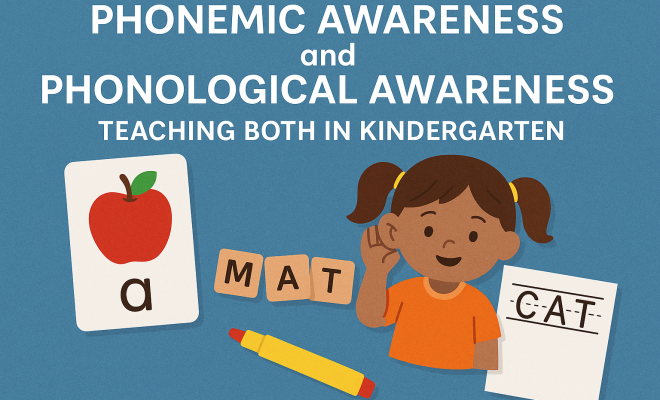
Phonemic awareness is a subset of phonological awareness, referring specifically to the ability to hear, identify, and manipulate individual sounds (or phonemes) in spoken words. This skill is crucial because it directly correlates with a child’s ability to decode words when reading. For instance, if a child can break down the word “cat” into its three phonemes /k/, /æ/, and /t/, they can more easily blend those sounds to read the word.
Understanding Phonological Awareness
Phonological awareness encompasses a broader range of skills than phonemic awareness. It includes the ability to recognize and work with larger units of sound, such as syllables and onsets and rimes. For example, phonological awareness allows children to clap out the syllables in their names or identify rhyming words. While both sets of skills are vital for literacy, phonemic awareness is particularly crucial as children begin to read.
The Importance of Phonemic Awareness in Kindergarten
Research indicates that strong phonemic awareness skills can predict future reading success. According to a study published in the journal Reading Research Quarterly, children who demonstrate phonemic awareness in kindergarten are more likely to become proficient readers by third grade. Moreover, the National Reading Panel emphasizes that phonemic awareness instruction significantly improves children’s reading abilities, making it an essential focus for educators.
Key Components of Teaching Phonemic Awareness
Teaching phonemic awareness effectively involves several key components. First, it’s essential to provide explicit instruction. This might include activities where children practice identifying initial, medial, and final sounds in words. Secondly, educators should integrate phonemic awareness activities into daily routines. Simple practices like singing songs with rhymes or engaging in sound games can reinforce these skills.
Strategies for Developing Phonological Awareness
While phonemic awareness is critical, fostering phonological awareness is equally important. Effective strategies include:
- Rhyming Games: Use familiar nursery rhymes to help children recognize and produce rhyming words.
- Syllable Clapping: Teach children to clap their hands to count the syllables in words.
- Sound Matching: Create activities where children find objects that start or end with the same sounds.
These strategies not only make learning fun but also allow children to engage with sounds on multiple levels.
Incorporating Phonemic Awareness into Daily Routines
To ensure that phonemic awareness becomes an integral part of the kindergarten curriculum, educators can incorporate it into various daily routines. Morning meeting times, for instance, can include brief phonemic awareness exercises. Teachers can ask students to share words that start with a particular sound or create a chain of rhyming words. These activities can create a lively atmosphere while reinforcing essential skills.
Parental Involvement in Phonemic Awareness Development
Parents play a crucial role in supporting phonemic awareness at home. Simple activities like reading together, singing songs, or playing sound-based games can reinforce what children learn in school. Parents can also engage their children in conversations about sounds and words to further develop their phonological awareness. Through collaboration between educators and parents, children can enjoy a consistent and supportive learning experience.
Current Trends and Research in Phonemic Awareness Education
The field of early literacy education is continually evolving, and recent research highlights the significance of phonemic awareness in kindergarten. Studies suggest that early and systematic phonemic awareness instruction can lead to improved reading outcomes. Additionally, educators are now exploring digital tools and apps designed to enhance phonemic and phonological awareness through interactive activities. These resources can provide engaging ways for children to practice skills in a fun and meaningful context. (See: Reading strategies from NIH.)
Building a Phonemic Awareness Curriculum
Crafting a phonemic awareness curriculum requires a thoughtful approach that balances various techniques and activities. Educators should aim to create a comprehensive program that not only introduces phonemic awareness but also reinforces it throughout the year. A successful curriculum could include:
- Interactive Games: Incorporate games that focus on sound recognition, such as phoneme bingo or sound scavenger hunts.
- Storytime Integration: Choose books with rich phonemic elements, such as repetitive sounds or rhymes, to enhance listening skills.
- Sound Workshops: Hold workshops where children can experiment with different sounds and play with language in a structured yet playful environment.
These elements can create an engaging learning atmosphere that fosters a deep understanding of phonemic awareness.
Expert Perspectives on Phonemic Awareness
Insights from experts in early childhood literacy emphasize the necessity of phonemic awareness. Dr. Timothy Shanahan, a well-known literacy expert, states that “the ability to hear and manipulate sounds is critical for children as they learn to read.” He argues that phonemic awareness is foundational and should be prioritized in early education. Additionally, researchers like Dr. Elaine M. McEwan-Adkins highlight that phonemic awareness not only impacts reading skills but also enhances spelling and writing abilities.
Many educators advocate for incorporating play-based learning into phonemic awareness instruction. Play allows children to explore language naturally, making it an effective way to develop these skills. Structured play activities, such as creating sound-based games, can reinforce phonemic awareness in a supportive environment that encourages exploration and experimentation.
Phonemic Awareness vs. Phonics: Understanding the Difference
It’s important to differentiate between phonemic awareness and phonics, as both play vital roles in literacy development but serve distinct purposes. Phonemic awareness refers to the ability to hear and manipulate sounds in spoken language without the use of written words. In contrast, phonics involves understanding the relationship between letters and sounds. While phonemic awareness is a precursor to reading, phonics allows children to decode words using their knowledge of letter-sound relationships.
For instance, when a child learns that the letter “b” represents the /b/ sound, they are using phonics. However, when they can isolate the /b/ sound in the word “bat,” they are demonstrating phonemic awareness. Both skills are necessary for effective reading instruction, and educators should integrate them into their teaching practices to provide a comprehensive literacy foundation.
Statistics on Phonemic Awareness and Literacy Success
Data from educational research underscores the importance of phonemic awareness in determining literacy success. According to the National Institute for Literacy, children who develop phonemic awareness by the end of kindergarten are significantly more likely to read at grade level by third grade. Studies show that children who receive phonemic awareness instruction outperform their peers in reading and writing assessments.
For example, a report from the National Reading Panel indicates that explicit phonemic awareness instruction can lead to improvements in reading performance by up to 50%. Furthermore, children with strong phonemic awareness skills often show higher self-esteem and motivation towards reading, creating a positive cycle of learning and achievement.
Challenges in Teaching Phonemic Awareness
While there is a wealth of knowledge on the benefits of phonemic awareness, educators may face challenges when implementing effective instruction. One challenge is the diversity of children’s backgrounds and experiences. Some children may come to kindergarten with varying levels of exposure to language and sounds, making it essential for teachers to differentiate instruction to meet individual needs.
Teachers may also struggle with time constraints within the curriculum. Balancing phonemic awareness instruction with other essential literacy components can be demanding. To overcome these challenges, educators should prioritize phonemic awareness activities as part of a balanced literacy approach, ensuring that they are woven into everyday learning experiences.
Effective Assessment of Phonemic Awareness Skills
Assessing phonemic awareness is crucial for understanding where each child stands in their literacy development. Educators can use a variety of assessment tools to gauge phonemic awareness skills, such as: (See: Phonemic awareness resources from Ed.gov.)
- Oral Assessments: Conduct informal assessments where children are asked to identify or manipulate sounds in words.
- Phoneme Segmentation Tests: Use exercises where children break words into individual sounds, providing insight into their phonemic decoding skills.
- Observation Checklists: Utilize checklists during classroom activities to monitor children’s participation and skill development in phonemic awareness tasks.
Regular assessment allows educators to tailor their instruction and provide targeted support to children who may need additional help with phonemic awareness.
Creative Activities for Enhancing Phonemic Awareness
Engaging children in creative activities can significantly enhance their phonemic awareness skills. Here are some fun and innovative ideas:
- Sound Storytime: Read stories that emphasize sound repetition and play. Ask children to clap or make sounds when they hear specific phonemes.
- Phoneme Puzzles: Create puzzles where children match pictures to their beginning sounds, reinforcing phonemic recognition through visual aids.
- Sound Collage: Have children collect objects or pictures that start with the same sound and create a sound collage, allowing them to visualize phoneme relationships.
These activities not only cultivate phonemic awareness but also foster creativity and critical thinking skills among young learners.
Building a Connection Between Phonemic Awareness and Vocabulary Development
Phonemic awareness does more than just aid in reading; it plays a significant role in expanding a child’s vocabulary. When children can dissect words into their individual sounds, they become more adept at recognizing similar-sounding words and understanding their meanings. For example, if a child can identify the phonemes in “cat,” they might also find it easier to relate to “bat” or “hat.” This phonemic connection not only boosts their reading skills but also enhances their vocabulary as they make associations between different words. Encouraging this connection can be as simple as incorporating vocabulary games that focus on sounds, leading to a richer language experience.
Content-Related Phonemic Awareness Activities
Phonemic awareness activities can be linked to various content areas beyond literacy, integrating learning across subjects. Here are a few examples:
- Math and Sound: Use counting games that require children to count sounds, such as the number of syllables in a math problem or the sounds in numbers.
- Science and Sounds: Engage children in identifying the sounds of animals or objects during a science lesson, reinforcing their phonemic skills while learning about the world around them.
- Art and Phonemes: Incorporate art projects where children create visual representations of sounds or phonemes, such as drawing pictures that start with a specific sound.
This cross-curricular approach not only makes learning more engaging but also helps children see the relevance of phonemic awareness in their everyday experiences.
Frequently Asked Questions (FAQ) about Phonemic Awareness in Kindergarten
What age should phonemic awareness instruction begin?
Phonemic awareness instruction can begin as early as preschool, with activities designed to introduce children to sounds and words. However, it becomes essential in kindergarten as children prepare to learn to read.
How can I support my child’s phonemic awareness at home?
You can support your child by engaging in sound-based activities such as singing songs, reading rhyming books, and playing games that focus on sound recognition. Encourage your child to listen for sounds in everyday conversations.
Are there specific phonemic awareness skills that should be prioritized in kindergarten?
Yes, important skills to prioritize include sound isolation, sound blending, and sound segmentation. These foundational skills are crucial for developing strong reading abilities. (See: Research on phonological awareness.)
Is phonemic awareness the same as phonics?
No, phonemic awareness is the ability to hear and manipulate sounds in spoken language, while phonics involves understanding the relationship between written letters and their corresponding sounds. Both skills are important for literacy development.
How can technology be used to enhance phonemic awareness?
Technology can offer interactive games and apps that focus on sound recognition and manipulation, making learning phonemic awareness engaging and accessible. Educational platforms often feature activities that reinforce these concepts in a fun way.
How long should phonemic awareness lessons be?
Phonemic awareness lessons can be effective in short, focused bursts, typically lasting between 10 to 20 minutes. This duration keeps children engaged and allows for intensive practice without overwhelming them.
Can phonemic awareness be taught in a group setting?
Absolutely! Group settings provide great opportunities for collaborative learning. Activities like sound games or group rhyming challenges can foster teamwork while enhancing phonemic awareness.
What are some signs that my child struggles with phonemic awareness?
Signs may include difficulty rhyming, trouble breaking words into sounds, or challenges blending sounds to form words. If you notice these signs, consider reaching out to your child’s teacher for support or additional resources.
Why is phonemic awareness more important than phonological awareness?
While both are essential, phonemic awareness is particularly critical because it focuses specifically on the smallest units of sound in language, which are vital for decoding words. This makes it a key predictor of reading success.
Conclusion: Building a Foundation for Lifelong Literacy
Phonemic awareness in kindergarten is not just an educational buzzword; it’s a crucial building block for literacy. By integrating phonemic and phonological awareness into daily lessons, engaging parents, and staying informed on current research and trends, educators can significantly impact children’s reading success. As we focus on developing these essential skills, we pave the way for a brighter future where every child is equipped with the tools they need to succeed in reading and beyond.
“`
Trending Now
Frequently Asked Questions
What is the difference between phonemic awareness and phonological awareness?
Phonemic awareness specifically refers to the ability to hear, identify, and manipulate individual sounds (phonemes) in spoken words, while phonological awareness encompasses a broader range of skills, including recognition of syllables and rhymes.
Why is phonemic awareness important for kindergarten students?
Phonemic awareness is crucial for kindergarten students as it lays the groundwork for reading and writing. Research shows that children with strong phonemic awareness are more likely to become proficient readers by third grade.
How can teachers promote phonological awareness in the classroom?
Teachers can promote phonological awareness through activities like clapping out syllables, identifying rhyming words, and engaging in sound games that help children recognize and manipulate larger sound units.
What are some activities to teach phonemic awareness?
Activities to teach phonemic awareness include sound matching games, segmenting words into individual sounds, and blending sounds to form words, all of which help children practice manipulating phonemes.
At what age should children develop phonemic awareness?
Children typically begin to develop phonemic awareness in kindergarten, around ages 5 to 6, which is essential for their future reading success and literacy development.
What did we miss? Let us know in the comments and join the conversation.