Asteroid Flybys 2026: Close Encounters, No Threat
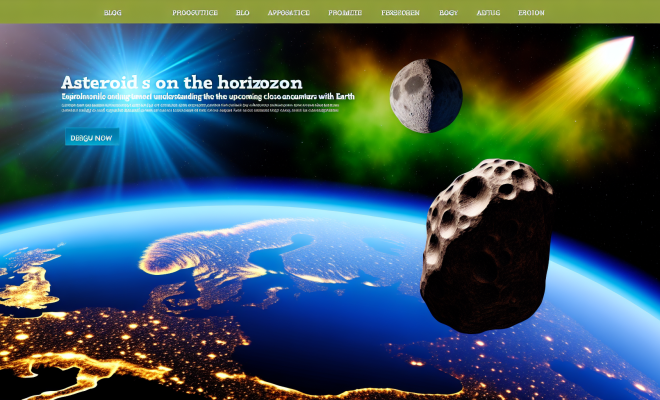
On April 29, 2026, skywatchers and scientists alike will turn their attention to the cosmos as two sizeable asteroids, designated 2026 HL3 and 2026 HP3, make their way past Earth. These celestial bodies, each comparable in size to a commercial airplane, will come remarkably close to our planet, specifically at distances of 1.6 million miles and 3.68 million miles, respectively. Despite the proximity of these asteroids, NASA and a host of astronomers have reassured the public that there is no cause for alarm, as both asteroids are categorized as non-threatening.
The Nature of the Asteroids
The two asteroids in question are part of a larger population of near-Earth objects (NEOs) that scientists monitor continuously. Asteroid 2026 HL3 is about 60 feet in diameter, while 2026 HP3 is slightly larger, measuring around 75 feet across. For context, this size is akin to a mid-sized airplane.
Details of the Flybys
- Asteroid 2026 HL3: Will pass at approximately 1.6 million miles (2.57 million kilometers) from Earth.
- Asteroid 2026 HP3: Will pass at a distance of roughly 3.68 million miles (5.91 million kilometers) from Earth.
To put these distances into perspective, the average distance from the Earth to the Moon is about 238,855 miles (384,400 kilometers), making these asteroids’ flybys a significant but not alarming event.
Why No Alarm?
Despite the attention garnered by these flybys, scientists are keen to emphasize that there is no cause for concern. The primary reason for this assurance lies in the extensive tracking and monitoring systems in place. NASA’s Near-Earth Object Observations (NEOO) program is dedicated to identifying and characterizing asteroids and comets that could potentially pose a threat to our planet.
NASA has stated that both 2026 HL3 and 2026 HP3 are classified as “potentially hazardous asteroids” (PHAs), but this classification does not necessarily imply that they are a direct threat. PHAs are defined by their size and proximity to Earth’s orbit. Scientists have established a comprehensive set of criteria to determine the level of risk posed by these objects, and ongoing observations have confirmed that both asteroids will pass safely.
The Role of Tracking Systems
The ability to predict the trajectories of asteroids is critical in planetary defense. The methods employed by astronomers include:
- Telescopic Observations: Large telescopes equipped with advanced imaging technologies are used to track the movement of asteroids across the night sky.
- Radar Measurements: When asteroids come close enough, radar can be used to gain precise measurements of their size, shape, and velocity.
- Computer Modeling: Scientists use mathematical models to simulate asteroid orbits, allowing them to predict future paths and potential impacts.
This multi-faceted approach ensures that scientists can accurately assess the risk posed by NEOs and respond accordingly.
The Importance of Monitoring Near-Earth Objects
Monitoring NEOs is not merely an academic exercise; it has real implications for global safety. The Earth has experienced impacts from asteroids in the past, some of which have had catastrophic effects, such as the extinction event that wiped out the dinosaurs approximately 66 million years ago. While large-scale impacts are rare, the potential consequences of even a small asteroid hitting Earth are significant enough to warrant ongoing vigilance.
Asteroids in Context
To understand the significance of these flybys, it’s essential to contextualize them within the broader scope of asteroid activity:
- Asteroids are remnants from the early solar system, primarily composed of rock and metal.
- There are millions of asteroids in the asteroid belt between Mars and Jupiter, but only a fraction of them are classified as NEOs.
- NASA’s Planetary Defense Coordination Office is tasked with coordinating efforts to detect, track, and characterize NEOs.
The monitoring of asteroids like 2026 HL3 and 2026 HP3 reflects a growing understanding of the significance of these celestial bodies and the potential implications they have for Earth.
Looking Ahead: Future NEO Events
The April 29 flybys are part of a series of asteroid close encounters that will occur in the coming years. As technology improves, the ability to detect and track NEOs is expected to become even more sophisticated, allowing scientists to refine their assessments of potential threats.
Upcoming Close Approaches
In addition to the asteroids on April 29, a few notable near-Earth approaches are scheduled for the near future:
- 2023 DZ2: This asteroid is set to pass by Earth on March 2, 2023, at an estimated distance of about 43,000 miles (69,000 kilometers).
- 2027 KJ: Expected to pass Earth on May 6, 2027, at a distance of 1.2 million miles (1.9 million kilometers).
- 2028 AF: Will approach Earth on January 15, 2028, at a distance of 650,000 miles (1.04 million kilometers).
Each of these events will be carefully monitored by international space agencies and astronomers around the world to ensure that they remain non-threatening.
Public Awareness and Education
The communication of such events plays a crucial role in public awareness and education. As asteroids continue to be a topic of interest, NASA and other organizations have ramped up efforts to inform the public about the realities of asteroid monitoring, the risks involved, and the steps being taken to mitigate potential threats.
Engaging the Public
Educational initiatives include:
- Public Lectures and Workshops: Institutions often hold events to educate the public about NEOs and planetary defense.
- Online Resources: Websites and social media platforms provide real-time updates and information on upcoming asteroid encounters.
- Citizen Science Projects: Programs that engage the public in tracking and reporting observations of NEOs.
By fostering a well-informed public, scientists can help demystify the subject of asteroids and encourage interest in space science.
Conclusion: A Safe Passage
As we approach April 29, 2026, the passage of asteroids 2026 HL3 and 2026 HP3 serves as a reminder of the dynamic nature of our solar system. While these celestial bodies will skim past Earth without incident, the ongoing efforts of scientists to monitor, track, and educate the public about NEOs are critical components in ensuring planetary safety.
In a world where cosmic events can spark both fascination and fear, it is reassuring to know that our planet is being watched over by dedicated experts. The flybys of these asteroids not only highlight the advanced capabilities of modern astronomy but also underscore the importance of vigilance in a universe full of wonders—and potential dangers.