Video Games: Revolutionizing AI Research & Scientific Discovery
“`html
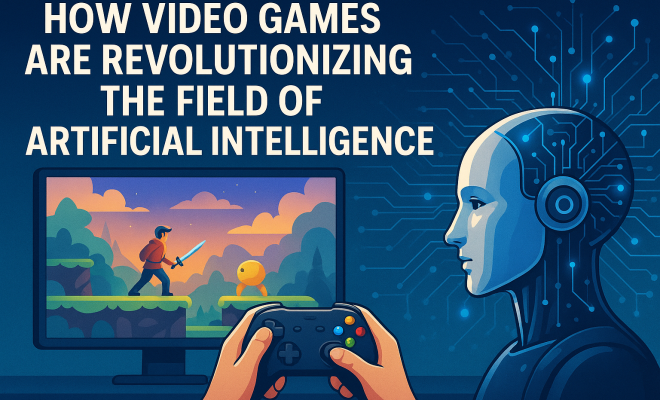
When you think of video games, your mind might drift to epic battles, virtual worlds, or the latest esports tournaments. But what if I told you that video games are also pushing the boundaries of artificial intelligence (AI) research? This surprising connection between video games and artificial intelligence is not just a passing trend; it’s a collaboration that could redefine how we approach complex scientific challenges. In this article, we’ll explore how video games are being utilized as innovative tools for scientific discovery, particularly in the realm of AI.
The Intersection of Gaming and Science
The conventional view of video games as mere entertainment is rapidly changing. Researchers are now recognizing their potential as platforms for scientific inquiry. The idea is simple yet profound: video games can engage users in ways that traditional research methods cannot. These interactive mediums serve as excellent tools for explaining difficult scientific concepts while simultaneously gathering valuable data.
One of the key areas where this intersection plays out is in the field of artificial intelligence. Games can simulate complex environments, allowing researchers to test algorithms, refine machine learning techniques, and crowdsource ideas from players around the globe. In a sense, video games have emerged as a new frontier for scientific exploration.
Crowdsourcing Knowledge Through Gameplay
One fascinating aspect of using video games in AI research is the crowdsourcing of knowledge. Players contribute their insights and solve problems collectively, thereby accelerating the scientific process. This approach has gained traction due to modern connectivity and online gaming platforms, where players from various backgrounds can collaborate in real-time.
Take the game Foldit, for example. This online puzzle game allows players to fold proteins in a virtual space. Players have successfully contributed to scientific breakthroughs by solving protein-folding problems that computers struggled with. The game’s engaging interface not only educates players about biochemistry but also harnesses the collective intelligence of its community to solve real-world scientific problems.
AI Training Through Video Games
Video games are not just tools for public engagement; they also serve as training grounds for AI. Developers and researchers have begun to harness gaming environments to train AI algorithms in increasingly complex tasks. These environments simulate real-world scenarios where AI can learn to make decisions, adapt to changing circumstances, and even interact with human players.
For instance, OpenAI’s Gym provides a toolkit for developing and comparing reinforcement learning algorithms. Many of the environments used for training AI are derived from video games, allowing researchers to evaluate how well their algorithms can perform in various conditions. This method is particularly effective because it combines entertainment with education, making the learning process engaging for both AI and human players.
AI and Game Design: A Symbiotic Relationship
The relationship between AI and video games is symbiotic. On one hand, AI enhances the gaming experience by creating intelligent NPCs (non-playable characters), improving player engagement through adaptive difficulty levels, and generating dynamic storylines. On the other hand, the gaming industry generates vast amounts of data that can be analyzed to improve AI algorithms.
Consider the game The Last of Us Part II. The AI used in this game is designed to create realistic interactions among characters, making the gameplay feel immersive and compelling. This sophistication in AI design not only enhances user experience but also provides developers with valuable insights into human behavior, which can be applied to other sectors.
Real-World Applications of AI in Gaming
The applications of AI in gaming extend far beyond entertainment. In fact, several industries are taking cues from gaming technology to improve their operations. For example, the healthcare industry is exploring how AI-driven simulations can assist in medical training, while the automotive sector is investigating how gaming algorithms can enhance self-driving technology.
Furthermore, the principles behind game mechanics are being adapted for applications such as educational tools, urban planning, and environmental monitoring. By leveraging the engaging nature of video games, researchers can design simulations that not only entertain but also inform and educate users about complex systems. (See: Video games and artificial intelligence.)
The Ethical Implications of AI in Gaming
As we explore the intersection of video games and artificial intelligence, it’s crucial to consider the ethical implications. The use of AI in gaming raises questions about data privacy, consent, and the potential for misuse. For instance, how are the data collected from players being utilized? Are players aware of how their contributions are being used in research?
Moreover, there’s the concern of AI behavior within games. If AI entities exhibit harmful behaviors, such as promoting violence or discrimination, how do we address this issue? Developers and researchers must take responsibility for ensuring that AI systems are designed ethically, fostering positive interactions rather than detrimental ones.
Future Directions: What Lies Ahead?
The future of video games and artificial intelligence looks promising. As technology continues to evolve, we can expect even more innovative applications of gaming in scientific research. The potential to simulate real-world scenarios and gather feedback from players will likely open new avenues for discovery.
Researchers are already exploring the integration of virtual reality (VR) and augmented reality (AR) with gaming to enhance data collection and user interaction. These technologies create immersive environments that can provide an even richer understanding of complex scientific concepts. Imagine a game where you could virtually navigate through a human body to learn about various biological processes!
Engaging the Public: A Call to Action
One of the most exciting aspects of leveraging video games for AI research is the opportunity to engage the public. Scientists are increasingly recognizing the value of public participation in solving complex problems. By inviting gamers to contribute their insights, researchers can tap into a diverse pool of ideas and perspectives.
This approach democratizes science, allowing everyday individuals to contribute to significant discoveries. Game developers and researchers must continue to collaborate, creating platforms that encourage public participation. Initiatives like Foldit have proven that ordinary people can make extraordinary contributions, and this model can be replicated across various scientific fields.
Exploring More Game Titles that Utilize AI
There’s a broad array of games that serve as perfect examples of how AI is not just an afterthought in game design but a core component that enhances the player experience. Games like StarCraft II have been recognized for their advanced AI, which even prompted AI researchers to develop algorithms that can compete at human levels. In 2019, Google DeepMind’s AlphaStar achieved Grandmaster status in this complex real-time strategy game, demonstrating the potential of AI in learning and adapting strategies in unpredictable environments.
Another noteworthy example is Left 4 Dead, a cooperative first-person shooter that utilizes an AI system known as the “Director.” This AI dynamically adjusts the game’s difficulty based on players’ performance, keeping the experience engaging and challenging. The Director’s ability to manage enemy spawns and events ensures that no two gameplay sessions are the same, providing a fresh experience every time.
The Impact of AI on Game Development
The integration of AI into game development isn’t just about enhancing gameplay; it’s transforming the way games are made. Procedural content generation—a method where AI algorithms create game assets like levels, environments, and narratives—has made it easier for developers to produce large, intricate worlds without needing to design every element manually. Games like No Man’s Sky showcase this technology, allowing players to explore a universe composed of billions of procedurally generated planets.
AI-driven analytics tools are also changing how developers understand player behavior. By analyzing gameplay data, developers can identify what keeps players engaged or what leads to frustration. This information helps refine the game design process and can lead to better player retention and satisfaction.
Statistics Showcasing the Influence of AI in Gaming
The influence of AI in gaming is substantial and measurable. According to a report by Newzoo, the global gaming market is expected to reach $200 billion by 2023, with AI technologies playing a crucial role in this growth. Moreover, AI-driven game analytics are projected to improve player experience, increase monetization, and optimize game performance, potentially resulting in revenue growth for developers.
Another important statistic comes from a survey conducted by PwC, revealing that 75% of gaming executives believe AI will significantly change the gaming industry in the next five years. This highlights the industry’s acknowledgment of AI as a transformative force, shaping not only game design but also how games are played, marketed, and monetized. (See: Research on AI in gaming.)
FAQ: Frequently Asked Questions about Video Games and AI
How are video games used in AI research?
Video games provide simulated environments where researchers can test AI algorithms, crowdsource problem-solving, and even train AI systems through player interactions. Games like Foldit and StarCraft II serve as platforms where players can contribute to scientific research and AI development.
What are some ethical concerns regarding AI in gaming?
Ethical concerns about AI in gaming include data privacy, how player data is used, the potential for algorithms to exhibit biased or harmful behaviors, and the implications of AI decision-making in games. Developers must prioritize ethical considerations when designing AI systems to ensure they promote positive player experiences.
Can AI enhance the gaming experience for players?
Absolutely! AI can enhance gaming experiences by creating smarter NPCs, personalizing difficulty levels based on player performance, and dynamically generating content that adapts to player choices. This leads to a more immersive and engaging gameplay experience.
What is procedural content generation in gaming?
Procedural content generation is a method where algorithms create game content such as environments, levels, or narratives without requiring manual design. This allows for vast, diverse game worlds that can keep players engaged for longer periods, as seen in games like No Man’s Sky.
What future applications can we expect from AI in gaming?
Future applications of AI in gaming may include more sophisticated AI companions, enhanced virtual reality experiences, better player behavior analysis, and even AI-driven narratives that adapt to players’ choices in real-time. The integration of AI could revolutionize how games are played and experienced.
The Role of AI in Game Testing
Another fascinating application of AI in gaming is its use in game testing. Traditionally, game testing is a labor-intensive process where quality assurance testers manually play through a game to identify bugs and balance issues. With the advent of AI, this process is becoming more streamlined.
AI systems can automate the testing of games by simulating player behavior, quickly identifying glitches, bugs, and performance issues that human testers might overlook. For example, AI can execute various gameplay scenarios at speeds far beyond human capability, ensuring that games are thoroughly vetted before release. This not only speeds up the testing process but also enhances the overall quality of the final product.
The Convergence of AI and Virtual Reality
The integration of AI into virtual reality (VR) is revolutionizing the way we experience games. VR immerses players in a fully interactive environment, and when combined with AI, it creates a dynamic and responsive gaming experience. Imagine a VR game where the environment reacts in real-time based on your decisions or actions, enhancing the sense of presence and immersion.
Recent advancements, such as AI-driven NPCs in VR games, have led to more realistic interactions. NPCs can adapt to player strategies, learning from their behavior to provide a more challenging experience. This not only improves gameplay but also makes the narrative more engaging, allowing the story to evolve based on the player’s choices.
The Influence of AI on Game Narratives
AI is also beginning to reshape how narratives are constructed in video games. Traditionally, game narratives are linear, leading players through a predetermined storyline. However, AI can introduce branching narratives that evolve based on player decisions, creating a unique experience for each player. (See: How video games help scientists.)
Games like Detroit: Become Human utilize AI to dynamically adjust the storyline based on the player’s choices. The complexity of AI in this context allows for multiple endings and a high degree of replayability, as players can explore different facets of the narrative by making different decisions.
This shift toward AI-fueled narratives not only enhances player engagement but also influences how developers craft their games. Writers and designers are now considering how to create stories that are both compelling and flexible, allowing for a more personalized gaming experience.
AI’s Impact on Game Marketing and Player Engagement
In addition to enhancing gameplay, AI is transforming how games are marketed and how player engagement is maintained. AI algorithms analyze data from social media, forums, and in-game behavior to identify trends and player preferences. This information can be invaluable for developers looking to tailor their marketing strategies.
For instance, using predictive analytics, companies can forecast which types of games or features are likely to resonate with players, allowing for more targeted advertising efforts. Additionally, AI-driven chatbots can enhance customer service by providing immediate responses to player inquiries, improving player satisfaction and retention.
Exploring AI in Game Accessibility
Accessibility is another important area where AI is making strides in gaming. Many players face challenges due to disabilities, and AI can help create more inclusive gaming experiences. For example, AI-powered tools can provide real-time captioning, voice recognition, or even sensory adjustments to help players enjoy games more fully.
Furthermore, AI can monitor a player’s performance and adapt the game’s difficulty based on their needs, making it more accessible for players of all abilities. This ensures that everyone can enjoy the rich worlds and stories that video games offer, fostering a more inclusive gaming community.
Conclusion: The Future is Collaborative
The relationship between video games and artificial intelligence is paving the way for groundbreaking advancements in research and development. As the lines blur between entertainment and science, we find ourselves in an exciting era where gaming can play a pivotal role in solving some of the most pressing challenges facing society. By leveraging the power of public participation and harnessing the innovative potential of gaming, we can unlock new possibilities in AI research.
Ultimately, it’s not just about playing games; it’s about changing the game in how we approach scientific discovery. So, the next time you pick up your controller, remember: you might just be contributing to the future of AI research!
“`
Trending Now
Frequently Asked Questions
How are video games used in artificial intelligence research?
Video games are being leveraged in artificial intelligence research by simulating complex environments where researchers can test algorithms and refine machine learning techniques. These interactive platforms allow for innovative scientific inquiry and can gather valuable data while engaging users.
What is the connection between video games and scientific discovery?
The connection lies in the ability of video games to engage users in ways traditional research methods cannot. They serve as platforms for scientific inquiry, enabling researchers to explain complex concepts while crowdsourcing data and insights from players worldwide.
Can playing video games contribute to scientific breakthroughs?
Yes, playing video games can significantly contribute to scientific breakthroughs. For instance, the game Foldit has allowed players to collaboratively fold proteins, leading to real scientific advancements through collective problem-solving.
What role does crowdsourcing play in AI research through gaming?
Crowdsourcing in AI research through gaming allows players to contribute their insights and solve problems collectively. This collaborative effort accelerates the scientific process by utilizing the diverse backgrounds and skills of players connected through online platforms.
Are video games only for entertainment, or can they have educational value?
Video games are not just for entertainment; they have significant educational value. They can explain difficult scientific concepts, engage users in learning, and serve as tools for scientific exploration and data collection, particularly in AI research.
Agree or disagree? Drop a comment and tell us what you think.