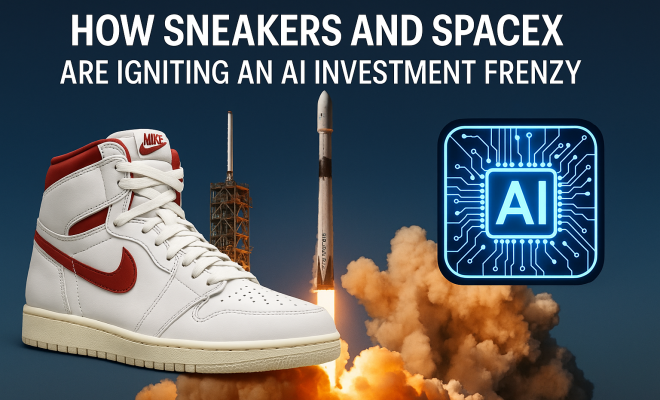
How Sneakers and SpaceX Are Igniting an AI Investment Frenzy
“`html
In an era where artificial intelligence (AI) is becoming an integral part of multiple industries, a recent surge in investment frenzy has caught the attention of both seasoned investors and curious newcomers. Key to this excitement are consumer-centric brands like sneakers and groundbreaking companies like SpaceX, which have positioned themselves at the forefront of AI investment trends. In this article, we will explore the dynamics driving this phenomenon, the implications for the market, and what it means for investors looking to capitalize on the AI movement.
1. The AI Investment Landscape
The landscape of AI investments is evolving rapidly, with a growing number of companies looking to integrate AI technologies into their operations. As reported by Reuters in their AI Weekly segment, this investment frenzy is fueled by a combination of excitement around AI advancements and the influence of major consumer brands. Investors are keenly aware that companies that can credibly attach themselves to AI are often seen as more attractive.
In recent months, the stock market has witnessed a significant uptick in companies leveraging AI capabilities, resulting in a ripple effect across various sectors. From tech to retail, investors are increasingly willing to back firms that demonstrate potential AI applications, suggesting that AI investment trends are here to stay. As the market continues to respond to these developments, we can expect even more volatility and speculation.
2. Sneaker Brands: A Case Study in AI Integration
Sneaker brands have emerged as surprising players in the AI investment trend. Major companies like Nike and Adidas are not just selling footwear; they’re also leveraging AI to enhance marketing strategies, optimize supply chains, and improve customer experiences. Nike’s AI-driven apps and personalized services are perfect examples of how these brands are tapping into technology to stay ahead of the competition.
This trend reflects a broader movement where retail giants are not only investing in technology but also in the data that comes with it. By harnessing AI, they can predict consumer behavior and tailor their offerings to match evolving demands. Thus, the sneaker market has become a hotbed for investment, tapping into both novelty and necessity that appeals to investors looking for the next big thing.
3. SpaceX: The Intersection of Space and AI
SpaceX, led by the charismatic Elon Musk, has become a cornerstone of the contemporary AI investment narrative. The company’s revolutionary projects, such as the Starlink satellite constellation, are not merely about space travel; they also encompass AI-driven data analysis and connectivity solutions. SpaceX’s ability to leverage AI for optimizing launch schedules and enhancing satellite communications is reshaping how we think about space technology.
The intersection of space exploration and AI has captivated investors, leading to a surge in funding for companies that showcase potential in these two dynamic fields. With an increasing focus on the implications of AI in space travel and technology, it’s no surprise that SpaceX has become a focal point in discussions surrounding AI investment trends. Investors are looking at the broader possibilities of AI applications beyond Earth, fueling further interest in the sector.
4. Valuation Bubbles: A Double-Edged Sword?
As more companies seize the opportunity to align themselves with AI technologies, the question of valuation bubbles looms large. There’s a certain excitement surrounding AI that can sometimes lead to inflated valuations—a concern for both investors and analysts. The fear of missing out (FOMO) is palpable, with many retail investors jumping into stocks based on the latest AI hype rather than solid fundamentals.
Investors need to be cautious. While there’s no denying the transformative potential of AI, the combination of speculative investments and inflated expectations often results in market volatility. The recent frenzy surrounding companies linked to sneakers and SpaceX highlights the need for a discerning approach to investment in the AI space. Evaluating the actual impact of AI technologies on a company’s bottom line is crucial in avoiding pitfalls associated with hype-driven investing.
5. The Role of Retail Investors in AI Trends
Retail investors have become increasingly influential in shaping AI investment trends. With the rise of trading platforms and social media, individual investors now have access to information and investment opportunities that were once the purview of institutional players. This new wave of investing has contributed significantly to the current market dynamics.
For instance, platforms like Robinhood and apps that facilitate stock trading have empowered a generation of investors to leap into the stock market with little prior experience. The accessibility of information through social media channels means that trends can spread quickly, further driving interest in AI-related companies. As retail investors flock to brands associated with AI, the potential for dramatic price swings increases, making it essential for investors to stay informed.
6. Market Implications of AI Investments
The implications of the AI investment frenzy are far-reaching. For one, the market is beginning to see a rapid repricing of companies based on their perceived association with AI. This trend is reshaping sectors from healthcare to entertainment, as companies strive to adopt AI technologies to maintain relevance and attract investment.
Moreover, as AI tools become more integrated into everyday business operations, we can expect to see shifts in job markets and employment patterns. Automation and AI-driven solutions will likely supplant certain roles, raising questions about the future of work. Understanding these market implications is critical for investors who want to navigate the complexities introduced by AI investment trends. (See: AI Weekly segment by Reuters.)
7. Global Perspective: AI Investments Beyond Borders
While the U.S. has been a leader in AI investments, the global landscape is changing rapidly. Countries in Europe and Asia are also making significant strides in AI, with firms in sectors like manufacturing, automotive, and healthcare exploring AI applications. These advancements are not merely regional; they have global implications for investors.
As companies in different parts of the world adopt AI solutions, the competition will intensify. Investors should keep an eye on international AI investment trends, as opportunities may arise in less-explored markets. This global perspective can provide a more comprehensive understanding of where AI technologies are headed, ultimately informing strategic investment decisions.
8. The Future of AI Investment Trends
Looking ahead, the future of AI investment trends appears bright but uncertain. As organizations continue to innovate and adopt AI solutions, the market will likely witness further fluctuations. The technologies that dominate today may evolve or be replaced as new capabilities emerge, creating opportunities for agile investors.
However, with every opportunity comes risk. As more players enter the AI space, discerning which companies will thrive and which might falter becomes even more crucial. Investors should be prepared to conduct thorough research and analysis, focusing on long-term sustainability over short-term hype.
9. Final Thoughts: Balancing Opportunity and Caution
In conclusion, the intersection of sneakers, SpaceX, and AI represents a compelling narrative within the current investment landscape. The excitement surrounding AI investment trends is palpable, but so is the cautionary tale of valuation bubbles and market volatility. Retail investors, in particular, need to approach these opportunities with discernment, balancing the thrill of potential gains against the realities of sound investing practices.
As you dive into the world of AI investments, keep in mind the broader implications of these trends, both in terms of technology and market dynamics. The AI investment frenzy is not just about quick returns; it’s about understanding the evolving role of artificial intelligence in reshaping industries and our daily lives.
10. Understanding AI Investment Trends: Key Drivers
To truly grasp the nuances of AI investment trends, we need to look at the key drivers propelling this phenomenon forward. These drivers include technological advancements, regulatory environments, investment strategies, and public perception.
Technological Advancements: Breakthroughs in machine learning, natural language processing, and robotics are at the forefront of AI’s growth. Companies are investing in AI research and development to stay competitive. For instance, according to a report by McKinsey, organizations that have embraced AI have outperformed their competition by 20% or more in profit margins.
Regulatory Environments: Governments worldwide are beginning to establish regulations surrounding AI technologies, influencing how companies operate. For example, the European Union’s AI Act aims to regulate AI systems based on their risk levels, promoting safety and ethical considerations in AI implementation. Such regulations can create both hurdles and opportunities for investors as companies navigate compliance.
Investment Strategies: Venture capitalists and private equity firms are increasingly focusing on AI startups and companies with AI capabilities. This shift in investment strategy is driven by the belief that AI will disrupt numerous industries. In 2021 alone, global investment in AI startups reached approximately $93 billion, highlighting the growing confidence in the sector.
Public Perception: The narrative surrounding AI has shifted significantly over the past few years. Once viewed with skepticism and concern, AI is now largely seen as a tool for innovation and efficiency. This change in perception has spurred interest from both institutional and retail investors, driving more capital into AI ventures.
11. Challenges Facing AI Investments
Despite the excitement surrounding AI, several challenges could impact future investments. Understanding these challenges is critical for anyone looking to navigate this evolving landscape.
Data Privacy Concerns: As AI systems rely heavily on data, concerns about data privacy and security are paramount. Regulations like the General Data Protection Regulation (GDPR) in Europe impose strict guidelines on data usage, which can constrain how companies leverage AI technologies. Investors should be aware of companies’ compliance strategies to mitigate risks associated with data breaches.
Skill Shortages: The demand for skilled AI professionals is outpacing supply, leading to a talent crunch. Companies investing heavily in AI may struggle to find and retain the talent necessary to implement and maintain AI systems effectively. This talent shortage can hinder growth and innovation, making it essential for investors to assess a company’s ability to attract top talent.
Market Saturation: As more companies integrate AI into their operations, the market may become saturated. This saturation could lead to diminishing returns for investors as competition increases. Identifying companies that maintain a competitive edge will be crucial for navigating potential market challenges. (See: Technology section of The New York Times.)
12. Case Studies of AI Investment Successes
Learning from successful AI investments can provide valuable insights. Here are a few standout examples that illustrate effective AI integration and the resulting financial gains.
Netflix: The streaming giant has leveraged AI to enhance its recommendation algorithms, personalizing user experiences. By analyzing viewing habits and preferences, Netflix has maintained a dominant market position and reduced churn rates. As a result, the company saw a 25% increase in its stock price following significant AI enhancements in its platform.
Tesla: Tesla’s investment in AI for autonomous driving technology has attracted significant investor interest. The company’s ability to collect vast amounts of data from its electric vehicles has positioned it as a leader in the self-driving car market. This innovation has not only driven up Tesla’s stock value but has also created a new revenue stream through AI-driven services.
Salesforce: Through its AI-powered Einstein platform, Salesforce has transformed customer relationship management (CRM) by automating tasks and providing predictive analytics. This integration of AI has led to a 20% increase in customer satisfaction ratings for companies utilizing the platform. The success of Salesforce’s AI strategies has further solidified its position as a market leader in CRM solutions.
13. FAQs about AI Investment Trends
What are AI investment trends?
AI investment trends refer to the patterns and movements in financial investment directed towards companies and technologies that utilize artificial intelligence. These trends often indicate a growing belief in the transformative potential of AI across various industries.
Why are sneaker brands investing in AI?
Sneaker brands are investing in AI to enhance customer engagement, optimize supply chains, and personalize marketing strategies. AI enables them to analyze consumer data effectively, helping them predict trends and consumer preferences.
How does SpaceX use AI?
SpaceX utilizes AI for optimizing satellite communications, analyzing launch data, and enhancing operational efficiency. Their innovative approach has drawn significant investment interest, highlighting the role of AI in space technology.
What are the risks of investing in AI companies?
Investing in AI companies carries risks such as inflated valuations, market volatility, regulatory challenges, and the potential for saturation in the market. Investors should conduct thorough research and consider both the opportunities and challenges before investing.
How can retail investors capitalize on AI trends?
Retail investors can capitalize on AI trends by staying informed through financial news, engaging with investment communities, and diversifying their portfolios. Understanding which companies have solid fundamentals in AI can help in making informed investment decisions.
What is the future of AI investments?
The future of AI investments is expected to grow as more companies integrate AI technologies into their operations. However, it will come with challenges, including regulatory scrutiny and the need for a skilled workforce. Investors will need to be strategic and adaptive to succeed in this evolving landscape.
14. Emerging AI Technologies to Watch
As AI continues to evolve, several emerging technologies are expected to significantly influence investment patterns. These include:
Quantum Computing: Quantum computing holds the promise of revolutionizing AI capabilities by processing vast amounts of data at unprecedented speeds. Companies exploring quantum AI can potentially disrupt existing industries, making them attractive to forward-thinking investors. Notably, IBM and Google are already investing heavily in this area, hinting at a future where quantum computing and AI converge.
Edge AI: As the Internet of Things (IoT) becomes more prevalent, edge AI is gaining traction. This technology allows data processing to occur closer to the data source rather than relying on cloud computing. As a result, it offers faster responses and reduced latency, which is critical for applications like autonomous vehicles and smart cities. The market for edge AI is projected to grow significantly, attracting investments from major tech players. (See: Artificial Intelligence topics on ScienceDirect.)
15. Ethical Considerations in AI Investments
Investors need to consider the ethical implications of AI technologies, as the conversation around responsible AI is becoming increasingly important. Ethical AI refers to the development and implementation of AI technologies in ways that are fair, transparent, and accountable.
Companies that prioritize ethical AI practices are likely to attract more investment, as consumers are becoming more discerning about the brands they support. For example, businesses that emphasize data privacy, bias reduction, and transparency in AI decision-making processes may gain a competitive advantage in the marketplace.
Investors should also be aware of potential backlash against companies that fail to adhere to ethical standards, as negative public perception can significantly impact stock prices. Platforms like the Partnership on AI are working to address these concerns, providing guidelines for responsible AI development that investors should consider when evaluating potential investments.
16. The Role of Incubators and Accelerators in AI Growth
Incubators and accelerators are playing an essential role in the growth of AI investment trends. These programs provide startups with the necessary resources, mentorship, and funding to develop their AI technologies. An example is the AI Accelerator program by NVIDIA, which supports startups focusing on AI applications across various sectors.
Through these initiatives, investors can access a pipeline of innovative companies that are poised for growth. Many successful AI firms began their journey in incubators or accelerators, making these programs a valuable point of interest for investors seeking the next big opportunity in AI.
By investing in these programs or collaborating with them, established investors can gain insights into emerging trends and technologies that may shape the future of AI investment.
17. AI Investment Trends: What’s Next?
Looking forward, AI investment trends will likely be influenced by a combination of technological advancements, regulatory developments, and evolving market dynamics. As AI continues to permeate various sectors, investors must remain agile and informed to capitalize on emerging opportunities.
Moreover, the global focus on sustainability and climate change will likely drive investments in AI solutions that contribute to environmental efforts. Companies developing AI technologies aimed at reducing carbon footprints, optimizing resource utilization, and enhancing energy efficiency will attract significant interest.
Investors should also keep an eye on the ongoing education and awareness around AI technologies, as understanding the potential and limitations of AI will be crucial in making informed investment decisions. As the landscape evolves, the companies that prioritize transparency, ethical practices, and innovative solutions will likely emerge as leaders in the AI investment arena.
“`
Trending Now
Frequently Asked Questions
How are sneakers influencing AI investment trends?
Sneaker brands like Nike and Adidas are integrating AI into their operations, enhancing marketing strategies, optimizing supply chains, and improving customer experiences. This innovative approach has attracted investor interest, showcasing how consumer-centric companies can lead AI investment trends.
What is driving the AI investment frenzy?
The AI investment frenzy is driven by excitement surrounding AI advancements and the influence of major consumer brands. Investors are keen to support companies that can credibly attach themselves to AI, resulting in significant market changes across various sectors.
Which companies are leading the AI investment movement?
Companies like SpaceX and major sneaker brands such as Nike and Adidas are at the forefront of the AI investment movement. Their integration of AI technologies into business practices has made them attractive to investors looking to capitalize on this growing trend.
What implications does AI investment have for the market?
The surge in AI investments is expected to lead to increased market volatility and speculation. As more companies adopt AI technologies, investors are likely to see varying trends across sectors, making it essential to stay informed about these developments.
How can investors capitalize on AI trends?
Investors can capitalize on AI trends by focusing on companies that are effectively integrating AI into their operations. Keeping an eye on sectors like tech and consumer brands, which demonstrate potential AI applications, can provide lucrative investment opportunities.
Have you experienced this yourself? We’d love to hear your story in the comments.