How to Use Bloom’s Taxonomy for Differentiated Instruction
“`html
1. Understanding Bloom’s Taxonomy: A Framework for Learning
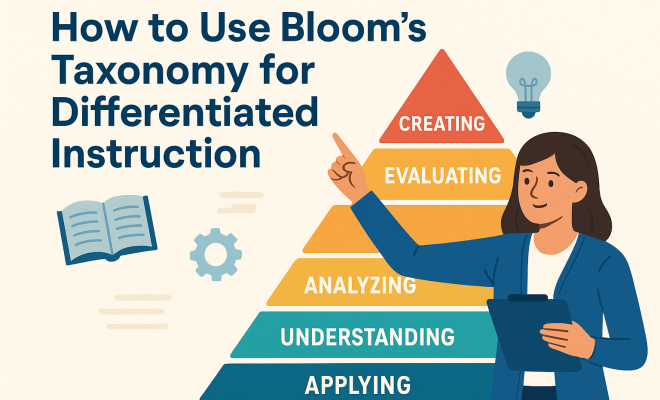
Bloom’s Taxonomy, developed by educational psychologist Benjamin Bloom in 1956, is a hierarchical classification of cognitive skills that educators use to guide the development of learning objectives. Originally, it consisted of six levels: knowledge, comprehension, application, analysis, synthesis, and evaluation. In 2001, the taxonomy was revised to include remembering, understanding, applying, analyzing, evaluating, and creating. This revised version is especially useful for educators aiming to implement differentiated instruction, as it recognizes the diverse ways students learn and process information.
By categorizing skills from lower to higher order, Bloom’s Taxonomy provides a structure that helps teachers design activities that meet students at their individual levels of understanding. For instance, a lesson on photosynthesis could involve basic recall of facts (remembering) for younger students, while older students might analyze the process’s implications for ecosystems (analyzing). This flexibility makes Bloom’s Taxonomy a powerful tool for differentiated instruction.
2. The Importance of Differentiated Instruction: Meeting Students Where They Are
Differentiated instruction is an approach that tailors teaching methods and learning experiences to accommodate different student needs, learning styles, and readiness levels. The aim is to ensure that all students, regardless of their starting point, have the opportunity to grow and succeed academically. With the diversity of learning abilities in modern classrooms, employing differentiated instruction is not just beneficial—it’s essential.
Bloom’s Taxonomy supports this instructional approach by offering a clear framework that can help educators plan lessons that engage everyone. For example, a teacher might use varied assessments aligned with the taxonomy’s levels. Students demonstrating a basic understanding of a concept might take a quiz (evaluating), while those ready for deeper inquiry might engage in a project (creating) that requires them to synthesize information from multiple sources. This versatility is why Bloom’s Taxonomy is often linked to effective differentiated instruction.
3. Creating Learning Objectives: Aligning with Bloom’s Levels
When utilizing Bloom’s Taxonomy for differentiated instruction, crafting clear learning objectives is crucial. Each objective should align with a specific level of the taxonomy to ensure appropriate cognitive challenge. For example, if the goal is for students to analyze a historical event, the objective should reflect this by using action verbs like ‘analyze’ or ‘compare’ rather than ‘identify’ or ‘describe,’ which are lower-level skills.
Moreover, objectives can be tailored to different student needs. For instance, while one group might work on factual recall of dates and events (remembering), another might explore the significance of those events in a larger context (analyzing). By writing objectives that cover various levels of Bloom’s Taxonomy, instructors can effectively meet diverse learning needs within the same classroom.
4. Designing Engaging Activities: Leveraging the Hierarchy for Diverse Learners
Once clear objectives are set, the next step is designing activities that reflect those objectives and cater to various learning preferences. Bloom’s Taxonomy provides a foundation for creating a spectrum of engaging activities. For example, lower-order thinking activities might include flashcards and quizzes, while higher-order thinking could involve group discussions, research projects, or debates.
For instance, in a science class studying ecosystems, a teacher could create a range of activities: younger students might start with simple drawings of food chains (applying), while advanced learners could conduct experiments to observe ecosystem functions (analyzing and creating). By incorporating a variety of activities that target different levels of the taxonomy, teachers can ensure all students are engaged and challenged appropriately.
5. Assessment Strategies: Measuring Understanding at Every Level
Assessment is integral to differentiated instruction, allowing educators to gauge student understanding and adjust teaching methods accordingly. Bloom’s Taxonomy can guide the development of assessments that align with different cognitive levels. For example, traditional tests often focus on lower-order thinking, but assessments can be designed to challenge students at every level of the taxonomy.
For effective assessment, educators can use formative assessments, such as exit tickets or quick quizzes, to evaluate students’ understanding at the lower levels (remembering, understanding). For higher levels, projects, presentations, or reflective essays can make for excellent summative assessments. This multifaceted approach to assessment ensures that all students are evaluated fairly and can demonstrate their understanding in ways that suit their strengths. (See: Understanding Bloom's Taxonomy.)
6. Utilizing Technology: Enhancing Differentiated Learning
In today’s digital age, technology plays a pivotal role in facilitating differentiated instruction. Various online platforms and tools can be leveraged to create personalized learning experiences that align with Bloom’s Taxonomy. For instance, educational software can be used to create quizzes tailored to specific cognitive levels, allowing students to progress at their own pace.
Moreover, technology enables educators to differentiate content delivery. For instance, video lessons can cater to auditory and visual learners, while online discussion forums can foster higher-order thinking through peer interaction (analyzing and evaluating). By incorporating technology into the learning experience, teachers can provide a more engaging and adaptive environment that supports differentiated instruction.
7. Professional Development: Continuous Growth in Differentiated Instruction
To effectively implement Bloom’s Taxonomy for differentiated instruction, continuous professional development is essential. Teachers should engage in ongoing training that focuses on understanding the taxonomy’s application in diverse learning environments. Workshops, webinars, and collaborative planning sessions can provide educators with fresh strategies and insights into effective differentiation.
Additionally, collaborating with fellow educators can foster a culture of shared knowledge and support. Teachers can share successful strategies, resources, and experiences, which can lead to more effective practices in differentiated instruction. Ultimately, investing in professional development creates an educational community that is better equipped to cater to the unique needs of all students.
8. Examples of Bloom’s Taxonomy in Action
Seeing Bloom’s Taxonomy in action can help clarify how it supports differentiated instruction. Consider a unit on environmental science. Here’s how different levels of Bloom’s Taxonomy might look:
- Remembering: Students might list the different types of ecosystems.
- Understanding: Students explain the importance of biodiversity.
- Applying: Students create a model of an ecosystem using materials found around them.
- Analyzing: Students compare and contrast two different ecosystems, discussing the species that inhabit each.
- Evaluating: Students critique a proposed development project and its potential impacts on the local environment.
- Creating: Students design a campaign to promote conservation efforts in their community.
This example illustrates how varied activities can meet the different cognitive needs of students while also allowing them to engage with a common theme. The differentiated instruction approach ensures every student can participate based on their capabilities.
9. Statistics Supporting Differentiated Instruction
Research shows that differentiated instruction significantly impacts student achievement. A study published in the “Journal of Educational Psychology” found that classrooms that implement differentiated instruction saw a 25% increase in student engagement and a 30% improvement in overall academic performance.
Further statistics indicate that when teachers use Bloom’s Taxonomy to guide their lesson planning and assessments, students show a greater understanding of the material. For example, a survey by the National Center for Educational Statistics revealed that schools adopting differentiated strategies based on Bloom’s framework reported a 40% improvement in students’ ability to apply critical thinking skills compared to traditional teaching methods.
10. Challenges of Implementing Differentiated Instruction
While differentiated instruction is beneficial, it does come with challenges. Teachers often cite a lack of resources and training as barriers to implementation. Crafting a variety of assessments and activities requires time and effort, which can be overwhelming, especially in large classrooms.
Another challenge is the potential for confusion among students. If not communicated clearly, students may feel overwhelmed by the different expectations and formats of assessments. To counter this, it’s essential for educators to establish clear guidelines and provide consistent feedback, ensuring that students understand their learning paths. (See: Tailoring Teaching Methods.)
11. Tips for Effective Differentiation
To effectively implement differentiated instruction using Bloom’s Taxonomy, consider the following tips:
- Know Your Students: Take time to assess the readiness and interests of your students. Use surveys or informal assessments to understand where they stand.
- Use Flexible Grouping: Change student groups regularly based on their learning objectives, interests, or abilities. This promotes collaboration and peer learning.
- Provide Choices: Allow students to choose how they engage with the material. Options could range from written assignments to creative projects or presentations.
- Reflect and Adjust: After assessments or activities, encourage students to reflect on their learning and adjust your teaching methods based on their feedback.
- Utilize Peer Teaching: Encourage students to teach each other. This not only reinforces their understanding but also helps foster a supportive classroom community.
12. FAQ about Bloom’s Taxonomy and Differentiated Instruction
What is Bloom’s Taxonomy?
Bloom’s Taxonomy is a framework that classifies cognitive skills and learning objectives into different levels, helping educators design effective teaching and assessment strategies.
How does differentiated instruction relate to Bloom’s Taxonomy?
Differentiated instruction utilizes Bloom’s Taxonomy to create tailored learning experiences that meet the diverse needs of students, ensuring they are challenged at their individual levels.
Can Bloom’s Taxonomy be used in all subjects?
Absolutely! Bloom’s Taxonomy is applicable across all subject areas, from math and science to language arts and social studies. The flexible framework allows educators to design appropriate learning objectives and assessments relevant to any content area.
How can technology enhance differentiated instruction using Bloom’s Taxonomy?
Technology can provide various tools and platforms that facilitate personalized learning experiences. Online resources can offer differentiated content, assessments, and collaborative learning opportunities that align with different levels of Bloom’s Taxonomy.
What are some common challenges in implementing differentiated instruction?
Common challenges include limited resources, lack of training, and managing diverse student needs within large classrooms. Educators may also find it difficult to communicate different expectations effectively.
How can I assess students at different levels of Bloom’s Taxonomy?
Educators can use formative assessments for lower-level skills, such as quizzes or short reflections, and summative assessments for higher-level skills, like projects or presentations. This variety ensures all students have opportunities to demonstrate their understanding.
13. Real-World Applications of Bloom’s Taxonomy in Differentiated Instruction
Understanding how Bloom’s Taxonomy is applied in real-world classrooms can provide valuable insight for educators. For instance, many schools have adopted project-based learning (PBL) that aligns closely with the principles of Bloom’s Taxonomy. In a PBL unit on climate change, students might be grouped by their readiness levels. Those new to the subject could engage in research projects that cover basic facts about climate change (remembering and understanding), while more advanced students might develop and present detailed proposals on sustainability initiatives (creating and evaluating).
This approach not only addresses the varying levels of understanding in the classroom but also promotes teamwork and critical thinking among students. PBL projects often require collaboration, allowing students to learn from one another and develop soft skills that are essential in today’s workforce. As a result, applying Bloom’s Taxonomy through PBL can foster a deeper understanding of content while also preparing students for real-world challenges.
14. Expert Perspectives on Differentiated Instruction
Educators and researchers have weighed in on the importance of differentiated instruction in today’s classrooms. Dr. Carol Ann Tomlinson, a leader in differentiation education, emphasizes that understanding student differences is key to effective teaching. According to her, “Effective differentiation is not just about what you teach; it’s about how you teach it. Adapting your methods to meet the individual needs of students creates a more inclusive and productive learning environment.”
Similarly, Dr. Richard D. Sagor notes that assessment should not merely be a way to gauge student performance but also a tool to inform instructional practices. “When teachers align assessments with Bloom’s Taxonomy, they can better understand where students struggle and adjust their teaching strategies accordingly,” he says. This insight highlights the necessity of continual assessment in the differentiation process.
15. Additional Resources for Educators
For educators looking to deepen their understanding and application of Bloom’s Taxonomy in differentiated instruction, several resources can be beneficial:
- “Differentiated Instruction in Action” by Carolyn Chapman and Nicole Hall – This book offers practical strategies for implementing differentiation in the classroom.
- TeachThought’s list of Bloom’s Taxonomy verbs – A comprehensive guide to verbs associated with each level of Bloom’s Taxonomy to assist in writing learning objectives.
- Edutopia article on creating assessments using Bloom’s Taxonomy – This article discusses how to design assessments that align with different levels of Bloom’s Taxonomy.
- Cult of Pedagogy’s resources on differentiation – A collection of articles and videos that provide strategies and insights on effective differentiation in classrooms.
16. Future Directions for Differentiated Instruction
The future of differentiated instruction looks promising as more educators recognize the importance of personalized learning. With advancements in technology, more adaptive learning systems are being developed that incorporate Bloom’s Taxonomy. These systems tailor learning experiences based on real-time assessments, allowing for immediate adjustments in instructional methods.
Furthermore, as educational research continues to evolve, new strategies for differentiation will emerge. For instance, incorporating social-emotional learning (SEL) into differentiation practices can enhance student engagement and achievement. Understanding the emotional and social contexts of students will enable educators to create even more responsive environments that meet the holistic needs of learners.
As these shifts take place, ongoing collaboration and professional development will be key for educators. By staying informed and connected, teachers can share best practices and continue to refine their approaches to meet the diverse needs of their students effectively.
Embracing Bloom’s Taxonomy for differentiated instruction not only helps in addressing the diverse learning needs present in classrooms but also empowers educators to create a more inclusive and effective learning environment. By understanding and applying this framework, teachers can ensure that all students have the opportunity to thrive academically.
“`
Trending Now
Frequently Asked Questions
What is Bloom's Taxonomy and its importance?
Bloom's Taxonomy is a hierarchical classification of cognitive skills developed by Benjamin Bloom in 1956. It helps educators create learning objectives that cater to various cognitive levels, from basic recall to higher-order thinking. This framework is crucial for developing differentiated instruction strategies that meet diverse student needs.
How can Bloom's Taxonomy be used in differentiated instruction?
Bloom's Taxonomy can be used in differentiated instruction by allowing teachers to design activities that align with students' varying levels of understanding. Educators can create lessons that range from basic knowledge recall to complex analysis, ensuring all students are engaged and appropriately challenged.
What are the levels of Bloom's Taxonomy?
The revised Bloom's Taxonomy includes six levels: remembering, understanding, applying, analyzing, evaluating, and creating. These levels represent a progression from lower to higher-order thinking skills, guiding educators in formulating learning objectives that enhance student learning.
Why is differentiated instruction important?
Differentiated instruction is essential because it tailors teaching methods to accommodate diverse student needs, learning styles, and readiness levels. This approach ensures that all students can engage with the material and achieve academic growth, regardless of their starting point.
How does Bloom's Taxonomy support diverse learning styles?
Bloom's Taxonomy supports diverse learning styles by providing a structured framework that allows educators to create varied activities and assessments. By addressing different cognitive levels, teachers can engage students with different strengths and preferences, fostering a more inclusive learning environment.
Have you experienced this yourself? We’d love to hear your story in the comments.