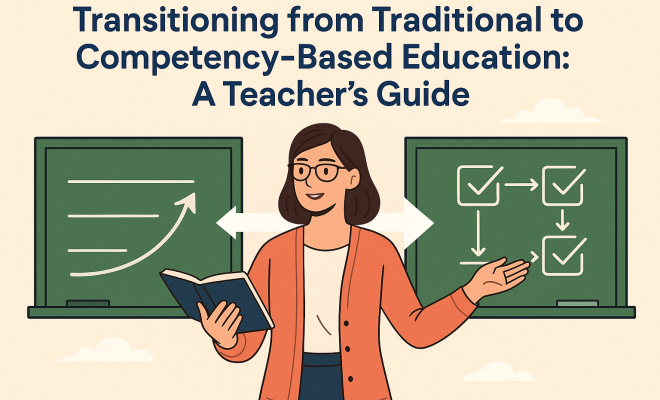
Transitioning from Traditional to Competency-Based Education: A Teacher’s Guide
“`html
In the evolving landscape of education, competency-based education (CBE) is rapidly gaining traction. This instructional approach prioritizes student outcomes over traditional seat-time metrics, allowing learners to advance upon mastering the required skills and knowledge. For educators looking to transition from traditional educational models to a CBE framework, understanding the foundational concepts, practical strategies, and ongoing challenges is crucial. This comprehensive guide serves as a roadmap for teachers aiming to implement competency-based education in their classrooms.
Understanding Competency-Based Education
At its core, competency-based education focuses on what students can do rather than how long they spend in a classroom. Unlike traditional education systems that often emphasize standardized testing and time-based progressions, CBE evaluates students based on their demonstration of knowledge and skills.
This approach is particularly beneficial in addressing diverse learning needs. Students who grasp concepts quickly can progress without waiting for peers, while those who need more time can receive additional support. The shift to CBE aligns with current educational goals that prioritize individual learning paths and outcomes.
The Need for Change: Challenges in Traditional Education
Many educators recognize that traditional education has inherent limitations. One of the most significant challenges is the one-size-fits-all approach, where all students are expected to learn the same material at the same pace. This often leads to disengagement, particularly among students who struggle to keep up or, conversely, those who find the pace too slow.
Furthermore, standardized testing can narrow the curriculum, forcing teachers to teach to the test rather than focusing on deep, meaningful learning. These challenges highlight the need for a more personalized learning experience, which CBE aims to provide.
Key Principles of Competency-Based Education
Transitioning to competency-based education requires embracing several key principles:
- Mastery Learning: Students progress only after demonstrating mastery of the subject matter. This requires clear learning objectives and assessments aligned with those objectives.
- Personalized Learning Paths: Each student has a unique trajectory based on their skills, interests, and pace of learning.
- Flexible Learning Environments: CBE allows for various learning modalities, including online resources, collaborative projects, and hands-on activities.
- Continuous Feedback: Regular, constructive feedback is essential for students to understand their progress and areas for improvement.
- Collaborative Learning: Students often work together to solve problems, share insights, and learn from one another, fostering a sense of community.
Practical Steps for Transitioning to Competency-Based Education
Transitioning to a competency-based education model can seem daunting, but it can be accomplished in manageable steps:
1. Define Clear Competencies
Begin by identifying the competencies your students need to master. This often involves collaborating with colleagues to establish a set of clear, measurable learning objectives that align with your curriculum standards. These competencies should encompass both knowledge and skills relevant to the subject matter.
2. Develop a Flexible Assessment Strategy
Assessments in a CBE model should go beyond traditional testing. Incorporate formative assessments, project-based evaluations, and peer assessments to gauge student understanding and mastery. This allows for a more nuanced view of student progress.
3. Create Personalized Learning Plans
Once competencies and assessments are in place, work with each student to develop personalized learning plans. These plans should outline individual goals, preferred learning methods, and timelines for mastery. Regular check-ins can help keep students on track and allow for adjustments as needed.
4. Foster a Growth Mindset
Encouraging a growth mindset among students is vital in a CBE framework. Remind students that mistakes are part of the learning process and that persistence is key to mastering new skills. Celebrate progress, no matter how small, to build confidence. (See: Competency-Based Education Overview.)
5. Leverage Technology
Technology plays a crucial role in facilitating competency-based education. Utilize learning management systems, digital resources, and educational software to provide personalized learning experiences and track student progress effectively. Implement tools that allow students to access resources at their own pace.
Addressing Potential Challenges
Transitioning to a CBE model is not without its challenges. Some common obstacles include resistance to change, lack of training, and insufficient resources. Here’s how to tackle these issues:
1. Building Buy-In
Change can be met with skepticism. To foster buy-in from colleagues, administrators, and parents, communicate the benefits of CBE clearly. Share success stories and research that highlights improved student outcomes in CBE environments.
2. Professional Development
Providing adequate professional development is essential for helping educators make this transition. Offer training sessions, workshops, and ongoing support to equip teachers with the skills and knowledge necessary to implement CBE effectively.
3. Resource Allocation
Implementing CBE may require additional resources, including software, materials, and staff. Advocate for these needs by demonstrating how CBE aligns with the school’s educational goals and enhances student learning.
Current Relevance and Future Trends
The relevance of competency-based education is more pronounced than ever. As our society increasingly values skills over traditional credentials, educational institutions are under pressure to adapt. CBE not only addresses individual learning needs but also prepares students for the demands of the modern workforce.
Looking ahead, we can expect further integration of technology in CBE models, with personalized learning experiences becoming even more tailored through artificial intelligence and data analytics. Additionally, the emphasis on social-emotional learning within competency frameworks is likely to grow, acknowledging that emotional intelligence is as critical as academic proficiency.
Case Studies: Success Stories in Competency-Based Education
Several schools and districts have successfully implemented competency-based education, offering valuable insights for others considering the transition:
1. New Hampshire’s Pioneering Approach
New Hampshire has been at the forefront of CBE, with its Performance Assessment of Competency Education (PACE) initiative. This state-wide program emphasizes student mastery through performance assessments rather than traditional standardized tests, resulting in improved student engagement and achievement.
2. The Success of Summit Public Schools
Summit Public Schools, a network of charter schools in California and Washington, has adopted a CBE model that combines personalized learning with project-based assessments. Students progress through a mastery-based system that emphasizes collaboration and real-world application of skills, proving to be successful in promoting student agency.
Exploring the Impact of Competency-Based Education on Student Outcomes
Studies have shown that students in competency-based education systems often achieve higher levels of mastery. In a report by the National Center for Education Statistics, schools adopting CBE reported a 20% increase in graduation rates compared to traditional systems. This shift not only benefits students academically but also empowers them to take charge of their learning journey.
Furthermore, competency-based education has been linked to improved retention rates. When students have the ability to learn at their own pace, they are less likely to drop out. The flexibility of CBE allows for students who may be facing challenges in their personal lives or outside-of-school responsibilities to succeed academically without feeling overwhelmed.
Expert Perspectives on Competency-Based Education
Leading educators and researchers have shared their insights on the importance and effectiveness of competency-based education. Dr. Linda Darling-Hammond, a prominent educator and researcher, emphasizes that CBE allows for a more equitable education system. She argues, “CBE gives all students the chance to demonstrate their knowledge and skills in ways that are true to their learning styles and needs.” This perspective highlights how CBE can reduce achievement gaps by catering to the diverse backgrounds and experiences of students. (See: Harvard Business School on CBE.)
Additionally, Dr. Robert Marzano, a leading educational researcher, notes that CBE promotes deeper learning. He states, “When students are engaged in competencies that reflect real-world applications, they are more likely to retain information and skills.” This connection to real-world scenarios enhances the relevance of education, making it more meaningful for students.
Comparative Analysis: CBE vs. Traditional Education Models
To better understand the benefits of competency-based education, it helps to compare it with traditional education models. In a traditional setting, students move forward based on time in class, often leading to gaps in knowledge. For instance, if a student does not grasp a concept during the designated week, they may struggle to keep up with future lessons.
In contrast, CBE allows students to take control of their learning. They can spend extra time on challenging topics while moving quickly through areas of strength. This model fosters a deeper understanding because students are not pressured by the clock.
Statistically, a recent survey indicated that 75% of educators believe that CBE enhances student engagement, compared to only 34% who feel the same about traditional education methods. This data underscores the broader appeal of CBE, especially among educators seeking innovative solutions to long-standing educational challenges.
Frequently Asked Questions about Competency-Based Education
What are the main benefits of competency-based education?
The primary benefits of CBE include personalized learning paths, increased student engagement, improved mastery of subjects, and higher graduation rates. Students have the opportunity to learn at their own pace, which can enhance retention and understanding of material.
How can parents support competency-based education?
Parents can play a crucial role by encouraging their children to take ownership of their learning. Engaging in discussions about individual learning goals, asking about progress, and celebrating achievements can foster motivation. Additionally, parents can advocate for CBE initiatives within their school communities.
Is competency-based education suitable for all students?
While CBE is designed to meet the diverse needs of learners, its effectiveness can vary by context. Students who thrive in self-directed learning environments typically excel in CBE. However, some students may require more structured support to succeed. It’s essential for educators to consider individual student needs when implementing CBE strategies.
How does technology facilitate competency-based education?
Technology enables a range of personalized learning experiences, from adaptive learning platforms that adjust content based on student performance to online resources that provide additional practice. Learning management systems can track progress and allow teachers to provide timely feedback, further supporting student mastery.
What does the future hold for competency-based education?
The future of competency-based education looks promising, with expectations for greater integration of technology and an emphasis on social-emotional skills. As educational institutions continue to adapt, CBE may influence curriculum design and teaching methodologies beyond traditional boundaries, aligning more closely with workforce demands and lifelong learning practices.
Real-World Applications of Competency-Based Education
One of the most compelling aspects of competency-based education is its applicability across various educational levels and settings. From K-12 schools to higher education institutions, CBE principles can create more engaging learning experiences. (See: Learning and Development Resources.)
For example, universities have begun adopting CBE in professional programs such as nursing and engineering. Students are required to demonstrate certain competencies through practical assessments rather than just passing exams. This not only prepares them for real-world challenges but also helps employers quickly identify candidates with the skills they truly need.
Additionally, many adult education programs are embracing CBE to cater to non-traditional learners. By allowing adults to progress based on their prior knowledge and skills, these programs support lifelong learning and help participants achieve career advancement more effectively.
Statistics and Research on Competency-Based Education
Research indicates that competency-based education can lead to significant improvements in academic performance. A study by the Bill & Melinda Gates Foundation reported that schools implementing CBE models saw a 25% increase in student satisfaction and engagement. Furthermore, a longitudinal study found that students in CBE settings outperformed their peers in traditional environments by about 15% on standardized assessments.
These findings suggest that CBE not only addresses the diverse learning needs of students but also improves overall educational outcomes. Additionally, the report noted that CBE schools experienced a 30% reduction in dropout rates, showcasing how the model can keep students engaged and committed to their education.
Challenges and Misconceptions About Competency-Based Education
Despite its benefits, misconceptions surrounding competency-based education persist. One common misunderstanding is that CBE lacks structure. In reality, successful CBE programs are built on a strong foundation of clearly defined competencies and assessments.
Another misconception is that CBE is only suitable for certain subjects or student populations. However, CBE can be adapted to fit various curricula and student needs. It’s essential for educators and administrators to communicate these realities to parents and stakeholders while promoting the advantages of a competency-based approach.
Strategies for Successful Implementation of Competency-Based Education
For schools looking to implement CBE successfully, consider the following strategies:
- Engage Stakeholders: Involve parents, teachers, and community members in the development and implementation process to create a sense of ownership and commitment.
- Start Small: Pilot CBE in one or two subjects before expanding to the entire curriculum. This allows for adjustments and improvements based on early feedback.
- Provide Ongoing Support: Establish a support system for teachers that includes resources, training, and mentoring to help them adapt to CBE practices.
- Use Data-Driven Decisions: Regularly assess student progress and the effectiveness of the CBE model, using data to inform changes and improvements.
Conclusion: The Future of Education
Transitioning from traditional education to competency-based education is more than a trend; it’s a necessary evolution in how we approach learning. By focusing on mastery, personalization, and flexibility, CBE has the potential to transform the educational experience for both students and teachers. While the transition may present challenges, the long-term benefits for student engagement and achievement make it a worthy endeavor. As educators continue to embrace this innovative model, they are not only preparing students for academic success but also for the complexities of the real world.
“`
Trending Now
Frequently Asked Questions
What is competency-based education?
Competency-based education (CBE) is an instructional approach that prioritizes student outcomes by allowing learners to progress upon mastering specific skills and knowledge, rather than adhering to traditional time-based metrics. This method emphasizes what students can do and addresses diverse learning needs, enabling personalized learning paths.
How does competency-based education differ from traditional education?
Unlike traditional education, which often relies on seat time and standardized testing, competency-based education focuses on students demonstrating mastery of content. CBE allows for individualized pacing, accommodating students who grasp concepts quickly as well as those who require more time to learn.
What are the challenges of traditional education?
Traditional education often employs a one-size-fits-all approach, leading to disengagement among students who may struggle or find the pace too slow. Additionally, the emphasis on standardized testing can limit curriculum depth, forcing teachers to prioritize test preparation over meaningful learning experiences.
Why is there a need to transition to competency-based education?
There is a growing recognition that traditional education does not meet the diverse needs of all learners. Competency-based education offers a solution by providing personalized learning experiences, allowing students to progress based on their mastery of content, which can enhance engagement and improve learning outcomes.
What are the key principles of competency-based education?
Key principles of competency-based education include student-centered learning, personalized pacing, mastery of skills and knowledge, and a focus on outcomes rather than time spent in the classroom. This approach aims to foster deeper understanding and cater to individual learning needs.
Agree or disagree? Drop a comment and tell us what you think.