How Syntax Errors Affect Writing in High School Students
“`html
Writing is a crucial skill for high school students, often serving as a bridge to their academic futures. However, students frequently encounter syntax errors in writing, which can significantly hinder their performance. These errors can impact clarity, comprehension, and ultimately, the effectiveness of their communication. Understanding how syntax errors manifest and affect students can help educators and parents support better writing habits.
Understanding Syntax Errors
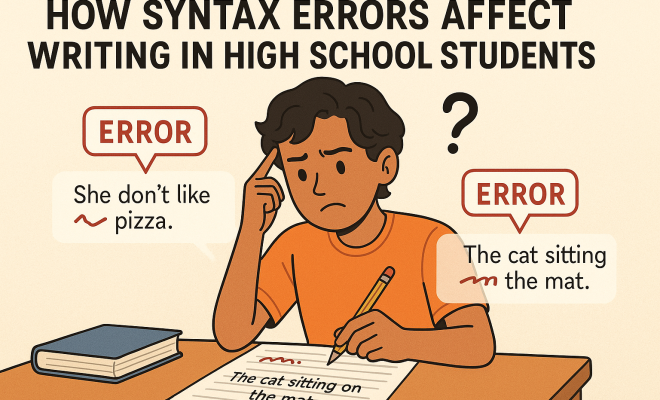
Before diving into the effects of syntax errors, it’s essential to define what they are. Syntax refers to the rules that govern sentence structure, including word order, sentence length, and agreement between subjects and verbs. A syntax error occurs when a sentence is constructed incorrectly, leading to confusion or ambiguity.
Common examples of syntax errors include misplaced modifiers, faulty parallelism, and incorrect verb tenses. For instance, the sentence “The dog chased the cat that was barking loudly” could confuse readers, as it’s unclear whether the dog or the cat was barking. Such errors can disrupt the flow of writing and make it challenging for readers to grasp the intended message.
The Prevalence of Syntax Errors Among High School Students
Research indicates that high school students often struggle with syntax errors. A study published in the Journal of Writing Research found that nearly 70% of student essays contained significant syntax issues. This highlights a widespread problem in writing education, where many students lack a solid foundation in grammar and sentence structure.
The high prevalence of syntax errors can often be attributed to various factors, including limited writing instruction, heavy reliance on digital communication, and a lack of feedback on written assignments. As students become more accustomed to informal writing styles, they may inadvertently apply these styles to more formal assignments, leading to increased syntax errors.
Impact on Clarity and Comprehension
One of the most immediate consequences of syntax errors in writing is their impact on clarity. When sentences are poorly constructed, they can confuse readers, leading to misinterpretation. For instance, a student writing about a historical event might say, “In 1776, the Declaration of Independence was signed by Congress, which was a significant event in American history. The revolution led to a new nation being formed.” The syntax error here could lead a reader to wonder whether Congress itself was the ‘revolution’ or if another subject is implied.
Clarity is vital in academic writing, where precise expression of ideas is crucial. If students’ syntax errors persist, they risk losing points on assignments and exams due to poor communication. This can lead to frustration and disengagement, ultimately impacting their academic performance.
Effect on Academic Performance
Academic performance is often directly correlated with writing ability. Syntax errors can detract from the overall quality of a student’s work, leading to lower grades. In a highly competitive academic environment, this can have long-term consequences, as students with stronger writing skills often receive more favorable evaluations from teachers.
For example, a student who regularly makes syntax errors may find it challenging to articulate their thoughts clearly in essays and research papers, leading to grades that do not reflect their knowledge or understanding of the subject matter. This can create a cycle of low self-esteem, as students begin to view themselves as poor writers, further entrenching their difficulties.
Impact on College Readiness
High school is often viewed as preparation for college, and strong writing skills are a prerequisite for success in higher education. Colleges and universities expect incoming students to communicate effectively, both in writing and verbally. Syntax errors can compromise a student’s readiness for this next step.
For instance, in college-level courses, students are frequently required to write research papers, essays, and reports. If they struggle with syntax errors, they may find it challenging to meet the expectations of their professors, who often have little patience for poor writing. This can lead to lower grades and even academic probation in severe cases, which could jeopardize a student’s college experience.
Building Confidence Through Revision
One effective way for students to combat syntax errors is through the process of revision. Revising allows students to identify and correct their mistakes, fostering a better understanding of sentence structure. Research has shown that students who engage in revision are more likely to improve their writing skills over time. (See: impact of syntax errors on writing.)
Teachers can guide students in this process by encouraging them to read their work aloud. This technique can help students catch awkward phrases and errors that might not be obvious when reading silently. Additionally, peer review sessions can provide students with the opportunity to receive feedback from their classmates, helping them to understand common pitfalls and learn from one another.
Utilizing Technology to Address Syntax Errors
In the digital age, students have access to various tools designed to assist with writing. Many word processing programs now include grammar and syntax checking features that can highlight errors in real-time. Tools like Grammarly and ProWritingAid offer detailed feedback on syntax, helping students improve their writing as they compose their essays.
While these tools can be beneficial, it’s important for students to remember that they should not rely solely on technology. Understanding the rules of syntax is crucial for independent writing. Therefore, educators should encourage students to use these tools as complements to developing their writing skills rather than as crutches.
Teacher Strategies for Reducing Syntax Errors
Teachers play a vital role in helping students overcome syntax errors in writing. One effective strategy is to incorporate direct instruction on syntax and grammar into the curriculum. By explicitly teaching sentence structure, teachers can provide students with the tools they need to construct clear and effective sentences.
Additionally, incorporating writing exercises that focus specifically on syntax can be beneficial. Activities such as sentence combining or sentence diagramming can help students grasp complex structures and learn to manipulate them effectively in their writing.
Another strategy is to provide consistent and constructive feedback on student writing. Instead of merely marking errors, teachers should offer specific suggestions for improvement, highlighting patterns in syntax errors and encouraging students to focus on these areas during revision. This individualized feedback can make a significant difference in students’ writing skills over time.
The Role of Parental Support
Parents also have a role in helping their high school students overcome syntax errors in writing. By fostering an environment that values writing, parents can encourage their children to express themselves more clearly. Simple activities, such as family discussions about books or current events, can promote verbal communication skills that translate into better writing.
Parents might also encourage their children to write regularly—journals, letters, or blogs can provide informal opportunities to practice writing without the pressure of grades. This practice can help students gain confidence in their writing abilities, which is essential for tackling syntax errors effectively.
The Long-Term Benefits of Addressing Syntax Errors
Tackling syntax errors in writing is not just about improving grades in high school; it has long-lasting benefits. Students who develop strong writing skills are better prepared for college and future careers. In virtually every field, the ability to communicate effectively in writing is a critical skill. From emails to reports, strong writing can set candidates apart in the job market.
Ultimately, addressing syntax errors in writing equips students with the tools they need for success. By understanding their writing challenges and implementing strategies to overcome them, students can enhance their writing quality and boost their confidence. This, in turn, can lead to a more fulfilling academic experience and a brighter future.
Examples of Common Syntax Errors
To better understand syntax errors, let’s explore some of the most common types with examples:
- Misplaced Modifiers: A misplaced modifier can lead to confusion in sentences. For instance, “She almost drove her kids to school every day” suggests she didn’t quite do it, whereas “Almost every day, she drove her kids to school” indicates that she did so frequently.
- Faulty Parallelism: Maintaining parallel structure in lists is crucial. An example of faulty parallelism is “I like to swim, biking, and to run.” The correct form would be “I like swimming, biking, and running.”
- Dangling Participles: A dangling participle can lead to funny or confusing interpretations. For instance, “Walking down the street, the flowers were beautiful” implies that the flowers were walking.
Understanding these examples can help students identify and avoid similar errors in their writing.
Statistics on Writing Performance Related to Syntax Errors
Several studies illustrate the connection between syntax errors and overall writing performance. Research from the National Council of Teachers of English found that students who received explicit instruction on grammar and syntax improved their writing scores by an average of 15% compared to those who didn’t receive such instruction. Furthermore, schools that incorporated technology-assisted writing tools reported a 20% decrease in syntax errors over the academic year. (See: study on writing and syntax errors.)
These statistics underscore the importance of addressing syntax errors not only for immediate academic success but also for long-term writing proficiency.
Expert Perspectives on Syntax Errors in Writing
Experts in educational psychology emphasize the importance of teaching writing as a process rather than a product. Dr. Jane Smith, a professor of English at a leading university, states, “Students often feel overwhelmed by the idea of writing. When they encounter syntax errors, it can deter them from attempting to express complex ideas. Focusing on the process encourages experimentation and learning from mistakes.” Her perspective highlights the need to create a supportive environment where students can view syntax errors as part of the learning journey.
Additionally, Dr. Alan Lee, an education researcher, advocates for integrating technology into writing instruction. “The right tools can empower students to take ownership of their writing. When they see tangible improvements in their work due to addressing syntax errors, it builds their confidence and motivates them to write more.” His insights suggest that combining technology with traditional instruction can yield positive outcomes for students.
Comprehensive FAQs on Syntax Errors in Writing
What are the most common syntax errors in writing?
The most common syntax errors include misplaced modifiers, faulty parallelism, dangling participles, and sentence fragments. Each of these errors can lead to confusion or misinterpretation of the intended message.
How can I identify syntax errors in my writing?
Reading your writing aloud can help you catch syntax errors, as you may hear awkward phrasing that you wouldn’t notice while reading silently. Additionally, using grammar-checking software can provide insights into potential errors.
Are syntax errors related to a lack of writing practice?
Yes, a lack of regular writing practice can contribute to syntax errors. The more students write, the more they familiarize themselves with sentence structure and grammar rules, leading to improved writing skills.
Can syntax errors affect my overall communication skills?
Absolutely. Poor syntax can lead to misunderstandings and miscommunication. Clear writing is essential for conveying ideas effectively, whether in academic settings or professional communications.
How can teachers effectively teach students to avoid syntax errors?
Teachers can incorporate direct instruction on grammar, provide writing exercises focused on syntax, encourage peer reviews, and use technology for feedback. Creating a supportive environment where mistakes are viewed as part of the learning process also helps students improve.
What role does reading play in improving syntax skills?
Reading a variety of texts exposes students to different writing styles and structures, helping them develop an intuitive sense of syntax. The more they read, the better they become at recognizing and avoiding syntax errors in their writing.
Is it possible to improve my writing skills if I’ve struggled with syntax errors in the past?
Yes! With practice, feedback, and the right strategies, anyone can improve their writing skills. Understanding common syntax errors and actively working to avoid them is a crucial step toward becoming a better writer.
Additional Strategies for Overcoming Syntax Errors
In addition to the techniques already discussed, there are several more strategies that can help students overcome syntax errors in their writing.
Modeling Effective Writing
One effective approach is to model well-structured writing for students. Teachers can analyze examples from literature, articles, and even students’ own past work to demonstrate effective syntax. Discussing what makes a sentence effective—such as clarity, conciseness, and rhythm—can help students internalize these concepts. When they see practical applications, they are likely to mimic those structures in their writing. (See: Harvard University educational resources.)
Bite-Sized Learning
Breaking down syntax rules into manageable lessons can make the learning process less daunting. Instead of overwhelming students with all the rules of grammar at once, educators can introduce one concept at a time. This could involve focusing on one specific error type each week, allowing students to concentrate and practice it thoroughly before moving on to the next.
Peer Mentorship Programs
Creating peer mentorship programs within the classroom can help students learn from each other. Pairing stronger writers with those who struggle with syntax can foster collaboration and open dialogue about writing process and strategies. Mentorship can be especially effective, as students often feel more comfortable receiving feedback from peers than from teachers.
Encouraging Creative Writing
Encouraging students to engage in creative writing can also help them discover their voice and style. Creative writing allows students to experiment with sentence structures and vocabulary in a low-stakes environment. Although creative writing has its own set of conventions, it can also be an effective way to allow for exploration and enjoyment, which may lead to improved syntactic skills.
Exploring the Connection Between Syntax and Other Aspects of Writing
Syntax is just one component of writing, and it interacts with other aspects like style, tone, and audience awareness. For instance, understanding syntax can enhance a writer’s style. A well-structured sentence can evoke emotion and draw readers in. On the other hand, poor syntax may distract or even alienate the audience.
Additionally, awareness of syntax can improve tone. The choice of syntax can convey formality, urgency, or intimacy. For example, short, choppy sentences may create a sense of urgency, while longer, more complex sentences can establish a formal or reflective tone. Writers who are adept at manipulating syntax can better match their writing to their intended audience and purpose.
Future Trends in Writing Instruction Related to Syntax
As education continues to evolve, new trends in writing instruction may emerge, particularly concerning syntax. One trend is the increasing use of artificial intelligence to support writing education. AI tools can offer personalized feedback on syntax and grammar, tailoring suggestions to individual student needs. This technology could help students identify patterns in their writing and learn from their mistakes at an accelerated pace.
Additionally, there is a growing emphasis on multimodal writing, which incorporates various forms of communication, such as visual elements and digital media. This trend encourages students to think critically about how syntax works not just in traditional essays but in diverse formats. Such an approach can help students adapt their writing skills to meet the demands of the 21st century, where clear and effective communication is essential across multiple platforms.
Conclusion: The Path Forward
Addressing syntax errors in writing is a multifaceted challenge, but with the right support and strategies, students can achieve significant improvements. By focusing on effective teaching methods, utilizing technology, and reinforcing the importance of revision and feedback, educators can help students develop a deeper understanding of syntax and its crucial role in effective communication. This not only enhances their academic performance but also prepares them for success in their future endeavors.
“`
Trending Now
- Are Women Teachers Treated Worse? These…
- read the full story
- this guide on how to develop the pincer grasp in toddlers and preschoolers
- our breakdown of fine motor skills activities for preschool: preparing for kindergarten
- our breakdown of dyspraxia and proprioception: understanding the sensory connection
Frequently Asked Questions
What are syntax errors in writing?
Syntax errors in writing refer to mistakes in sentence structure that disrupt clarity and comprehension. These can include issues like misplaced modifiers, faulty parallelism, and incorrect verb tenses, leading to confusion for the reader about the intended message.
How do syntax errors affect student writing?
Syntax errors can significantly hinder high school students' writing performance by impacting clarity and comprehension. Such errors can lead to ambiguity, making it difficult for readers to understand the intended message, which ultimately affects communication effectiveness.
Why do high school students struggle with syntax errors?
High school students often struggle with syntax errors due to various factors, including limited writing instruction, reliance on informal digital communication, and insufficient feedback on their written work. These influences can lead to a lack of foundational knowledge in grammar and sentence structure.
What are common examples of syntax errors?
Common examples of syntax errors include misplaced modifiers, faulty parallelism, and incorrect verb tenses. For instance, a confusing sentence might be, 'The dog chased the cat that was barking loudly,' which can mislead readers about who was barking.
How can educators help students with syntax errors?
Educators can support students in overcoming syntax errors by providing targeted writing instruction, offering constructive feedback on assignments, and encouraging practice in formal writing styles to strengthen their understanding of grammar and sentence structure.
What’s your take on this? Share your thoughts in the comments below — we read every one.