SpaceX IPO: Asteroid Mining’s Commercial Boom is Here
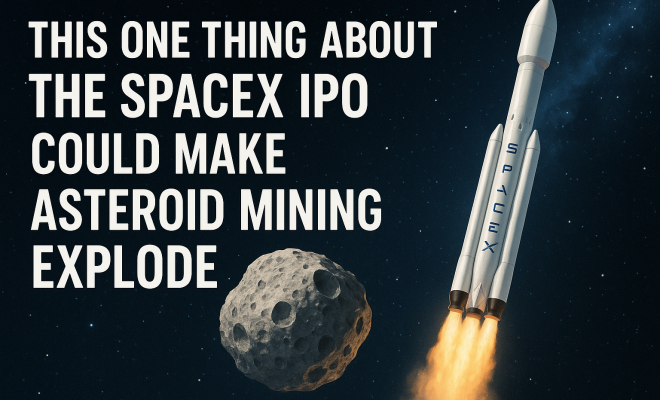
For decades, the idea of mining asteroids felt like pure science fiction, confined to the pages of pulp novels and the silver screen. It was a fantastical notion, a distant dream reserved for a humanity far more advanced than our own. Yet, something truly significant has just happened, something that dramatically shifts asteroid mining from hypothetical fantasy to an imminent commercial reality: the inclusion of asteroid resource utilization as a core business driver in SpaceX’s recent IPO filing. This isn’t just a casual mention; it’s a profound statement from one of the most ambitious and disruptive companies on Earth, signaling that the era of harvesting riches from space is not only plausible but a foundational component of our future in the cosmos. And it dramatically changes the conversation around the SpaceX IPO asteroid mining strategy.
When a company like SpaceX, known for its audacious goals and remarkable execution, puts asteroid mining into its official financial prospectus, it’s not just a nod to a future possibility. It’s an declaration of intent, a strategic pillar supporting its long-term vision for humanity becoming a multi-planetary species. This isn’t about treasure hunting in space; it’s about building the fundamental infrastructure that will enable sustained human presence beyond Earth. Think about it: every major civilization has been built upon access to resources – water, minerals, energy. Space will be no different. The sheer mention in such a pivotal document transforms asteroid mining from a niche, speculative venture into a serious, investment-grade opportunity, and it’s a huge reason why the SpaceX IPO asteroid mining strategy is so compelling.
The Meteoric Rise of a Once-Fringe Concept
It wasn’t that long ago that discussing asteroid mining in serious business circles would elicit polite smiles and thinly veiled skepticism. Now, look at the numbers: the asteroid mining market, practically non-existent just a few years ago in any significant commercial sense, is projected to surge from a respectable $2.49 billion in 2026 to a staggering $5.42 billion by 2030. Some even predict it could hit $10.0 billion by 2034. These aren’t wild guesses from starry-eyed idealists; these are market projections from financial analysts who see the writing on the wall. What’s driving this incredible shift?
Part of it is undoubtedly the relentless progress in space technology, largely spearheaded by companies like SpaceX. We’re seeing reusable rockets become commonplace, launch costs plummet, and a general democratization of access to space. This technological leap makes previously impossible missions, like sending probes to distant asteroids to assess their composition, suddenly achievable and economically viable. But it’s also a growing recognition that Earth’s resources, while vast, are finite, and the demand for critical materials like platinum-group elements, cobalt, and nickel is only increasing with our technological advancement.
From Sci-Fi to Strategic Imperative
The transition from fantastical concept to strategic imperative is fascinating. It’s driven by a confluence of factors: technological readiness, economic necessity, and a renewed human drive to explore and utilize space. When you consider the sheer quantity of valuable resources locked within asteroids, it becomes clear why this isn’t just a passing fad. A single asteroid, perhaps just a few hundred meters across, could contain more platinum than has ever been mined in human history on Earth. That’s a profound thought, isn’t it?
What’s particularly compelling is how this narrative is shifting. It’s no longer just about ‘striking it rich’ by finding a ‘gold rush’ asteroid. Instead, the focus is increasingly on building a sustainable space economy. That means utilizing asteroid resources not just for return to Earth, but for manufacturing and construction in space. Imagine 3D printing components for a lunar base using asteroid-derived metals, or fueling deep-space missions with water extracted from an icy asteroid. This is the vision that the SpaceX IPO asteroid mining strategy implicitly supports. For more on this, see moon collision details.
SpaceX’s Bold Vision: Beyond Earth’s Orbit
SpaceX isn’t just a launch provider; it’s an architect of humanity’s future in space. Elon Musk’s long-term goal for the company has always been to make humanity a multi-planetary species, starting with Mars. But how do you build cities on Mars, or establish sustainable outposts on the Moon, without an incredibly expensive and logistically challenging supply chain from Earth? You don’t. You need to ‘live off the land,’ as it were, and in space, that ‘land’ includes asteroids.
The inclusion of asteroid mining in the SpaceX IPO filing isn’t a speculative ‘what if’; it’s a strategic necessity for achieving their core mission. They understand that to truly colonize space, you can’t just send people and supplies from Earth indefinitely. You need to develop in-space resource utilization (ISRU) capabilities. Asteroids, particularly near-Earth asteroids (NEAs), offer a tantalizing array of resources: water ice for propellant and life support, and metals for construction and manufacturing. This isn’t just about a potential revenue stream for SpaceX; it’s about enabling the very infrastructure that will support their entire multi-planetary endeavor.
The Interplay of Infrastructure and Resources
Think about the early days of any frontier. What was crucial? Access to resources and the means to transport them. In the American West, it was water, timber, and railroads. In space, it’s propellant, building materials, and reliable transportation systems. SpaceX is building the transportation system (Starship, Falcon 9), and by acknowledging asteroid mining, they’re laying the groundwork for the resource supply chain. It’s a symbiotic relationship. Cheaper, more frequent access to space via Starship makes asteroid missions more feasible, and conversely, asteroid resources make sustained space operations more affordable and independent from Earth.
This holistic approach is what sets SpaceX apart. They aren’t just thinking about getting to orbit; they’re thinking about what happens *after* you get there. How do you fuel return trips from Mars? How do you expand a lunar base? The answers invariably lead back to harvesting resources from the vast celestial bodies around us. The SpaceX IPO asteroid mining strategy is a recognition of this fundamental truth. (See: Asteroid mining on Wikipedia.)
The Counterintuitive Nature of Space Mining
It sounds utterly backward, doesn’t it? Flying millions of miles into the vacuum of space, grappling with a spinning chunk of rock, and then trying to extract metals, all while dealing with extreme temperatures and radiation. It seems infinitely harder than digging a hole in the ground here on Earth. And yet, in many ways, it’s actually simpler for certain types of resources.
Consider the environmental impact. Terrestrial mining often involves massive open pits, deforestation, chemical processing, and significant carbon emissions. Asteroid mining, particularly for specific resources like platinum-group metals (PGMs), could be far cleaner. There’s no atmosphere to pollute, no ecosystems to disrupt. Moreover, many asteroids are essentially ‘piles of rubble’ or loosely consolidated material, meaning extraction might involve less brute force and more sophisticated robotic separation techniques, rather than blasting and crushing solid rock.
The Gravitational Advantage (or Disadvantage?)
One of the biggest challenges and surprising advantages is gravity. Or rather, the lack thereof. On Earth, hauling heavy equipment and extracted ore against gravity is a monumental task. In microgravity, moving even massive objects requires far less energy once they’re set in motion. The challenge shifts from overcoming gravity to simply *containing* everything. Imagine trying to process ore in zero-G – dust and particles would float everywhere. But this is where innovative engineering comes in, with companies developing clever methods to manage materials in such an environment.
The economics also play a role. While initial capital expenditure for space missions is high, the cost of labor in space is practically zero – robots don’t demand wages or benefits. And the purity of certain extraterrestrial resources can be incredibly high, reducing the need for extensive refinement. It’s a different paradigm of mining, one that leverages robotics, automation, and the unique physics of space. It’s these kinds of nuanced considerations that underpin the seriousness of the SpaceX IPO asteroid mining proposition.
The Target: Near-Earth Asteroids and Their Riches
When we talk about asteroid mining, we’re not talking about sending missions to the asteroid belt between Mars and Jupiter – at least not initially. The primary targets are Near-Earth Asteroids (NEAs). These are asteroids whose orbits bring them relatively close to Earth, making them more accessible from an energy and time perspective. Some NEAs even have orbits that are less energetically demanding to reach than the surface of the Moon!
NEAs are broadly categorized into different types, but the ones of most interest for mining are C-type (carbonaceous), S-type (silicaceous), and M-type (metallic) asteroids. C-type asteroids are rich in water ice and organic compounds, making them prime candidates for ‘fuel stations’ in space, providing propellant and life support. S-type asteroids contain significant amounts of silicates and iron-nickel, useful for construction. But the real treasure troves, from a terrestrial market perspective, are the M-type asteroids, which are thought to be the exposed cores of shattered protoplanets, absolutely packed with valuable metals.
AstroForge: Paving the Way for Extraction
While SpaceX is building the transportation, other companies are focusing on the ‘how’ of extraction. One of the most prominent players in this emerging field is AstroForge. They’re not just talking about asteroid mining; they’re actively doing it. AstroForge’s strategy is to launch missions to evaluate and eventually extract valuable metals. They’re particularly interested in platinum-group elements (PGEs) like platinum, palladium, and rhodium, as well as cobalt and nickel. These metals are crucial for a host of modern technologies, from catalytic converters and electronics to electric vehicle batteries and hydrogen fuel cells. Terrestrial supplies are becoming scarcer and more concentrated in politically unstable regions, making extraterrestrial sources incredibly attractive.
AstroForge’s approach involves small, targeted missions. They’re developing innovative, low-cost technologies to identify suitable asteroids, characterize their composition, and then develop specialized extraction techniques. Their recent missions, though small in scale, are critical proof-of-concept steps, demonstrating the viability of robotic asteroid exploration and resource assessment. These pioneers are essentially the prospectors of the 21st century, venturing into a new frontier with the promise of immense riches.
Monetization Opportunities: Investing in the Final Frontier
For investors, the rise of asteroid mining, especially with the endorsement of a company like SpaceX, opens up fascinating new avenues. This isn’t just a tech story; it’s a fundamental shift in how humanity sources its critical materials and builds its future. The monetization opportunities are significant and diverse, aligning with various investing and business niches.
First, there’s direct investment in asteroid mining companies themselves. While many are still in their early stages, companies like AstroForge are attracting significant venture capital and are likely to go public eventually. These companies represent the pure-play bets on the success of extraterrestrial resource extraction. Then there are the infrastructure providers – companies that build the robotics, sensors, propulsion systems, and processing equipment necessary for these missions. These are often more diversified aerospace and technology firms, but their exposure to the asteroid mining sector is growing.
ETFs and the Broader Space Economy
For those looking for a more diversified approach, ‘space resource ETFs’ or broader ‘future of space technology investments’ are becoming increasingly available. These exchange-traded funds pool investments across a basket of companies involved in the space economy, including those with direct or indirect ties to asteroid mining. This allows investors to gain exposure to the sector’s growth without having to pick individual winners and losers in a nascent industry. (See: NASA's asteroid exploration mission.)
Beyond direct investment, consider the ripple effects. The success of asteroid mining will drive demand for advanced materials science, robotics, artificial intelligence, and specialized manufacturing. Companies in these adjacent sectors will also benefit. The economic ecosystem surrounding space resource utilization is poised for exponential growth, making it a compelling area for long-term investment consideration. The SpaceX IPO asteroid mining revelation acts as a powerful catalyst for this entire investment landscape.
Regulatory Frameworks and International Law
Of course, no new frontier is without its legal and ethical complexities. Who owns the resources on an asteroid? What are the rules for extraction? These aren’t just theoretical questions; they are critical for ensuring the stability and legality of asteroid mining operations. The existing Outer Space Treaty of 1967, while a landmark agreement, largely focuses on preventing national appropriation of celestial bodies. It doesn’t explicitly address private commercial resource extraction, leaving a significant legal gray area.
Nations like the United States and Luxembourg have taken steps to create domestic legislation supporting private companies’ rights to extract and own space resources, but these laws only apply within their own jurisdictions. They don’t constitute international law. The challenge lies in developing a universally accepted international framework that encourages investment and innovation while preventing conflict and ensuring equitable access. This will require delicate diplomacy and collaboration among spacefaring nations.
The Precedent of Maritime Law?
Some legal scholars draw parallels to maritime law, where resources in international waters are governed by specific treaties. Others suggest a ‘first come, first served’ approach, while some argue for a common heritage of mankind principle, where benefits should be shared. The debate is robust, and the stakes are high. Without clear rules, the industry faces significant uncertainty, which can deter investment. As asteroid mining moves closer to reality, the pressure to establish a comprehensive international legal framework will only intensify.
Ultimately, the success of asteroid mining won’t just depend on technological prowess or economic viability; it will also hinge on the ability of nations to come together and forge a sustainable and fair legal path forward. It’s a complex puzzle, but one that must be solved if humanity is to truly embrace its destiny among the stars. The SpaceX IPO asteroid mining strategy will undoubtedly push these discussions to the forefront.
Environmental Considerations: Space Debris and Contamination
While asteroid mining promises a cleaner alternative to terrestrial mining in some respects, it’s not without its own environmental considerations. The primary concern in space is the generation of debris. Every mission, every extraction operation, carries the risk of creating new fragments that could pose a hazard to other spacecraft, satellites, and even future asteroid missions. The orbital environment around Earth is already becoming increasingly congested with space junk; we certainly don’t want to replicate that problem in the asteroid belt or around NEAs.
Responsible operators will need to implement stringent measures to minimize debris, including careful mission planning, robust collision avoidance systems, and perhaps even active debris removal technologies. Beyond debris, there’s also the question of potential contamination. While unlikely to affect Earth directly, transferring materials from one celestial body to another could introduce biological or chemical contaminants to pristine environments. Although most asteroids are considered inert, the principle of planetary protection, designed to prevent forward (from Earth) and backward (to Earth) contamination, will need to be applied and possibly expanded to include interplanetary resource transfer.
Maintaining the Pristine Nature of Space
The vastness of space might lead some to think these concerns are overblown, but history has shown us that even seemingly minor human activities can have unforeseen long-term consequences. As we industrialize space, we must do so with an awareness of our impact. This means developing best practices for sustainable space operations, investing in technologies that minimize environmental footprints, and fostering a culture of stewardship for the cosmos.
The lessons learned from terrestrial environmental movements will be crucial here. We have an opportunity to get it right from the beginning in space, establishing a framework that allows for resource utilization while preserving the scientific and intrinsic value of celestial bodies. It’s a delicate balance, but one that the emerging space industry must actively champion. It’s not just about profit; it’s about pioneering responsibly. This forward-thinking approach is something we can expect from leaders like SpaceX, whose long-term vision for humanity’s future requires a sustainable and accessible space environment. (See: Scientific research on asteroid resources.)
The Economic Impact: A New Global Industry
The economic impact of a thriving asteroid mining industry could be truly transformative. Imagine a world where critical metals like platinum, cobalt, and nickel are no longer subject to the geopolitical whims of a few terrestrial mining nations. A new, potentially limitless supply from space could stabilize commodity markets, drive down prices for essential components, and accelerate technological innovation. This isn’t just about making a few billionaires richer; it’s about fundamentally altering global supply chains and creating entirely new industries.
Consider the jobs that will be created: engineers, roboticists, astronomers, legal experts, policy makers, mission controllers, and even space architects. We’re talking about an entirely new sector of the global economy, one that could generate trillions of dollars in wealth and provide opportunities for countless individuals. The ripple effect would be felt across manufacturing, transportation, energy, and beyond. It’s a paradigm shift on a scale not seen since the industrial revolution or the advent of the internet.
Beyond Earth: Manufacturing in Orbit
But the biggest economic impact might not even be felt on Earth. As mentioned earlier, the true game-changer is the ability to use asteroid resources in space. This enables in-space manufacturing, allowing us to build larger, more complex structures than could ever be launched from Earth. Think massive solar power satellites beaming energy to Earth, or vast orbiting habitats, or even entire fleets of interstellar spacecraft. The cost savings and logistical advantages of not having to launch everything from Earth’s deep gravity well are immense.
This vision of an orbital industrial complex, fueled by asteroid resources and enabled by companies like SpaceX, is where the long-term economic promise truly lies. It’s about opening up an entirely new dimension for human commerce and development, expanding our economic sphere far beyond the confines of our home planet. The SpaceX IPO asteroid mining strategy is a key enabler of this breathtaking future.
The Future is Now: What to Expect
The inclusion of asteroid mining in the SpaceX IPO filing isn’t just a signal; it’s a call to action. It tells us that this isn’t some distant pipe dream anymore. We are on the cusp of a new era of space industrialization. What can we expect to see in the coming years?
Certainly, more missions like those from AstroForge, focusing on reconnaissance and resource prospecting. Expect to see continued technological advancements in robotics, artificial intelligence, and propulsion systems, all aimed at making asteroid missions more efficient and cost-effective. We’ll also likely see an acceleration in the development of in-space processing and manufacturing capabilities, moving beyond simple extraction to actual utilization in orbit.
Policy and Public Engagement
Crucially, expect the legal and regulatory debates to intensify. As the commercial viability becomes clearer, nations will be forced to confront the need for international agreements. Public awareness and engagement will also grow. The idea of ‘space resources’ will move from abstract concept to concrete reality, prompting discussions about ethics, equity, and sustainability.
The integration of asteroid mining into the core business strategy of a company like SpaceX is a watershed moment. It’s a declaration that humanity’s future is not just on Earth, but among the stars, and that the resources to build that future are waiting for us in the vast expanse of our solar system. The journey has just begun, and it promises to be one of the most exciting and transformative ventures in human history.
Trending Now
- our breakdown of this crucial mistake is jeopardizing your ai smart home privacy
- The Startling Truth About AI in Your Finances: Why Most Investors Still Say No
- Congress’s Bold Move to Close a…
- this guide on bitmart’s sudden end: 9 dire lessons for your crypto holdings
- Unmasking the Shadow War: Iranian Cyber…
Frequently Asked Questions
What is asteroid mining and why is it significant?
Asteroid mining involves extracting valuable resources from asteroids, such as metals and water. Its significance lies in the potential to support human expansion into space, providing essential materials for building infrastructure and sustaining life beyond Earth.
How does SpaceX's IPO relate to asteroid mining?
SpaceX's IPO includes asteroid resource utilization as a core business driver, indicating a strategic focus on asteroid mining. This inclusion signals a serious commitment to developing the infrastructure necessary for future space exploration and resource extraction. This builds on Starship's impact on travel.
Why has asteroid mining gained more attention recently?
Asteroid mining has gained traction due to advancements in technology and SpaceX's recent IPO, which highlights it as a viable business opportunity. This shift from speculative to serious investment is reshaping perceptions of the industry.
What resources can be mined from asteroids?
Asteroids can contain valuable resources such as precious metals (like gold and platinum), water, and other minerals. These resources are essential for supporting human life and infrastructure in space, making asteroid mining a lucrative venture.
What are the implications of SpaceX's focus on asteroid mining?
SpaceX's focus on asteroid mining implies a strategic vision for a multi-planetary future. It enhances the understanding of space as a resource-rich environment, potentially leading to sustainable human presence beyond Earth and transforming the economy of space exploration.
Have you experienced this yourself? We'd love to hear your story in the comments.