Boost Social Skills: Role-Play Transforms Middle School Pragmatics
“`html
Middle school is a critical period for students, not just academically but also socially. As children transition from the more sheltered environment of elementary school to the more complex social dynamics of adolescence, they encounter various challenges. Among these, understanding social pragmatics stands out as a crucial skill. Social pragmatics role play offers an innovative and effective method for teaching these essential skills. This article dives deep into the significance of social pragmatics, the role of role-play in education, and practical strategies for implementing these lessons in middle school.
Understanding Social Pragmatics
Social pragmatics refers to the social use of language and the rules that govern interactions in different contexts. It encompasses a variety of skills, such as understanding non-verbal cues, recognizing social norms, and adapting communication styles to suit diverse situations. These skills are foundational for building relationships, resolving conflicts, and functioning effectively in society.
For middle school students, mastering social pragmatics can significantly impact their ability to form friendships, collaborate with peers, and participate in group activities. Studies have shown that students who struggle with social pragmatics may face difficulties in communication and relationships, leading to isolation and even academic challenges.
The Importance of Role-Play in Social Learning
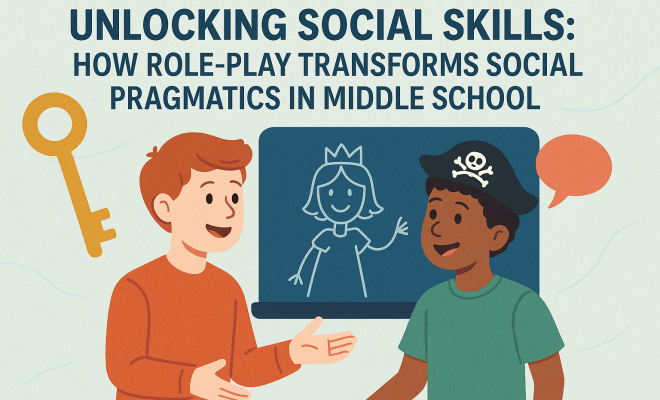
Role-play is a powerful educational tool that allows students to practice social scenarios in a safe and structured environment. Through role-play, students can explore different perspectives, experiment with various communication styles, and receive immediate feedback on their interactions. This method is particularly effective for teaching social pragmatics, as it encourages active participation and reflection.
Research indicates that engaging in role-play helps students develop empathy and better understand social cues. By stepping into someone else’s shoes, they can gain insight into how their words and actions impact others, fostering more meaningful connections.
Designing Effective Role-Play Scenarios
Creating role-play scenarios that resonate with middle school students is key to successful engagement. Here are several tips to consider:
- Relate to Real-Life Situations: Scenarios should mirror the social situations students face daily, such as navigating friendships, handling conflicts, or participating in group projects.
- Incorporate Variety: Use diverse scenarios that address a wide range of social contexts, from casual conversations to formal presentations.
- Encourage Creativity: Allow students to add their twists to scenarios, fostering creativity and investment in the role-play.
- Focus on Specific Skills: Design scenarios that target particular social pragmatic skills, such as initiating conversations, maintaining eye contact, or interpreting body language.
Implementing Social Pragmatics Role Play in the Classroom
Introducing social pragmatics role play into the curriculum requires careful planning. Here’s a step-by-step guide to effectively implement role-play activities in your classroom:
- Select Learning Objectives: Define clear objectives for what you want students to learn. For example, you might focus on non-verbal communication or conflict resolution.
- Prepare Students: Before diving into role-play, ensure students understand the goals and expectations. Discuss the importance of social pragmatics and how role-play will help them develop these skills.
- Conduct the Role-Play: Assign roles to students and provide them with the scenario details. Allow ample time for students to immerse themselves in their roles, encouraging them to act naturally.
- Facilitate Reflection: After the role-play, hold a discussion where students can reflect on their experiences. Ask guiding questions such as, “What did you find challenging?” or “How did it feel to be in that role?” This reflection helps solidify their learning.
- Provide Feedback: Offer constructive feedback on their performance, highlighting both strengths and areas for improvement.
Case Studies: Successful Implementation of Role-Play
Several educational institutions have successfully incorporated social pragmatics role play into their curricula, yielding impressive results. For instance, a middle school in California introduced a weekly role-play session focused on social skills. Over the course of a semester, teachers observed a marked improvement in students’ interpersonal interactions. Many students reported feeling more confident in their ability to communicate effectively, resulting in a decrease in conflicts and an increase in positive peer relationships.
Another case involved a school that partnered with a local theater group to facilitate role-play workshops for students. This collaboration not only made the learning process enjoyable but also allowed students to engage in more dynamic and varied scenarios. Feedback indicated that students were more willing to participate, and many expressed enthusiasm for continuing these activities beyond the classroom. (See: CDC on youth mental health.)
Challenges in Teaching Social Pragmatics
While role-play is a powerful tool, it’s not without its challenges. Some students may feel uncomfortable participating in role-play due to shyness or anxiety, which can hinder their learning experience. Others might struggle to grasp the subtleties of social interactions, making the learning process more complex.
To address these issues, educators can take several approaches:
- Foster a Safe Environment: Create a classroom atmosphere where students feel safe to express themselves without fear of judgment. This can be achieved through team-building activities and clear communication of expectations.
- Utilize Small Groups: Breaking students into smaller groups for role-play can help alleviate anxiety and give shy students a chance to participate more comfortably.
- Offer Alternative Roles: Let students choose roles that match their comfort levels. For instance, if a student is anxious about being the center of attention, they could play a supporting character.
Assessment and Evaluation of Social Pragmatics Skills
Assessing students’ social pragmatics skills can be challenging, given their subjective nature. However, incorporating assessment into role-play activities can provide valuable insight into student development. Here are several methods for evaluation:
- Observation: Teachers can observe students during role-play scenarios, noting their use of social skills such as eye contact, turn-taking, and active listening.
- Peer Feedback: Encourage students to provide feedback to one another after role-play sessions. This peer evaluation can foster collaboration and highlight different perspectives.
- Self-Assessment: Ask students to reflect on their performance and identify areas where they felt strong or struggled. Self-assessment encourages personal growth and accountability.
Current Relevance in a Digital Age
In today’s digital era, where online communication often replaces face-to-face interactions, the importance of social pragmatics is more pronounced than ever. Many students rely on text messages and social media for communication, which can impede their ability to develop crucial social skills. Role-play serves as a bridge between traditional social interaction and modern communication methods, allowing students to practice their skills in a controlled environment.
Furthermore, the rise of remote learning due to the pandemic has highlighted the need for effective social communication strategies. Educators are now tasked with finding innovative ways to teach social skills in hybrid or fully online settings. Role-play can be adapted for virtual classrooms, using breakout rooms for smaller group interactions and online platforms for collaborative scenarios.
Practical Examples of Social Pragmatics Role Play
To make the concept of social pragmatics role play more tangible, consider these sample scenarios that can be implemented in the classroom:
- Scenario 1: Initiating a Conversation: In pairs, students practice starting a conversation with a peer they don’t know well. One student takes the role of the initiator, while the other plays a person who might be shy or reserved. This scenario helps students learn how to break the ice and engage someone in dialogue.
- Scenario 2: Handling Conflict: Students role-play a situation where two teammates disagree on how to approach a project. This allows them to explore conflict resolution strategies, emphasizing the importance of active listening, compromise, and maintaining respect even when disagreements arise.
- Scenario 3: Giving Constructive Feedback: In this scenario, students take turns providing feedback on a peer’s presentation. Emphasizing the “sandwich” technique (praise, critique, praise), students learn how to convey their thoughts constructively, which is vital in both academic and personal contexts.
Statistics on Social Pragmatics and Role Play
Understanding the impact of social pragmatics can be highlighted through statistics that demonstrate the connection between social skills and overall student success. For instance:
- According to a study published in the Journal of Educational Psychology, students with strong social skills are 30% more likely to achieve academic success.
- A survey conducted by the National Institute of Mental Health found that up to 60% of adolescents with social communication difficulties experience anxiety in social situations.
- Research from the American Psychological Association indicates that students who engage in role-play activities show a 40% improvement in their ability to manage peer relationships effectively.
Expert Perspectives on Social Pragmatics Role Play
Experts in the field of education and psychology emphasize the significance of teaching social pragmatics through interactive methods such as role play. Dr. Sarah Johnson, a child psychologist, states, “Role play allows students to process social situations actively, making the learning experience relatable and applicable to their lives.” Similarly, educational consultant Mark Thompson asserts, “Incorporating social pragmatics role play in classrooms not only enhances communication skills but also prepares students to face real-world challenges.”
These perspectives underscore the value of role play in developing essential life skills that extend beyond the classroom. (See: WHO on adolescent health.)
Common Questions About Social Pragmatics Role Play
What age group benefits the most from social pragmatics role play?
While students of all ages can benefit from role play, middle schoolers are particularly receptive due to their developmental stage. This age group is navigating complex social dynamics, making it an ideal time to teach social pragmatics skills.
How often should role play be incorporated into the curriculum?
Incorporating role play once a week or bi-weekly can help reinforce skills and provide students with regular opportunities to practice. Consistency aids retention and application of learned skills.
Can role play be effective for students with special needs?
Absolutely! Role play can be adapted to meet the needs of students with special needs, providing tailored scenarios that align with their learning styles. It can foster social skills development in a supportive environment.
Are there any tools or resources to assist with role play?
Yes, there are many resources available, including books that provide role-play scenarios, online platforms that facilitate virtual role play, and workshops for educators focusing on social skills development.
How can parents support social pragmatics learning at home?
Parents can support their children by engaging in role-play activities at home, discussing social situations, and encouraging open communication about their experiences with peers. Reading books or watching films together and discussing characters’ interactions can also enhance understanding.
Expanding the Role of Social Pragmatics in Education
Beyond the confines of middle school, understanding social pragmatics is vital for success in higher education and the workplace. As students prepare for high school and beyond, the ability to navigate complex social situations becomes increasingly important. Many colleges and universities have recognized this need, integrating workshops and seminars focused on social skills into their orientation programs. These initiatives often utilize role-play to simulate real-world interactions, helping students acclimate to their new environments.
In the workplace, employers highly value individuals who can communicate effectively and work well with others. A study by the National Association of Colleges and Employers found that 70% of employers seek candidates with strong interpersonal skills, underscoring the enduring importance of social pragmatics throughout a student’s life.
The Long-Term Benefits of Social Pragmatics Role Play
Engaging in social pragmatics role play not only addresses immediate classroom dynamics but also lays the groundwork for lifelong social competence. Students who participate in these exercises often report increased confidence in social settings, improved relationships with peers, and a greater ability to handle stressful interactions. Over time, these skills contribute to better mental health outcomes, as strong social networks are linked to lower levels of anxiety and depression.
Additionally, equipping students with social pragmatics skills can enhance their leadership potential. As they learn to communicate effectively and empathize with others, students become more capable of leading group projects, participating in community service, and taking on roles that require collaboration.
Integrating Technology with Social Pragmatics Role Play
As technology continues to advance, integrating digital tools into social pragmatics role play can enhance the learning experience. Virtual reality (VR) and augmented reality (AR) platforms are emerging as innovative methods for simulating real-life social interactions. These technologies allow students to engage in role play scenarios that are immersive and realistic, providing them with opportunities to practice social skills in environments that mimic real-world settings.
For instance, a VR program might place students in a virtual café where they must initiate conversations, resolve conflicts, or provide feedback—all essential social pragmatics skills. By navigating these scenarios in a safe, controlled setting, students can build confidence and improve their abilities without the fear of real-world consequences.
Real-World Applications of Social Pragmatics Skills
The skills developed through social pragmatics role play extend into various real-world applications. For example, consider the realm of customer service. Employees in this field must possess strong social pragmatics skills to effectively communicate with customers, resolve conflicts, and provide exceptional service. Training programs for customer service representatives often include role-play exercises to help employees practice responding to different customer scenarios.
Similarly, in healthcare, professionals engage in role play to improve their communication with patients. Medical students often participate in simulations where they must communicate a diagnosis or deliver bad news, honing their skills in empathy and effective communication—key components of social pragmatics.
Conclusion: The Future of Teaching Social Pragmatics
As we continue to understand the importance of social pragmatics in education, it becomes clear that role-play is an invaluable method for teaching these skills. With its ability to foster empathy, improve communication, and build confidence, role-play can empower students to navigate the complexities of social interactions. As educators, it’s essential to embrace innovative strategies like social pragmatics role play, ensuring that our students are well-equipped for their social futures.
“`
Trending Now
- Unlocking Student Potential: How Scaffolding in Competency-Based Education Transforms Learning
- 7 Proven Scaffolding Techniques for Advanced…
- this guide on unlocking communication: essential strategies for teaching pragmatics to students with autism
- this guide on how scaffolding executive function can transform learning for kids
Frequently Asked Questions
What are social pragmatics in middle school?
Social pragmatics refers to the social use of language and the rules governing interactions in various contexts. It includes skills like understanding non-verbal cues, recognizing social norms, and adapting communication styles, which are vital for middle school students as they navigate complex social dynamics.
How does role-play help with social skills?
Role-play is an effective educational tool that allows students to practice social scenarios in a safe environment. It encourages active participation, experimentation with communication styles, and provides immediate feedback, which helps students develop empathy and improve their social pragmatics.
Why are social skills important for middle school students?
Social skills are crucial for middle school students as they influence their ability to form friendships, collaborate with peers, and engage in group activities. Mastering social pragmatics can prevent isolation and enhance their overall academic and social experience.
What practical strategies can be used for teaching social pragmatics?
Practical strategies for teaching social pragmatics include structured role-play activities, guided discussions on social norms, and using real-life scenarios for practice. These methods foster understanding and mastery of social interactions among middle school students.
What challenges do middle school students face with social interactions?
Middle school students often face challenges such as navigating changing social dynamics, understanding complex social cues, and adapting their communication styles. Struggles with social pragmatics can lead to difficulties in relationships and academic performance.
What did we miss? Let us know in the comments and join the conversation.