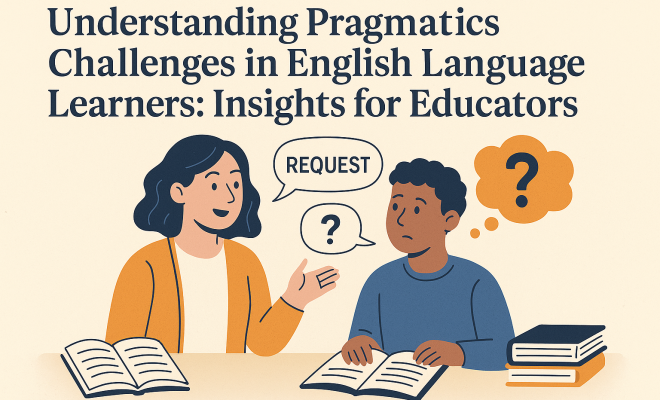
Pragmatics Challenges for English Language Learners: Educator Insights
“`html
In an increasingly globalized world, understanding language extends beyond grammar and vocabulary. One area that is crucial yet often overlooked is pragmatics in English language learners. Pragmatics involves the rules and conventions that govern language use in social contexts, including how meaning is constructed through context, tone, and non-verbal cues. For educators, grasping these nuances can significantly enhance their teaching strategies and offer better support to students navigating the complexities of the English language.
What is Pragmatics?
Pragmatics is a branch of linguistics that studies how people use context to interpret meaning. Unlike semantics, which deals with the literal meanings of words, pragmatics focuses on how language is used in practice. It encompasses a variety of elements, including:
- Context: The circumstances surrounding a conversation, which can shape its meaning.
- Non-verbal communication: Body language, gestures, and facial expressions that supplement verbal communication.
- Speech acts: Actions performed via speaking, such as requests, commands, and apologies.
- Implicature: The implied meanings that go beyond the literal interpretation.
When students learn English, they often focus on grammar and vocabulary but may struggle with pragmatics. This gap can lead to misunderstandings and communication breakdowns, something that teachers need to be aware of.
The Importance of Pragmatics in Language Learning
Understanding pragmatics is essential for effective communication. For English language learners (ELLs), the ability to navigate pragmatic rules can significantly impact their social interactions, academic performance, and overall language proficiency. Here are a few reasons why pragmatics is vital:
- Social Integration: ELLs who grasp pragmatic norms are better equipped to interact socially, forming friendships and participating in community activities.
- Academic Success: Mastering pragmatics can aid in understanding classroom discourse, including group discussions and presentations.
- Reduced Miscommunication: Awareness of contextual cues helps ELLs to interpret and respond appropriately to various communicative situations.
In essence, pragmatics serves as a bridge between linguistic knowledge and practical communication skills, a bridge that is often unconstructed for many ELLs.
Common Pragmatic Challenges Faced by ELLs
While every learner is unique, several common challenges repeatedly surface among English language learners regarding pragmatics:
1. Contextual Understanding
Many ELLs find it challenging to interpret language within context. Cultural references, idiomatic expressions, and even humor can be lost on them, leading to confusion. For instance, an expression like “kick the bucket” may leave a learner puzzled if they interpret it literally without understanding its idiomatic meaning of death.
2. Non-Verbal Communication
Non-verbal cues play a significant role in communication. Differences in body language, such as eye contact, gestures, and physical distance, can lead to misinterpretations. For example, while direct eye contact is seen as a sign of confidence in many Western cultures, it may be perceived differently in other cultures, where it can signify disrespect or aggression.
3. Speech Acts
Many ELLs struggle with understanding and performing various speech acts. A student may not realize that a phrase like “Could you pass the salt?” is not a mere question but actually a polite request. This misunderstanding can lead to awkward social interactions where the learner might either respond inappropriately or remain silent.
4. Implicature and Indirectness
In many English-speaking cultures, being indirect can be a way to communicate effectively. However, ELLs may not grasp the nuances of implicature, leading them to take statements too literally. For instance, saying, “It’s a bit chilly in here, isn’t it?” might be a subtle request to close a window, but a learner might simply agree or state that the temperature is indeed cool, missing the implied request.
Strategies for Teaching Pragmatics
Teachers can employ various strategies to help ELLs navigate the challenges of pragmatics in English:
1. Explicit Instruction
Directly teaching pragmatic rules can be beneficial. This can involve discussing the functions of language in different contexts, such as formal versus informal settings. Role-playing activities can simulate real-life situations, allowing students to practice and understand the appropriate use of language.
2. Use of Real-Life Contexts
Integrate authentic materials such as videos, podcasts, and articles that showcase language in use. Analyzing dialogues from movies or TV shows can help students observe how native speakers navigate pragmatic challenges, such as humor, sarcasm, or politeness strategies. (See: Understanding pragmatics in linguistics.)
3. Encourage Peer Interaction
Group work or partner activities can provide opportunities for ELLs to practice their pragmatic skills in a supportive environment. Encourage students to engage in discussions, debates, and presentations where they can experiment with language use and receive immediate feedback.
4. Cultural Awareness Activities
Integrating cultural discussions into the curriculum can benefit ELLs. Understanding cultural norms associated with language use helps them grasp pragmatic rules more effectively. Teachers can facilitate discussions about cultural differences in communication styles, body language, and conversational norms.
The Role of Feedback
Feedback is a powerful tool in any learning environment, and it is especially vital when it comes to pragmatics. Teachers should provide constructive feedback that addresses both successful communicative acts and areas for improvement. This can help ELLs feel more comfortable experimenting with language and understanding its nuances.
1. Immediate Feedback
Offering immediate corrections or suggestions during practice can help students recognize and adjust their pragmatic use in real-time. For example, if a student uses an awkward phrase in a conversation, gently correcting them can reinforce learning.
2. Encouraging Self-Assessment
Encouraging students to reflect on their interactions can lead to greater self-awareness. After a speaking activity, ask students to evaluate how well they navigated the conversation, identifying any pragmatic missteps they encountered.
Assessing Pragmatic Competence
Assessment of pragmatic competence can be challenging, but it is essential for tracking progress in ELLs. Traditional tests may not adequately capture a student’s pragmatic abilities, so alternative evaluation methods should be considered:
1. Observational Assessments
Teachers can conduct observational assessments during group activities or discussions. Note how students use language in context, their ability to read non-verbal cues, and their understanding of various speech acts.
2. Role-Playing Scenarios
Incorporating role-playing into assessments allows students to demonstrate their pragmatic skills in action. Create scenarios that require the use of pragmatics—like asking for help or making an apology—and evaluate their performance based on appropriate language use.
3. Journaling
Have students maintain a language learning journal where they reflect on their experiences using English. They can write about specific situations where they felt successful or struggled with pragmatics, helping them articulate their learning journey.
Current Relevance and Future Directions
As our classrooms become increasingly diverse, the focus on pragmatics in English language learners is more relevant than ever. Educators play a crucial role in preparing students for real-world interactions, and understanding pragmatics can significantly impact their success.
With the rise of technology, virtual classrooms, and online communication, new pragmatic challenges have emerged. Teachers must be equipped to address these in both face-to-face and digital interactions. This includes helping students navigate tone in emails, understanding emojis in text communication, and adjusting language for different online platforms.
Advanced Pragmatics: Nuances and Implications for ELLs
As students become more proficient in English, understanding the deeper nuances of pragmatics can further enhance their communication skills. Advanced pragmatics includes the understanding of politeness strategies, speech community norms, and discourse markers, which can differ greatly across cultures. For example, the way politeness is conveyed can vary widely; in some cultures, directly stating a request is considered rude, whereas in others, it is seen as frankness. Educators should introduce these advanced concepts to ELLs to prepare them for interactions in a multicultural and multilingual world.
The Role of Speech Communities
Speech communities refer to groups of people who share a set of norms regarding language use. Understanding the norms of specific speech communities can help ELLs navigate social contexts more effectively. For instance, academic discourse differs from everyday conversation, and learners must adapt their language accordingly. Educators can facilitate this understanding by exposing students to various speech communities within the classroom, highlighting differences in language use, and providing opportunities for students to engage in various discourse forms.
Examples of Pragmatics in Real-Life Scenarios
Pragmatics comes to life in specific, real-world situations where understanding the unspoken rules of language is crucial. Here are a few examples that illustrate the complexities of pragmatics for ELLs: (See: Importance of communication skills.)
1. Navigating a Job Interview
In a job interview context, understanding pragmatics can determine a candidate’s success. For instance, if an interviewer asks, “What do you do for fun?” the expected response isn’t just a factual answer but can also involve demonstrating enthusiasm and cultural fit. A student who responds with a simple “I play soccer” might miss the opportunity to elaborate on what it means to them personally. They could share how soccer fosters teamwork, indicating valuable soft skills that employers look for.
2. Participating in Group Work
In a classroom setting, group work often requires both verbal and non-verbal communication skills. For example, if a group member says, “Let’s take a vote,” a learner needs to understand not just the literal meaning but also the implied expectation of participation and collaboration. If they don’t recognize the importance of this context, they might abstain, leading to feelings of exclusion.
3. Using Humor in Conversation
Humor can be particularly tricky for ELLs as it often relies on shared cultural knowledge and language subtleties. Jokes can fall flat if the learner doesn’t pick up on the cultural references or linguistic playfulness involved. For instance, puns require a dual understanding of language and humor, and if they aren’t familiar with the wordplay, the joke may not resonate. Educators can introduce examples of humor from various cultures and encourage students to share jokes from their backgrounds, opening up avenues for deeper understanding.
Statistics on Pragmatics and Language Learning
Research highlights the significant impact of pragmatic skills on the success of English language learners. A study conducted by the International Society for Language Studies found that over 60% of ELLs reported difficulties with pragmatic aspects of communication, leading to feelings of frustration and isolation. Furthermore, a survey by the Teaching English as a Second Language International Association indicated that classrooms focusing on pragmatic instruction saw a 40% increase in student confidence during conversations.
Frequently Asked Questions about Pragmatics in English Language Learners
1. Why is pragmatics important for English language learners?
Pragmatics is essential for ELLs because it enables them to understand and participate in meaningful interactions within their social and academic environments. Mastering pragmatics helps them avoid misunderstandings, integrate socially, and succeed academically.
2. How can teachers effectively teach pragmatics?
Teachers can adopt various methods, including role-playing, explicit instruction, and using authentic materials. Encouraging peer interactions and incorporating cultural discussions can also enhance students’ pragmatic skills.
3. What are some signs that an ELL is struggling with pragmatics?
Signs include frequent misunderstandings in conversation, difficulty interpreting non-verbal cues, and a tendency to take statements literally. If an ELL often seems confused or withdrawn in social settings, it may indicate a lack of pragmatic understanding.
4. Can pragmatics be taught to young ELLs?
Absolutely! Teaching pragmatics can start at a young age by using interactive and engaging activities. Through games, role-play, and storytelling, young learners can grasp basic pragmatic concepts effectively.
5. How can technology aid in teaching pragmatics?
Technology provides various tools that can enhance pragmatic learning. Online platforms, video conferencing, and interactive language apps can create simulated real-life scenarios where ELLs can practice their pragmatic skills. Additionally, watching authentic media content can expose learners to natural language use.
Conclusion: Embracing Pragmatics for Effective Teaching
Pragmatics in English language learners is a multi-faceted issue that requires a comprehensive approach from educators. By recognizing the challenges and implementing effective teaching strategies, teachers can empower students to communicate confidently and competently in English. Ultimately, fostering pragmatic skills in ELLs not only supports their language acquisition but also enriches their social experiences, propelling them toward success in an interconnected world.
Pragmatics and Cultural Context
To fully grasp pragmatics, one must also understand its ties to cultural context. Language is deeply embedded in cultural practices and belief systems, and how people use language often reflects those cultural nuances. For instance, the notion of politeness and how it is expressed can vary widely across different cultures. In East Asian cultures, indirectness is often preferred and considered more polite, while in many Western cultures, directness is associated with honesty and transparency.
This cultural variance in communication styles means that ELLs can benefit significantly from cultural immersion experiences. Engaging with local communities can provide them with real-life contexts where they can observe and practice pragmatic norms. Schools can organize cultural exchange programs, invite guest speakers, or facilitate cultural fairs that celebrate diversity in communication. (See: Language and communication development.)
Pragmatics in the Digital Age
In today’s world, digital communication has introduced new pragmatic challenges. The use of emojis, GIFs, and informal language in text messages can often lead to misunderstandings among ELLs. Students adept in face-to-face communication may struggle to interpret tone and intent without the visual and auditory cues they are accustomed to in person.
To address this, educators should incorporate lessons that focus on digital literacy. This includes discussing how to convey tone in written communication, the significance of emojis, and how to interpret digital discourse. Lessons could involve analyzing text messages or social media posts, prompting discussions about how digital mediums alter pragmatic norms. By integrating these lessons, teachers can better prepare ELLs for effective communication in both social and professional digital environments.
Pragmatics and Emotional Intelligence
Emotional intelligence plays a significant role in one’s ability to navigate pragmatics effectively. It involves recognizing one’s own emotions as well as the emotions of others, which is crucial in understanding context and responding appropriately. ELLs may find it challenging to read emotional cues due to language barriers, which can impact their social interactions. This is where educators can step in by promoting activities that enhance emotional intelligence through role-play and group discussions.
For example, role-playing scenarios that involve conflict resolution can help students practice interpreting emotional cues and responding appropriately. Group discussions about character motivations in literature can also foster an understanding of different emotional perspectives. Such activities not only enhance language skills but also build empathetic communication—an essential component of effective pragmatics.
Case Study: An ELL’s Journey through Pragmatic Learning
Consider the case of Maria, a Spanish-speaking ELL who moved to the United States at the age of 10. Initially, Maria struggled with understanding local idioms and the subtleties of social interactions. For instance, during a group project, when a peer suggested, “We should brainstorm some ideas,” Maria took it literally and sat in silence, unsure how to contribute.
With the support of her teacher, who implemented explicit instruction on speech acts and contextual understanding, Maria began to thrive. Through role-playing and peer interactions, she learned that “brainstorming” was an invitation to share ideas, not just a command. Over time, she became more confident in her contributions, even sharing her own cultural expressions, which enhanced her peers’ understanding of language diversity.
This case highlights the importance of tailored support for ELLs. By recognizing individual challenges and providing focused strategies, educators can facilitate an environment where students like Maria can develop their pragmatic skills alongside their language proficiency.
The Future of Pragmatic Learning in ELL Education
As the field of language education continues to evolve, the focus on pragmatics will likely gain even more prominence. With the increasing diversity of classrooms and the integration of technology, educators must stay informed about the latest research and methods for teaching pragmatics. Collaborative projects, community engagement, and ongoing professional development will be key components in preparing teachers to address the unique needs of their students.
Furthermore, future research could explore innovative approaches to pragmatics instruction, such as virtual reality simulations that immerse students in real-world communicative scenarios. Such advancements could enhance the learning experience, making it more engaging and relevant to students’ lives. As we look ahead, it is clear that a strong emphasis on pragmatics will shape the future of English language education, preparing ELLs for successful interactions in an interconnected world.
“`
Trending Now
- read the full story
- our breakdown of 7 proven scaffolding techniques for advanced placement classes that boost student success
- this guide on how scaffolding executive function can transform learning for kids
- our breakdown of unlocking the power of pragmatics in language development: a parent’s essential guide
Frequently Asked Questions
What is pragmatics in language learning?
Pragmatics is a branch of linguistics that examines how context influences the interpretation of meaning in communication. It encompasses aspects like context, non-verbal cues, speech acts, and implicature, which are essential for effective interaction, especially for English language learners.
Why is pragmatics important for English language learners?
Pragmatics is crucial for English language learners as it impacts their social integration, academic success, and overall language proficiency. Understanding pragmatic norms helps them navigate social interactions and enhances their ability to communicate effectively in various contexts.
How can educators support English language learners with pragmatics?
Educators can support English language learners by incorporating pragmatic teaching strategies, such as role-playing, contextualized learning, and explicit instruction on non-verbal communication. This approach helps students better understand social cues and improves their communication skills.
What challenges do English language learners face with pragmatics?
English language learners often struggle with pragmatics due to a lack of exposure to cultural norms and non-verbal cues. This gap can lead to misunderstandings and communication breakdowns, making it essential for educators to address these challenges in their teaching.
What elements are included in pragmatics?
Pragmatics includes several elements such as context, non-verbal communication (like gestures and body language), speech acts (requests, commands, apologies), and implicature, which refers to implied meanings beyond the literal interpretation of words.
Have you experienced this yourself? We’d love to hear your story in the comments.