“Visual, Auditory, and Kinesthetic Learning Styles: Myth or Meaningful Framework?”
“`html
The concept of learning styles has captivated educators, psychologists, and students alike for decades. The idea that individuals absorb and process information differently is appealing – it suggests personalized education tailored to each student’s strengths. Among these styles, the most widely recognized are visual, auditory, and kinesthetic learning. But is this framework a meaningful tool for enhancing education, or merely a myth? In this article, we’ll explore the origins of these learning styles, their practical implications, and the current debates surrounding them.
Understanding Learning Styles
The idea of learning styles can be traced back to the 1920s, with psychologist Carl Jung’s theories about personality and cognition. However, the modern interpretation began gaining traction in the 1970s, thanks in large part to educational theorists like Howard Gardner, who proposed the theory of multiple intelligences, and Neil Flemin, who introduced the VAK model (Visual, Auditory, Kinesthetic).
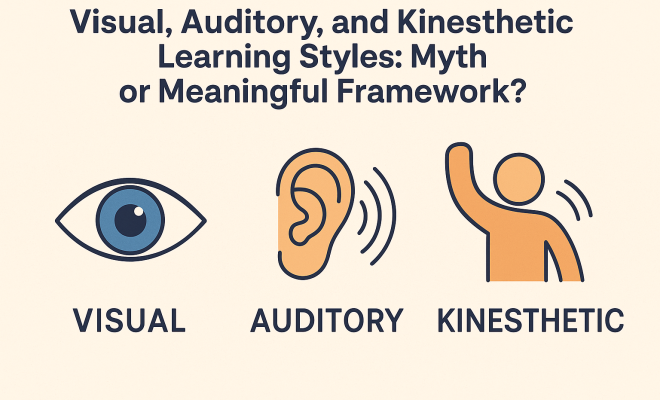
According to this model, people have preferred ways of learning based on sensory modalities. Visual learners benefit from diagrams, charts, and written instructions. Auditory learners thrive through listening to lectures and discussions. Kinesthetic learners grasp concepts best through hands-on activities and movement. This framework quickly gained popularity in classrooms worldwide and seemed to provide a simple way for educators to tailor instruction to diverse learning needs.
The Appeal of Learning Styles
What makes the concept of learning styles so enticing? It offers a sense of empowerment. By categorizing students based on their preferred learning methods, educators can foster an inclusive environment where every student feels recognized and valued. Furthermore, it promotes the idea that one doesn’t have to struggle with learning if the right approach is applied.
This approach also aligns with a more individualized educational philosophy that has gained momentum in recent years. All students have unique backgrounds, interests, and experiences, which contribute to how they learn. By acknowledging these differences, teachers can create a more engaging and effective classroom atmosphere.
The Evidence Behind Learning Styles
Despite the popularity of learning styles, scientific scrutiny has raised questions about their validity. A comprehensive analysis in 2015 by researchers at the University of Virginia found little evidence to support the efficacy of teaching according to students’ learning styles. The study suggested that the idea of matching teaching methods to learning styles lacks a robust empirical foundation.
Moreover, a 2021 meta-analysis examined dozens of studies on learning styles and concluded that students perform just as well when taught using methods not aligned with their preferred style. This has led many in the academic community to question the practical impact of learning styles on education.
Criticism of the Learning Styles Framework
Critics argue that the learning styles framework oversimplifies the complexities of how people learn. Psychologist Barbara Rogoff emphasizes that learning is a dynamic and context-dependent process. Instead of fitting students into predefined categories, a more flexible approach that considers diverse cognitive strategies may be more beneficial. (See: Harvard Business School research.)
Another concern is the risk of pigeonholing students into specific learning styles. Labeling a student as a “visual learner” may inadvertently limit their exposure to other valuable learning experiences. This narrow categorization can hinder a student’s ability to adapt and learn in various contexts.
Current Trends and Perspectives
The debate surrounding learning styles has prompted a shift in educational approaches. Rather than focusing solely on matching instruction to learning preferences, many educators are adopting a more integrative model that encourages using multiple modalities in teaching. This approach acknowledges that individuals can learn effectively through various methods, irrespective of their preferred styles.
For instance, a history lesson might incorporate a video (visual), a discussion (auditory), and a group project (kinesthetic). This multi-modal strategy not only caters to diverse learners but also enriches the educational experience for everyone. As technology evolves, tools such as interactive simulations and virtual reality are enabling educators to create even more engaging and varied learning environments.
Practical Insights for Educators
Given the ongoing debates about learning styles, how can educators best approach their teaching strategies? Here are some practical insights:
- Encourage Flexibility: Foster an environment where students can explore different learning modalities. Encourage them to engage with various types of content and teaching methods.
- Assess Understanding: Utilize formative assessments that allow students to demonstrate knowledge in ways that suit them, regardless of their preferred learning style.
- Promote Collaboration: Group projects that require collaboration among students with different strengths can create opportunities for peers to learn from one another.
- Incorporate Technology: Use educational technology to provide diverse learning experiences that can cater to multiple learning styles simultaneously.
- Encourage Self-Awareness: Help students reflect on their own learning processes. This can empower them to identify strategies that work best for them, regardless of predefined categories.
Implications for Future Research
The ongoing discourse surrounding learning styles underscores the need for more nuanced research into how people learn. Future studies should focus not only on the effectiveness of different teaching methods but also on the interplay between individual preferences, cultural contexts, and environmental factors.
Additionally, researchers could explore the impact of technology on learning styles. As online learning becomes more prevalent, understanding how digital environments affect learning preferences will be crucial in shaping future educational practices.
Examples in Practice: Real-World Applications
To illustrate how the concept of learning styles is applied in real-life educational settings, consider a few examples:
- Project-Based Learning: Many schools have adopted project-based learning (PBL) as a way to incorporate various learning styles. In a PBL environment, students engage in projects that require research, collaboration, and hands-on activity. This model not only caters to visual, auditory, and kinesthetic learners but also encourages critical thinking and problem-solving.
- Differentiated Instruction: Teachers often employ differentiated instruction strategies to address the diverse needs of their students. For instance, a teacher might present a topic through a lecture (auditory), followed by a video (visual), and then allow students to create a model (kinesthetic). This approach ensures all learners can engage with the material in a way that resonates with them.
- Flipped Classrooms: The flipped classroom model allows students to engage with lecture materials at home through videos (visual) and come to class prepared to participate in discussions (auditory) or hands-on activities (kinesthetic). This format caters to a range of learning styles while promoting active engagement.
Statistics on Learning Preferences
Understanding the proportions of different learning preferences among students can help educators devise more effective strategies. According to a survey conducted by the International Society for Technology in Education (ISTE), approximately:
- 65% of learners identify as visual learners.
- 30% prefer auditory methods.
- 5% are kinesthetic learners.
These statistics highlight the overwhelming preference for visual learning, suggesting that educators should prioritize visual aids in their teaching methods.
Expert Perspectives on Learning Styles
Experts in education and psychology offer varying viewpoints on the validity of learning styles. Dr. Daniel Willingham, a cognitive scientist, argues that while students may have preferred learning modalities, there’s no strong evidence that teaching to these preferences enhances learning outcomes. He suggests focusing on evidence-based practices instead of fitting teaching into a learning style framework.
On the other hand, Dr. Rita Dunn, an advocate for learning styles, emphasizes the importance of recognizing individual differences in the classroom. She argues that while research may challenge the notion of fixed learning styles, the acknowledgment of diverse preferences can lead to more engaging teaching strategies.
FAQ About Learning Styles
What are the most common learning styles?
The most common learning styles include visual (learning through seeing), auditory (learning through listening), and kinesthetic (learning through doing). Some people also identify as reading/writing learners, who prefer to learn through written text, and interpersonal learners, who thrive in social settings.
How can I identify my learning style?
You can identify your learning style through self-reflection and by noticing how you prefer to absorb information. Consider the methods that work best for you — do you remember things better when you see them, hear them, or engage in hands-on activities? Various online quizzes and questionnaires can also offer insights into your learning preferences.
Are learning styles fixed throughout a person’s life?
Learning styles can evolve over time, influenced by experiences, education, and changes in one’s environment. While you may have a preferred style, it’s also beneficial to develop flexibility in how you learn as different contexts may require different approaches.
Can educators still use the concept of learning styles?
While some experts caution against rigidly categorizing students into learning styles, educators can still recognize individual differences and adapt their teaching strategies to include a variety of methods. A blended approach that combines different modalities may enhance overall learning without strictly adhering to the learning styles framework.
Practical Strategies for Implementing Learning Styles
Understanding learning styles isn’t just an academic exercise; it’s about applying strategies to enhance educational outcomes. Here are some practical strategies that educators can implement:
- Interactive Learning Stations: Set up different stations in the classroom, each catering to a different learning style. For example, one station could have visual aids and posters, another could focus on discussing concepts in pairs or groups, and another could allow students to engage in hands-on activities related to the subject matter. This setup encourages students to experience different modalities and discover what resonates with them.
- Use of Multimedia: Incorporate multimedia presentations into your teaching. Videos, podcasts, infographics, and interactive quizzes can cater to various learning preferences simultaneously. For example, a lesson on ecosystems might include a video tour of a rainforest, followed by a group discussion, and culminating in a hands-on experiment or project.
- Student Choice Projects: Allow students to choose how they want to present a project. Some might prefer to create a visual poster, while others might opt for a presentation or a performance. This flexibility acknowledges individual preferences and encourages students to engage more deeply with the material.
- Peer Teaching: Encourage students to teach each other. This approach can be especially beneficial in diverse classrooms. Students who feel confident in their knowledge can explain concepts to their peers in ways that are relatable and understandable, reinforcing their own learning in the process.
- Feedback Loop: Create a system for feedback where students can share which methods help them learn best. This can help educators adapt their teaching methods continually and ensure that instruction remains effective and engaging.
Learning Styles Across the Curriculum
Learning styles shouldn’t just be an isolated topic; they can be integrated across various subject areas. Here’s how different subjects can utilize the concept of learning styles:
- Mathematics: For visual learners, teachers can use graphs and visual representations of problems. Auditory learners might benefit from verbal explanations of mathematical concepts, while kinesthetic learners could use physical objects to solve problems, such as blocks or counters.
- Science: In science classes, experiments cater to kinesthetic learners, while lectures cater to auditory learners. Visual learners can benefit from diagrams and illustrations of scientific concepts. Collaborative projects can also blend all styles, allowing students to engage on multiple levels.
- Language Arts: Students can engage in reading and writing activities that cater to different styles. Visual learners might create storyboards, auditory learners could participate in group read-alouds, and kinesthetic learners can act out scenes from a story or create physical representations of themes.
- History: Rather than just lecturing, history teachers can include documentaries, debates, and role-playing activities. Visual learners can analyze maps and timelines, auditory learners can engage in discussions, and kinesthetic learners can recreate historical events through simulations.
Future Directions in Learning Styles Research
As educational practices evolve, so too must our understanding of learning styles. Future research should aim to:
- Investigate the Role of Culture: Different cultures may approach learning in unique ways. Exploring how cultural backgrounds influence learning preferences could provide deeper insights into effective teaching methods.
- Examine the Impact of Emotional Factors: Emotional well-being can significantly affect learning. Researching how emotions interact with learning styles can open new pathways to tailoring instruction that is sensitive to students’ emotional needs.
- Integrate Neuroscience: As neuroscience continues to advance, understanding how the brain processes information can provide valuable perspectives on learning styles and preferred teaching methodologies.
- Longitudinal Studies: Conducting longitudinal studies that track changes in learning preferences over time can offer insights into how students adapt to different educational environments as they progress through their learning journeys.
Conclusion: A Balanced Approach
While the concept of learning styles has been met with skepticism, it remains a part of the conversation in educational theory. It’s clear that a one-size-fits-all approach to education is ineffective, but categorizing students’ learning preferences may not be the best solution either. Instead, a balanced approach that incorporates varied teaching methods while respecting individual differences may pave the way for more effective learning experiences.
As educators continue to refine their practices, it is essential to remain open to new ideas and research findings. The ultimate goal should be to create an inclusive, engaging, and adaptable learning environment that prepares students for the complexities of the world beyond the classroom.
“`
Trending Now
Frequently Asked Questions
What are the different learning styles?
The different learning styles typically include visual, auditory, and kinesthetic modalities. Visual learners prefer diagrams and charts, auditory learners thrive on listening to lectures and discussions, while kinesthetic learners grasp concepts best through hands-on activities and movement.
Are learning styles a myth?
The concept of learning styles has been debated extensively. While many educators find the framework appealing for personalizing education, research suggests that the effectiveness of tailoring instruction to specific learning styles may not be supported by empirical evidence, leading some to label it a myth.
How can understanding learning styles help students?
Understanding learning styles can help students by providing them with strategies that align with their preferred methods of learning. This can create a more engaging and effective educational experience, making it easier for them to absorb and retain information.
Who proposed the learning styles theory?
The modern interpretation of learning styles gained traction in the 1970s, largely due to the work of educational theorists such as Howard Gardner, who introduced the theory of multiple intelligences, and Neil Fleming, who developed the VAK model focusing on Visual, Auditory, and Kinesthetic learning.
Why are learning styles popular in education?
Learning styles are popular in education because they offer a sense of empowerment and inclusivity. By categorizing students based on their learning preferences, educators can create tailored instructional approaches that recognize and value each student's unique strengths.
What’s your take on this? Share your thoughts in the comments below — we read every one.