Scaffolding in Competency-Based Education: Transform Learning
“`html
In the modern educational landscape, educators are constantly seeking strategies that effectively support student learning and development. One such approach that has gained traction is scaffolding in education, particularly within the context of competency-based education (CBE). This method not only enhances student engagement but also fosters a deeper understanding of material. In this guide, we’ll explore the concept of scaffolding, its importance in CBE, and practical strategies for implementation in the classroom.
Understanding Scaffolding in Education
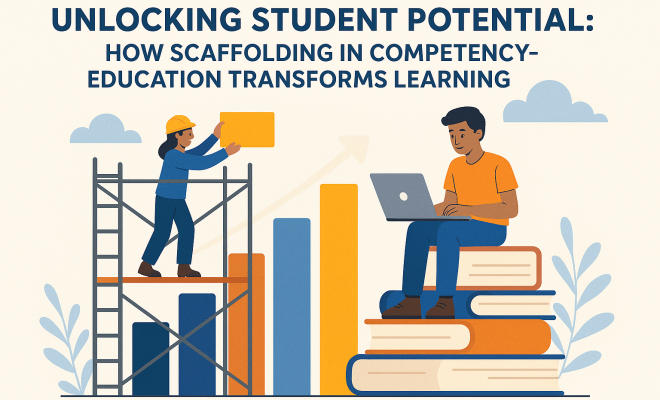
Scaffolding in education refers to the support provided to students as they develop new skills or knowledge. The term, borrowed from construction, emphasizes building knowledge incrementally and providing temporary support to help students reach higher levels of understanding. Just as scaffolding for a building is removed once the structure is stable, educational scaffolding is gradually taken away as students gain independence in their learning.
The concept of scaffolding can be traced back to the work of cognitive psychologist Lev Vygotsky, who introduced the idea of the Zone of Proximal Development (ZPD). This framework suggests that students learn best when they are working just beyond their current abilities, with the right support. Scaffolding, therefore, acts as that necessary support, allowing students to tackle challenging tasks while still feeling guided and secure. (essential learning apps)
The Significance of Scaffolding in Competency-Based Education
Competency-based education is fundamentally different from traditional education models. Rather than following a set timeline, CBE focuses on the mastery of skills and knowledge before students progress. This requires a nuanced approach to teaching—one that scaffolding can effectively provide. Here’s why scaffolding is particularly crucial in a competency-based environment:
- Personalized Learning: CBE allows for individualized learning paths, and scaffolding supports this by adapting to each student’s unique needs.
- Promotes Mastery: By breaking down complex skills into smaller, manageable components, students can achieve mastery in a step-by-step manner.
- Increased Student Engagement: Scaffolding keeps students actively engaged in their learning, as they are more likely to participate when they have clear guidance.
- Confidence Building: With appropriate support, students feel more capable of tackling difficult tasks, which in turn builds their confidence and willingness to take on new challenges.
Key Components of Scaffolding
Successful scaffolding in education encompasses several key components. Understanding these can help educators implement effective strategies in their classrooms:
- Modeling: Demonstrating a skill or strategy is often the first step in scaffolding. By showing students how to approach a task, teachers provide a clear example to follow.
- Think-Alouds: This technique involves verbalizing the thought process behind problem-solving or decision-making, allowing students to understand the rationale behind certain approaches.
- Guided Practice: Once students have seen a model, they can engage in guided practice where the teacher provides support but gradually steps back as students become more proficient.
- Feedback: Timely, constructive feedback is crucial in scaffolding. It helps students understand their strengths and areas for improvement, guiding their learning journey.
- Gradual Release of Responsibility: This principle involves shifting the responsibility for learning from the teacher to the student over time, allowing them to become independent learners.
Practical Strategies for Implementing Scaffolding in CBE
Now that we understand the significance of scaffolding and its key components, let’s explore some practical strategies for implementing this approach effectively in competency-based education:
1. Break Down Learning Objectives
Instead of presenting broad learning objectives, break them down into specific, manageable tasks. For instance, if you’re teaching a complex concept like fractions, start with understanding numerators and denominators before moving on to operations with fractions. This allows students to build their understanding gradually.
2. Use Collaborative Learning
Encourage students to work together in small groups. Collaborative learning not only provides peer support but also allows students to learn from each other’s perspectives. As they explain concepts to their peers, they reinforce their own understanding while also receiving scaffolding from classmates.
3. Incorporate Technology Tools
Technology can play a significant role in scaffolding. Utilize educational software that allows for personalized learning experiences. Tools such as interactive simulations or instructional videos can guide students through complex concepts at their own pace.
4. Utilize Visual Aids
Visual aids can help students grasp difficult concepts more easily. Charts, graphs, and diagrams serve as scaffolds that provide visual support. For instance, using a concept map can help students organize their thoughts and see connections among ideas. (See: Scaffolding in learning.)
5. Foster Reflection
Encourage students to reflect on their learning experiences. Reflection can be facilitated through journals, discussions, or portfolios. By thinking about what they’ve learned and how they approached various tasks, students can develop metacognitive skills that enhance their learning.
Assessing Student Progress in a Scaffolding Framework
Assessment is a pivotal aspect of competency-based education. It not only measures student understanding but also informs instructional decisions. In a scaffolding approach, assessment can take various forms:
- Formative Assessments: These ongoing assessments, such as quizzes or in-class activities, provide immediate feedback and highlight areas where students may need additional support.
- Summative Assessments: At the end of a unit or module, summative assessments evaluate overall mastery of competencies. They should align with the skills and knowledge that were scaffolded throughout the learning process.
- Self-Assessments: Encourage students to assess their own learning. This practice fosters self-efficacy and allows students to identify their strengths and weaknesses.
Challenges and Considerations in Scaffolding
While the benefits of scaffolding in competency-based education are clear, there are challenges educators may face in its implementation:
- Resource Availability: Not all educational institutions have access to the necessary resources, such as technology or training, to effectively implement scaffolding strategies.
- Time Constraints: Teachers often face time limitations when it comes to delivering content, making it challenging to incorporate extensive scaffolding techniques.
- Diverse Learning Needs: Classrooms are filled with students who possess varying levels of understanding and learning styles. Tailoring scaffolding to meet these diverse needs can be daunting.
Despite these challenges, educators can overcome obstacles by collaborating with colleagues, seeking professional development opportunities, and utilizing community resources.
Current Relevance of Scaffolding in Education
As education continues to evolve, especially in light of recent global events that have shifted learning paradigms, the relevance of scaffolding in education has never been more pronounced. The transition to remote learning during the COVID-19 pandemic highlighted the necessity for adaptable teaching strategies. Educators who integrated scaffolding principles into their online instruction found that students remained engaged and motivated, even in challenging circumstances.
Moreover, as more schools adopt competency-based models, understanding how to implement scaffolding effectively becomes crucial. As educators strive to prepare students for a complex world, the ability to learn independently and apply knowledge in real-world situations is paramount. Scaffolding not only empowers students to achieve academic success but also equips them with the skills needed for lifelong learning.
Examples of Scaffolding Strategies in Different Subjects
Understanding how scaffolding can be applied across different subjects can provide educators with practical insights. Here are some subject-specific examples:
Language Arts
In a language arts classroom, teachers can scaffold reading comprehension through the use of graphic organizers. For instance, before reading a chapter, students can fill out a KWL chart (What I Know, What I Want to Know, What I Learned) to activate prior knowledge and set goals for their reading. After reading, students can respond to guided questions that help them reflect on the text, building their analytical skills step-by-step.
Mathematics
In mathematics, scaffolding might involve using manipulatives to help students understand abstract concepts. For example, when teaching fractions, teachers can use pie charts or fraction bars to visually represent the concept before moving to numerical representations. This gradual transition makes complex ideas more accessible.
Science
In a science classroom, scaffolding could take the form of structured labs. Teachers might first model the steps of a scientific experiment and explain the scientific method before allowing students to design their own experiments, providing them with a clear framework to follow. (See: CDC on educational strategies.)
Social Studies
In social studies, educators can help students analyze historical events by providing them with a timeline or a cause-and-effect chart. This scaffolding tool allows students to visually connect events while encouraging them to dive deeper into the implications of those events. Group discussions can further enhance their understanding, as students compare perspectives and interpretations.
Expert Perspectives on Scaffolding in Education
To gain a deeper understanding of the importance of scaffolding in education, let’s look at what some experts in the field have to say:
Dr. John Hattie, a renowned education researcher, emphasizes the significance of visible learning and feedback in effective teaching practices. He notes that scaffolding allows educators to provide targeted feedback that can significantly impact student understanding. His research suggests that when students receive clear, constructive feedback throughout the learning process, they are more likely to achieve their learning goals.
Similarly, Dr. Linda Darling-Hammond, an influential educational researcher, argues that effective scaffolding practices contribute to equity in education. By providing tailored support to students, scaffolding helps ensure that all learners, regardless of their background or prior knowledge, have the opportunity to succeed. She advocates for professional development that equips teachers with the skills to implement scaffolding strategies effectively.
Statistics on Scaffolding Effectiveness
Research shows that scaffolding can lead to significant improvements in student learning outcomes. For instance, a study conducted by the Education Endowment Foundation found that structured intervention programs that included scaffolding techniques had an average effect size of 0.75, indicating a substantial impact on student achievement.
Furthermore, a meta-analysis of various studies revealed that students who received scaffolding in mathematics outperformed their peers by an average of 12 percentile points. These findings underscore the importance of incorporating scaffolding strategies into teaching practices to enhance student learning.
FAQ About Scaffolding in Education
What is the main goal of scaffolding in education?
The primary goal of scaffolding is to support students as they learn new skills and concepts, enabling them to achieve independence in their learning. It provides temporary assistance that is gradually removed as students become more proficient.
How can I implement scaffolding in my classroom?
To implement scaffolding, start by breaking down complex tasks into smaller, manageable parts, use modeling and think-alouds, provide guided practice, and offer continuous feedback. Adapting support based on individual student needs is key to effective scaffolding.
Does scaffolding work for all age groups?
Yes, scaffolding can be effective for students of all ages. The key is to adapt the level and type of support according to the developmental stage and prior knowledge of the learners. Whether in early childhood education or higher education, scaffolding can enhance learning outcomes. (See: Associated Press education news.)
How do I know when to remove scaffolding?
Monitor student progress through assessments and observations. If students demonstrate understanding and can perform tasks independently, it may be time to gradually remove scaffolding. Continuous reflection and feedback from the students can guide this process.
Can technology be used as a scaffolding tool?
Absolutely! Technology offers a myriad of tools that can support scaffolding, such as interactive simulations, educational apps, and online discussion forums. These tools can provide personalized learning experiences and foster engagement among students.
Future Directions in Scaffolding
As we look ahead to the future of education, the role of scaffolding is likely to evolve. With the rapid advancement of technology and the increasing focus on personalized learning, educators are finding new ways to implement scaffolding that align with 21st-century skills. For example, artificial intelligence (AI) can offer real-time feedback and adjustment to the learning pathway, providing a tailored scaffolding experience for each student.
In addition, there is a growing emphasis on social-emotional learning (SEL) within educational frameworks. Educators are recognizing that scaffolding isn’t just about academic skills but also about providing emotional and social support. This holistic approach can help students develop resilience and a growth mindset, which are essential for success in today’s world.
Scaffolding and Culturally Responsive Teaching
Integrating scaffolding with culturally responsive teaching practices can enhance the effectiveness of both methods. Culturally responsive teaching recognizes the unique backgrounds and experiences of each student, which can inform the scaffolding process. By acknowledging cultural diversity and incorporating students’ cultural contexts into teaching, educators can create a more inclusive learning environment.
For instance, when scaffolding a project, educators might allow students to draw on their cultural backgrounds by selecting topics that resonate with them personally. This approach not only increases relevance but also encourages students to engage more deeply with the material, enhancing their learning experience.
Conclusion: The Future of Scaffolding in Competency-Based Education
Scaffolding in education is a powerful tool that fosters growth and mastery in students. As competency-based education continues to shape modern classrooms, the need for effective scaffolding strategies will only increase. By embracing personalized learning approaches and providing the necessary support, educators can unlock the potential of each student, preparing them for the challenges ahead. In the rapidly changing educational landscape, scaffolding remains a cornerstone of effective teaching and learning.
“`
Trending Now
- 7 Scaffolding Strategies for Math Teachers That Transform Student Learning
- this guide on 10 proven strategies for scaffolding learning for students with ieps
- Unlocking Potential: Effective Scaffolding Writing Instruction for Middle School Students with Learning Disabilities
- our breakdown of 8 essential scaffolding reading strategies for kindergarten students that work wonders
- our breakdown of unlocking learning: how scaffolding and the zone of proximal development can transform education
Frequently Asked Questions
What is scaffolding in education?
Scaffolding in education refers to the support provided to students as they develop new skills or knowledge. It involves building understanding incrementally and offering temporary assistance to help learners reach higher levels of comprehension, similar to construction scaffolding that is removed once the structure is stable. See also choice boards for engagement.
How does scaffolding enhance student learning?
Scaffolding enhances student learning by providing structured support that helps students tackle challenging tasks while ensuring they feel guided and secure. This approach fosters deeper understanding and engagement, ultimately leading to improved mastery of skills and knowledge.
Why is scaffolding important in competency-based education?
Scaffolding is crucial in competency-based education (CBE) because it supports personalized learning paths, allowing students to master skills at their own pace. This tailored approach ensures that learners receive the right level of support as they progress, making it easier to achieve competency.
What are practical strategies for implementing scaffolding in the classroom?
Practical strategies for implementing scaffolding include breaking tasks into manageable steps, using graphic organizers, providing guided practice, and gradually removing support as students gain confidence. These methods help create a supportive learning environment that encourages independence.
Who developed the concept of scaffolding in education?
The concept of scaffolding in education is largely attributed to cognitive psychologist Lev Vygotsky, who introduced the Zone of Proximal Development (ZPD). This framework emphasizes the importance of providing support to learners as they work just beyond their current capabilities.
Agree or disagree? Drop a comment and tell us what you think.