VARK Learning Styles: Myth or Method? The Research Truth
“`html
The concept of learning styles has long been a popular topic in educational circles, frequently cited by teachers, trainers, and educational theorists. Among various learning style theories, the VARK model—standing for Visual, Aural, Read/Write, and Kinesthetic—has garnered significant attention. But what does research actually say about learning styles VARK theory? Is it a useful framework, or merely a myth? In this article, we’ll explore the origins of VARK, the current research landscape, practical implications, and its relevance in today’s educational settings.
The Origins of VARK Theory
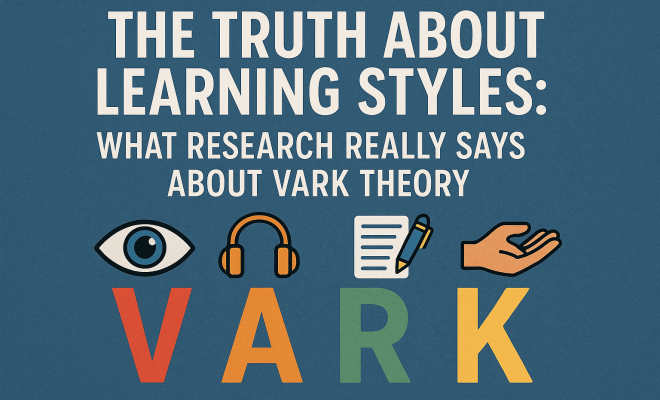
Developed by Neil Fleming in 1987, the VARK model emerged as a means to categorize the different ways individuals prefer to learn. Fleming proposed that understanding these preferences could enhance educational practices, making learning more effective by tailoring methods to each learner’s style. The four modalities of VARK are as follows:
- Visual: Learners who prefer visual representations, such as diagrams, charts, and graphs.
- Aural: These individuals learn best through listening, utilizing auditory materials such as lectures, podcasts, and discussions.
- Read/Write: This group favors text-based input and output, benefiting from reading and writing tasks.
- Kinesthetic: Kinesthetic learners thrive on hands-on experiences, engaging with the material through physical activity.
Fleming’s work suggested that tailoring educational practices to these preferred styles could significantly enhance learning outcomes. However, the question remains: How robust is the evidence supporting this theory?
Research Findings on Learning Styles
Over the years, a growing body of research has sought to investigate the validity of learning styles, particularly the VARK model. A significant 2009 meta-analysis by Pashler et al. critically assessed learning styles in general, concluding that there is no substantial evidence to support the idea that tailoring instruction to individual learning styles improves educational outcomes. Further studies have echoed these findings, emphasizing a lack of empirical support for the effectiveness of adapting teaching methods to fit learning styles.
In 2018, a comprehensive review published by the Educational Psychologist reaffirmed that the notion of learning styles lacks scientific backing. The authors argued that while individuals may have preferences for how they receive information, these preferences do not translate into better performance when instruction aligns with those styles. Instead, the focus should be on effective instructional practices that benefit all learners, regardless of their purported learning style.
The Variability of Learning
One significant issue with the VARK model and similar theories is the oversimplification of how people learn. Research has shown that learning is a complex and dynamic process influenced by numerous factors, including the subject matter, context, and individual motivation. For example, while a visual learner may prefer diagrams for complex information, they may also benefit from auditory explanations in certain contexts.
Additionally, the concept of a single dominant learning style may not accurately reflect an individual’s learning process. Many people exhibit a blend of styles; someone may be primarily kinesthetic but also engage well with visual aids or written material. This intersectionality complicates the validity of categorizing learners into rigid boxes. Moreover, the same learner might exhibit different preferences depending on the task at hand.
Practical Applications of VARK in Education
Despite the lack of empirical support for the learning styles VARK theory, educators still find value in recognizing diverse learning preferences. By acknowledging that students have different ways of engaging with material, teachers can implement a variety of instructional strategies that cater to a broader audience.
For instance, a lesson on ecosystems could include:
- A visual presentation with images of different habitats.
- A discussion or podcast featuring experts discussing their research.
- Hands-on activities, such as building a model ecosystem.
- Reading assignments related to ecological concepts.
Such an approach not only accommodates various preferences but also provides multiple entry points for all students to engage with the material. Furthermore, this method can inspire collaboration among students who may have different strengths, fostering a richer learning environment.
The Role of Assessment in Understanding Learning Styles
Another aspect to consider is how assessment practices can inform our understanding of learning styles. Tools such as VARK questionnaires can provide insights into student preferences. However, relying solely on these assessments can lead to misinterpretation and overemphasis on learning styles.
Instead, assessments should focus on understanding a student’s strengths, challenges, and learning behaviors. For example, formative assessments can help educators identify which teaching strategies resonate with their students, allowing for adjustments to be made in real-time. This responsive approach enhances engagement and learning outcomes without being tied solely to a predetermined learning style.
Current Perspectives on Learning Styles
In recent years, the conversation around learning styles has evolved. While some educators remain steadfast in promoting the VARK model, an increasing number are advocating for evidence-based practices rooted in cognitive science and learning theory. One emerging perspective emphasizes the importance of metacognition—the awareness and understanding of one’s own thought processes.
Teaching students to reflect on their learning habits and preferences can empower them to become more effective learners. This approach encourages adaptability, enabling students to utilize a range of strategies rather than relying on a fixed learning style. For instance, learners can be trained to recognize when they need visual aids to grasp a concept or when a discussion might be more beneficial. (See: VARK model on Wikipedia.)
Effective Teaching Strategies Beyond VARK
With the shortcomings of the VARK model in mind, educators are encouraged to explore a repertoire of effective teaching strategies that don’t rely on categorizing students by learning styles. Here are a few approaches that can be universally beneficial:
- Active Learning: Engaging students in hands-on activities and discussions fosters deeper understanding and retention.
- Multimodal Instruction: Incorporating visuals, auditory materials, and kinesthetic activities into lessons can reach a wider range of learners.
- Feedback and Assessment: Providing timely feedback helps students understand their progress and adjust their learning strategies accordingly.
- Collaborative Learning: Group activities encourage students to learn from one another, utilizing diverse skills and perspectives.
- Scaffolding: Building up from foundational knowledge allows students to connect new information with what they already know.
These strategies focus on enhancing the learning environment for all students, moving away from a rigid interpretation of learning styles.
Implications for Teacher Training
Teacher training programs are pivotal in shaping how future educators approach learning styles and instructional methods. Incorporating current research findings into teacher education can help new teachers develop a critical understanding of the limitations of VARK and similar theories.
Professional development opportunities should emphasize evidence-based practices, encouraging teachers to experiment with a variety of strategies while remaining flexible in their approach. By fostering a mindset of continuous improvement, educators can better meet the diverse needs of their students, preparing them for an increasingly complex world.
Conclusion: A More Nuanced Understanding of Learning
While the learning styles VARK theory remains prevalent in educational discussions, ongoing research highlights the importance of moving beyond simplistic categorization. Emphasizing effective teaching strategies that engage various learning modalities can create a richer educational experience for all students.
Ultimately, the goal of education should be to equip learners with the skills they need to adapt, reflect, and engage meaningfully with a wide array of information. Understanding that individual learning is complex opens the door to innovative teaching methods that can have a lasting impact on student success. By focusing on evidence-based practices and fostering a culture of adaptability, educators can create dynamic learning environments that meet the needs of every student.
Understanding VARK: A Deep Dive into Each Learning Style
To grasp the significance of the VARK model, it’s essential to examine each learning style in detail. By doing so, educators can better appreciate the unique needs of their students and how to address them effectively.
Visual Learners
Visual learners often thrive on imagery, color, and spatial understanding. They are the types of students who might doodle while listening to a lecture or who recall information better when it’s presented in a visually engaging way. For instance, studies show that using graphic organizers can enhance learning retention, as they help visual learners organize and represent information visually.
Consider incorporating mind maps, infographics, or visual aids like videos into lessons. A study by the University of California found that students who engage with visual materials can remember significantly more content than those who only receive verbal information. This supports the stance that while the VARK model may lack empirical support in a broad sense, the specific modalities do cater to varying preferences that can be beneficial in practice.
Aural Learners
Aural learners excel in environments where they can listen to information and engage in discussions. They often remember things they hear better than things they read or see. This group can benefit tremendously from auditory materials, discussions, and lectures. For example, podcasts and audiobooks can be effective resources for these learners, making it easier for them to absorb information.
Research from the University of Minnesota indicated that aural learners scored higher on tests when instruction involved discussions and peer interactions compared to solitary reading tasks. This emphasizes the importance of incorporating dialogue into teaching practices to support aural learners effectively.
Read/Write Learners
Read/Write learners prefer information displayed as words. These learners often excel in traditional education settings where reading and writing are emphasized. They benefit greatly from written explanations and extensive reading assignments. Incorporating essays, research papers, and textbooks into the curriculum can enhance their learning experience.
A study conducted by the National Center for Educational Statistics (NCES) revealed that students who engaged in more reading and writing activities performed better academically compared to those who did not. This supports the idea that while the VARK framework may not be universally applicable, recognizing the strength of read/write modalities can lead to improved educational strategies.
Kinesthetic Learners
Kinesthetic learners are those who learn best through physical activities and hands-on experiences. They may struggle in traditional classroom settings that rely heavily on passive learning. Allowing kinesthetic learners to engage in activities like role-playing, experiments, or building models can significantly enhance their understanding and retention of the material.
Research from the University of Southern California highlights that kinesthetic learners often perform better when they engage in tactile learning activities. For example, students who participated in hands-on science labs exhibited a deeper understanding of concepts than those who only attended lectures.
Combining Learning Styles with Instructional Strategies
It’s essential to note that while the VARK model categorizes learners, effective teaching also involves the integration of various instructional strategies that can benefit all types of learners simultaneously. This can be achieved through the use of differentiated instruction, where educators provide diverse learning options tailored to the needs of the class. (See: CDC report on learning styles.)
For example, a lesson on ancient civilizations could involve:
- A visual slideshow highlighting important artifacts.
- A podcast featuring historians discussing their findings.
- An assignment to write an essay about a specific civilization.
- A hands-on activity, such as creating a model of a historical site.
By combining these approaches, teachers can create a more inclusive and engaging environment that promotes learning across the spectrum of styles present in their classroom.
Statistics on Learning Styles and Educational Outcomes
Understanding the practical implications of learning styles can be bolstered by statistical evidence. A 2020 study published in the Journal of Educational Psychology analyzed the performance of over 5,000 students across various educational settings. The results indicated that students exposed to a multimodal instructional approach saw a 25% increase in retention rates compared to those who received traditional, single-modal instruction.
Furthermore, data from the American Educational Research Association shows that students typically respond better to teaching methods that are flexible and adaptive, rather than strictly aligned with a single learning style. This reinforces the notion that while VARK may provide a framework for understanding preferences, it is the method of delivery that often drives educational success.
FAQs About Learning Styles VARK Theory
1. Is the VARK model scientifically validated?
No, while the VARK model is widely used, major reviews, including a meta-analysis by Pashler et al., have found insufficient scientific evidence to support the idea that aligning teaching with individual learning styles significantly improves learning outcomes.
2. Can I use VARK to create lesson plans?
Yes, you can use the VARK model as a guideline for incorporating various teaching methods. However, it’s essential to supplement it with evidence-based practices that support all learners, rather than relying solely on the model.
3. Are learning styles fixed or can they change?
Learning styles can be fluid and may change based on the task, context, or new experiences. Many individuals exhibit a combination of styles, and their preferences can evolve over time.
4. How can metacognition improve learning?
Metacognition fosters self-awareness and encourages students to reflect on their learning processes. By understanding their strengths and weaknesses, students can adapt their strategies, making them more effective in various learning situations.
5. What are the most effective teaching strategies for diverse learners?
Employing a combination of active learning, multimodal instruction, collaborative learning, and scaffolding can effectively address the diverse needs of all learners in a classroom setting.
6. Should I assess students’ learning styles?
While assessing learning styles can provide insights into student preferences, it’s advisable to focus more on assessing overall strengths and learning behaviors rather than strictly adhering to learning style categories.
7. How can teachers create a more inclusive classroom environment?
Teachers can foster an inclusive environment by incorporating diverse teaching methods, allowing for flexibility in learning activities, and encouraging collaboration among students with different strengths.
8. What role do hands-on activities play in learning?
Hands-on activities are vital for kinesthetic learners and can also enhance engagement and retention for all students. They provide practical applications of theoretical concepts, making learning more meaningful.
Final Thoughts on Learning Styles VARK Theory
The learning styles VARK theory offers a lens through which to view educational preferences, but it’s crucial to approach it with a critical and flexible mindset. Emphasizing effective instructional practices that engage a variety of modalities can create a dynamic learning environment that meets the needs of every student. By staying informed about current research and focusing on evidence-based strategies, educators can effectively adapt their teaching to promote success in diverse classrooms. (See: Research on learning styles in ScienceDirect.)
The Evolution of Learning Styles in Modern Education
The landscape of education is continually evolving, and as such, the discussion around learning styles has also changed. With the advent of technology and online learning, educators are finding new ways to engage students that transcend traditional learning styles. For example, gamified learning platforms combine visual engagement, auditory feedback, and kinesthetic interaction, appealing to multiple learning styles simultaneously.
Furthermore, blended learning models, which combine online digital media with traditional face-to-face classroom methods, have gained popularity. These models allow for personalized learning pathways where students can choose how they engage with content, further reducing the reliance on fixed learning style categories. A report from the Bill & Melinda Gates Foundation stated that schools implementing blended learning saw notable improvements in student engagement and academic performance.
Critiques of Learning Styles: A Call for Caution
While the VARK model and other learning style theories have their merits, it’s essential to approach them with caution. Critics argue that categorizing students too rigidly can lead to a self-fulfilling prophecy, where learners feel limited by their assigned style. For instance, if a student identifies as a ‘visual learner,’ they may shy away from activities that involve reading or auditory instruction, potentially hindering their overall educational development.
Educational psychologist Dr. Patricia H. Miller notes that the emphasis on learning styles could inadvertently detract from more effective strategies that benefit all students. She emphasizes the need for a balanced approach that incorporates a variety of teaching methods while also encouraging students to step outside of their comfort zones. By doing so, educators can help foster a growth mindset where students are more open to diverse learning experiences.
Future Directions in Learning Style Research
The future of learning style research appears to be shifting towards a more integrative approach. Instead of focusing solely on categorizing learners, emerging studies are investigating how different contexts and environments influence learning preferences. This holistic view could lead to more personalized education that recognizes the complexity of individual learning experiences.
Additionally, researchers are exploring the impact of cultural factors on learning preferences. A study conducted by the University of Chicago found significant differences in learning preferences among students from different cultural backgrounds, suggesting that educational frameworks should be culturally responsive. This insight could pave the way for more inclusive practices that take into account the rich diversity present in today’s classrooms.
FAQs: Further Clarifications on Learning Styles VARK Theory
9. How can I determine if my teaching methods are effective for diverse learners?
Collect feedback from students on their learning experiences, observe engagement levels during different activities, and monitor academic performance. This data can inform your instructional adjustments to better meet the needs of your students.
10. What role does motivation play in learning styles?
Motivation can significantly influence how students engage with content. A motivated learner is more likely to explore different modalities, regardless of their preferred style. Encouraging intrinsic motivation through relevant, meaningful content can enhance learning experiences across the board.
11. Can I combine VARK with other educational frameworks?
Definitely! Many educators find success in blending VARK with other models, such as multiple intelligences or Universal Design for Learning (UDL), to create a more comprehensive approach to teaching that addresses diverse needs.
12. What should educators keep in mind when discussing learning styles with students?
Educators should emphasize flexibility and adaptability rather than rigidity. Encourage students to experiment with different learning strategies and be open to trying new methods, which can enhance their overall learning experience.
“`
Trending Now
Frequently Asked Questions
What is the VARK learning style model?
The VARK model categorizes learning preferences into four modalities: Visual, Aural, Read/Write, and Kinesthetic. Developed by Neil Fleming in 1987, it suggests that understanding these preferences can enhance educational practices by tailoring teaching methods to individual learning styles.
Is there evidence supporting learning styles?
Research, including a significant 2009 meta-analysis by Pashler et al., has found no substantial evidence supporting the effectiveness of tailoring teaching methods to individual learning styles, including the VARK model. This raises questions about the validity of learning style theories.
How can VARK theory be applied in education?
While VARK theory suggests that adapting teaching methods to learners' styles could improve outcomes, recent research indicates that such tailoring may not be effective. Educators are encouraged to use diverse teaching strategies that engage all learners rather than focusing solely on individual styles.
Who developed the VARK learning styles?
The VARK learning styles model was developed by Neil Fleming in 1987. It was designed to help educators understand different learning preferences and improve educational practices by customizing methods to fit these styles.
What are the four types of learning styles in VARK?
The four types of learning styles in the VARK model are: Visual (preferring images and diagrams), Aural (learning through listening), Read/Write (favoring text), and Kinesthetic (engaging through hands-on experiences). Each style represents a different way individuals prefer to absorb information.
Agree or disagree? Drop a comment and tell us what you think.