The Startling Truth: AI Is Shrinking University Staff — Here’s How
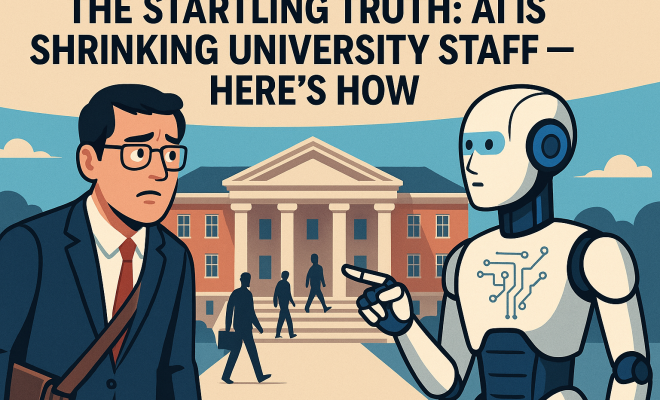
Alright, let’s talk about something that’s got a lot of folks in higher education administration feeling a little uneasy: artificial intelligence. For decades, we’ve seen a pretty consistent trend – the number of non-teaching staff in universities just keeps growing. It often felt like administrative teams were expanding faster than faculty lines or even student bodies. But what if I told you that trend is not only slowing down but, in some cases, actually reversing? That’s right, the best AI tools for higher education administration are fundamentally reshaping how our institutions operate, and it’s happening faster than many expected.
A recent survey from the College and University Professional Association for Human Resources (CUPA-HR) dropped a bit of a bombshell. Looking at 2025, they reported a 6.6% reduction in full-time staff and a whopping 23.9% decrease in part-time staff compared to the previous year. Now, if you’ve been in education for any length of time, you know those aren’t just minor fluctuations; they represent a significant, almost unprecedented reversal. What’s driving this? Academics are pointing squarely at AI. Universities, facing everything from declining enrollment to persistent funding cuts, are looking for ways to do more with less, and AI is stepping up to automate tasks like research, event planning, and even donor relations. This isn’t just about efficiency; it’s about survival for some institutions, and it’s directly impacting job security for many dedicated professionals.
It’s a controversial topic, no doubt, and it’s loaded with emotion. For every administrator seeing a pathway to streamline operations and focus on more strategic work, there’s another wondering about their future. But regardless of where you stand on the ethical implications or the human cost, the reality is that AI is here, and it’s transforming higher education administration. Understanding the specific tools making this shift possible isn’t just academic; it’s essential for anyone working in or with these institutions. So, let’s dive into some of the best AI tools for higher education administration that are truly making a difference.
1. Automated Admissions & Enrollment Management Platforms: Streamlining the Student Pipeline
When you think about the sheer volume of applications, inquiries, and follow-ups involved in admissions, it’s clear why this area is ripe for AI. Automated admissions and enrollment management platforms are perhaps some of the most impactful AI tools for higher education administration. These systems leverage machine learning to analyze applicant data, predict enrollment likelihood, and even personalize communication with prospective students. Imagine a system that can sift through thousands of applications, flag those that meet specific criteria, and even identify potential high-achievers who might otherwise get overlooked. That’s the power we’re talking about.
Beyond initial application processing, these AI tools can manage the entire enrollment lifecycle. They can automate sending personalized email reminders for deadlines, provide instant answers to frequently asked questions through chatbots, and even help students navigate financial aid processes. This not only reduces the workload on admissions staff, freeing them up for more high-touch interactions with complex cases, but it also improves the applicant experience. Prospective students get faster, more consistent responses, which can be a significant factor in their decision-making process. For institutions struggling with enrollment numbers, this level of efficiency and personalized engagement can be a game-changer.
2. AI-Powered Research Assistants & Data Analytics: Unearthing Insights and Efficiency
Research is the lifeblood of many universities, and administrative support for research can be incredibly resource-intensive. AI-powered research assistants and data analytics platforms are stepping in to revolutionize this domain. These tools can automate literature reviews, helping researchers quickly synthesize vast amounts of information from academic journals and databases. They can identify trends, highlight key findings, and even suggest relevant articles that human researchers might miss. Think about the time saved when an AI can do in minutes what would take a research assistant hours or even days.
Beyond literature, these platforms excel at managing and analyzing complex datasets. For administrators, this means AI can help track grant applications, monitor research project progress, and even identify funding opportunities more efficiently. In development offices, AI-powered analytics can analyze donor data, predicting who is most likely to give and at what level, and even suggest personalized outreach strategies. This isn’t just about crunching numbers; it’s about extracting actionable insights that can lead to more successful fundraising campaigns and more efficient allocation of research resources. The administrative burden associated with these tasks historically has been immense, and AI is proving to be a powerful antidote.
3. Intelligent Chatbots & Virtual Assistants: Enhancing Student and Staff Support
How many times do university staff answer the same questions day in and day out? From ‘When is the add/drop deadline?’ to ‘How do I access my grades?’, the repetitive nature of student inquiries can be a significant drain on resources. This is precisely where intelligent chatbots and virtual assistants shine, making them some of the most widely adopted AI tools for higher education administration. These AI-driven tools can be deployed on university websites, student portals, and even messaging apps, providing instant, 24/7 support.
These aren’t your basic, clunky chatbots from a few years ago. Modern AI assistants leverage natural language processing (NLP) to understand complex queries, provide accurate information, and even guide users through multi-step processes. They can answer questions about course registration, financial aid, campus events, and even IT support issues. The benefit isn’t just for students, who get immediate answers without waiting on hold or for an email reply. It’s also huge for administrative staff, who are freed from answering routine questions and can instead focus on more complex, sensitive, or unique student needs. This shift not only improves efficiency but also elevates the quality of human interaction when it’s truly needed. (See: Associated Press on AI in education.)
4. Automated Event Planning & Resource Scheduling Software: Mastering Logistics
Organizing events, whether it’s a major conference, a departmental meeting, or a student activity, involves a dizzying array of logistical challenges. From booking venues and coordinating catering to managing invitations and tracking RSVPs, the administrative overhead can be substantial. AI-powered event planning and resource scheduling software are emerging as essential AI tools for higher education administration, bringing order to this chaos. For more context, see the rise of AI in education.
These platforms can automate numerous aspects of event management. They can analyze room availability across campus, suggest optimal times to avoid conflicts, and even send automated reminders to attendees and vendors. For large-scale events, AI can help manage speaker schedules, coordinate travel arrangements, and personalize attendee itineraries. Beyond events, these tools are invaluable for scheduling shared resources like labs, equipment, and meeting rooms, ensuring maximum utilization and minimizing conflicts. By taking on the heavy lifting of logistical coordination, AI allows administrative staff to focus on the content and impact of events, rather than getting bogged down in the minutiae.
5. AI-Enhanced Financial Management & Budgeting Tools: Precision in Fiscal Planning
University finances are notoriously complex, involving multiple departments, funding sources, and regulatory requirements. Managing budgets, tracking expenditures, and ensuring compliance often requires a significant administrative workforce. AI-enhanced financial management and budgeting tools are transforming this critical function, offering unprecedented precision and efficiency as key AI tools for higher education administration.
These AI systems can analyze historical spending patterns, predict future financial needs, and identify potential areas for cost savings. They can automate routine tasks like invoice processing, expense reporting, and reconciliation, drastically reducing manual errors and processing times. Furthermore, AI can monitor for anomalies or potential fraud, flagging suspicious transactions for human review. For budget managers, these tools provide real-time insights into financial health, allowing for more agile and informed decision-making. The ability to forecast with greater accuracy and automate compliance checks means fewer staff members are needed for repetitive financial tasks, allowing them to engage in higher-level strategic financial planning.
6. Personalized Learning & Academic Support Systems: Beyond the Classroom
While often thought of in a teaching context, AI’s role in personalized learning and academic support extends significantly into administration. These systems leverage AI to track student progress, identify learning gaps, and recommend personalized resources or interventions. Administratively, this means fewer staff are needed to manually monitor student performance or guide them to appropriate support services.
Consider AI tutors like my own Entelechy, which can provide tailored assistance to students, answering questions and offering explanations outside of office hours. From an administrative perspective, this offloads some of the demand on tutoring centers and academic advisors. AI can also help identify students at risk of dropping out, allowing intervention strategies to be deployed much earlier and more effectively. This proactive approach not only benefits students but also reduces the administrative burden associated with student retention efforts, making it a powerful application among the best AI tools for higher education administration.
7. AI for HR & Talent Management: Optimizing the Workforce
Human Resources in higher education is a complex beast, managing everything from recruitment and onboarding to performance reviews and compliance. AI is making significant inroads here, helping institutions optimize their workforce and streamline HR processes. As the CUPA-HR survey indicated a notable reduction in staff, HR departments are undoubtedly looking to AI to manage the remaining workforce more efficiently.
AI can automate resume screening, helping HR departments quickly identify the most qualified candidates for open positions. It can also assist with scheduling interviews, sending automated communications to applicants, and even personalizing onboarding experiences. For existing staff, AI can analyze performance data, identify training needs, and even help predict employee turnover, allowing for proactive retention strategies. By automating many of the administrative tasks associated with HR, universities can ensure their human resources are focused on strategic initiatives like talent development and fostering a positive campus culture, rather than getting bogged down in paperwork.
8. Donor Relations and Advancement Platforms: Cultivating Philanthropy with Precision
University advancement and donor relations are absolutely vital for institutional growth and sustainability, especially in an era of fluctuating funding. This area, traditionally highly reliant on personal relationships and extensive administrative support, is being transformed by AI. These AI tools for higher education administration are not about replacing human connection but about enhancing it by providing unparalleled insights and efficiency. (See: New York Times on higher education trends.)
AI-powered donor relations platforms can analyze vast amounts of data – historical giving patterns, engagement with university communications, social media activity, and even public records – to identify potential major donors. These systems can predict giving capacity and propensity with remarkable accuracy, allowing advancement teams to prioritize their outreach and tailor their messaging. Furthermore, AI can automate personalized communications, ensuring donors receive relevant updates and invitations. It can also manage stewardship activities, ensuring timely acknowledgments and reports on the impact of their contributions. By providing development officers with deep, actionable insights and automating routine tasks, AI frees them to build stronger, more meaningful relationships with key philanthropic partners, ultimately leading to more successful fundraising campaigns and a more secure financial future for the institution.
9. Campus Operations and Smart Infrastructure Management: The Intelligent Campus
Beyond the direct administrative tasks, AI is also revolutionizing the physical and operational aspects of university campuses. Think about the sheer scale of managing buildings, utilities, security, and transportation across a sprawling university. These are massive administrative undertakings, and AI tools for higher education administration are making them smarter and more efficient. For more context, see critical thinking skills in the age of AI.
AI-powered systems can monitor energy consumption in buildings, automatically adjusting heating, ventilation, and air conditioning (HVAC) systems based on occupancy and external weather conditions. This doesn’t just save money; it reduces the administrative effort involved in manual adjustments and reactive maintenance. Similarly, AI can optimize waste management routes, predict equipment failures before they happen, and even manage campus traffic flow during peak hours or large events. For campus security, AI-enhanced surveillance systems can identify unusual activity or unauthorized access, alerting security personnel in real-time, greatly reducing the need for constant human monitoring of every camera feed. This creates a truly “smart campus” where resources are optimized, costs are controlled, and the overall environment is safer and more efficient for everyone. The administrative teams responsible for facilities, maintenance, and security find their reactive tasks significantly reduced, allowing them to focus on strategic improvements and long-term planning.
10. Compliance and Regulatory AI Tools: Navigating the Legal Labyrinth
Universities operate under a dizzying array of local, state, federal, and sometimes international regulations. From Title IX and FERPA to accreditation standards and grant compliance, the administrative burden of ensuring adherence to these rules is immense. Missteps can lead to severe penalties, reputational damage, and loss of funding. This is where AI-powered compliance and regulatory tools step in as indispensable AI tools for higher education administration.
These systems can continuously monitor changes in regulations, automatically flag policies or practices that might be non-compliant, and even suggest necessary adjustments. For example, an AI could scan university documents and communications to ensure they meet accessibility standards or data privacy requirements. In research, AI can track the ethical approval status of projects, ensuring all necessary protocols are followed. For financial aid, it can verify that all disbursements comply with federal guidelines. By automating the auditing, monitoring, and reporting processes associated with compliance, universities can significantly reduce the risk of errors and free up legal and administrative staff from tedious review tasks. This allows them to concentrate on complex legal interpretations, policy development, and proactive risk management, ensuring the institution remains on solid legal ground.
The Broader Impact and What’s Next
The trend we’re seeing, highlighted by the CUPA-HR survey, isn’t just a blip; it’s a significant shift. The best AI tools for higher education administration are indeed reversing a decades-long pattern of administrative expansion. This isn’t just about cutting costs, though that’s certainly a factor given declining enrollment and funding pressures. It’s also about creating leaner, more agile institutions that can respond more effectively to the needs of students, faculty, and the broader community.
Of course, this transformation isn’t without its challenges. The “controversial and emotionally charged” aspect of this shift, as the source material notes, is very real. Job security is a legitimate concern for many, and universities have a responsibility to manage this transition thoughtfully, perhaps by investing in reskilling programs or reallocating staff to new, higher-value roles that AI can’t replicate. The goal shouldn’t just be automation for automation’s sake, but rather using AI to augment human capabilities, allowing our talented administrative professionals to focus on the strategic, creative, and interpersonal aspects of their work that truly make a difference.
Looking ahead, we’ll likely see even more sophisticated AI tools emerge, capable of handling increasingly complex administrative tasks. The integration of AI across different university departments will become seamless, creating truly intelligent campuses. For higher education to thrive in the coming decades, embracing these technologies isn’t just an option; it’s a necessity. It’s about adapting, innovating, and ensuring that our institutions remain relevant, efficient, and deeply committed to their educational mission. For more context, see student loan forgiveness and AI's impact. (See: CDC on workforce changes.)
The conversation isn’t about whether AI will impact higher education administration; it’s about how deeply, and how quickly, that impact will be felt. Understanding these tools and preparing for the future they’re shaping is crucial for anyone involved in the academic world. The future of higher education administration is undeniably AI-powered, and it’s going to be fascinating to see how we collectively adapt.
Frequently Asked Questions About AI in Higher Education Administration
Q1: Is AI really going to replace human jobs in university administration?
This is the big question everyone’s asking, and it’s complex. While AI is automating many routine, repetitive tasks, the goal for many institutions isn’t wholesale replacement but rather a reallocation of human talent. The CUPA-HR survey points to job reductions, yes, but many universities are looking to shift staff from purely transactional roles to more strategic, creative, and interpersonal functions that AI can’t replicate. Think of it as AI augmenting human capabilities, allowing administrators to focus on higher-value work, relationship building, and complex problem-solving. However, it’s also true that some roles will undoubtedly be impacted, requiring institutions to invest in reskilling and career transition support.
Q2: How secure is student and institutional data when using AI tools?
Data security is a paramount concern, especially with the sensitive nature of student records and institutional financial information. Reputable AI tools and platforms designed for higher education are built with robust security measures, including encryption, access controls, and compliance with privacy regulations like FERPA (Family Educational Rights and Privacy Act) and GDPR (General Data Protection Regulation). Universities must conduct thorough due diligence, ensuring any AI vendor meets strict security standards and has clear policies on data ownership, usage, and retention. It’s about partnering with trusted providers and implementing strong internal data governance policies.
Q3: What are the biggest challenges universities face when adopting AI?
Implementing AI isn’t without its hurdles. One major challenge is simply the upfront cost of purchasing and integrating sophisticated AI systems. Another is data quality – AI tools are only as good as the data they’re trained on, so universities need clean, organized, and accessible data. There’s also the challenge of staff training and change management; people need to understand how to use these new tools and see the value they bring. Ethical considerations, like bias in AI algorithms or the potential for over-reliance on technology, also need careful consideration. Finally, ensuring seamless integration with existing legacy systems can be a complex technical undertaking.
Q4: Can small universities or community colleges afford AI tools?
Absolutely. While some enterprise-level AI solutions can be expensive, many scalable and affordable AI tools are available, including cloud-based services and open-source options. The key is to start small, identify specific pain points where AI can offer immediate value (like a chatbot for FAQs or an admissions assistant), and then scale up. Many AI vendors offer tiered pricing models, making it accessible for institutions of all sizes. The return on investment (ROI) in terms of efficiency gains and cost savings often makes AI a very viable option even for smaller institutions, allowing them to compete more effectively.
Q5: How does AI help with student retention and success?
AI plays a crucial role in student retention by helping identify at-risk students early on. By analyzing academic performance, engagement data, and even behavioral patterns (with appropriate privacy safeguards), AI systems can flag students who might be struggling before they drop out. This allows advisors and support staff to intervene proactively with personalized resources, tutoring, or counseling. AI-powered personalized learning systems can also tailor educational content to individual student needs, making learning more effective and engaging. Essentially, AI helps create a more supportive and responsive academic environment, which directly contributes to higher retention rates and overall student success.
Trending Now
Frequently Asked Questions
How is AI affecting university staff employment?
AI is leading to a significant reduction in university staff, with a reported 6.6% decrease in full-time and a 23.9% decrease in part-time positions. This shift is largely due to universities seeking efficiency and cost-cutting measures amid challenges like declining enrollment and funding cuts.
What are the benefits of AI in higher education administration?
AI tools in higher education help automate various tasks such as research, event planning, and donor relations. This automation allows universities to streamline operations, focus on strategic initiatives, and potentially improve survival rates amid financial challenges.
What trends are emerging in university staffing due to AI?
There is a notable trend of shrinking administrative staff in universities, reversing decades of growth. The integration of AI tools is fundamentally reshaping staffing needs, with institutions adapting to do more with fewer resources.
Why are universities reducing staff numbers?
Universities are reducing staff numbers primarily to address financial pressures, including declining enrollment and funding cuts. The adoption of AI is seen as a solution to automate tasks, enabling institutions to maintain essential services with fewer personnel.
What challenges does AI pose for university staff?
The rise of AI in university administration raises concerns about job security for staff. While AI offers operational efficiencies, it also creates uncertainty and anxiety among employees regarding their roles and future employment opportunities in higher education.
What did we miss? Let us know in the comments and join the conversation.