Explosive: New Jersey’s Public School Healthcare Crisis Could Worsen — A Bold Plan Faces Fierce Backlash
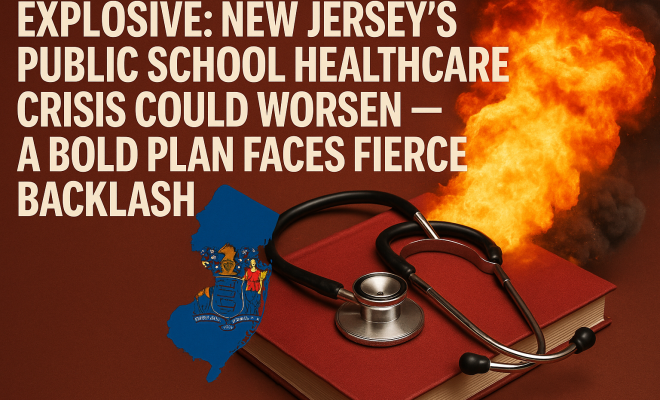
When you’re working in education, especially in our public schools, you’re not just shaping young minds; you’re often doing it on a modest salary, with the promise of benefits being a crucial part of the compensation package. So, imagine the gut punch when you hear that your health insurance premiums are about to skyrocket by a staggering 34% in a single year. That’s the terrifying reality facing thousands of PreK-12 educators across New Jersey right now, creating a very real, very urgent public school healthcare crisis. It’s a situation that isn’t just about numbers on a spreadsheet; it’s about families, livelihoods, and the very stability of our education system.
This isn’t some abstract economic theory; it’s a direct financial hit that could force impossible choices on teachers and school districts alike. We’re talking about potential widespread budget cuts, fewer resources for students, and an exodus of talented educators who simply can’t afford to stay. The New Jersey Education Association (NJEA) isn’t sitting idly by, though. They’ve thrown a legislative proposal into the ring, aiming to tackle this escalating crisis head-on. But like any bold move in a high-stakes game, it’s drawn both staunch support and fierce opposition. Let’s dig into what’s really happening here, why it matters so much, and what this could mean for the future of education in the Garden State.
The Looming Financial Catastrophe: A 34% Premium Hike
Let’s be blunt: a 34% increase in health insurance premiums is nothing short of catastrophic. For the average family, that’s hundreds, if not thousands, of dollars more out of pocket each year. For a teacher already navigating the rising costs of living, student loan debt, and perhaps even supplementing their classroom supplies out of their own pocket, this kind of increase can be the straw that breaks the camel’s back. It forces individuals to make agonizing decisions: do I cut back on groceries? Postpone necessary medical care? Or, in a worst-case scenario, do I leave the profession I love?
This isn’t just about individual teachers, either. School districts are also feeling the squeeze. Health insurance costs are often one of the largest budget line items after salaries. When these costs surge, districts have limited options. They can raise property taxes, which is never popular and often met with strong community resistance. They can cut programs, services, or even staff – potentially leading to larger class sizes, fewer arts or sports programs, or reduced support for students with special needs. It’s a lose-lose situation that compromises the quality of education for all.
NJEA’s Bold Proposal: A New Trust for Healthcare
The New Jersey Education Association, representing a significant portion of the state’s public school employees, isn’t just complaining about the problem; they’re proposing a solution. Their legislative plan aims to move the public school employee health benefits program out of its current structure and into a brand-new trust. The thinking behind this is multifaceted: they believe a dedicated trust could offer improved transparency, greater accountability, and, crucially, better cost control mechanisms. It’s an attempt to wrest control from what they see as an inefficient and overly expensive system.
The idea is that by creating a separate entity focused solely on the health benefits of public school employees, there could be more direct oversight, more agile negotiation with providers, and a stronger ability to implement cost-saving strategies tailored specifically to this population. They envision a system where educators themselves, or their representatives, have a more direct say in how their healthcare plans are managed, rather than being subject to broader state-level decisions that might not always align with their best interests or financial realities.
Bipartisan Backing, But Not Unanimous Support
It’s rare to see significant bipartisan agreement on contentious issues, especially when money is involved. Yet, the NJEA’s proposal has managed to garner support from some key legislative figures on both sides of the aisle. Senator Vin Gopal, a Democrat, and Senator Joseph F. Vitale, also a Democrat and a prominent voice on health policy, have reportedly thrown their weight behind the initiative. This kind of bipartisan endorsement suggests that there’s a recognized urgency to the public school healthcare crisis, and a shared belief among some lawmakers that the current system is indeed failing.
However, ‘bipartisan support’ doesn’t mean ‘unanimous endorsement.’ Far from it. While some legislators see the trust as a viable path forward, others, particularly those representing school boards, are raising serious alarms. They argue that the proposal, while well-intentioned, doesn’t go nearly far enough to genuinely mitigate the spiraling costs. In fact, some critics fear it could inadvertently make the situation worse, further straining already precarious school budgets. This division highlights the complexity of the issue; there are no easy answers, and what one group sees as a solution, another views as a potential pitfall. (See: CDC on healthcare for youth.)
The Core of the Debate: Cost Control and Accountability in the Public School Healthcare Crisis
At the heart of this entire debate is the fundamental question of how to control healthcare costs in a way that is both sustainable for the state and fair to its employees. Everyone agrees that the current trajectory of premium increases is unsustainable. The disagreement lies in the methodology for correction. Proponents of the trust argue that its independent structure would allow for more effective negotiation with insurance carriers and healthcare providers, potentially leading to better rates and more innovative plan designs. They believe that by removing the program from the broader state health benefits system, it can be more nimble and responsive to the specific needs and demographics of public school employees.
Critics, on the other hand, are skeptical. They often point to the complexities of managing such a large-scale benefits program independently, questioning whether a new trust would truly have the leverage or expertise to achieve significant cost savings. Some fear that it could create an additional bureaucratic layer without delivering the promised financial relief, or even worse, it might shift costs in unforeseen ways that ultimately burden school districts even more. Transparency and accountability are buzzwords that everyone likes, but the practical implementation of these principles in a new, massive benefits trust is a legitimate concern for many. For more context, see The Staggering Cost of Raising a Child by State.
School Boards’ Perspective: ‘Not Enough’ and ‘Potential for Worse’
The New Jersey School Boards Association (NJSBA) and individual school boards across the state are among the most vocal critics of the NJEA’s proposal. Their perspective is rooted in the direct financial impact on their local budgets. They’re the ones who have to find the money for these premium increases, and they’re the ones who face the difficult decisions about where to cut if funds aren’t available. From their vantage point, the NJEA’s plan might offer some structural changes, but it doesn’t fundamentally address the underlying drivers of healthcare cost inflation. They’re looking for concrete, measurable cost reductions, and they just don’t see them clearly articulated in the proposed trust model.
Furthermore, there’s a genuine fear among school board members that creating a new trust could actually complicate matters further. They worry about the transitional costs, the potential for administrative inefficiencies in a new entity, and the risk that the trust might not be able to negotiate more favorable terms than the current state system, which benefits from pooling a much larger group of state and local government employees. Their argument is essentially, ‘if it’s not going to save us significant money, and it might even make things more complex or expensive, then why are we doing it?’ It’s a pragmatic, budget-focused critique that cannot be easily dismissed.
The Human Element: Impact on PreK-12 Educators and School Budgets
Beyond the legislative debates and financial models, we must remember the real people at the center of this public school healthcare crisis: the educators themselves. These are the teachers, counselors, librarians, and support staff who dedicate their lives to our children. They are often underpaid compared to other professions requiring similar levels of education and responsibility. For them, health benefits aren’t just a perk; they’re a fundamental component of their financial security and a key factor in their decision to remain in public education. A significant increase in their out-of-pocket healthcare costs can be devastating.
Consider a young teacher, perhaps just a few years into their career, possibly with a young family, already stretched thin by student loan payments and the general cost of living in New Jersey. A 34% hike in premiums could easily wipe out any modest annual raise they might receive, effectively resulting in a pay cut. This isn’t just unfair; it’s a direct threat to teacher retention at a time when schools are already struggling to attract and keep talent. If educators feel they can’t afford to stay, who will teach our children? This ripple effect extends to school budgets, where districts might face increased costs for substitute teachers, recruitment efforts, and less experienced staff, all while grappling with higher health insurance expenses themselves.
Learning from Other States: A Comparative Look at Healthcare Models
New Jersey isn’t alone in grappling with escalating public employee healthcare costs. This is a nationwide challenge. Many states have experimented with different models, from large state-run pooled systems to more localized district-specific plans, and even self-insured trusts similar to what the NJEA is proposing. For instance, some states have found success with wellness programs that incentivize healthy behaviors, ultimately reducing long-term healthcare expenditures. Others have explored direct contracting with healthcare providers, bypassing traditional insurance companies to negotiate lower rates.
What’s clear from a broader perspective is that there’s no one-size-fits-all solution. What works in one state, with its unique demographics, political landscape, and existing healthcare infrastructure, might not translate directly to another. However, examining the successes and failures of other states’ approaches could offer valuable insights for New Jersey. Are there best practices in cost containment, provider negotiation, or plan design that could be adapted? Could a hybrid model, combining elements of a trust with the leverage of a larger state pool, offer a middle ground? These are the kinds of questions that need thorough, unbiased investigation if New Jersey truly wants to solve its public school healthcare crisis rather than just shift its symptoms around.
The Emotional and Political Landscape: A High-Stakes Debate
This isn’t just a policy debate; it’s an emotionally charged one. For educators, it’s about their families’ health and financial stability. For school boards, it’s about fiscal responsibility and the ability to provide quality education without breaking the bank. For legislators, it’s about balancing constituent demands, state budgets, and the long-term health of public services. The direct financial impact on thousands of individuals and the potential for widespread school budget cuts makes this an incredibly high-stakes discussion. It’s the kind of issue that can mobilize voters, influence elections, and shape the political narrative for years to come. (See: New Jersey Department of Education.)
The NJEA, as a powerful advocacy group, understands the emotional resonance of this issue. They’re framing it as a fight for fairness and stability for their members. School boards, on the other hand, are emphasizing the potential for fiscal irresponsibility and the need to protect educational resources. This clash of narratives creates a complex political environment where compromise is difficult, and every proposed solution is scrutinized through multiple, often conflicting, lenses. The outcome of this debate will undoubtedly have profound implications, not just for healthcare, but for the entire public education system in New Jersey.
Beyond the Trust: Other Potential Avenues for Relief
While the NJEA’s trust proposal is currently at the forefront, it’s crucial to acknowledge that other avenues for addressing the public school healthcare crisis exist, and perhaps some of these should be explored in parallel or as alternatives. For instance, could the state explore more aggressive negotiations with pharmaceutical companies to lower prescription drug costs, which are a significant driver of overall healthcare spending? What about investing more heavily in preventative care programs and chronic disease management, which have been shown to reduce long-term costs by keeping people healthier? For more context, see Millions Just Got a Huge Win for Public Service Loan Forgiveness.
Another area for consideration is a more comprehensive review of the current health benefits plan designs. Are there opportunities to introduce high-deductible health plans with health savings accounts (HSAs) that empower employees to manage their own healthcare spending more efficiently, while still providing robust coverage for catastrophic events? Or perhaps a deeper dive into provider networks to ensure that public employees have access to high-quality, cost-effective care without sacrificing choice. The solution to such a complex problem is rarely singular; it often requires a multi-pronged approach that tackles various cost drivers simultaneously.
The Role of Technology and Innovation in Healthcare Cost Management
In this ongoing public school healthcare crisis, we can’t ignore the potential of technology and innovation to bend the cost curve. Telemedicine, for example, has seen massive growth and can significantly reduce costs for routine consultations and follow-ups. Instead of a teacher needing to take time off work to visit a doctor for a minor issue, a quick video call can often suffice, saving both time and money. Could New Jersey’s public school employee health plans more aggressively integrate and promote telehealth services?
Beyond telemedicine, consider the impact of data analytics. With access to anonymized health data, a new trust or the existing state system could identify trends in healthcare utilization, pinpoint areas of high cost, and design targeted interventions. For instance, if data shows a high prevalence of certain chronic conditions, resources could be directed towards educational programs or preventative screenings for those specific issues. Wearable technology and digital health platforms also offer opportunities for preventative care and chronic disease management, empowering individuals to take a more active role in their health. Implementing these tech-driven solutions requires initial investment, but the long-term savings and improved health outcomes could be substantial.
Expert Perspectives: Economists and Healthcare Policy Analysts
To truly understand the depth of this public school healthcare crisis, it helps to bring in the perspectives of economists and healthcare policy analysts. Many economists would point to the underlying issue of healthcare inflation, which consistently outpaces general inflation. They might argue that simply shifting who manages the benefits won’t solve the core problem of rising drug prices, hospital costs, and administrative overhead. Their solutions often revolve around market-based reforms, greater price transparency, or even single-payer systems – ideas that are often politically charged but aim to tackle the fundamental economics of healthcare.
Healthcare policy analysts, on the other hand, might focus on specific policy levers. They could suggest a deeper dive into provider reimbursement models, advocating for value-based care where providers are paid for patient outcomes rather than just the volume of services. They might also highlight the importance of robust primary care networks, arguing that strong preventative care can avert more expensive interventions down the line. These experts bring a crucial evidence-based approach to the debate, suggesting that solutions need to be grounded in proven strategies for cost containment and quality improvement, rather than solely administrative reshuffles.
The Impact on Teacher Morale and Recruitment
The financial strain of rising healthcare costs has a direct and profound impact on teacher morale. Educators are already facing immense pressure, often working long hours with limited resources. When their essential benefits, like health insurance, become a source of significant financial anxiety, it creates a feeling of being undervalued and unsupported. This isn’t just about money; it’s about a sense of security and respect for a vital profession. For more context, see This Brutal Reality About Raising Kids Is Pushing Parents To The Brink. (See: New Jersey Department of Labor.)
This erosion of morale directly translates into challenges for teacher recruitment and retention. Talented individuals considering a career in education might be deterred by the prospect of high out-of-pocket healthcare costs, especially when comparing public school salaries and benefits to those in the private sector or in other states. Experienced teachers, who are often the backbone of a school, might choose early retirement or seek opportunities in districts or states with more favorable benefits packages. Losing these experienced educators means a loss of institutional knowledge, mentorship, and stability for students, creating a vacuum that’s incredibly difficult to fill. Addressing the public school healthcare crisis isn’t just about balancing budgets; it’s about safeguarding the future of the teaching profession itself.
A Deep Dive into the State Health Benefits Program (SHBP)
To fully grasp the NJEA’s proposal, we need to understand the current landscape: the State Health Benefits Program (SHBP). This program serves a vast pool of state and local government employees, including many public school staff. The SHBP leverages the sheer size of its membership to negotiate rates with insurance carriers. The argument for remaining in the SHBP often hinges on this concept of “economies of scale” – the idea that a larger group has more bargaining power, potentially leading to lower per-person costs.
However, critics of the SHBP, like the NJEA, argue that while the scale is large, the management of the program isn’t tailored enough to the specific needs and risk profile of public school employees. They contend that school employees might be subsidizing other, potentially higher-risk, employee groups within the broader SHBP. They also raise questions about transparency in how the SHBP’s costs are allocated and how decisions are made regarding plan design and carrier negotiations. Moving to a dedicated trust, from this perspective, would allow for a more granular, focused approach to managing the health benefits of educators, potentially leading to efficiencies that the larger, more generalized SHBP cannot achieve.
Looking Ahead: The Road to Resolution (or Further Conflict)
The path forward for New Jersey’s public school healthcare crisis is far from clear. The NJEA’s proposal represents a significant push for change, but the strong opposition from school boards signals that this will not be an easy legislative victory. The emotional weight of a 34% premium increase has created an undeniable urgency, but genuine resolution will require more than just reacting to the immediate crisis. It demands a thoughtful, data-driven approach that considers the long-term sustainability of healthcare for educators and the financial health of school districts.
Whether the proposed trust gains enough traction to become law, or if alternative solutions emerge, one thing is certain: the debate will continue to be intense. Educators, school administrators, parents, and taxpayers will all be watching closely. The outcome will not only determine how much teachers pay for healthcare in the coming years but also how well New Jersey’s public schools can continue to serve their students. This isn’t just about dollars and cents; it’s about the very fabric of our communities and the future of our children’s education.
Trending Now
Frequently Asked Questions
What is causing the healthcare crisis in New Jersey public schools?
The healthcare crisis in New Jersey public schools is primarily driven by a staggering 34% increase in health insurance premiums for educators. This significant rise is impacting teachers' financial stability and could lead to budget cuts and a loss of valuable staff in the education system.
How will the 34% increase in health insurance premiums affect teachers?
The 34% increase in health insurance premiums will place a heavy financial burden on teachers, forcing them to make difficult choices regarding their personal and family expenses. This can lead to stress, potential budget cuts in schools, and even an exodus of talented educators from the profession.
What is the NJEA's plan to address the healthcare crisis?
The New Jersey Education Association (NJEA) has introduced a legislative proposal aimed at addressing the escalating healthcare crisis. Their plan seeks to mitigate the impact of rising premiums and stabilize healthcare costs for educators, although it has faced both support and opposition.
Why is the healthcare crisis in public schools important?
The healthcare crisis in public schools is crucial because it directly affects the financial well-being of educators, which can lead to broader implications for the education system, including reduced resources for students, potential teacher shortages, and overall instability in public education.
What could happen if the healthcare crisis is not resolved?
If the healthcare crisis is not resolved, New Jersey public schools could face severe consequences, including widespread budget cuts, diminished resources for students, and a significant loss of experienced educators, ultimately jeopardizing the quality of education in the state.
What's your take on this? Share your thoughts in the comments below — we read every one.