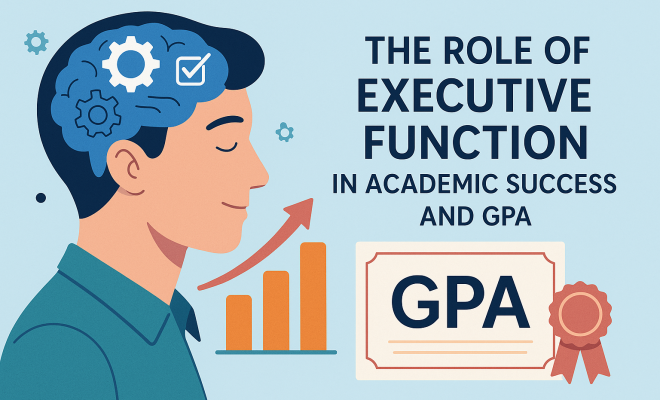
The Role of Executive Function in Academic Success and GPA
“`html
Understanding Executive Function: What Is It?
Executive function refers to a set of cognitive processes that are crucial for controlling behavior, managing tasks, and achieving goals. These skills include working memory, cognitive flexibility, and inhibitory control. Essentially, executive function acts as the brain’s management system, helping individuals plan, focus attention, remember instructions, and juggle multiple tasks effectively.
For students, these skills are particularly important as they directly correlate to academic success. Students with strong executive function skills can organize their study schedules, prioritize tasks, and maintain attention during lectures, leading to improved performance in school and higher GPAs.
The Connection Between Executive Function and Academic Success
Research indicates a clear link between executive function and academic performance. A study published in the Journal of Educational Psychology found that students with higher executive function skills tend to achieve better grades. This correlation is primarily due to the way these cognitive skills contribute to students’ ability to learn and apply knowledge in an academic setting.
For instance, working memory allows students to hold information in their minds while using it in problem-solving. Cognitive flexibility helps them adapt to new information and perspectives, while inhibitory control enables them to resist distractions and impulses. Together, these skills create a strong foundation for learning.
Key Components of Executive Function
To fully appreciate how executive function influences academic success, it’s essential to break down its key components:
- Working Memory: This involves holding and manipulating information over short periods. For example, during math class, a student may need to remember a formula while applying it to solve a problem.
- Cognitive Flexibility: This skill allows students to switch between tasks or adapt to new rules and ideas. In group projects, for example, students with good cognitive flexibility can adjust their roles based on group dynamics.
- Inhibitory Control: This is the ability to suppress impulsive responses and distractions. Students with strong inhibitory control can resist the urge to check their phones during lectures, focusing instead on the teacher’s instructions.
The Impact of Executive Function on Grades
As students progress through their education, the demands on their executive function skills increase. In early schooling, tasks may primarily involve memorization and simple problem-solving. However, as students reach higher grades, they encounter complex assignments that require advanced executive functions.
A longitudinal study published in the Developmental Psychology journal analyzed students from elementary through high school. It found that those with robust executive function skills not only achieved higher GPAs but also reported lower levels of stress related to their academic workload. This suggests that strong executive function can lead to a smoother academic experience, allowing students to handle challenges more effectively.
Strategies to Enhance Executive Function Skills
Improving executive function skills is possible and can lead to significant benefits in academic performance. Here are several strategies:
- Practice Mindfulness: Engaging in mindfulness exercises can enhance attention and emotional regulation, crucial components of executive function.
- Use Organizational Tools: Tools like planners, to-do lists, and digital calendars can help students keep track of assignments and deadlines.
- Set Goals: Encourage students to set specific, measurable, attainable, relevant, and time-bound (SMART) goals. This practice helps them prioritize tasks and stay on track.
- Break Tasks Down: Large projects can be overwhelming. Breaking them into smaller, manageable parts can make it easier for students to focus and complete them.
The Role of Technology in Supporting Executive Function
In today’s digital age, technology can be a double-edged sword when it comes to executive function. While distractions are plentiful, there are also numerous tools designed to enhance executive function skills. Apps for time management, note-taking, and organization can be incredibly beneficial.
For instance, programs like Todoist or Evernote help students manage their tasks efficiently, while tools like Focus@Will provide music specifically designed to increase concentration. Using technology wisely can help students capitalize on their strengths and mitigate weaknesses in executive function. (See: Health and Academic Success.)
The Role of Educators and Parents
Educators and parents play a crucial role in fostering executive function skills in students. In the classroom, teachers can implement strategies such as project-based learning, which encourages planning, collaboration, and problem-solving—key elements of executive function.
At home, parents can support their children by creating structured routines and providing a conducive learning environment. Simple practices like setting specific times for homework and limiting distractions can significantly improve a child’s ability to focus and manage their tasks.
The Long-Term Benefits of Strong Executive Function Skills
Developing strong executive function skills doesn’t just impact academic success; it also sets the stage for future achievements. Adults with high executive function skills tend to excel in the workforce, demonstrating effective time management, problem-solving abilities, and adaptability to changing circumstances.
Moreover, these skills contribute to personal well-being. Individuals who can manage their time and tasks effectively often experience lower stress levels and better mental health. As such, fostering executive function skills from a young age is an investment in a child’s future, both academically and personally.
Current Relevance: Executive Function in Post-Pandemic Education
The COVID-19 pandemic has disrupted educational systems globally, leading to unique challenges regarding executive function. With remote learning becoming the norm, students have had to adapt to new ways of organizing their studies and managing distractions at home.
Many students have struggled with engagement and motivation, highlighting the need for strong executive function skills to thrive in this environment. As we move forward, it’s essential to recognize and address these needs in educational settings, providing appropriate support to help students regain their footing.
Investing in Executive Function for Academic Success
The connection between executive function and academic success is clear. By understanding the role these cognitive skills play and implementing strategies to enhance them, students can significantly improve their academic performance and overall well-being. As educational stakeholders, it is our responsibility to create environments that foster these vital skills, ensuring that all students have the opportunity to succeed.
Comparative Analysis: Executive Function Skills Across Different Age Groups
It’s important to realize that executive function skills develop and evolve as children grow. The strategies that may work well for elementary students might not be as effective for high schoolers. For example, younger children often benefit from structured routines and visual aids to support their working memory. In contrast, older students may require more sophisticated time management tools and self-monitoring techniques.
Research shows that the capacity for cognitive flexibility increases with age. A study from the American Psychological Association highlights that teenagers often show greater variability in cognitive flexibility compared to younger children, which can be both an advantage and a challenge. Understanding these developmental differences can help tailor support for students at various stages, ensuring that interventions are age-appropriate and effective.
Understanding the Neurobiology of Executive Function
To appreciate executive function fully, it’s useful to understand its neurobiological underpinnings. Executive functions are primarily governed by the prefrontal cortex, a brain region that is responsible for complex cognitive behavior, decision-making, and moderating social behavior. This area of the brain continues to develop well into young adulthood, explaining why executive function skills often mature over time.
Research has shown that engaging in tasks that challenge executive function, such as problem-solving games or strategy-based learning, can enhance the connectivity and efficiency of the neural pathways in the prefrontal cortex. Involving students in activities that require strategic thinking can lead to improved executive functioning, influencing both academic performance and life skills.
Expert Perspectives on Executive Function and Learning
Experts in the fields of psychology and education emphasize the importance of nurturing executive function skills. Dr. Adele Diamond, a leading researcher on executive function, states that “these skills are crucial for academic success and personal well-being. They help children manage their emotions, make decisions, and cope with stress.” Understanding the significance of these skills can help parents and educators prioritize their development in school settings. (See: Executive Function and Learning.)
Furthermore, educational psychologist Dr. Barbara J. Davis points out that “teaching executive function skills directly can be just as important as teaching academic content.” Implementing programs that explicitly focus on developing these skills can lead to more well-rounded learners who are prepared for both academic challenges and real-world situations.
Real-World Applications: Executive Function in Everyday Life
Executive function skills aren’t just vital for academic settings; they play a significant role in everyday life. For instance, consider the process of planning a family meal. It requires working memory to recall ingredients, cognitive flexibility to adapt if something is missing, and inhibitory control to resist the temptation of ordering takeout instead of cooking. The same skills come into play when managing a budget, meeting deadlines at work, or even remembering to exercise regularly.
Research from the National Institute of Health indicates that individuals with strong executive function skills perform better in various life domains beyond academics, including health, relationships, and employment. As such, focusing on developing these skills in students can enrich their entire life experience.
Frequently Asked Questions about Executive Function and Academic Success
What are some signs of weak executive function in students?
Common signs include difficulty organizing tasks, trouble following through on assignments, frequent forgetfulness, and challenges in managing time effectively. Students may also struggle with maintaining attention during lessons or may have trouble adapting to new situations.
Can executive function skills be improved over time?
Absolutely! With targeted interventions, practice, and support, students can improve their executive function skills. Techniques such as structured routines, mindfulness practices, and cognitive behavioral strategies have all been shown to enhance executive function.
How does executive function differ from intelligence?
While intelligence refers to a person’s cognitive capabilities, executive function skills are specifically related to the management and regulation of those capabilities. A student may have high intelligence but still struggle with executive function, leading to difficulties in academic settings.
Why is executive function important beyond academics?
Executive function is essential in everyday life, affecting decision-making, emotional regulation, time management, and goal-setting. Strong executive function skills lead to more successful interactions in personal, social, and professional environments.
What role do teachers play in developing executive function skills?
Teachers can foster executive function skills through classroom strategies that promote organization, self-regulation, and critical thinking. Incorporating project-based learning, collaborative group work, and clear routines can enhance these skills in students.
Expanding the Understanding of Executive Function: The Social-Emotional Aspect
Executive function is not just about cognitive skills; it is inherently linked to emotional regulation and social interactions. The ability to manage emotions influences how students approach challenges and engage with peers and teachers, significantly impacting their academic success.
For example, students who struggle with emotional regulation may find it difficult to cope with stress from exams or project deadlines. This can lead to a cycle of avoidance and procrastination, further exacerbating their academic challenges. Research indicates that programs incorporating social-emotional learning (SEL) can significantly enhance executive function skills by teaching students how to handle their emotions and foster resilience.
Statistics Highlighting the Importance of Executive Function Skills
Statistics underscore the significant relationship between executive function and academic outcomes. According to the National Institute for Learning Development, students who engage in programs designed to improve executive function skills show a 23% increase in academic performance over peers who do not participate in such programs. Additionally, a report from the Center for Research on Learning indicates that schools implementing executive function training have seen a 15% reduction in behavioral issues, allowing for a more conducive learning environment.
Longitudinal Studies on Executive Function and Life Outcomes
Longitudinal studies offer compelling evidence of the long-term effects of executive function skills. The Dunedin Multidisciplinary Health and Development Study, which has tracked individuals since the age of five, found that participants with stronger executive function skills displayed better health, economic success, and lower criminality in adulthood. These findings highlight the far-reaching implications of nurturing executive function from a young age, potentially shaping not just academic trajectories but entire life paths.
How Schools Can Integrate Executive Function Training into Curriculum
Schools have a unique opportunity to integrate executive function training into their curricula. This can be achieved through specific programs designed to enhance these skills across various subjects. For instance, incorporating project-based learning can encourage students to plan, execute, and reflect on complex tasks, reinforcing their executive function capabilities. Schools can also provide professional development for teachers so they understand how to integrate these skills naturally into their teaching practices.
Furthermore, employing cooperative learning strategies allows students to develop cognitive flexibility and inhibitory control. Group work can present challenges that require students to adapt to different viewpoints and manage their impulses, fostering stronger executive function skills in a collaborative environment.
The Impact of Culture on Executive Function Development
Culture plays a significant role in shaping executive function development. Research indicates that cultural norms and practices can influence how children learn to manage their behaviors and emotions. For example, in collectivist cultures, where group harmony is highly valued, children may develop stronger collaborative skills and emotional regulation compared to those in more individualistic cultures that prioritize independence and self-advocacy.
Educational strategies that are culturally responsive can enhance executive function development. Tailoring programs to recognize and incorporate students’ cultural backgrounds can provide a more supportive framework for building these essential skills, ultimately leading to greater academic success.
Final Thoughts: The Holistic Approach to Academic Success
Achieving academic success requires a holistic approach that encompasses more than just intellectual capabilities. By fostering executive function skills alongside traditional academic content, educators and parents can equip students with the tools they need to thrive both in school and in their future endeavors. Cultivating these skills not only aids in academic achievement but also helps students build resilience, emotional intelligence, and the ability to navigate real-world challenges effectively.
“`
Trending Now
Frequently Asked Questions
What is executive function in education?
Executive function in education refers to a set of cognitive processes that help students manage tasks, control behavior, and achieve goals. It includes skills like working memory, cognitive flexibility, and inhibitory control, which are essential for organizing study schedules and maintaining focus in academic settings.
How does executive function affect academic performance?
Executive function significantly impacts academic performance by enabling students to plan, prioritize tasks, and resist distractions. Research shows that students with stronger executive function skills tend to achieve better grades due to their enhanced ability to learn and apply knowledge effectively.
What are the key components of executive function?
The key components of executive function include working memory, cognitive flexibility, and inhibitory control. Working memory allows students to hold and manipulate information, cognitive flexibility helps them adapt to new tasks, and inhibitory control enables them to resist distractions and stay focused.
Can executive function be improved in students?
Yes, executive function can be improved through targeted strategies and interventions. Techniques such as cognitive training, mindfulness practices, and structured routines can help enhance these skills, leading to better academic outcomes and higher GPAs for students.
What role does working memory play in academic success?
Working memory plays a crucial role in academic success by allowing students to hold and manipulate information while solving problems. It helps them remember instructions and apply knowledge effectively, which is essential for performing well in subjects like math and science.
What did we miss? Let us know in the comments and join the conversation.