Unlocking Student Potential: The Essential Guide to Scaffolding in Education
“`html
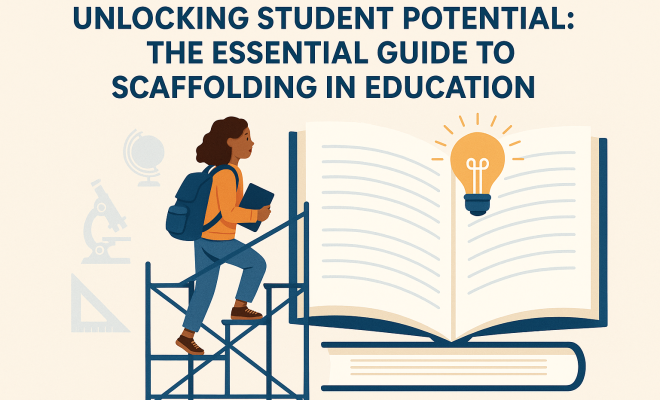
Scaffolding in education is a term that you might have heard thrown around in teacher workshops or educational conferences, but what does it really mean? At its core, scaffolding is a teaching strategy that provides students with temporary support structures to help them gain independence and master complex concepts. By breaking down learning into manageable parts, educators can guide students through their academic journey, ensuring they build a solid foundation for future learning.
Understanding the Concept of Scaffolding
Scaffolding, much like its construction counterpart, refers to the supportive framework that allows learners to achieve greater understanding and skills without being overwhelmed. This approach was popularized by psychologist Lev Vygotsky, whose theories emphasized the importance of social interaction in cognitive development. Vygotsky introduced the idea of the Zone of Proximal Development (ZPD), which illustrates the difference between what a learner can do independently and what they can do with guidance.
In essence, scaffolding helps teachers identify the ZPD for each student, enabling them to provide targeted assistance that is gradually removed as students gain confidence and competence. The ultimate goal is to foster learners who are not just knowledgeable, but also capable of applying their skills independently.
The Importance of Scaffolding in Education
Why is scaffolding so vital in the classroom? First and foremost, it promotes student engagement. When students are met at their level of understanding and gradually challenged, they’re more likely to remain interested and invested in their learning. Furthermore, scaffolding allows for differentiated instruction; not all students learn at the same pace, and scaffolding enables tailored support that meets diverse needs.
Additionally, scaffolding builds problem-solving skills and resilience. By navigating challenges with the support of a teacher or peer, students learn to approach problems methodically rather than feeling defeated. This not only enhances their academic performance but also prepares them for future challenges in and out of the classroom.
How Scaffolding Works: Key Strategies
Implementing scaffolding in education requires a variety of strategies. Here are some key techniques that teachers can utilize:
- Modeling: Demonstrating a skill or process before asking students to try it themselves. For instance, a teacher might model how to solve a math problem step-by-step.
- Think-Alouds: Sharing thoughts while solving a problem aloud, allowing students to see the cognitive processes involved in decision-making.
- Guided Practice: Providing opportunities for students to practice new skills with support. For example, a teacher might work through a chemistry experiment with students before they attempt it alone.
- Graphic Organizers: Using visual aids to help students organize information. These tools can be particularly effective in subjects like writing or science, where complex information needs to be structured.
- Peer Collaboration: Encouraging students to work in pairs or groups fosters a support system where learners can help each other, sharing their understanding and approaches.
Each of these strategies plays a crucial role in creating an environment where students feel secure enough to take risks and make mistakes, which is essential for deep learning.
Scaffolding Examples Across Grade Levels
To give you a clearer picture of how scaffolding can be applied in practice, let’s explore some examples across various grade levels:
Elementary School (Grades K-5)
In the early years of education, scaffolding often takes the form of hands-on learning experiences. For instance, in a kindergarten classroom, a teacher might use manipulatives to teach basic math concepts. By letting students physically handle blocks or counters, they can better grasp addition and subtraction.
In reading, a teacher might use a shared reading approach, where students read along with the teacher, who pauses to ask questions and provide context. This method builds comprehension skills while providing the support needed for young readers.
Middle School (Grades 6-8)
As students transition into middle school, the emphasis on independent learning increases, but scaffolding remains crucial. For example, in a social studies class, a teacher might introduce a complex topic like the causes of World War II by breaking it down into smaller parts. Initially, students could work in groups to research specific aspects of the war, guided by the teacher’s prompts. (See: Scaffolding in education.)
In writing, a teacher can provide a structured outline for an essay, allowing students to fill in their ideas gradually. As they become more confident in their writing abilities, the outlines can become less detailed, encouraging more independent thought.
High School (Grades 9-12)
In high school, scaffolding prepares students for the demands of higher education or the workforce. For example, in a science lab, teachers can initially guide students through experiments, ensuring they understand the procedures and safety protocols. Over time, students can take on more responsibility, designing their experiments with less oversight.
In literature classes, teachers can use Socratic seminars to facilitate discussions, providing students with a clear structure to follow. They might first model how to ask open-ended questions and encourage responses before handing over full control of the discussion to the students.
Challenges in Implementing Scaffolding
While scaffolding offers numerous benefits, it’s not without its challenges. One significant hurdle is the diverse skill levels within a classroom. Teachers must be adept at recognizing each student’s ZPD and providing appropriate supports, which can be time-consuming and requires keen observation skills.
Moreover, some educators may feel uncertain about how to scaffold effectively. A lack of training or resources can hinder their ability to implement these strategies. Professional development opportunities focused on scaffolding techniques can be invaluable for teachers seeking to refine their practice.
Current Trends and Research in Scaffolding
Recent studies highlight the growing recognition of scaffolding as a vital component of effective teaching. Research consistently shows that students who receive scaffolding perform better academically than their peers who do not. For example, a study published in the Journal of Educational Psychology found that students who engaged in scaffolded learning demonstrated significantly higher problem-solving abilities.
Furthermore, the integration of technology in classrooms has opened new avenues for scaffolding. Digital tools, such as interactive simulations and educational software, can provide immediate feedback and support, creating a dynamic learning environment. Tools like Google Classroom and various educational apps allow for personalized scaffolding that meets students at their individual levels.
Scaffolding Beyond Academics
Scaffolding isn’t just limited to academics; it can also play a role in social and emotional learning. For instance, educators can scaffold social skills by modeling appropriate behavior and providing explicit instruction on conflict resolution. This approach creates a safe space for students to experiment with and develop these essential life skills.
Moreover, educators can scaffold emotional regulation by teaching strategies such as mindfulness or self-reflection. By helping students understand their emotions and reactions, they can learn to navigate challenges more effectively, both inside and outside the classroom.
Tips for Educators on Effective Scaffolding
If you’re looking to enhance your scaffolding techniques, consider these practical tips:
- Assess Prior Knowledge: Before introducing new material, gauge what your students already know. This helps tailor your scaffolding to their needs.
- Use Clear Language: Ensure your instructions are straightforward and accessible. Avoid jargon and be explicit about what you expect.
- Encourage Questions: Foster an environment where students feel comfortable asking questions. This promotes engagement and allows for real-time adjustments to your scaffolding.
- Provide Timely Feedback: Offer constructive feedback during the learning process. This helps students understand what they’re doing well and where they can improve.
- Gradually Remove Support: As students gain confidence, gradually decrease the scaffolding. This encourages independence and resilience.
By implementing these tips, educators can create a more supportive and effective learning environment that nurtures student growth and development.
FAQs About Scaffolding in Education
What types of scaffolding exist in educational settings?
Scaffolding can take many forms, including cognitive, social, and instructional scaffolding. Cognitive scaffolding enhances understanding and problem-solving skills, social scaffolding promotes collaboration among students, and instructional scaffolding provides structured guidance through lectures, materials, or tools.
How can technology support scaffolding in education?
Technology can facilitate scaffolding by providing interactive platforms that adapt to students’ needs. For example, educational apps often include built-in assessments that can adjust the difficulty of tasks based on student performance. Online discussion forums can also provide a space for peer collaboration and feedback. (See: Scaffolding strategies in education.)
How do teachers determine a student’s Zone of Proximal Development?
Teachers can assess a student’s ZPD through a combination of formal assessments, observations, and one-on-one interactions. By understanding a student’s current abilities and the challenges they face, teachers can tailor their support effectively.
Can scaffolding be applied in remote or hybrid learning environments?
Absolutely! Scaffolding strategies can be adapted for online learning. For example, teachers can use video tutorials to model processes, utilize breakout rooms for collaborative activities, and provide online resources that students can explore at their own pace.
How does scaffolding impact long-term learning outcomes?
Research indicates that effective scaffolding can lead to deeper understanding and retention of knowledge. Students who receive scaffolding are often better prepared for complex tasks and demonstrate improved critical thinking skills, which are vital for success in academic and real-world contexts.
Case Studies: Successful Scaffolding Applications
Case Study 1: Math Intervention Program
A middle school implemented a scaffolding program in its math curriculum, focusing on students struggling with algebra concepts. Teachers created a series of progressively challenging tasks, starting with concrete examples like using physical objects to represent variables. Over time, students transitioned to more abstract representations and problem-solving scenarios.
The results were notable: the average test scores increased by 20% within one semester, and students reported feeling more confident in their math abilities, highlighting how effective scaffolding can transform learning experiences.
Case Study 2: Language Acquisition
An elementary school serving a large population of English Language Learners (ELLs) utilized scaffolding techniques in their language arts classes. Teachers began with visuals, sentence frames, and vocabulary lists to support students as they engaged with texts. Gradually, these supports were faded as students became more proficient. Surveys revealed a marked increase in student participation and a decrease in anxiety around language use, demonstrating the positive impact of scaffolding on language acquisition.
Future Directions for Scaffolding in Education
The landscape of education is always evolving, and with it, the practices surrounding scaffolding. As educational technologies continue to advance, new methods of scaffolding will likely emerge. For instance, artificial intelligence can provide personalized learning experiences that adapt in real-time to a student’s progress, offering tailored support as their ZPD shifts.
Additionally, there is a growing emphasis on culturally responsive scaffolding, where educators incorporate students’ backgrounds and experiences into their teaching. This approach not only makes learning more relevant but also fosters a sense of belonging among students, which is crucial for effective learning.
Conclusion
In an ever-evolving educational landscape, scaffolding in education remains a crucial strategy for fostering student learning and independence. By understanding the principles behind scaffolding and implementing targeted strategies, educators can significantly enhance the learning experiences of their students. As we continue to explore innovative ways to teach and engage learners, scaffolding will undoubtedly play an essential role in shaping future educational practices.
Scaffolding Techniques in Different Educational Contexts
Scaffolding is not a one-size-fits-all approach; it can and should be adapted to suit different educational contexts. Here are some examples of how scaffolding can be tailored for various settings:
Scaffolding in Special Education
In special education, scaffolding techniques can be essential for supporting students with diverse learning needs. Teachers might use more explicit modeling and step-by-step instructions, along with frequent check-ins to assess understanding. Visual aids, manipulatives, and tailored resources can help break down complex tasks into smaller, more digestible steps, allowing students to progress at their own pace. (See: Educational strategies and research.)
For instance, a teacher might use social stories to scaffold social interactions for students with autism, helping them understand social cues and appropriate responses. This targeted support can lead to improved social skills and greater inclusion in classroom activities.
Scaffolding in STEM Education
In STEM (Science, Technology, Engineering, and Mathematics) education, scaffolding can take the form of inquiry-based learning, where students are guided through scientific investigations. Teachers might start with structured experiments, providing clear guidelines and expectations. As students become more proficient, they can be encouraged to design their own experiments, fostering critical thinking and creativity.
Additionally, coding education has seen effective scaffolding through platforms like Scratch, where beginners can build simple projects with predefined blocks of code. As students gain experience, they can progress to more complex programming languages, gradually increasing their independence and problem-solving abilities.
Research Insights on Scaffolding Effectiveness
Numerous studies have explored the effectiveness of scaffolding in educational settings, revealing important insights. A meta-analysis conducted by the Institute of Education Sciences found that students who received scaffolded instruction outperformed their peers in both assessments and retention of knowledge. This finding underscores the importance of providing supportive frameworks that allow learners to thrive.
Furthermore, an investigation into student attitudes toward learning showed that those who experienced scaffolding were more likely to report higher levels of motivation and engagement. This suggests that scaffolding not only enhances academic performance but also positively impacts students’ feelings toward their educational journey.
The Role of Educators in Scaffolding
Educators play a crucial role in the scaffolding process. Their ability to assess student needs, provide appropriate support, and facilitate gradual independence is vital for fostering effective learning environments. Continuous professional development is essential to equip teachers with the skills and strategies necessary for successful scaffolding.
Mentorship programs and collaborative teaching approaches can also enhance teachers’ capabilities. By sharing experiences and strategies, educators can learn from one another, refining their scaffolding techniques to better meet the needs of diverse learners.
Conclusion: The Lasting Impact of Scaffolding in Education
As we reflect on the importance of scaffolding in education, it becomes clear that this approach is not merely a set of techniques, but a philosophy of teaching that prioritizes student growth and independence. With the right strategies and support, educators can create an environment where all students have the opportunity to excel and become lifelong learners. Embracing scaffolding in education will not only improve academic outcomes but also prepare students to navigate the complexities of the future successfully.
“`
Trending Now
- our breakdown of educators & linkedin: there is a place for you
- this guide on understanding why adhd students face challenges in pragmatic language skills
- the complete explanation
- our breakdown of empowering young minds: 9 ways to enhance pragmatic language development in preschool
- Decoding Language: How Pragmatics, Semantics, and…
Frequently Asked Questions
What is scaffolding in education?
Scaffolding in education refers to a teaching strategy that provides temporary support structures for students, helping them master complex concepts. It involves breaking down learning into manageable parts, allowing educators to guide students towards independence and deeper understanding.
Why is scaffolding important for students?
Scaffolding is crucial as it promotes student engagement by meeting learners at their level. It allows for differentiated instruction, catering to diverse learning needs, and helps build essential problem-solving skills and resilience as students navigate challenges with support.
Who developed the concept of scaffolding?
The concept of scaffolding was popularized by psychologist Lev Vygotsky, who emphasized social interaction in cognitive development. His theory of the Zone of Proximal Development (ZPD) highlights the difference between what learners can do independently and with guidance.
How does scaffolding help in differentiated instruction?
Scaffolding aids in differentiated instruction by providing tailored support that meets the varied learning paces of students. Educators can identify each student's Zone of Proximal Development and offer appropriate assistance, gradually removing support as students gain confidence.
What are the benefits of using scaffolding in the classroom?
The benefits of scaffolding include enhanced student engagement, improved problem-solving skills, and greater resilience. It allows teachers to effectively support students through their learning journey, ensuring they build a solid foundation for future academic success.
Have you experienced this yourself? We’d love to hear your story in the comments.