Pragmatics, Semantics, & Syntax: Unlocking Language’s Dance
“`html
1. Understanding Language: The Building Blocks
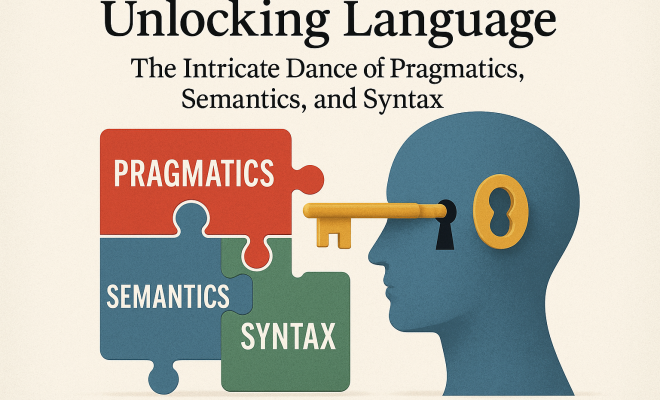
Language is the bedrock of human communication, serving as a vehicle for expressing thoughts, emotions, and ideas. At the heart of this complex system lie three fundamental components: pragmatics, semantics, and syntax. Each of these elements plays a unique role in how we construct and interpret language, making them essential for effective communication.
To appreciate the intricacies of human language, it’s vital to understand how these three pillars interact. While syntax pertains to the structure of sentences, semantics deals with meaning, and pragmatics focuses on context. Together, they form a cohesive framework that allows us to convey and comprehend messages with clarity.
2. Diving into Syntax: The Structure of Language
Syntax refers to the set of rules, principles, and processes that govern the structure of sentences in a given language. It dictates how words combine to form phrases and sentences, establishing a hierarchy of elements that communicates meaning. Understanding syntax involves recognizing the different parts of speech—such as nouns, verbs, adjectives, and adverbs—and how they interact within a sentence.
For example, consider the difference between the sentences “The cat chased the mouse” and “The mouse chased the cat.” Both contain the same words but convey entirely different meanings due to their syntactical arrangements. This illustrates the significance of syntax in language; without it, communication would be a chaotic jumble of words lacking coherence.
Syntax is also critical in language acquisition. Children learn the rules of syntax as they develop language skills, starting from simple sentences to more complex structures. This progression not only aids their communication but also helps in cognitive development, as they learn to organize thoughts and ideas logically.
Furthermore, syntax can vary significantly across languages. For instance, in English, the typical sentence structure is Subject-Verb-Object (SVO), as seen in the sentence “The dog (subject) eats (verb) the bone (object).” In contrast, languages like Japanese often use a Subject-Object-Verb (SOV) structure, which can lead to fascinating linguistic studies on how different cultures structure their thoughts through language.
3. Exploring Semantics: The Study of Meaning
Semantics is the branch of linguistics that deals specifically with meaning. It focuses on how words, phrases, and sentences communicate their intended meanings, as well as the relationships among them. In essence, semantics is concerned with the significance attached to linguistic expressions.
There are various layers to semantics, including lexical semantics, which examines the meanings of individual words and their relationships, and compositional semantics, which looks at how meanings combine in larger expressions. For instance, the word “bank” can mean a financial institution or the side of a river, demonstrating how context plays a crucial role in semantic interpretation.
Additionally, semantics is pivotal in fields like translation and interpretation, where accurately conveying meaning is essential. A translator must grasp both the lexical and contextual meanings to ensure that the message is faithfully represented in a different language. This complexity of semantics also extends to the study of ambiguity, where a single phrase may have multiple interpretations depending on its usage.
To further illustrate this, consider the phrase “kick the bucket,” which is an idiomatic expression meaning to die. Here, the literal semantics of the words do not convey the intended meaning without an understanding of the idiomatic context. Such idioms can be particularly challenging for language learners.
Recent studies in semantics have also explored how new technological advancements, such as emoji and gifs, add layers of meaning in digital communication. These non-verbal elements can change or enhance the semantics of a message, demonstrating that meaning is not solely derived from words.
4. Differentiating Pragmatics: Language in Context
Pragmatics goes beyond the literal meanings of words and sentences to explore how context influences communication. This field examines the social and cultural factors that shape how language is used, which can vary dramatically depending on the situation. For example, the phrase “Can you pass the salt?” is not merely a question about someone’s ability to pass an item; it often functions as a polite request. (See: Understanding the concept of syntax.)
Understanding pragmatics involves recognizing implicatures, which are implied meanings that arise from context rather than explicit statements. For instance, if someone says, “It’s getting late,” in a conversation, the pragmatics might suggest they want to leave, even if they don’t say so directly. This nuanced understanding is vital for effective communication, as it emphasizes that meaning often extends beyond the words chosen.
Pragmatics also encompasses speech acts, which are actions performed via utterances. For example, when someone makes a promise, an apology, or a request, they are engaging in a speech act that conveys not just information but also intention and social relationships. Recognizing these acts helps in navigating social interactions more effectively.
Moreover, pragmatics can help explain phenomena like politeness strategies. For instance, in many cultures, saving face is important, and speakers might choose to use indirect language to avoid offending others. Understanding these strategies can improve cross-cultural communication and reduce misunderstandings.
5. The Interplay of Pragmatics, Semantics, and Syntax
While syntax, semantics, and pragmatics are distinct fields, they are deeply interconnected. Syntax provides the framework for constructing sentences, semantics imparts meaning to these structures, and pragmatics contextualizes their usage. An effective communicator must navigate all three aspects to convey messages accurately.
For example, consider the sentence “I can’t wait to see you.” The syntax places “I” as the subject and “see” as the verb. Semantically, it conveys excitement about a future meeting. However, pragmatically, the intended meaning can shift depending on the relationship between the speaker and listener. The impact of context can even alter how the message is received, highlighting the importance of understanding all three pillars.
Furthermore, the interaction of these components can lead to various linguistic phenomena, such as metaphor and irony, where the surface structure does not convey the intended meaning. Understanding this interaction can enhance comprehension and improve skills in both written and spoken communication.
A practical example of this interplay can be seen in humor. A joke typically relies on a specific syntactical structure, has semantic elements that can be misinterpreted, and uses pragmatics to land appropriately with an audience. Comedians often play with syntax and semantics to create humor that resonates with the context of their audience, demonstrating the dynamic nature of language.
6. Real-World Applications of Pragmatics, Semantics, and Syntax
The practical implications of understanding pragmatics, semantics, and syntax extend into various fields, including education, artificial intelligence, and intercultural communication. In education, teachers can better support language development by recognizing how students interpret meaning based on their grasp of syntax and semantics while also considering their individual contexts.
In artificial intelligence, natural language processing systems rely heavily on these three pillars to enable machines to understand human language. For AI to effectively interact with humans, it must analyze syntax to parse sentences, use semantics to derive meaning, and apply pragmatics to select appropriate responses based on context.
For example, chatbots trained with comprehensive datasets can leverage these principles to understand user queries better. By analyzing the syntactic structure of a question and its semantic meaning, a chatbot can generate contextually appropriate responses, enhancing user experience.
In the realm of intercultural communication, understanding these linguistic components can aid in bridging language gaps. For instance, businesses expanding into foreign markets must consider the syntactical, semantic, and pragmatic differences in humor, politeness, and persuasion to effectively engage with new audiences.
7. The Role of Pragmatics in Social Interaction
In everyday conversations, pragmatics plays a crucial role in social interaction. Understanding the nuances of conversation can enhance interpersonal relationships and cater to varied social dynamics. For example, recognizing when to use formal or informal language can significantly impact communication outcomes. Using the appropriate level of politeness, for instance, is guided by pragmatic principles.
Consider how cultural differences influence pragmatic norms. In some cultures, directness is valued and expected, while in others, indirect communication is preferred. Being attuned to these subtleties enhances effective communication, allowing speakers to navigate social situations more adeptly. (See: Exploring the role of pragmatics.)
Social media platforms have further complicated the landscape of pragmatics. The use of emojis, memes, and shorthand can change the way meaning is interpreted. For instance, a simple emoji can convey humor, sarcasm, or affection, emphasizing the need to understand the context in which language is used today.
Moreover, the rise of virtual communication has created new challenges in pragmatic understanding. Tone, body language, and facial expressions, which are key components of face-to-face interaction, can be lost in text-based communication, leading to potential misunderstandings. Hence, being aware of these differences can improve online communication strategies, making them more effective.
8. Challenges in Understanding Pragmatics, Semantics, and Syntax
Despite their importance, mastering the interplay of pragmatics, semantics, and syntax can be challenging. Language learners often struggle with idiomatic expressions or metaphors that may not translate directly across contexts or cultures. Additionally, the same sentence can lead to different interpretations, depending on the listener’s background or experiences.
Misunderstandings can arise when speakers are unaware of pragmatic cues, leading to confusion or offense. For example, a statement like “That’s an interesting choice” can be interpreted as genuine praise or sarcastic criticism, depending on tone and context. Addressing these challenges requires ongoing awareness and practice in both understanding and using language effectively.
Moreover, the rapid evolution of language due to technological influences, such as texting and social media, poses additional challenges. Young people today are adopting new syntactic structures and semantic uses that may not align with traditional grammar rules, complicating the landscape of language education and usage.
Furthermore, the constant presence of multiple languages in a globalized world can lead to code-switching, where speakers alternate between languages within a conversation. This phenomenon adds a layer of complexity that requires understanding the syntactical, semantic, and pragmatic rules of more than one language, leading to unique challenges in communication.
9. The Future of Language Studies: Integrating the Pillars
As language studies continue to evolve, the integration of pragmatics, semantics, and syntax remains a focal point for researchers and educators alike. Advances in linguistics, cognitive science, and artificial intelligence are driving new insights into how these elements interact and influence communication.
Looking ahead, the emphasis on interdisciplinary approaches will likely shape the study of language even further. By exploring how cultural, social, and technological factors impact language use, scholars can deepen our understanding of human communication. Ultimately, comprehending the dance between pragmatics, semantics, and syntax will pave the way for enhanced communication strategies in an increasingly interconnected world.
Moreover, as we harness AI and machine learning, understanding these linguistic elements will be crucial in developing systems that can mimic human-like understanding. These advancements could lead to better educational tools that personalize learning based on individual language comprehension styles, showcasing the practical significance of these linguistic components in the digital age.
10. Frequently Asked Questions (FAQ)
What are pragmatics, semantics, and syntax in simple terms?
Pragmatics is about how context influences language use, semantics focuses on the meaning of words and sentences, and syntax is about the structure of sentences. Together, they shape our understanding and communication of language.
Why is understanding pragmatics important?
Understanding pragmatics is crucial because it helps us interpret meanings that aren’t explicitly stated. It allows us to read between the lines and grasp implied meanings, making communication more effective in social situations. (See: Research on semantics in language.)
How do pragmatics, semantics, and syntax work together?
These three components work together to create meaningful communication. Syntax structures the sentences, semantics provides the meanings, and pragmatics gives context. For effective communication, one must consider all three aspects.
Can you give an example of how context affects meaning?
Sure! If someone says, “It’s cold in here,” the literal meaning is clear, but in context, it might imply that they want someone to close a window or turn up the heat. The pragmatic context changes the interpretation.
What challenges do learners face with these concepts?
Language learners often struggle with idioms, cultural references, and contextual cues that influence meaning. They may misinterpret phrases or miss the nuances of language that are crucial for effective communication.
How does technology impact language use?
Technology has introduced new forms of communication, such as texting and social media, which often use informal syntax and semantics. This evolution can lead to misunderstandings but also enriches language by creating new expressions and meanings.
What role do cultural differences play in pragmatics?
Cultural differences significantly influence pragmatic norms, affecting how direct or indirect language is used. Understanding these differences can prevent miscommunication and enhance social interactions in multicultural contexts.
How can improved understanding of these concepts benefit education?
Educators can create tailored learning experiences by understanding how students use pragmatics, semantics, and syntax. This comprehension can help in developing teaching strategies that cater to diverse learning needs and promote effective communication skills.
What is the impact of globalization on language and its components?
Globalization has led to increased interaction among speakers of different languages, resulting in the borrowing of syntax and vocabulary. This cross-pollination can create new forms of expression, requiring an understanding of how pragmatics and semantics shift in multicultural conversations.
Are there any tools to help understand pragmatics, semantics, and syntax?
Yes! There are various linguistic software and applications designed to analyze text for syntactical structure, semantic meaning, and pragmatic context. These tools can assist language learners and educators in breaking down complex language elements for better comprehension.
“`
Trending Now
Frequently Asked Questions
What are the main components of language?
The main components of language are pragmatics, semantics, and syntax. Pragmatics focuses on context and usage, semantics deals with meaning, and syntax pertains to the structure of sentences. Together, they form a framework essential for effective communication.
How does syntax influence meaning in sentences?
Syntax influences meaning by dictating the arrangement of words within a sentence. For example, 'The cat chased the mouse' and 'The mouse chased the cat' use the same words but convey different meanings due to their syntactical structure.
Why is understanding syntax important for language acquisition?
Understanding syntax is crucial for language acquisition as it helps children learn how to combine words into coherent sentences. This skill aids their communication and supports cognitive development by enabling them to organize thoughts logically.
What role does pragmatics play in language?
Pragmatics plays a vital role in language by focusing on the context and social aspects of communication. It helps individuals interpret meaning beyond the literal words, considering factors like tone, intent, and situational context.
How do semantics and syntax work together?
Semantics and syntax work together to create meaningful sentences. While syntax provides the structural rules for sentence formation, semantics assigns meaning to the words and phrases, ensuring that the intended message is conveyed clearly.
What did we miss? Let us know in the comments and join the conversation.