Mastering Social Learning: Attention, Retention, Reproduction, Motivation
“`html
Social learning theory has become a cornerstone in understanding how people acquire new behaviors, skills, and knowledge through observation. Developed by Albert Bandura in the 1960s, this theory emphasizes the importance of social contexts and the ways in which individuals learn from one another. It doesn’t just happen in classrooms or structured environments — social learning is a dynamic process occurring all around us, shaping our behaviors and attitudes daily.
Understanding Social Learning Theory
At its core, social learning theory posits that people learn by observing others, particularly in social environments where interaction is prevalent. Unlike traditional learning methods that rely heavily on direct teaching, social learning focuses on modeling and imitation. Bandura’s pioneering research showcased how individuals can learn without direct personal experience, which shifts the focus from individual-based learning to a more collective approach.
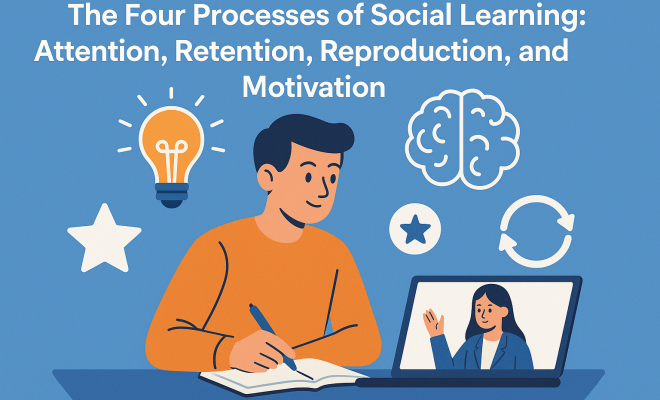
Through the lens of social learning theory, behaviors are learned not just through reinforcement or punishment, but through the observation of others’ actions and their consequences. This understanding opens up avenues for exploring behavioral change and the influence of societal norms on individual development. To fully grasp how this theory operates, we need to break down its four essential processes: attention, retention, reproduction, and motivation.
The Process of Attention
The first step in social learning is attention. For learning to take place, an individual must first observe a behavior. This involves not just seeing the behavior but also paying attention to it. Factors influencing attention include the observer’s level of interest, the attractiveness or relevance of the model, and the complexity of the behavior being demonstrated.
For instance, a child is much more likely to imitate a parent engaging in a fun game than an adult performing a tedious task. The child’s attention is captured not just by the action itself but also by how engaging or rewarding it seems. This is where the concept of modeling comes into play. A model can be anyone from a parent to a peer, or even characters from media. The key takeaway here is that effective teaching often starts with engaging the audience, making it crucial for educators and leaders to capture attention to facilitate learning.
The Process of Retention
Once an individual has paid attention to a behavior, the next process is retention. This involves encoding the observed information into memory so it can be recalled later. Retention is influenced by several factors, including the observer’s mental imagery, verbal rehearsal, and the ability to relate the observed behavior to prior knowledge or experiences.
One effective way to enhance retention is through the use of mnemonic devices or storytelling. By linking new information to existing knowledge, individuals can create mental connections that facilitate easier recall. For example, a teacher may use storytelling to describe a scientific concept, allowing students to visualize and remember the information better. Techniques such as repetition and summarization also play crucial roles in reinforcing retention.
The Process of Reproduction
Next is reproduction, which refers to the process of converting observations and retained knowledge into actual behavior. This step requires not only the memory of the behavior but also the physical and cognitive ability to reproduce it. This is where practice comes in. The more an individual practices a skill or behavior, the more proficient they become at reproducing it.
For instance, a basketball player who has observed a skilled player making three-point shots must first have retained the technique and then practice it repeatedly to replicate the action successfully. This process highlights the importance of feedback and reinforcement. Positive feedback from peers or instructors can boost confidence, encourage practice, and ultimately lead to mastery of the observed behavior.
The Process of Motivation
The final process in social learning theory is motivation. Even if an individual has paid attention, retained information, and can reproduce the behavior, they must be motivated to act on that learning. Motivation can come from various sources, including internal factors, like personal goals or interests, and external factors, such as rewards, recognition, or societal pressures.
Bandura identified two types of motivation within the framework of social learning theory: intrinsic and extrinsic motivation. Intrinsic motivation arises from within — a genuine interest or enjoyment in the task itself. Extrinsic motivation, on the other hand, comes from external rewards or the desire for approval from others. Both forms of motivation can significantly impact the effectiveness of the learning process. (See: Social Learning Theory on Wikipedia.)
Applications of Social Learning Theory in Education
Understanding the four processes of social learning theory has profound implications for education. Teachers can enhance learning by designing activities that consider attention, retention, reproduction, and motivation. For example, using multimedia presentations can attract attention, while collaborative projects can facilitate retention through peer discussion and reinforcement.
Moreover, educators can utilize modeling by demonstrating behaviors and skills they want students to learn, followed by offering ample opportunities for practice. Incorporating feedback mechanisms can help students refine their skills and maintain motivation. Celebrating small victories or progress helps in sustaining engagement and reinforcing the desire to learn more.
Social Learning Theory Beyond the Classroom
While education is a primary domain for social learning theory, its applications extend far beyond classrooms. In workplaces, training programs can benefit significantly from these principles. Organizations increasingly utilize mentorship and coaching, allowing employees to observe and imitate experienced colleagues. This not only facilitates skill acquisition but also fosters a culture of continuous learning.
Social media has also become a modern platform for social learning. Users often learn from influencers, educators, or peers who share skills, tutorials, and knowledge through videos and posts. This digital landscape offers numerous opportunities for observation and reinforcement, effectively bridging geographical and cultural gaps.
The Role of Technology in Social Learning
Technology plays a vital role in enhancing social learning processes. Online platforms and communities provide spaces for individuals to engage in collaborative learning, share experiences, and model behaviors. Whether through forums, webinars, or social media groups, technology enables learners to connect and communicate, making learning a more social experience.
Tools such as video conferencing can simulate observational learning in real-time, allowing learners to watch and interact with experts from around the world. E-learning modules often incorporate gamification elements to enhance motivation, making the learning process more engaging and interactive.
Challenges in Implementing Social Learning
Despite the advantages, implementing social learning theory is not without challenges. One significant barrier is the traditional education system’s focus on standardized testing and rote memorization, which can undermine the principles of social learning. Educators may find it difficult to shift their teaching methods to accommodate observation and modeling.
Additionally, in workplaces, there may be resistance to change from established training protocols. Some organizations may struggle to create a culture that fosters open communication and collaboration, which are essential for effective social learning. Addressing these challenges requires a commitment to professional development and a willingness to embrace innovative teaching and training methods.
Future Implications of Social Learning Theory
The ongoing evolution of social learning theory, particularly in light of technological advancements and changing societal dynamics, presents exciting opportunities for future exploration. As we continue to navigate a world increasingly influenced by digital interactions, understanding the nuances of social learning becomes even more critical.
Researchers are continually exploring how various factors, such as cultural context and social identity, impact the learning process. The rise of virtual reality and augmented reality technologies also opens new avenues for observational learning, potentially revolutionizing how we acquire and practice skills in immersive environments.
Real-World Examples of Social Learning Theory in Action
To better appreciate the practical implications of social learning theory, it’s worth examining real-world examples where this approach has made a significant impact. Consider the case of a community health initiative aimed at reducing smoking rates among teenagers. By utilizing peer educators who had successfully quit smoking, the program capitalized on the principles of social learning; adolescents were more likely to listen to and emulate their peers rather than authority figures. The success of such programs often hinges on the relatable models they provide, proving that the influence of peer behavior can be a powerful motivator for change.
The Impact of Social Learning Theory on Parenting
Parenting styles often reflect the principles of social learning theory. Parents serve as primary models for their children, demonstrating behaviors, attitudes, and values that kids tend to internalize. For example, a parent who regularly practices kindness and empathy is likely to raise children who mirror those behaviors. Research indicates that children with parents who model positive social behaviors exhibit higher levels of social competence and emotional regulation. This reinforces the idea that effective parenting is not just about direct instruction but also about modeling desired behaviors. (See: CDC on Social Learning in Youth.)
Statistics Highlighting the Relevance of Social Learning Theory
Several studies underscore the impact of social learning theory on behavior. For instance, a survey conducted by the Pew Research Center revealed that 82% of teenagers reported learning about social issues through social media platforms, highlighting the role of observation in shaping their perspectives. Furthermore, research from the University of California found that children who engaged in cooperative learning environments demonstrated a 30% improvement in problem-solving skills compared to those in competitive settings. These statistics illustrate how social contexts can profoundly influence learning outcomes.
Expert Perspectives on Social Learning Theory
Experts in educational psychology emphasize the ongoing relevance of social learning theory. Dr. David Johnson, a professor of educational psychology, asserts, “The ability to learn from others is a fundamental human trait that shapes our interactions and responses throughout life.” His research highlights that fostering environments where observation and collaboration are prioritized not only enhances learning but also contributes to social cohesion.
Additionally, Dr. Linda Darling-Hammond, an education researcher, notes, “Modeling effective behaviors in classrooms cultivates a culture of learning and growth. Educators who exemplify these principles encourage students to engage actively and empathetically with their peers.” Her insights further reinforce the importance of social learning in shaping future generations.
Social Learning Theory in the Workplace
In a workplace setting, social learning theory is increasingly applied through peer-to-peer training programs. For example, companies like Google and Zappos have embraced this approach to foster knowledge sharing and collaboration among employees. By creating environments where employees are encouraged to learn from one another through observation and informal interactions, these organizations have seen improvements in employee performance and satisfaction. Training initiatives that incorporate social learning principles often yield better retention of information and skills, as individuals learn not only from trainers but also from the experiences of their colleagues.
Frequently Asked Questions about Social Learning Theory
What is the core principle of social learning theory?
The core principle of social learning theory is that individuals learn behaviors and attitudes through the observation of others, rather than through direct experience alone. This theory emphasizes the role of modeling and imitation in the learning process.
How can social learning theory be applied in educational settings?
In educational settings, social learning theory can be applied by creating collaborative learning activities, using peer modeling, and encouraging discussions that allow students to share their observations and insights. Educators can use multimedia tools and real-world examples to engage students effectively.
What role does motivation play in social learning?
Motivation is crucial in social learning, as it drives individuals to act on what they have observed. Both intrinsic and extrinsic motivation can influence whether a person chooses to replicate a behavior. For example, intrinsic motivation may arise from a personal interest in a subject, while extrinsic motivation might come from rewards or recognition.
Can social learning occur in non-educational settings?
Absolutely. Social learning can occur in various contexts, including the workplace, home, and community environments. Observing peers, mentors, or even media influences can shape behaviors and attitudes outside of formal educational settings.
What challenges might educators face in implementing social learning theory?
Educators may face challenges such as resistance to change from traditional teaching methods, large class sizes that hinder collaboration, and the pressure of standardized testing. These factors can make it difficult to implement social learning strategies effectively.
How can technology enhance social learning?
Technology enhances social learning by providing platforms for collaboration, such as online forums, social media, and video conferencing tools. These technologies allow individuals to connect, share knowledge, and observe behaviors in real-time, making learning a more interactive and engaging experience.
Examples of Social Learning Theory in Action
Social learning theory is evident in various real-world scenarios, illustrating its practical applications. For example, in the context of public health, campaigns aimed at reducing obesity rates often leverage social learning principles. By showcasing community leaders and local influencers who have adopted healthier lifestyles, these campaigns encourage others to follow suit. The positive outcomes are often amplified when individuals see relatable peers achieving success, which can motivate them to make similar changes.
In the business world, companies that promote a culture of continuous learning often share success stories among employees. When an employee successfully adopts a new software tool through peer guidance, that story can be shared in meetings or newsletters, encouraging others to seek help and embrace similar tools. This cycle of observation and imitation not only reinforces the learning but also builds a sense of community within the organization.
The Importance of Feedback in Social Learning
Feedback plays a crucial role in the social learning process, enhancing both retention and motivation. When learners receive constructive feedback, they are more likely to refine their understanding and skills. For instance, in an educational setting, when a teacher provides specific feedback on a student’s group project, it helps the student identify areas for improvement and encourages further exploration of the subject matter.
In workplaces, feedback from peers can foster a collaborative environment. When employees are encouraged to share feedback on each other’s performances, it not only improves individual skills but also strengthens team dynamics. This exchange of feedback reinforces the social learning cycle, where observations lead to practice, and practice leads to further observation and learning.
Barriers to Social Learning Theory Implementation
While many organizations and educators recognize the benefits of social learning theory, several barriers can hinder its implementation. One significant challenge is the lack of resources. Not all educational institutions or workplaces have access to the necessary technology or training materials to facilitate effective social learning experiences. Limited budgets can restrict opportunities for collaborative projects or peer mentoring programs.
Cultural factors also play a role. In some environments, there may be a prevailing attitude that values individual achievement over collaborative learning. This can create resistance to adopting social learning practices. Changing this mindset requires a concerted effort from leadership to model collaborative behaviors and foster a culture that values learning from one another.
Conclusion
Social learning theory provides a robust framework for understanding how we learn from each other through observation, imitation, and modeling. By breaking down the four processes of attention, retention, reproduction, and motivation, we can gain valuable insights into enhancing our learning experiences in various contexts. Whether in education, the workplace, or our daily interactions, embracing social learning can lead to more effective, engaging, and meaningful learning experiences for individuals of all ages.
“`
Trending Now
- read the full story
- the complete explanation
- “Why Neuroscientists Say Learning Styles Theory…
- our breakdown of “how to teach to different learning preferences without limiting student growth”
- this guide on “how childhood attachment patterns affect adult relationships and mental health”
Frequently Asked Questions
What are the four processes of social learning?
The four processes of social learning, as described by Albert Bandura, are attention, retention, reproduction, and motivation. Attention involves observing a behavior, retention is about remembering the behavior, reproduction is the ability to replicate the behavior, and motivation influences whether the behavior will be enacted based on observed outcomes.
How does social learning theory work?
Social learning theory works by positing that individuals learn behaviors, skills, and knowledge through observing others in social contexts. It emphasizes modeling and imitation rather than direct teaching, showing that learning can occur without personal experience.
Why is attention important in social learning?
Attention is crucial in social learning because it is the first step for learning to occur. An individual must observe and focus on a behavior to learn it. Factors such as interest in the model and the behavior's relevance significantly influence attention.
What role does motivation play in social learning?
Motivation plays a vital role in social learning as it determines whether an individual will replicate the observed behavior. If the consequences of a behavior are perceived as positive, the individual is more likely to be motivated to imitate it.
How can social learning theory be applied in education?
Social learning theory can be applied in education by encouraging collaborative learning environments where students observe and model each other's behaviors. This approach fosters peer interaction and allows students to learn from both teachers and classmates, enhancing overall learning outcomes.
Have you experienced this yourself? We’d love to hear your story in the comments.