Solana’s 2026 FUD: Opportunity Amidst Institutional Growth?
“`html
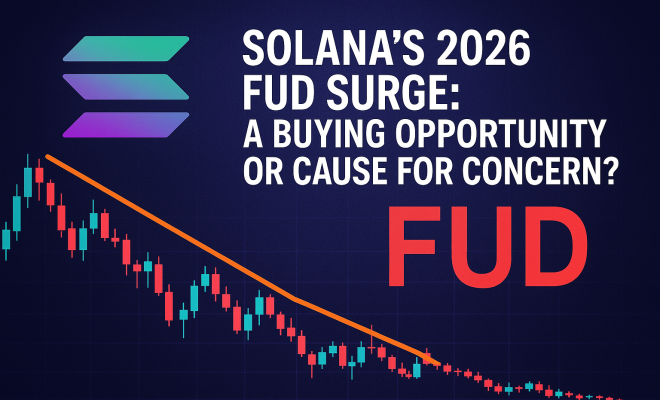
The cryptocurrency world is buzzing with Solana cryptocurrency news as the network faces unprecedented levels of negative sentiment in 2026. This heightened fear, uncertainty, and doubt (FUD) comes at a time when Solana is also experiencing a remarkable uptick in institutional adoption, raising eyebrows and sparking discussions among investors and crypto enthusiasts alike. As the trading volume plummets, traders are left wondering if this is a golden opportunity or a warning sign.
The Current Landscape: Solana’s Challenges and Strengths
In 2026, Solana’s trading volume has seen a steep decline, coinciding with a surge in negative sentiment. Social media platforms and crypto forums are flooded with apprehensive posts regarding the future of the Solana blockchain. The term FUD has become synonymous with this period, as traders grapple with emotional responses driven by fear.
Despite the troubling narratives circulating in the market, it’s essential to highlight Solana’s undeniable accomplishments. The chain has positioned itself as the dominant platform for tokenized real-world assets (RWAs), processing a staggering $5.7 billion worth of these assets. Notably, 97% of all tokenized stock volume is now funneled through Solana, underscoring its significance in the evolving digital asset landscape.
Understanding FUD: The Emotional Underpinnings
FUD is an acronym that stands for fear, uncertainty, and doubt, often propagated to influence investor behavior. In the case of Solana, the negative sentiment appears to stem from a combination of market volatility and recent controversies surrounding blockchain protocols.
Many investors are navigating a tumultuous emotional landscape where they feel compelled to act quickly, either in fear of missing out on potential gains or in response to the negative rhetoric dominating the narrative. This emotional rollercoaster leads to impulsive trading decisions, frequently influencing the market dynamics.
Institutional Adoption Amidst Public Distrust
What’s fascinating about the current situation is the juxtaposition between the negative social sentiment and the growing institutional interest in Solana. The blockchain has successfully attracted major players in various sectors, particularly in finance, which indicates a level of confidence that contrasts sharply with the public’s wariness.
Despite the bearish sentiment, institutions are flocking to Solana, seeking to leverage its capabilities for tokenizing real-world assets. This evolution could signify a fundamental shift in how tokenized assets are perceived, hinting that institutional adoption may indicate a more stable future for Solana—one that is not reflected in the current market sentiment.
Analysis of Trading Volume Decline
The decline in trading volume for Solana has left many investors scratching their heads. A drop in trading volume can indicate many factors, including market manipulation, profit-taking, or simply a lack of interest from retail investors.
In Solana’s case, the decline coincides with widespread media coverage focusing on negative aspects of the blockchain. This has led to traders pulling back, opting for safer investments in a volatile market. The sharp contrast between on-chain activity and trading sentiment raises questions about the market’s perception of value versus actual utility.
The Role of Community and Social Sentiment
Communities play a pivotal role in shaping the narrative around cryptocurrencies. Forums like Reddit and Twitter have become echo chambers where FUD can spread rapidly, leading to swift and often irrational actions from investors.
In Solana’s case, community sentiment has been mixed. While some vocal factions express deep-seated concerns about the blockchain’s future, others fervently defend its capabilities and potential. This split in community sentiment often leads to heightened volatility, influencing short-term price movements.
Is This the Time to Buy Solana?
For many investors, the current FUD surrounding Solana presents a conundrum. Is this a buying opportunity, or should one be cautious? It’s vital to approach the situation with a clear, analytical mindset.
Investors should consider factors such as the blockchain’s recent adoption rates, its market utility, and historical performance metrics. If Solana continues to dominate the tokenized asset market, it could emerge stronger from the current wave of negativity. Conversely, if the public sentiment continues to deteriorate without a corresponding increase in on-chain activity, the risks could outweigh the potential rewards.
Expert Perspectives on Solana’s Future
Experts in the crypto sphere have varied opinions on the future of Solana amidst the current FUD. Some analysts argue that the blockchain’s technological advancements and institutional backing indicate a promising trajectory. (See: Understanding fear, uncertainty, and doubt.)
Conversely, others warn that the ongoing negative sentiment could lead to prolonged instability. They emphasize the importance of monitoring market trends, on-chain activity, and overall investor confidence to gauge the blockchain’s long-term viability.
Potential for Recovery and Growth
Despite the current FUD, there remains potential for recovery and growth in the Solana ecosystem. The influx of institutional capital, along with its significant market share in tokenized assets, positions Solana favorably for future expansion.
Investors keen on identifying promising opportunities should keep a watchful eye on Solana’s development roadmap and its capacity to address existing problems. The blockchain community’s response to challenges could very well determine its trajectory moving forward. For more on this, see Solana's April 2026 hurdles.
The Importance of Informed Decision-Making
In an environment rife with FUD, informed decision-making is crucial. Investors must sift through the noise, focusing on substantiated data rather than succumbing to the emotional impulses driven by fear.
Strategies such as thorough research, risk management, and a long-term perspective can provide a buffer against the volatility that often characterizes the cryptocurrency market. Remember, while FUD can have immediate impacts on market sentiment, the underlying value and utility of a blockchain like Solana can often prevail in the long run.
Final Thoughts: Navigating the FUD Storm
With Solana’s FUD at a peak in 2026, the cryptocurrency landscape is charged with emotion and uncertainty. However, the blockchain’s robust position in the tokenized asset sector suggests a more nuanced narrative beneath the surface. As an investor, maintaining a balanced perspective and focusing on the blockchain’s fundamentals will be key in navigating this turbulent period.
Ultimately, the clash between social sentiment and actual on-chain utility creates a compelling discussion for the crypto community. Whether this moment serves as a buying opportunity or a warning will depend on how effectively investors can distinguish between fleeting sentiment and enduring value.
Comparative Analysis: Solana vs. Other Blockchains
When assessing Solana’s current standing amidst the FUD, it’s beneficial to compare it with other prominent blockchains like Ethereum and Avalanche. Ethereum has long been the dominant player in the smart contract space, boasting a vast ecosystem of decentralized applications.
Ethereum’s challenges include high gas fees and slower transaction speeds, which have paved the way for competitors like Solana and Avalanche to capture market share. Solana’s unique consensus mechanism, Proof of History, allows it to process transactions incredibly fast and at a fraction of the cost, making it particularly appealing for developers and users.
Despite its strengths, Solana’s growing pains, such as network outages and security concerns, are contrasted with Avalanche’s approach to scalability and interoperability. Avalanche has made a name for itself with its subnets, allowing for tailored blockchains that can operate independently while benefiting from the security of the Avalanche network.
From a user and developer perspective, Solana’s ecosystem continues to expand, with DeFi and NFT projects flocking to its platform, showcasing its potential despite the current market volatility. This competition is a reminder of the rapidly changing landscape in the cryptocurrency world, where adaptability and innovation are vital for survival.
Statistics: Solana’s Market Position
To grasp Solana’s position in the market, it’s essential to consider some statistics. As of 2026, Solana holds approximately 15% of the total market share among cryptocurrencies, with a market cap fluctuating around $40 billion. In comparison, Ethereum commands over 50% of the market, indicating that Solana still has room to grow.
The number of active wallets on Solana has increased by over 300% year-over-year, a testament to its growing adoption among developers and users. In contrast, Ethereum’s active wallet growth has slowed due to rising costs and transaction complexity.
Moreover, transaction speeds on Solana average around 2,000 transactions per second (TPS), making it one of the fastest blockchains available. This stands in stark contrast to Ethereum’s average of around 15 TPS, showcasing Solana’s technological advantages in handling a high volume of transactions during peak times.
Expert Opinions: What Influencers Are Saying About Solana
Taking a closer look at expert opinions, renowned crypto analysts, and influencers have begun to weigh in on the state of Solana. Names like Anthony Pompliano and Raoul Pal have highlighted Solana’s potential, stating that its technology could be a game-changer for the decentralized finance (DeFi) sector.
However, caution remains among others who emphasize the importance of sustainability. They argue that while institutional investment is promising, Solana must prove its reliability over a more extended period to shake off the stigma tied to its recent performance issues. (See: Impact of fear and uncertainty on mental health.)
Social media sentiments often reflect these opinions. Influencers have contributed to the narrative, either furiously defending Solana as a technological marvel or criticizing it for its recent troubles. This dichotomy creates an environment where new investors must navigate a sea of conflicting viewpoints.
FAQ Section: Addressing Common Questions About Solana
1. What caused the recent decline in Solana’s trading volume?
The decline is attributed to several factors, including market sentiment driven by FUD, profit-taking by investors, and concerns over network stability. As traders become more cautious in volatile markets, they often reduce their positions in assets they perceive as risky.
2. How does Solana’s transaction speed compare to Ethereum?
Solana boasts a transaction speed of around 2,000 TPS, while Ethereum averages approximately 15 TPS. This significant difference gives Solana an edge in handling large-scale applications requiring high throughput.
3. Is now a good time to invest in Solana?
Investment timing depends on individual risk tolerance and market analysis. While current FUD could discourage some investors, others may see it as an opportunity to acquire at lower prices. Evaluating on-chain metrics, institutional interest, and market trends is essential before making a decision.
4. What role do institutions play in Solana’s future?
Institutional investors bring credibility and significant capital to Solana, indicating confidence in its technology and long-term viability. Their involvement can stabilize the market and drive further adoption, potentially countering the prevailing negative sentiment.
5. Can Solana recover from the current FUD?
Recovery is possible if Solana can demonstrate its utility and reliability to both retail and institutional investors. Increased adoption rates, successful upgrades, and addressing any security concerns will be critical in overcoming negative sentiment.
6. How do community sentiments influence Solana’s market performance?
Community sentiment can create a feedback loop that influences market performance. Positive sentiments can drive prices up as more investors buy in, while negative sentiments can lead to sell-offs. Engaged and supportive communities can help stabilize prices and foster growth.
Long-Term Outlook for Solana
While the current landscape may seem bleak, the long-term outlook for Solana remains promising. With its foundational strengths, increasing institutional interest, and an expanding user base, Solana has the potential to emerge as a leading blockchain platform. Monitoring its developments and community sentiment will provide insights into how it navigates the ongoing challenges.
In the evolving cryptocurrency space, the adaptability of a blockchain often determines its success. As Solana continues to innovate and enhance its infrastructure, it could very well solidify its place among the top players in the industry.
New Opportunities for Developers on Solana
As Solana continues to position itself as a formidable player in the blockchain space, the opportunities for developers are expanding rapidly. The launch of developer incentives and grant programs has drawn attention to Solana, encouraging more projects to build on its platform. With funding available for innovative projects, developers can focus on creating solutions that leverage Solana’s high transaction speeds and low fees.
DeFi projects are particularly thriving on Solana, with platforms such as Serum and Raydium gaining traction. These decentralized exchanges offer traders seamless trading experiences and address issues like slippage and high fees that have plagued Ethereum-based platforms. The growth of DeFi on Solana could offer unique advantages, including accessibility to a wider audience.
Additionally, the NFT market on Solana has seen explosive growth. With platforms like Metaplex allowing creators to mint and sell NFTs easily, artists and musicians are turning to Solana to establish their digital presence. This shift is not only solidifying Solana’s presence in the NFT space but also expanding its appeal to a broader demographic of users who may not have engaged with blockchain technology otherwise.
The Risks of Investing in Solana
While the potential upside of investing in Solana is considerable, it’s important to recognize and assess the risks involved. The volatility inherent in cryptocurrency markets means that prices can swing dramatically, driven by market sentiment or external factors like regulatory changes.
Additionally, Solana has faced criticism regarding its network’s reliability, particularly after previous outages that impacted users and developers. Such occurrences raise concerns about the long-term scalability and stability of the platform. Investors should weigh these risks carefully against the potential rewards, taking into account their risk tolerance and investment strategy. (See: Cryptocurrency market trends and challenges.)
The competitive landscape is also a significant factor. As new blockchains emerge, existing ones like Solana must continually innovate to maintain their edge. The pressure from established networks like Ethereum and newer contenders like Avalanche means that Solana cannot afford to rest on its laurels, as the space is continuously evolving.
Community Initiatives and Governance
Solana’s community is actively involved in governance initiatives, allowing token holders to participate in decision-making processes. This engagement fosters a sense of ownership and accountability, encouraging more users to invest in the success of the platform. Recent proposals for upgrades and features have been driven by community feedback, illustrating the decentralized nature of governance on Solana.
This inclusive approach can positively influence investor sentiment, as community-driven projects often resonate better with users. By allowing stakeholders to voice their opinions and shape the development of the platform, Solana aims to build trust and transparency, which can counteract some of the FUD circulating in the market.
Furthermore, educational initiatives within the community are gaining momentum, aiming to increase awareness and understanding of blockchain technology. Workshops, webinars, and online resources are helping to demystify the technology behind Solana, empowering users to make informed decisions about their investments and participation in the ecosystem.
Comparing Solana’s NFT Market with Ethereum’s
The NFT market is a crucial aspect of both Solana and Ethereum, yet the two platforms exhibit distinct characteristics. Ethereum has historically dominated the NFT space, hosting major projects like CryptoKitties and Bored Ape Yacht Club. However, high gas fees and network congestion have driven some creators and collectors to explore alternatives like Solana.
On Solana, the low transaction costs and rapid confirmation times allow users to mint, buy, and sell NFTs with ease. Projects such as Solanart and DigitalEyes are gaining traction, showcasing the platform’s potential in facilitating NFT transactions. This shift could signify a broader trend where users prioritize cost-effectiveness and efficiency, opening the door for Solana to capture a more significant share of the NFT market.
The cross-chain capabilities and interoperability of NFTs could also play a role in shaping the future landscape. As users begin to demand seamless experiences across different platforms, Solana’s unique advantages may attract even more projects and users, further diversifying its NFT ecosystem.
Preparing for Market Changes: Strategies for Investors
Given the current climate of uncertainty surrounding Solana, investors need to adopt strategies that help them navigate the market effectively. Keeping abreast of news developments, both positive and negative, is crucial for making informed decisions. Setting clear goals and risk thresholds can also guide investment choices, especially during turbulent times like these.
Investors may also consider diversifying their portfolios to mitigate risk. By holding a mix of assets, including those outside of Solana, they can reduce exposure to any single investment’s volatility. This approach allows for a more balanced strategy and better long-term performance.
Finally, engaging with the community can provide valuable insights. By participating in discussions, attending meetups, and following influential voices in the Solana ecosystem, investors can gain perspectives that may help refine their investment strategies and keep them informed about the latest trends and opportunities.
“`
Trending Now
Frequently Asked Questions
What is causing the FUD surrounding Solana in 2026?
The FUD surrounding Solana in 2026 is driven by a combination of market volatility, negative sentiment on social media, and controversies related to blockchain protocols. As trading volumes decline, fears about the future of Solana have intensified, leading to impulsive trading decisions among investors.
Is the decline in Solana's trading volume a bad sign?
While the decline in trading volume can be concerning, it's essential to consider Solana's strengths, such as its dominance in tokenized real-world assets. The network processes a significant portion of tokenized stock volume, which may indicate long-term growth potential despite current FUD.
Should I invest in Solana despite the negative sentiment?
Investing in Solana during this period of negative sentiment could present a buying opportunity, especially given its strong institutional adoption and dominance in tokenized assets. However, potential investors should carefully evaluate the risks associated with market volatility and emotional trading behaviors.
What does FUD mean in the context of cryptocurrency?
FUD stands for fear, uncertainty, and doubt. In cryptocurrency, it refers to negative information or rumors that can influence investor behavior and market dynamics. In the case of Solana, FUD has contributed to heightened anxiety among traders, impacting their decision-making.
How is institutional adoption affecting Solana in 2026?
Despite the surge in FUD, Solana is experiencing remarkable institutional adoption, positioning itself as a leader in the tokenization of real-world assets. This institutional interest could potentially bolster Solana's market position and long-term viability, even amid negative sentiment.
What did we miss? Let us know in the comments and join the conversation. This builds on Bitcoin sentiment insights.