Teaching Conflict Resolution Through Socratic Seminar Discussions
“`html
In an age where disagreement and tensions often escalate into conflict, the need for effective conflict resolution education has never been more relevant. Educators across the globe are recognizing the significance of teaching students not just how to argue, but how to engage in meaningful dialogue. One of the most effective methods for achieving this is through Socratic seminars, a pedagogical approach that emphasizes critical thinking and collaborative learning. This article explores the profound impact of Socratic seminars on conflict resolution education, delving into its principles, applications, and the skills it nurtures in students.
Understanding Socratic Seminars
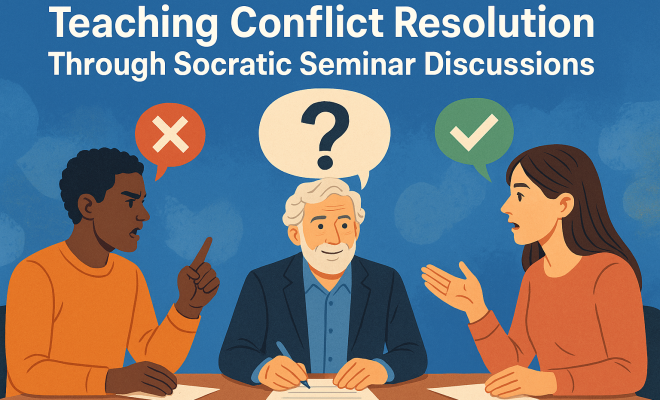
The Socratic seminar is named after the ancient Greek philosopher Socrates, who believed in stimulating critical thought through dialogue. Unlike traditional discussions, where a teacher may dominate the conversation, a Socratic seminar encourages students to take the lead, challenging each other’s ideas in a respectful and constructive manner. This format creates a safe space for students to express their thoughts, explore different perspectives, and develop their reasoning skills.
In a typical Socratic seminar, students engage with a text or a question, sharing their interpretations and responding to one another. The goal isn’t to reach a consensus but to explore the complexities of a topic deeply. This dialogue-driven approach fosters an environment where multiple viewpoints can coexist, helping students understand that conflict is often rooted in differing perspectives.
The Role of Conflict Resolution Education
Conflict resolution education aims to equip individuals with the skills necessary to handle disputes effectively. The importance of this education spans various settings, from classrooms to workplaces, and even personal relationships. According to research conducted by the U.S. Department of Education, conflict resolution programs can reduce school violence, improve student behavior, and enhance academic performance.
At its core, conflict resolution education encompasses a variety of skills, including active listening, empathy, negotiation, and problem-solving. When students learn these skills, they become better equipped to navigate disagreements and find solutions without resorting to aggression or avoidance. Integrating this education into the curriculum is essential for fostering a more harmonious society.
How Socratic Seminars Enhance Conflict Resolution Skills
By employing the Socratic seminar method, educators can effectively teach conflict resolution skills. Here are some key ways in which this approach enhances students’ abilities to resolve conflicts:
- Active Listening: Socratic seminars require students to practice active listening, a critical component of conflict resolution. By paying attention to their peers’ viewpoints, students learn to respect differing opinions and formulate responses based on understanding rather than rebuttal.
- Empathy Development: Engaging in discussions that explore diverse perspectives helps students develop empathy. Understanding where others are coming from allows students to address conflicts with sensitivity rather than hostility.
- Constructive Criticism: In a Socratic seminar, students learn to critique ideas, not individuals. This distinction is vital for healthy conflict resolution, as it enables students to address issues without personal attacks.
- Critical Thinking: The seminar format encourages students to analyze arguments critically and evaluate evidence. These skills are essential for negotiating solutions and making informed decisions during conflicts.
Setting Up a Socratic Seminar
Implementing a Socratic seminar in the classroom requires careful planning and structure. Here’s a step-by-step guide to setting one up:
- Select a Text or Topic: Choose a piece of literature, a current event, or a philosophical question that has multiple viewpoints. This selection should be relevant to the students’ lives and capable of sparking debate.
- Prepare Students: Before the seminar, provide students with guidelines on how to participate effectively. Discuss the importance of respectful dialogue, active listening, and open-mindedness.
- Create a Safe Environment: Establish ground rules that promote a safe space for sharing ideas. Ensure that all students feel comfortable expressing their thoughts without fear of judgment.
- Facilitate the Discussion: As the teacher, your role is to facilitate rather than dominate the conversation. Pose open-ended questions, encourage deeper exploration of ideas, and keep the discussion focused.
- Debrief: After the seminar, hold a debriefing session. Encourage students to reflect on what they learned, how they felt during the discussion, and how their perspectives may have shifted.
Real-World Applications of Conflict Resolution Skills
The skills developed through Socratic seminars extend beyond the classroom. In real-world scenarios, individuals with strong conflict resolution capabilities are better equipped to handle various challenges. For instance: (See: Socratic method overview.)
- Workplace Dynamics: In professional environments, employees often face conflicts with colleagues or management. Those who can engage in constructive discussions are more likely to find collaborative solutions and maintain positive working relationships.
- Community Engagement: When community members encounter disagreements, effective conflict resolution education can pave the way for dialogue and understanding, leading to more cohesive neighborhoods.
- Personal Relationships: Individuals equipped with conflict resolution skills can navigate disputes in their personal lives, fostering healthier relationships and building trust.
Challenges in Implementing Socratic Seminars
While the Socratic seminar method has numerous benefits, it’s not without its challenges. Here are some common obstacles teachers may face:
- Student Reluctance: Some students may be hesitant to speak up in a group setting. Building a culture of openness and trust is essential to overcoming this barrier.
- Time Constraints: Socratic seminars can be time-consuming, particularly if the topic sparks intense discussion. Educators must balance the need for thorough exploration with the requirements of the curriculum.
- Diverse Learning Styles: Students have varying learning preferences, and some may find it challenging to engage in verbal discussions. Incorporating alternative methods, such as written reflections, can help accommodate these differences.
The Future of Conflict Resolution Education
As society continues to evolve, the importance of conflict resolution education will only grow. With the rise of digital communication, the ability to resolve conflicts in online environments has become increasingly crucial. Educators need to adapt their teaching methods to address these new challenges.
Moreover, integrating technology into conflict resolution education can enhance the learning experience. Virtual simulations, online forums, and digital role-playing exercises can provide students with practical experiences in managing conflicts. By embracing innovative teaching techniques, educators can prepare students for a rapidly changing world.
The Importance of Empathy in Conflict Resolution
Empathy is often touted as a cornerstone of effective conflict resolution education. When individuals can place themselves in someone else’s shoes, they’re more likely to understand the underlying emotions driving conflicts. Studies have shown that empathy can significantly reduce the intensity of conflicts. According to a 2018 survey by the American Psychological Association, individuals who reported higher levels of empathy were 70% more likely to resolve disputes amicably.
Incorporating empathy-building exercises into conflict resolution education can further enhance students’ skills. Role-playing activities, where students must advocate for positions opposite to their own beliefs, can foster greater understanding and compassion. These exercises can be particularly impactful in an increasingly polarized society, where differing viewpoints often lead to conflict.
Statistics and Research on Conflict Resolution Education
Numerous studies highlight the effectiveness of conflict resolution education. A report by the National Institute for Dispute Resolution found that schools implementing conflict resolution programs saw a 50% reduction in disciplinary referrals. Additionally, a 2020 study published in the Journal of Conflict Resolution revealed that students trained in conflict resolution techniques performed better academically and experienced fewer emotional issues.
Another study by the University of Minnesota reported that schools incorporating conflict resolution education displayed a 25% increase in student satisfaction and engagement. These statistics emphasize the critical need for educators and institutions to prioritize conflict resolution education in a comprehensive manner, not only for the benefit of the students but also for the overall school environment.
Integrating Conflict Resolution Education Across Curriculum
Conflict resolution education doesn’t have to be limited to social studies or health classes. It can be integrated into various subjects, enriching the overall curriculum. For instance: (See: Socratic seminars in education.)
- Literature: Discussing characters’ conflicts in novels can lead to deep conversations about moral dilemmas and decision-making processes. Studying these narratives can help students develop insight into the complexity of human relationships.
- Science: Collaborative group projects in science classes provide a natural setting for students to practice conflict resolution skills. When disagreements arise over hypotheses or experimental methods, students can apply their learning to resolve disputes effectively.
- Mathematics: Even in math, students can engage in problem-solving discussions where differing methods to arrive at a solution can lead to debates, fostering critical thinking and negotiation skills.
Creating a Culture of Peace in Schools
One of the ultimate goals of conflict resolution education is to create a culture of peace within schools. This culture is characterized by respect, understanding, and cooperation among students, teachers, and staff. Implementing conflict resolution programs can significantly contribute to this atmosphere. Schools can host events or workshops that promote peace-building and collaboration, allowing students to practice their skills in a supportive environment.
Peer mediation programs are one effective way to encourage this culture. These programs train students to help resolve conflicts among their peers, reinforcing the principles of empathy and active listening. A study from the University of Nebraska found that schools with peer mediation programs reported fewer incidents of bullying and violence, showcasing the benefits of fostering a supportive community.
FAQs about Conflict Resolution Education
What is conflict resolution education?
Conflict resolution education teaches individuals the skills necessary to navigate and resolve disputes effectively. It encompasses active listening, empathy, negotiation, and problem-solving skills, all aimed at fostering healthier interactions.
Why is conflict resolution education important in schools?
Conflict resolution education is crucial in schools as it helps students develop essential life skills, reduces incidents of violence and bullying, and promotes a positive learning environment. Students who are equipped with these skills are more likely to succeed academically and socially.
How can teachers implement conflict resolution strategies in their classrooms?
Teachers can implement conflict resolution strategies by integrating them into their lesson plans, using methods like Socratic seminars, role-playing, and peer mediation. Providing students with opportunities to practice these skills in real-life scenarios also enhances their learning experience.
What challenges do teachers face when teaching conflict resolution?
Challenges may include student reluctance to participate, time constraints in the curriculum, and accommodating diverse learning styles. Creating a safe environment and building a culture of trust can help mitigate these challenges.
How can parents support conflict resolution education at home?
Parents can support conflict resolution education by modeling effective communication and conflict resolution strategies at home. Encouraging children to express their feelings, understand different perspectives, and work collaboratively to solve problems reinforces what they learn in school.
Additional Strategies for Effective Conflict Resolution Education
Beyond Socratic seminars and peer mediation, there are various strategies educators can employ to enhance conflict resolution education: (See: Impact of dialogue on learning.)
- Workshops and Training: Schools can host workshops that focus on conflict resolution skills, inviting guest speakers who are experts in the field. These sessions can provide students with practical tools and techniques for managing conflicts in everyday life.
- Service Learning Projects: Engaging students in community service that involves conflict resolution can deepen their understanding of the concepts. For example, students could work with local organizations on initiatives aimed at improving community relations.
- Restorative Justice Practices: Schools can adopt restorative justice approaches, which focus on repairing harm and restoring relationships. This method encourages accountability and allows students to actively participate in the resolution process.
- Conflict Resolution Curriculum: Developing a dedicated curriculum focused solely on conflict resolution can provide a structured approach to teaching these essential skills. This curriculum can include theory, practical exercises, and assessments to evaluate student progress.
The Role of Technology in Conflict Resolution Education
In today’s digital age, technology plays a pivotal role in how conflict resolution education is delivered. Online platforms can facilitate discussions and role-playing exercises that may not be possible in a traditional classroom setting. Video conferencing tools can allow students to engage with peers from different backgrounds, further enriching their perspectives.
Additionally, there are various apps and online resources designed specifically for teaching conflict resolution. These tools can provide interactive scenarios where students can practice their skills in a safe, controlled environment. For instance, simulation games can allow students to navigate conflicts in virtual settings, helping them to develop strategies for real-life situations.
The Impact of Conflict Resolution Education on Lifelong Skills
Teaching conflict resolution education goes beyond merely addressing disputes; it cultivates a skill set that benefits individuals throughout their lives. Research shows that those who have received training in conflict resolution are more likely to excel in various professional and personal contexts. Skills like negotiation, effective communication, and emotional intelligence are highly valued in the workplace.
Moreover, individuals who can manage conflicts effectively tend to experience better mental health outcomes. Studies indicate that having the ability to resolve disputes can lead to reduced stress levels, improved interpersonal relationships, and a stronger sense of community belonging.
Conclusion: The Lasting Impact of Socratic Seminars on Students
Teaching conflict resolution through Socratic seminars is not just an educational technique; it’s a powerful way to prepare students for the complexities of life. By equipping them with the skills to engage in respectful dialogue, analyze differing viewpoints, and find common ground, educators are helping to foster a generation of thoughtful, empathetic individuals. In an increasingly polarized world, the ability to resolve conflicts peacefully is a gift that will serve students throughout their lives. As we continue to explore and implement innovative approaches to education, let’s recognize the profound impact that conflict resolution education can have on shaping a more harmonious society.
“`
Trending Now
Frequently Asked Questions
What is a Socratic seminar?
A Socratic seminar is a discussion format that encourages students to engage in dialogue about a text or question, promoting critical thinking and collaboration. Unlike traditional discussions, students lead the conversation, challenging each other's ideas respectfully and exploring different perspectives without the pressure to reach a consensus.
How can Socratic seminars help with conflict resolution?
Socratic seminars foster an environment where students can explore multiple viewpoints and understand differing perspectives. This dialogue-driven approach helps students develop essential conflict resolution skills, such as active listening, respectful disagreement, and critical reasoning, which are vital for managing conflicts effectively.
What skills do students develop through Socratic seminars?
Students develop critical thinking, active listening, respectful communication, and the ability to articulate their thoughts clearly through Socratic seminars. These skills are crucial for engaging in meaningful dialogue and resolving conflicts, as they allow students to understand and navigate different perspectives.
Why is conflict resolution education important?
Conflict resolution education is essential as it equips individuals with the skills to handle disputes effectively. This education can reduce school violence, improve relationships, and enhance communication skills, making it relevant in various settings, including classrooms, workplaces, and personal interactions.
What are the principles of Socratic seminars?
The principles of Socratic seminars include promoting critical thinking, encouraging respectful dialogue, and valuing diverse perspectives. The format emphasizes student-led discussions, where participants explore complex topics deeply rather than seeking consensus, fostering a safe space for expression and exploration.
What’s your take on this? Share your thoughts in the comments below — we read every one.