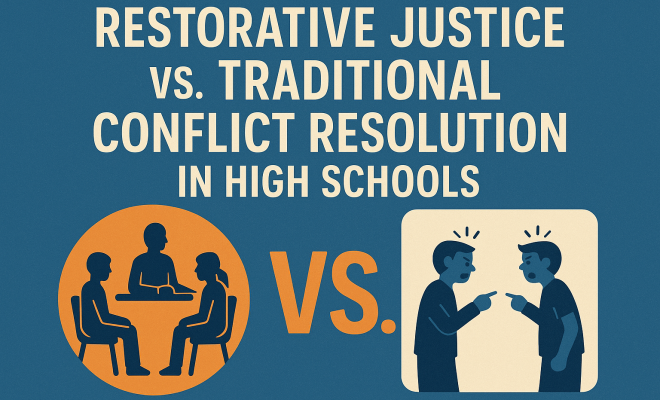
Restorative Justice vs. Traditional Conflict Resolution in High Schools
“`html
In the complex world of high school environments, conflicts are inevitable. Whether stemming from misunderstandings, peer pressure, or cultural differences, how schools choose to address these issues plays a crucial role in shaping students’ social and emotional development. While traditional conflict resolution methods have dominated for decades, restorative justice in schools is emerging as a transformative approach. This article explores the fundamental differences, benefits, and challenges of both methods, providing insights into why restorative justice may be a superior choice for fostering a positive school culture.
1. The Nature of Conflict in Schools
High school is often a melting pot of diverse personalities, backgrounds, and values, making conflict a natural occurrence. Conflicts can arise from simple misunderstandings or escalate into more significant issues, such as bullying or discrimination. Traditional conflict resolution strategies, often punitive in nature, tend to focus on identifying a perpetrator and administering consequences. This method can lead to feelings of resentment and alienation among students.
In contrast, restorative justice in schools emphasizes understanding the underlying causes of the conflict. It seeks to repair harm rather than simply punish the individuals involved. This approach encourages open dialogue, allowing students to express their feelings and learn from their mistakes. As a result, conflicts can be resolved more constructively, fostering a sense of community and accountability among students.
2. Understanding Traditional Conflict Resolution
Traditional conflict resolution in schools typically follows a punitive model, where the focus is on discipline rather than healing. Common practices include detention, suspension, or expulsion. While these measures may temporarily address the issue, they often fail to resolve the root causes of conflicts. Students may leave the process feeling marginalized, with no real understanding of the impact of their actions on others.
This model can also contribute to a negative school environment. When students perceive that disciplinary actions are arbitrary or overly harsh, it can lead to distrust between students and school staff. Moreover, students who are suspended or expelled miss out on valuable instructional time, which may exacerbate academic struggles and disengagement from school.
3. Restorative Justice: A Different Approach
Restorative justice in schools represents a paradigm shift in how conflicts are addressed. Rather than focusing solely on punishment, this approach seeks to bring together all parties affected by the conflict—victims, offenders, and the broader community. Through facilitated dialogues, participants can share their perspectives, express feelings, and collaboratively work toward a resolution that emphasizes healing and accountability.
One of the core principles of restorative justice is that it acknowledges the harm caused by the conflict and seeks to repair that harm through mutual understanding. This is achieved through practices such as restorative circles, mediation, and community service. The goal is to restore relationships and build a supportive school culture that reduces the likelihood of future conflicts.
4. Key Principles of Restorative Justice in Schools
At the heart of restorative justice practices are several key principles that differentiate them from traditional methods:
- Inclusion: All stakeholders are involved in the process, allowing for a more comprehensive understanding of the conflict.
- Accountability: Offenders are encouraged to take responsibility for their actions and their consequences.
- Empathy: Participants are guided to understand the feelings and perspectives of others, fostering a sense of community.
- Repair: The focus is on repairing the harm caused, rather than simply punishing the offender.
By embracing these principles, restorative justice in schools not only resolves conflicts but also promotes social-emotional learning and resilience among students. The collective involvement helps to cultivate an environment of trust and cooperation.
5. Benefits of Implementing Restorative Justice Practices
Numerous studies demonstrate the positive impact of restorative justice in schools. For one, these practices can significantly reduce disciplinary incidents. A report by the U.S. Department of Education found that schools implementing restorative justice saw a 25% decrease in suspensions over three years. This suggests a move toward a more peaceful school environment.
Moreover, restorative justice fosters improved relationships among students and staff. When students engage in restorative practices, they often develop a greater understanding of conflicts and learn valuable communication skills. This, in turn, leads to an increase in student engagement and academic performance, as students feel more connected to their school community. (See: Restorative Justice in Youth Settings.)
6. Challenges and Criticisms of Restorative Justice
While there are many advantages to restorative justice, it is not without its challenges. Some critics argue that it may not be effective for all types of conflicts, particularly those involving severe violence or trauma. In such cases, victims may feel unsafe participating in restorative processes with their offenders.
Additionally, effective implementation requires comprehensive training for staff and students. Without proper training, the principles of restorative justice can be misunderstood or misapplied, leading to further conflict rather than resolution. Ensuring a consistent approach across all school staff is crucial for the success of these practices.
7. Real-World Applications of Restorative Justice
Several schools across the United States have successfully integrated restorative justice practices into their conflict resolution frameworks. For example, the Oakland Unified School District has been a pioneer in implementing these practices, resulting in a significant reduction in suspensions and expulsions. Students report feeling safer and more supported within their school community.
Another notable example is the University of Virginia, which has adopted restorative justice measures to address instances of misconduct on campus. By creating spaces for dialogue, the university has seen a positive shift in student culture and accountability. These case studies showcase the transformative potential of restorative justice in diverse educational settings.
8. The Role of Educators in Restorative Justice
Teachers and school staff play a vital role in fostering a restorative justice environment. They must be trained not only in the principles of restorative practices but also in facilitating discussions that can often be emotionally charged. Educators need to model empathy and active listening, creating safe spaces for students to express their feelings and experiences.
Moreover, teachers can incorporate restorative practices into their daily interactions with students, promoting a culture of respect and understanding. By integrating these principles into their teaching methods, educators can help students navigate conflicts proactively, equipping them with the tools they need for healthy relationships both in and out of school.
9. The Future of Conflict Resolution in Schools
The growing recognition of restorative justice in schools marks a significant shift in how educational institutions approach conflict. As more schools explore this innovative model, it is essential to continually assess its effectiveness and adapt practices based on feedback from students and staff. Research should drive improvements, ensuring that restorative justice not only addresses conflict but also contributes to a positive and nurturing school culture.
Looking ahead, the integration of restorative justice practices can empower students to take ownership of their actions, cultivate empathy, and develop vital communication skills. This, in turn, fosters a generation of young people who are better equipped to navigate conflicts and contribute positively to their communities.
10. Conclusion: Embracing Restorative Justice in Schools
In summary, restorative justice in schools offers a compelling alternative to traditional conflict resolution methods. By focusing on healing rather than punishment, schools can create environments that foster understanding, empathy, and accountability among students. While challenges exist, the benefits are clear: improved student relationships, decreased disciplinary issues, and a more inclusive school culture.
As we continue to address the needs of diverse student populations, embracing restorative justice practices may prove essential in shaping the future of educational conflict resolution. It’s time for more schools to consider this transformative approach and invest in the positive growth of their students.
11. Implementing Restorative Justice: Steps for Schools
To effectively implement restorative justice practices, schools can follow a structured approach. Here are some essential steps to guide the process:
- Assess School Climate: Start by surveying students, parents, and staff to understand the current conflicts and overall school climate. This assessment will help identify areas where restorative justice can be most beneficial.
- Engage Stakeholders: Involve teachers, administrators, parents, and students in discussions about the potential of restorative justice. Creating a sense of ownership among stakeholders will be crucial for successful implementation.
- Training and Development: Invest in training programs for staff and students on restorative practices. This training should focus on communication skills, conflict resolution strategies, and the philosophy behind restorative justice.
- Develop a Restorative Framework: Establish policies and procedures that outline how restorative practices will be integrated into the school’s conflict resolution process. This framework should be adaptable based on the unique needs of the school community.
- Launch Pilot Programs: Start with a pilot program in specific classrooms or grade levels. Use this opportunity to gather data and feedback that can inform broader implementation across the school.
- Monitor and Evaluate: Regularly assess the effectiveness of restorative practices by collecting data on disciplinary incidents, student engagement, and overall school climate. Adjust the approach as needed based on this feedback.
12. Statistics Supporting Restorative Justice
Data indicates that restorative justice practices can lead to significant improvements in school environments. For instance, a study conducted by the University of California in Los Angeles found that schools utilizing restorative justice experienced a 50% reduction in suspensions. Furthermore, a report from the RAND Corporation highlighted that schools with restorative practices saw an 18% increase in student attendance rates.
Interestingly, research published in the Journal of School Violence found that students who participated in restorative justice programs reported a greater sense of belonging and safety. Ninety percent of those involved in these programs felt that they had a voice in resolving conflict, leading to improved overall satisfaction with their school experience. (See: National Institute of Justice on Restorative Practices.)
13. Expert Perspectives on Restorative Justice
Experts in education and psychology have offered various insights on the importance of restorative justice in schools. Dr. John Braithwaite, a leading criminologist, argues that restorative justice promotes social cohesion and empowers students to become active participants in their learning environments. According to Dr. Braithwaite, “When students are involved in their own conflict resolution, they develop critical thinking and interpersonal skills that will serve them throughout their lives.”
Similarly, Dr. Susan Jones, an educational psychologist, emphasizes that restorative justice can address the emotional needs of students. “Many conflicts arise from unmet emotional needs,” Dr. Jones states. “Restorative practices create a space where students can express these needs, leading to healthier relationships and a more supportive school culture.”
14. Addressing Misconceptions About Restorative Justice
Despite the growing interest in restorative justice, several misconceptions persist. One common myth is that restorative justice is a soft approach that allows students to evade consequences for their actions. In reality, restorative justice holds students accountable while also emphasizing healing and repair. It’s about taking responsibility in a way that fosters growth rather than merely punishing behavior.
Another misconception is that restorative justice is only suitable for minor infractions. However, restorative practices can be adapted for various situations, including serious incidents. It’s essential that trained facilitators guide the process to ensure that all parties feel safe and supported, regardless of the conflict’s severity.
15. Frequently Asked Questions about Restorative Justice in Schools
Q1: How does restorative justice differ from mediation?
A: While both restorative justice and mediation involve facilitated discussions, restorative justice focuses on repairing harm and restoring relationships among all affected parties. Mediation, on the other hand, typically aims to reach an agreement between two conflicting individuals.
Q2: Can restorative justice be used for all types of conflicts?
A: Restorative justice can be effective for a range of conflicts, but it may not be suitable for every situation, especially those involving severe trauma or violence. The safety of all participants is paramount, and trained facilitators should assess whether restorative practices are appropriate.
Q3: What role do parents play in restorative justice?
A: Parents can be key partners in restorative justice processes. Involving them can help support students in understanding the implications of their actions and reinforce positive behaviors at home.
Q4: How long does the restorative justice process take?
A: The duration of the restorative justice process varies depending on the complexity of the conflict and the number of participants involved. Some discussions can be resolved in a single session, while others may require multiple meetings.
Q5: Is restorative justice effective in improving school climate?
A: Yes, many studies have shown that implementing restorative justice practices can lead to better relationships among students and staff, lower rates of disciplinary incidents, and an overall positive school climate.
16. The Global Perspective on Restorative Justice in Education
Restorative justice is not just a concept in the United States; it has gained traction in educational systems worldwide. Countries like New Zealand and Canada have successfully integrated restorative approaches into their schools, resulting in notable improvements in student engagement and conflict resolution.
For instance, in New Zealand, the Ministry of Education has endorsed restorative practices as part of their national curriculum. Schools adopting these practices have reported reductions in bullying incidents and improved student attendance. Similarly, in Canada, restorative justice initiatives have been implemented in both K-12 and post-secondary institutions, fostering inclusive environments where students feel valued and heard.
17. Overcoming Barriers to Restorative Justice Implementation
Implementing restorative justice in schools can face several barriers. One major hurdle is resistance from staff who may be accustomed to traditional disciplinary methods. Professional development and ongoing support are crucial for changing mindsets and practices. Schools need to ensure that all staff members are on board and understand the philosophy behind restorative justice.
Another barrier is a lack of resources. Some schools, particularly those in underfunded areas, may struggle to provide adequate training and support for restorative practices. Building partnerships with local organizations can help provide the necessary resources, training, and expertise to support implementation.
Additionally, addressing cultural differences within diverse student populations can be complex. Schools need to be sensitive to the unique backgrounds of their students and tailor restorative practices to be culturally relevant and inclusive. This requires ongoing training and the involvement of community members to ensure that all voices are heard and respected.
18. Success Stories from Schools Implementing Restorative Justice
Many schools share inspiring success stories that underline the impact of restorative justice. For instance, a high school in Denver shifted to restorative practices after facing high suspension rates and significant student tension. Through restorative circles, students learned to engage with one another, addressing grievances and fostering mutual respect. The school reported a 60% drop in suspensions within the first year of implementation, alongside improved student relationships.
Another example comes from a middle school in Los Angeles, where restorative justice practices were integrated to combat bullying. Following the introduction of restorative circles, students reported feeling safer and more supported. Teachers observed a marked decrease in bullying incidents and an increase in student participation during classes. These cases illustrate the tangible benefits of adopting restorative justice approaches in schools.
19. Preparing Students for Restorative Practices
For restorative justice to be effective, students must be adequately prepared to participate in these processes. Schools should introduce foundational concepts of restorative justice early in students’ educational journeys. This could involve workshops on communication skills, empathy exercises, and role-playing scenarios that might arise during conflicts.
Additionally, integrating social-emotional learning (SEL) into the curriculum can equip students with the necessary skills to engage in restorative practices. Teaching students how to manage their emotions, resolve conflicts peacefully, and understand different perspectives is essential for creating a culture of acceptance and empathy.
20. Conclusion: Building Lasting Change Through Restorative Justice
Restorative justice in schools is more than just a conflict resolution strategy; it’s a holistic approach that cultivates a supportive and inclusive educational environment. By prioritizing healing, empathy, and accountability, schools can empower students not only to resolve conflicts but also to develop the skills necessary for their future endeavors. As educators and policymakers continue to explore innovative practices, the potential for restorative justice to create lasting change in schools is immense. Embracing this approach can lead to a generation of students who are not just academically proficient but also socially responsible and emotionally intelligent.
“`
Trending Now
Frequently Asked Questions
What is restorative justice in schools?
Restorative justice in schools is an approach that focuses on repairing harm caused by conflicts rather than punishing individuals. It encourages open dialogue among students, allowing them to express their feelings and learn from their mistakes, fostering a sense of community and accountability.
How does traditional conflict resolution work in high schools?
Traditional conflict resolution in high schools typically employs a punitive model, focusing on discipline through measures like detention, suspension, or expulsion. This approach often fails to address the underlying causes of conflicts, leaving students feeling marginalized rather than healed.
What are the benefits of restorative justice over traditional methods?
Restorative justice offers several benefits, including promoting understanding, healing relationships, and fostering a positive school culture. Unlike traditional methods, it encourages students to engage in constructive dialogue, which can lead to more effective conflict resolution and a stronger sense of community.
What challenges does restorative justice face in schools?
Restorative justice can face challenges such as lack of training for staff, resistance from students or parents, and the need for a cultural shift within the school. Implementing this approach requires commitment and support to effectively address conflicts and embrace healing.
Can restorative justice reduce bullying in schools?
Yes, restorative justice can help reduce bullying by addressing the root causes of conflicts and fostering empathy among students. By encouraging dialogue and understanding, students are more likely to learn from their actions and develop healthier relationships, contributing to a safer school environment.
Agree or disagree? Drop a comment and tell us what you think.