Parallel Play Activities for Preschool Classrooms
“`html
When it comes to the development of young children, play is often the foundation for learning. In preschool classrooms, one particularly important type of play is known as parallel play, where children engage in similar activities in proximity but without direct interaction. Understanding how to foster and utilize parallel play activities can enhance children’s social, emotional, and cognitive development. This article will explore the significance of parallel play, provide practical examples of activities, and discuss effective strategies for educators.
What is Parallel Play?
Parallel play is typically observed in toddlers and preschool-aged children, generally occurring between the ages of 2 and 3 years. In this stage, children play alongside each other, engaging with similar toys or activities without necessarily interacting with one another. This form of play is crucial for several reasons:
- Social Skills Development: Children learn about social dynamics by observing their peers, helping them understand concepts like sharing and taking turns.
- Independence: Each child has the opportunity to explore their interests and preferences in a non-competitive environment.
- Foundation for Cooperative Play: As children become comfortable playing near one another, they gradually move towards more interactive forms of play.
Research has shown that parallel play lays the groundwork for future social interactions, making it essential for preschool educators to encourage such activities in the classroom.
Benefits of Parallel Play Activities
Parallel play activities offer a plethora of benefits that support holistic development in children. Here are some key advantages:
- Encourages Creativity: When children play in parallel, they often develop their unique ways of engaging with the toys or materials, promoting creativity.
- Language Development: Even without direct interaction, children may engage in verbal play, helping to expand their vocabulary and communication skills as they observe others.
- Confidence Building: As children become comfortable in their own play, they build self-esteem, which is crucial for their development.
It’s clear that parallel play activities contribute to a child’s developmental milestones while creating a nurturing environment for learning.
Examples of Parallel Play Activities
Incorporating parallel play activities into preschool classrooms can be both fun and educational. Here are several engaging activities that facilitate parallel play:
1. Art Stations
Setting up different art stations with various materials allows children to express their creativity while working side by side. For instance, one station could have crayons and paper, another could include paints, and a third could offer clay. As children explore these materials, they can observe and inspire each other, even if they aren’t directly collaborating.
2. Block Building
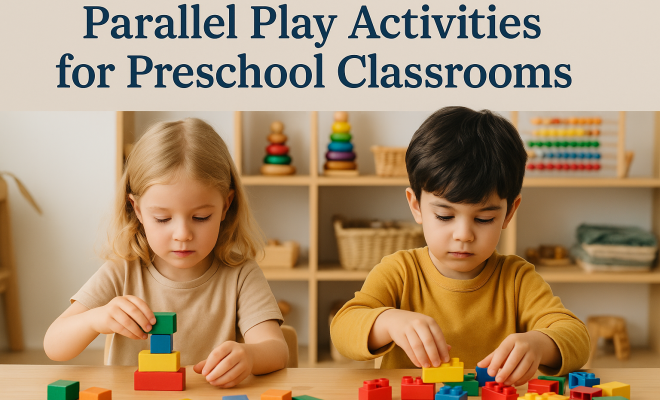
Providing blocks or construction materials encourages children to build independently. They might construct their structures adjacent to others without verbal interaction. This activity fosters spatial awareness and fine motor skills while allowing children to learn from each other’s designs.
3. Dramatic Play Areas
Setting up a dramatic play area with costumes, dolls, and props gives children the freedom to engage in imaginative scenarios. For example, one child may dress up as a doctor while another pretends to be a patient. Even though they are in the same space, their play can remain separate, providing a rich context for learning.
4. Sensory Play
Sensory bins filled with materials like sand, water, or rice can be excellent for parallel play. Children can scoop, pour, and explore the different textures while playing next to one another. As they engage with the materials, they may spontaneously begin to share tools or talk about their discoveries.
Incorporating Parallel Play into Curriculum
To effectively integrate parallel play activities into the preschool curriculum, educators should consider the following approaches:
1. Structure the Environment
Creating an inviting classroom layout that encourages parallel play is essential. Designate specific areas for different types of activities, ensuring children have enough space to engage without feeling crowded. This can be done through the use of low dividers or simply by arranging furniture to create distinct zones. (See: Child development and play activities.)
2. Promote Choice
Children thrive when they have choices. By offering a variety of parallel play activities, you allow them to select what interests them most. This self-directed learning promotes intrinsic motivation, which is crucial for engagement and learning.
3. Monitor and Support
While parallel play is often characterized by independent play, educators should actively observe and support the children. Acknowledge their play, ask open-ended questions, and gently facilitate interactions when appropriate. This guidance can help children transition from parallel play to more interactive forms of play.
Challenges in Implementing Parallel Play Activities
Implementing parallel play activities can present challenges, but being aware of these can help educators navigate them effectively:
1. Individual Differences
Every child develops at their own pace, and some may struggle with parallel play. Children who are more introverted may prefer solitary play while others may be eager to engage with peers. Providing a mix of activities that cater to different personalities helps accommodate these differences.
2. Conflict Resolution
Even in parallel play, conflicts can arise, especially if children want to use the same toy or space. Educators should be prepared to step in and facilitate conflict resolution. Teaching children strategies for sharing and taking turns can also be a valuable lesson during these moments.
The Role of Educators in Fostering Parallel Play
Educators play a vital role in facilitating parallel play activities. Here are some strategies they can use:
1. Model Behavior
Teachers can demonstrate parallel play themselves by engaging in activities alongside the children. This modeling helps children understand that playing near others can be enjoyable and valuable without the need for direct interaction.
2. Encourage Reflection
After parallel play activities, educators can encourage children to reflect on their experiences. Asking questions about what they enjoyed or learned can deepen their understanding and help them articulate their thoughts, enhancing language skills.
Current Relevance of Parallel Play in Education
In today’s educational landscape, the significance of parallel play activities remains strong. With increasing awareness of social-emotional learning, educators recognize the importance of nurturing these foundational skills. Parallel play activities provide a framework for developing these skills in a natural and organic way.
The Impact of Technology
As technology becomes more integrated into children’s lives, there’s a growing concern regarding screen time and its impact on play. Parallel play activities encourage hands-on, interactive experiences that counterbalance passive screen time, making it essential for educators to create opportunities for meaningful play.
Deeper Analysis of Parallel Play
To better understand the importance of parallel play in early childhood development, let’s explore its psychological and social underpinnings. Developmental psychologists like Jean Piaget noted the significance of play in cognitive development. He emphasized that children learn not just through direct instruction but significantly through interactions that occur during play. In parallel play, children learn through observation, imitation, and individual exploration.
Theoretical Frameworks Supporting Parallel Play
Several theories support the developmental benefits of parallel play. Vygotsky’s Social Development Theory posits that social interaction is fundamental to cognitive development. His concept of the zone of proximal development highlights how children can achieve more significant developmental strides through guided interaction. Even in parallel play, where direct interaction is minimal, children are absorbing social cues and learning from their peers’ behaviors.
Statistical Insights
Research shows that children who engage in parallel play activities demonstrate improved social skills and emotional regulation. A study by the American Academy of Pediatrics found that children who regularly participate in various forms of play, including parallel play, are 40% more likely to exhibit strong social competence by the age of 5. This underscores the importance of fostering such play in educational settings.
Comparative Analysis: Parallel Play vs. Cooperative Play
While both parallel play and cooperative play are important in a child’s developmental journey, they serve different purposes. Parallel play is centered around individual exploration and comfort, allowing children to play alongside others without the pressure of direct interaction. In contrast, cooperative play involves shared goals and requires negotiation, communication, and teamwork.
Benefits of Cooperative Play
Cooperative play offers its own set of developmental advantages, including enhanced problem-solving skills, teamwork, and verbal communication. For instance, children engaged in cooperative play might work together to build a fort or solve a puzzle. However, transitioning from parallel to cooperative play can sometimes be challenging. Children may need guidance to navigate the complexities of interaction, making the groundwork laid by parallel play essential.
Additional Examples of Parallel Play Activities
To further inspire educators and parents, here are more specific examples of parallel play activities that can be easily implemented:
5. Puzzle Stations
Set up different puzzle stations with varying levels of difficulty. Children can work on puzzles next to each other, focusing on their own pieces while occasionally glancing at what their peers are doing. This encourages problem-solving skills and fine motor development while allowing for individual exploration.
6. Outdoor Play Areas
Outdoor environments can be fantastic for parallel play. Set up areas with different physical activities such as climbing structures, sandbox play, or water tables. Children can engage in physical activity in parallel, whether they are climbing, digging, or splashing water, fostering gross motor skills and sensory exploration.
7. Cooking Projects
Introduce simple cooking or baking projects where children can work side by side. They might each have their ingredients to mix or decorate their treats. This activity not only supports parallel play but also enhances fine motor skills and encourages discussions about measurement, colors, and tastes.
8. Nature Exploration
Take children on a nature walk where they can collect items like leaves, rocks, or flowers. They can work side by side to create a nature collage or share their findings. This activity encourages exploration and appreciation of the environment while promoting curiosity and observational skills.
FAQ about Parallel Play Activities
What age do children typically start parallel play?
Children generally begin to engage in parallel play around the age of 2, continuing through their third year. During this stage, you’ll notice them playing alongside peers without much interaction.
How can I encourage my child to engage in parallel play?
Providing a variety of engaging, open-ended activities can encourage parallel play. Ensure there are options that cater to different interests, such as art, building, and sensory play. You can also invite friends over to create a playgroup environment.
Is parallel play important for social development?
Absolutely! Parallel play is a crucial step in social development, allowing children to observe and learn from their peers, which sets the foundation for future cooperative play.
Can parallel play turn into cooperative play?
Yes, it often does! As children become more comfortable playing alongside each other and develop social skills, they may naturally transition into cooperative play, where they start interacting and collaborating on shared activities.
What should I do if my child prefers to play alone?
It’s important to respect a child’s preferences while gradually introducing them to parallel play opportunities. Encourage playdates with a peer, but also allow them to have solitary playtime. Each child’s comfort level with social interaction varies.
Embracing Different Learning Styles through Parallel Play
One of the fascinating aspects of parallel play activities is how they cater to various learning styles. Every child has a unique way of absorbing information and interacting with the world. Here’s how parallel play accommodates different styles:
Visual Learners
Children who learn best visually can greatly benefit from parallel play set-ups that involve colorful materials, art supplies, and visually stimulating toys. For instance, an art station filled with bright colors and various textures allows these learners to explore their creativity while observing peers’ techniques.
Auditory Learners
Even in parallel play, auditory learners can engage through sounds and conversations. When children play with musical instruments side by side or participate in storytelling activities, they can soak in language and sound patterns from their peers, enhancing their listening skills.
Kinaesthetic Learners
For children who learn best through movement, parallel play activities like building forts or climbing structures provide the perfect outlet. These learners thrive in hands-on environments, where they can experiment with physical activity while observing others.
Integrating Cultural and Community Themes into Parallel Play
Parallel play activities can also serve as an avenue to introduce cultural and community themes. This integration not only broadens children’s horizons but also allows them to learn about diversity and inclusivity in a playful context. Here are some ideas:
1. Cultural Art Projects
Set up art stations that allow children to explore different cultural art styles. For instance, children might use traditional African patterns to create their art or try their hand at Japanese origami. As they work alongside peers, they can share what they’ve learned about these cultures.
2. Community Helpers Role Play
Provide costumes and props related to community helpers like firefighters, doctors, or teachers, allowing children to engage in parallel play while role-playing. They can each choose to enact their character, learning about the roles in their community while observing their peers’ interpretations.
3. World Music Exploration
Set up a music corner with instruments from different cultures. Children can play instruments alongside each other, exploring sounds while learning about music from various regions. This activity helps them appreciate diversity while they engage in parallel play.
Conclusion: Embracing Parallel Play Activities
Incorporating parallel play activities in preschool classrooms is not just beneficial—it’s essential. These activities support social, emotional, and cognitive development while allowing children to explore their interests in a safe environment. By understanding the value of parallel play, educators can create rich, engaging experiences that foster growth and learning. As we continue to navigate the complexities of early childhood education, let’s embrace the power of parallel play to nurture the next generation.
“`
Trending Now
Frequently Asked Questions
What is parallel play in preschool?
Parallel play is a stage of play typically observed in toddlers and preschool-aged children, where they engage in similar activities side by side without direct interaction. This form of play is important for social skills development, independence, and serves as a foundation for later cooperative play.
What are the benefits of parallel play activities?
Parallel play activities provide numerous benefits, including encouraging creativity, enhancing language development, and fostering social skills. They allow children to explore their interests in a non-competitive environment, which is crucial for their overall emotional and cognitive growth.
How can educators encourage parallel play?
Educators can encourage parallel play by setting up play areas with similar toys or materials, ensuring that children have space to engage side by side. Providing opportunities for children to observe and mimic each other can also help facilitate this type of play, promoting social interaction in a low-pressure setting.
At what age does parallel play typically occur?
Parallel play usually occurs between the ages of 2 and 3 years. During this developmental stage, children begin to play alongside one another, which is essential for building foundational social skills and preparing them for more interactive forms of play as they grow older.
How does parallel play support social development?
Parallel play supports social development by allowing children to observe their peers, which helps them understand social dynamics like sharing and taking turns. This observational learning is key in building the skills necessary for future cooperative play and interactions with others.
Have you experienced this yourself? We’d love to hear your story in the comments.