How to Support Fine Motor Development Through Play
“`html
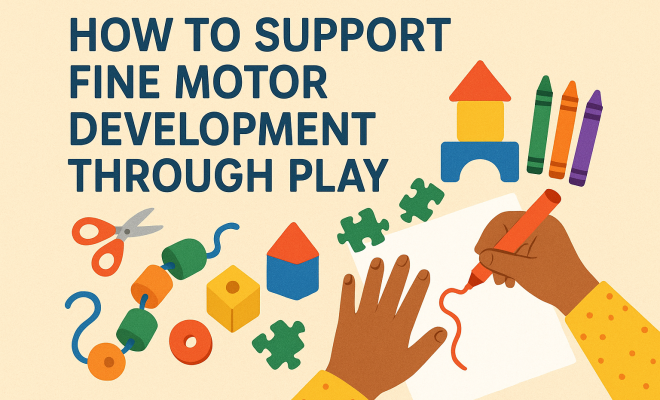
Fine motor skills are essential for a child’s development, influencing everything from handwriting to self-care tasks. Engaging in play is one of the best ways to support these skills. By incorporating fun and interactive fine motor skills activities into daily routines, you can lay a strong foundation for your child’s future learning and independence. This article will explore ten effective activities, explaining how they contribute to fine motor development and offering practical insights for parents and educators alike.
1. Play-Doh Creations: Stimulating Imagination and Dexterity
Play-Doh is a classic tool for enhancing fine motor skills. When kids squish, roll, and mold this colorful substance, they’re not just having fun; they’re strengthening the small muscles in their hands and fingers. This kneading and shaping process encourages hand-eye coordination as they manipulate the dough into various forms. You can enhance the experience by introducing tools like rolling pins, cookie cutters, or even simple household items such as forks and spoons.
To make this activity even more engaging, consider asking your child to create specific objects or shapes, which adds a layer of challenge. For example, you can prompt them to create animals, letters, or even their favorite foods. This not only supports fine motor skills but also enhances creativity and problem-solving abilities.
2. Beading and Stringing: A Colorful Challenge
Stringing beads is a fantastic way to improve fine motor skills. This activity requires children to use their pincer grasp, which is crucial for tasks like holding a pencil. Choose beads of various sizes and shapes to keep the activity interesting. You can also introduce patterns to encourage cognitive skills, as children will have to think about how to replicate or build on these designs.
For younger children, you can start with large beads and thick string to make it easier for them to grip and manipulate. As they gain confidence, you can transition to smaller beads and thinner strings. This gradual increase in difficulty not only fosters fine motor development but also boosts their self-esteem as they master each level.
3. Scissor Skills: Snipping for Success
Using scissors is a significant milestone in fine motor skill development. Cutting paper helps children strengthen their hand muscles and improve coordination. To get started, provide them with safety scissors and colorful paper. You can begin with straight lines and then progress to zig-zags and curves as they become more adept.
Incorporating a themed cutting activity, such as creating a collage or holiday decorations, can make this exercise more exciting. Encourage them to cut out pictures from magazines or create shapes to glue onto another piece of paper. This not only develops their cutting skills but also brings in an artistic element, making the experience all the more enjoyable.
4. Puzzles: Fostering Problem Solving and Coordination
Puzzles are excellent fine motor skills activities that also promote cognitive development. As children fit pieces together, they enhance their hand-eye coordination and develop spatial awareness. Choose puzzles with varying complexity based on your child’s age and ability. Simple jigsaw puzzles can be a great start, while more complex options can provide a challenge for older kids.
To enrich the learning experience, ask guiding questions while they work on a puzzle, such as, “Which piece do you think fits here?” This encourages critical thinking and communication skills, making the activity more than just a motor exercise.
5. Painting and Coloring: Unleashing Creativity
Art activities like painting, coloring, and drawing are fantastic for developing fine motor skills. The act of holding a paintbrush or crayon strengthens grip and dexterity. Encourage your child to experiment with various tools, such as sponges, brushes, and even finger paints, to explore different textures and techniques.
Incorporating different surfaces, like canvas or textured paper, can add an exciting twist to the activity. Moreover, this creative outlet can help children express their emotions and thoughts, making it a vital aspect of their overall development. Setting up an art corner at home can inspire consistent engagement with these fine motor skills activities.
6. Building Blocks: Constructing Coordination
Blocks are not just toys; they’re building blocks of fine motor development! As children stack, balance, and build with blocks, they work on their precision and control. This activity also encourages spatial awareness and problem-solving as they figure out how to construct stable structures. (See: CDC milestones for child development.)
Consider mixing different types of blocks, such as wooden, soft, and magnetic, to keep the experience fresh and stimulating. You can also introduce challenges like building towers of a specific height or creating certain structures, which can help refine their skills while keeping them engaged.
7. Nature Scavenger Hunt: An Outdoor Adventure
Take fine motor skills activities outside with a nature scavenger hunt. Create a list of items for your child to find, such as leaves, rocks, or flowers. As they gather these treasures, they’ll practice grasping and manipulating different shapes and textures. Additionally, this activity fosters observational skills and encourages a love for nature.
Once back home, you can incorporate the collected items into crafts, such as leaf rubbings or rock painting. This not only extends the learning experience but also allows for creative expression, further enhancing fine motor skills through various artistic techniques.
8. Kitchen Activities: Cooking Up Fine Motor Skills
The kitchen can be a treasure trove of fine motor skills activities. Involving your child in simple cooking tasks like stirring, pouring, or measuring can greatly enhance their dexterity. From mixing cake batter to rolling dough, each step requires coordination and control.
To make the experience educational, you can use measuring cups and spoons to teach them about fractions and measurements. This not only makes cooking a fun learning experience but also reinforces their fine motor skills in an everyday context, helping them see the practical applications of what they’re learning.
9. Gardening: Growing Skills and Responsibility
Gardening is a wonderful way to connect fine motor skills activities with nature. Digging, planting seeds, and watering plants all require the use of small muscle groups in the hands. This activity provides an excellent opportunity to teach children about responsibility and care for living things.
You can start with simple tasks, like planting flowers or herbs in pots, and gradually introduce more complex gardening tasks as their skills improve. Plus, watching something they’ve planted grow can be incredibly rewarding, boosting their confidence and reinforcing their motor skills through repeated practice.
10. Role-Playing Games: Imaginative Play for Skill Building
Engaging in role-playing games can also support fine motor skill development. Whether it’s playing house, pretending to be a doctor, or running a store, these activities require manipulation of various objects—like toy tools, dolls, or kitchen utensils. This type of imaginative play encourages children to use their fingers and hands in purposeful ways, enhancing their coordination.
To incorporate fine motor skills activities into role play, provide props that require children to grip, twist, or pull. This not only makes playtime more dynamic but also ensures that children are practicing their motor skills in a fun and engaging way. Encouraging creativity through role-playing can also bolster their social skills and emotional intelligence.
11. Clay Modeling: Sculpting Skills
Clay modeling, much like Play-Doh, offers a more durable and versatile option for fine motor skills activities. Using air-dry clay or modeling clay can allow for more intricate designs and a longer-lasting product. As children mold the clay into various shapes, they engage their hand muscles in different ways. This can include rolling, pinching, cutting, and sculpting, which all promote strength and dexterity.
To make this activity more educational, you can introduce themes or stories. For instance, after reading a storybook, ask your child to create characters or scenes from the book using clay. This not only enhances their fine motor skills but also reinforces literacy and comprehension skills, giving them a multi-faceted learning experience.
12. Origami: Folding Fun
Origami is a traditional Japanese art form that involves folding paper into beautiful shapes and figures. This activity is excellent for developing fine motor skills as it requires precision and control. Children learn to grasp, fold, and manipulate paper, all of which enhances their dexterity.
Start with simple designs, such as cranes or boats, and gradually move to more complex figures. You might even turn it into a family project, where everyone creates their own origami piece to display or use, fostering not only fine motor skills but also a sense of community and teamwork. (See: NIH resources on learning and development.)
13. Buttoning and Zipping: Life Skills for Independence
Teaching children how to button shirts or zip up jackets may seem like a simple task, but these activities are crucial for developing fine motor skills. They require precise finger movements and concentration. You can use practice boards made from fabric with buttons, zippers, and other fasteners sewn onto them to facilitate learning.
Encourage your child to practice these skills during dressing time, making it a part of their daily routine. This not only supports fine motor skills development but also boosts their confidence in becoming more independent in self-care tasks.
14. Sorting Activities: Organizing for Skills
Sorting objects by color, size, or shape is another effective way to enhance fine motor skills. This activity can be done with everyday items like buttons, beads, or even toys. As children sort through items, they practice grasping and manipulating, which strengthens their hand muscles.
To make this activity more structured, you can turn it into a game. For example, set a timer and see how quickly they can sort a mix of different colored blocks or objects. This not only makes it fun but also encourages speed and efficiency in their movements.
15. Fine Motor Skills FAQ
What are fine motor skills?
Fine motor skills refer to the small muscle movements of the hands and fingers. They are crucial for tasks such as writing, buttoning clothes, using utensils, and other daily activities that require detailed hand movements.
At what age do children typically develop fine motor skills?
Fine motor skills development varies by child. Generally, infants start developing these skills as early as six months, with more refined skills appearing by age two to three. By age five, most children have developed adequate fine motor skills for basic self-care tasks.
Why are fine motor skills important?
Fine motor skills are essential for independence in daily activities, academic tasks like writing and drawing, and overall cognitive development. They also play a significant role in a child’s self-esteem and confidence as they master new tasks.
How can I help my child improve their fine motor skills at home?
There are many simple activities you can do at home to promote fine motor skills. Incorporating play-based activities such as the ones mentioned in this article can make practice enjoyable. Everyday tasks like pouring, sorting, or handling small objects can also provide valuable learning experiences.
What should I do if my child struggles with fine motor skills?
If you notice your child struggling significantly with fine motor skills, it may be beneficial to consult with a pediatric occupational therapist. They can provide tailored strategies and exercises to help support your child’s development.
16. Why Fine Motor Skills Activities Matter
The significance of fine motor skills activities goes beyond mere fun and games. These activities play a critical role in children’s overall development. Strong fine motor skills can directly contribute to academic success, allowing for improved handwriting, better control when using tools or instruments, and enhanced creativity in art projects. The more children practice these skills, the more adept they become in various aspects of their lives.
Research indicates that children who engage in fine motor skills activities often perform better academically as they progress through school. A well-developed motor system not only aids in writing but also in problem-solving, spatial awareness, and cognitive processing. For instance, studies have shown that students with strong fine motor skills performed better in math due to their ability to manipulate objects and visualize solutions effectively.
17. Comparative Analysis of Fine Motor Skills Activities
When considering fine motor skills activities, it’s helpful to analyze them based on the skills they primarily enhance. For example, activities like puzzles and building blocks focus heavily on spatial awareness and problem-solving, while activities like painting and clay modeling foster creativity alongside dexterity. Understanding this can help parents and educators select activities that target specific skill sets based on a child’s developmental needs.
Additionally, some activities combine multiple skill areas. For instance, cooking can improve fine motor skills through measuring and stirring while also teaching basic math concepts. Similarly, gardening encompasses fine motor work while fostering responsibility and scientific inquiry as children learn about plant growth.
18. Expert Perspectives on Fine Motor Skills Development
Experts in child development emphasize the importance of fine motor skills as foundational for later learning. According to Dr. Linda Acredolo, a developmental psychologist, “Fine motor skills are critical for establishing independence in daily tasks. When children engage in activities that strengthen these skills, they’re not just improving their dexterity but also gaining confidence as they navigate the world.”
Occupational therapists like Sarah Johnson advocate for a variety of activities to keep children engaged. “It’s important to provide a mix of structured and unstructured play opportunities. Children naturally learn through play, and activities that seem simple often have layers of developmental benefits,” she explains.
19. Encouraging Fine Motor Skills in Different Age Groups
Fine motor skills activities can be tailored to suit different age groups, making it easier for parents and educators to engage children at their developmental level. For infants, simple grasping toys can promote hand strength and coordination. As children transition into toddlerhood, activities like stacking blocks or simple beading can provide more of a challenge while still being age-appropriate.
Preschoolers can handle more intricate tasks, such as cutting shapes from paper, engaging in art projects, or even simple cooking tasks. As children reach school age, encourage them to take on more complex activities like sewing, model building, or even gardening tasks that require careful manipulation of tools and materials.
20. Fine Motor Skills Activities for Special Needs
Fine motor skills activities can also be adapted for children with special needs. Occupational therapists often design specific activities tailored to each child’s unique abilities and challenges. For example, children with limited grip strength may benefit from using larger tools or adaptive scissors. Incorporating sensory materials, such as textured fabrics or squishy toys, can also help engage children who may struggle with typical activities.
Incorporating visual aids or simple verbal prompts can be beneficial as well. Activities can be introduced in a step-by-step manner to prevent frustration and promote success. Using timers or visual schedules can help children with attention difficulties stay focused during tasks.
Supporting fine motor development through play doesn’t have to be complicated. By incorporating these engaging activities into your child’s routine, you can help them build essential skills in a fun and enjoyable way. Remember, the key is to provide opportunities for practice while keeping the experiences enjoyable and pressure-free. The more they play, the more they’ll grow!
“`
Trending Now
Frequently Asked Questions
What activities can help develop fine motor skills in children?
Activities like Play-Doh creations, beading and stringing, and using scissors for cutting paper are excellent for developing fine motor skills. These activities enhance hand-eye coordination, grip strength, and dexterity, all essential for tasks like writing and self-care.
How does Play-Doh help with fine motor development?
Play-Doh helps fine motor development by encouraging children to squish, roll, and mold the dough, which strengthens the small muscles in their hands and fingers. This process also improves hand-eye coordination as they manipulate the dough into various shapes.
What age is appropriate for fine motor skill activities?
Fine motor skill activities can begin as early as toddler age. Simple tasks like stringing large beads or manipulating Play-Doh are suitable for younger children, while more complex activities can be introduced as their skills develop, typically around preschool age.
Why are fine motor skills important for children?
Fine motor skills are crucial for children's overall development as they influence essential tasks such as handwriting, self-care, and daily activities. Strong fine motor skills contribute to greater independence and confidence in performing these tasks.
How can parents support fine motor development at home?
Parents can support fine motor development by incorporating fun activities into daily routines, such as arts and crafts, cooking, or sensory play with materials like Play-Doh. Engaging children in these activities encourages practice and skill enhancement in an enjoyable way.
Agree or disagree? Drop a comment and tell us what you think.