The Edvocate

Top Menu

Main Menu

  • Start Here
    • Our Brands
    • Governance
      • Lynch Education Consulting, LLC.
      • Dr. Lynch’s Personal Website
      • Careers
    • Write For Us
    • Books
    • The Tech Edvocate Product Guide
    • Contact Us
    • The Edvocate Podcast
    • Edupedia
    • Pedagogue
    • Terms and Conditions
    • Privacy Policy
  • PreK-12
    • Assessment
    • Assistive Technology
    • Best PreK-12 Schools in America
    • Child Development
    • Classroom Management
    • Early Childhood
    • EdTech & Innovation
    • Education Leadership
    • Equity
    • First Year Teachers
    • Gifted and Talented Education
    • Special Education
    • Parental Involvement
    • Policy & Reform
    • Teachers
  • Higher Ed
    • Best Colleges and Universities
    • Best College and University Programs
    • HBCU’s
    • Diversity
    • Higher Education EdTech
    • Higher Education
    • International Education
  • Advertise
  • The Tech Edvocate Awards
    • The Awards Process
    • Finalists and Winners of The 2025 Tech Edvocate Awards
    • Finalists and Winners of The 2024 Tech Edvocate Awards
    • Finalists and Winners of The 2023 Tech Edvocate Awards
    • Finalists and Winners of The 2021 Tech Edvocate Awards
    • Finalists and Winners of The 2022 Tech Edvocate Awards
    • Finalists and Winners of The 2020 Tech Edvocate Awards
    • Finalists and Winners of The 2019 Tech Edvocate Awards
    • Finalists and Winners of The 2018 Tech Edvocate Awards
    • Finalists and Winners of The 2017 Tech Edvocate Awards
    • Award Seals
  • Apps
    • GPA Calculator for College
    • GPA Calculator for High School
    • Cumulative GPA Calculator
    • Grade Calculator
    • Weighted Grade Calculator
    • Final Grade Calculator
  • The Tech Edvocate
  • Post a Job
  • AI Powered Personal Tutor

logo

The Edvocate

  • Start Here
    • Our Brands
    • Governance
      • Lynch Education Consulting, LLC.
      • Dr. Lynch’s Personal Website
        • My Speaking Page
      • Careers
    • Write For Us
    • Books
    • The Tech Edvocate Product Guide
    • Contact Us
    • The Edvocate Podcast
    • Edupedia
    • Pedagogue
    • Terms and Conditions
    • Privacy Policy
  • PreK-12
    • Assessment
    • Assistive Technology
    • Best PreK-12 Schools in America
    • Child Development
    • Classroom Management
    • Early Childhood
    • EdTech & Innovation
    • Education Leadership
    • Equity
    • First Year Teachers
    • Gifted and Talented Education
    • Special Education
    • Parental Involvement
    • Policy & Reform
    • Teachers
  • Higher Ed
    • Best Colleges and Universities
    • Best College and University Programs
    • HBCU’s
    • Diversity
    • Higher Education EdTech
    • Higher Education
    • International Education
  • Advertise
  • The Tech Edvocate Awards
    • The Awards Process
    • Finalists and Winners of The 2025 Tech Edvocate Awards
    • Finalists and Winners of The 2024 Tech Edvocate Awards
    • Finalists and Winners of The 2023 Tech Edvocate Awards
    • Finalists and Winners of The 2021 Tech Edvocate Awards
    • Finalists and Winners of The 2022 Tech Edvocate Awards
    • Finalists and Winners of The 2020 Tech Edvocate Awards
    • Finalists and Winners of The 2019 Tech Edvocate Awards
    • Finalists and Winners of The 2018 Tech Edvocate Awards
    • Finalists and Winners of The 2017 Tech Edvocate Awards
    • Award Seals
  • Apps
    • GPA Calculator for College
    • GPA Calculator for High School
    • Cumulative GPA Calculator
    • Grade Calculator
    • Weighted Grade Calculator
    • Final Grade Calculator
  • The Tech Edvocate
  • Post a Job
  • AI Powered Personal Tutor
  • How Do I Choose the Best Teacher Health Care Plan

  • 10 Fun And Creative 8th Grade Art Projects

  • 10 Fun “Would You Rather” Scenarios for Elementary Students

  • 10 Free and Affordable 4th Grade Reading Fluency Passages

  • 10 Free 3rd Grade Reading Fluency Passages

  • 10 Fantastic Martin Luther King Jr. Activities for Preschoolers

  • 10 Fantastic Fortnite Activity Sheets for Gamers

  • 10 Facts About School Attendance

  • 10 Facts about George Washington for Kids

  • 10 Facts about Christmas in France

EdTech & Innovation
Home›EdTech & Innovation›How to Help Teachers Conquer Their Fear of Robots

How to Help Teachers Conquer Their Fear of Robots

By Chris Piehler
March 26, 2019
0
Spread the love

An education professor explains that, with coaching and student-included PD, educators no longer worry about teaching with (or breaking!) high-tech tools.
By Steve Coxon, PhD

We’ve all sat through meaningless professional development (PD). Whether it’s provided by someone so far removed from the classroom that they can’t relate to the demands today’s teachers face, or just something that could have been handled in an email. We would rather spend productive hours planning engaging projects or reviewing student work instead. At Maryville University, we’ve been using research to create effective, engaging PD that helps teachers implement new technologies and curricula that truly improve student learning. Since then, we’ve traveled to multiple districts replicating this model.

Our School of Education’s Center for Access and Achievement (CA2) conducts frequent PD in STEM, especially for pre-K–12 robotics. We’ve developed two effective models of professional development that work extremely well, both in terms of teacher engagement and learning, and in terms of student achievement. Here are some practical best practices to help any school district implement these two models, which are student-included PD (SIPD) and coaching.

Student-Included Professional Development (SIPD)

In our CREST-M (Children using Robotics for Engineering, Science, Technology, and Math) project, focused on creating STEM curricula using LEGO WeDo 2.0 robotics, we’ve had dozens of teachers and hundreds of students learn together. In the SIPD model, teachers work in the summers with small groups of students from their districts, going through the math-robotics curricula together, with an expert teacher there to help guide them.

It helps to have one teacher with expertise in robotics and a strong background in math education, along with 4–5 teachers learning the material and about 20 students split into small groups. The questions and challenges that arise are far easier to work out the first time with a small group than a large one. In this way, teachers learn the curriculum especially well and are completely ready to take their full classes through it during the school year. School administrators report very high implementation rates and teacher confidence. Pre- and post-assessment of the students also demonstrates very strong improvement in math.

Using Expert Coaches In Class

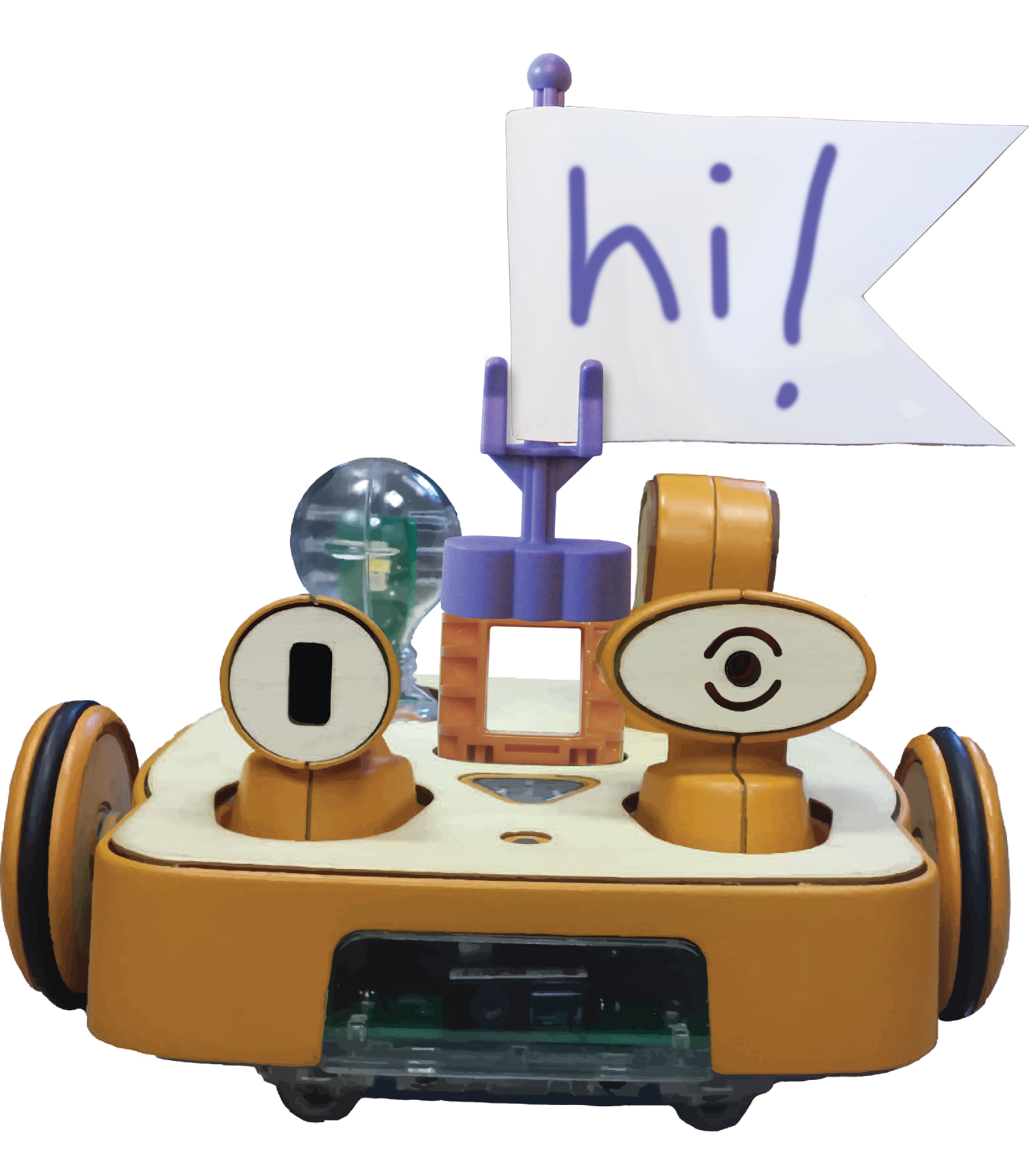
We’ve found individual coaching to be another very strong model of PD. For example, this year we worked with a diverse, high-poverty early childhood center on a grant-funded STEM project. We started with an hour of professional development just with teachers on the KIBO Robot at the onset of the school year. The real learning came later in the fall, when we made ourselves available for in-class coaching.

While teachers had attended PD on using robotics, having expert coaches available in their classrooms while they implemented the robotics platform for the first time was invaluable to their success. Our experts didn’t teach the kids, but were available to provide guidance when the teachers were implementing the robots.

Alleviating Common Fears

SIPD and coaching also have shown to help teachers overcome common fears associated with teaching new material and introducing new technology. Many teachers are afraid kids will break the robots. In some cases, it’s so bad that the teachers lock the robots in a closet and never let the kids use them!

I encourage schools to purchase robots and robotic kits designed for the classroom. Educational kits are often more heavy-duty and can withstand accidents without breaking. Both SIPD and coaching, provide opportunities for kids to accidently drop a robot and for teachers to see that sort of accident won’t derail the lesson or render the robot useless.

Teachers are also often afraid that they don’t know everything for which the robot can be programmed. I’ve been working with robotics for 15 years, and I don’t know all of the things they can do, either. It’s helpful for teachers to think about programming the robots less like solving an equation and more like creative writing. I can find the answer to almost any equation, but I never know what a student will dream of writing. There are unlimited possibilities.

PD doesn’t have to be a pain. SIPD and coaching can improve teacher quality and student learning. Teachers have no need to fear robotics, and these methods help them see a pathway to success.

Steve Coxon, PhD, is an associate professor and executive director for the Center for Access and Achievement at Maryville University.

Previous Article

Education Customized to Your Genome is Coming, ...

Next Article

Children in Foster Care Deserve Better Educational ...

Chris Piehler

Related articles More from author

  • Early Childhood & K-12 EdTechEdTech & InnovationOnline Learning & eLearning

    My Vision for the Future of Adaptive Learning in Education

    March 24, 2018
    By Matthew Lynch
  • EdTech & Innovation

    Is an online education really that cheap?

    January 22, 2016
    By Matthew Lynch
  • EdTech & InnovationHBCU'sHigher Education

    Early-career researchers the missing link for STEM diversity

    January 15, 2016
    By Matthew Lynch
  • Early Childhood & K-12 EdTechEdTech & Innovation

    Do Your Classes Allow for Tech Integration?

    June 9, 2022
    By Matthew Lynch
  • EdTech & InnovationEducation NewsEquity

    Closing the computer science gender gap: How one woman is making a difference in many lives

    January 11, 2016
    By Matthew Lynch
  • EdTech & InnovationMatthew LynchTeachers

    Cloud Computing and K-12 Classrooms

    January 25, 2016
    By Matthew Lynch

Search

Registration and Login

  • Register
  • Log in
  • Entries feed
  • Comments feed
  • WordPress.org

Newsletter

Signup for The Edvocate Newsletter and have the latest in P-20 education news and opinion delivered to your email address!

RSS Matthew on Education Week

  • Au Revoir from Education Futures November 20, 2018 Matthew Lynch
  • 6 Steps to Data-Driven Literacy Instruction October 17, 2018 Matthew Lynch
  • Four Keys to a Modern IT Approach in K-12 Schools October 2, 2018 Matthew Lynch
  • What's the Difference Between Burnout and Demoralization, and What Can Teachers Do About It? September 27, 2018 Matthew Lynch
  • Revisiting Using Edtech for Bullying and Suicide Prevention September 10, 2018 Matthew Lynch

About Us

The Edvocate was created in 2014 to argue for shifts in education policy and organization in order to enhance the quality of education and the opportunities for learning afforded to P-20 students in America. What we envisage may not be the most straightforward or the most conventional ideas. We call for a relatively radical and certainly quite comprehensive reorganization of America’s P-20 system.

That reorganization, though, and the underlying effort, will have much to do with reviving the American education system, and reviving a national love of learning.  The Edvocate plans to be one of key architects of this revival, as it continues to advocate for education reform, equity, and innovation.

Newsletter

Signup for The Edvocate Newsletter and have the latest in P-20 education news and opinion delivered to your email address!

Contact

The Edvocate
910 Goddin Street
Richmond, VA 23230
(601) 630-5238
[email protected]
  • situs togel online
  • dentoto
  • situs toto 4d
  • situs toto slot
  • toto slot 4d
Copyright (c) 2025 Matthew Lynch. All rights reserved.