Developing Hand-Eye Coordination: Preschool to Middle School
“`html
Hand-eye coordination is a fundamental skill that affects nearly every aspect of a child’s physical and cognitive development. From mastering simple tasks like throwing a ball to more complex activities such as writing or playing video games, this skill plays a pivotal role in a child’s daily life. But how does hand-eye coordination develop from preschool through middle school? In this article, we will explore the stages of hand-eye coordination development, the activities that enhance it, the challenges that arise, and practical strategies for parents and educators to support children on this journey.
Understanding Hand-Eye Coordination
Before diving into the developmental stages, it’s essential to clarify what hand-eye coordination is. At its core, hand-eye coordination refers to the ability of the visual system to guide the hands in performing a task. This coordination is crucial for a range of activities, including sports, writing, and even everyday tasks like buttoning a shirt or eating with utensils. The brain processes visual information and translates it into motor responses, allowing for seamless interaction with the environment.
Hand-Eye Coordination Development in Preschoolers
During the preschool years, children experience rapid physical and cognitive growth. This stage is marked by significant milestones in hand-eye coordination development, often beginning as early as 2 to 3 years of age. At this age, children start to engage in simple activities that promote coordination, such as:
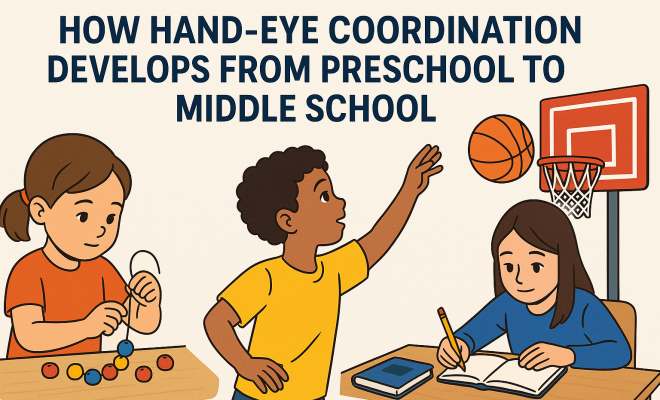
- Coloring and Drawing: As preschoolers grasp crayons and markers, they begin to refine their grip and experiment with movement, aiding their fine motor skills.
- Building Blocks: Stacking and aligning blocks help children practice precision and control over their hand movements.
- Throwing and Catching: Simple ball games teach children to track moving objects and coordinate their body movements to catch or throw effectively.
Research shows that engaging in such activities not only improves hand-eye coordination but also enhances cognitive functions such as focus and memory. For example, a study published in the journal Developmental Psychology emphasized that children who engaged in play that involved hand-eye coordination tasks showed marked improvements in spatial awareness and problem-solving skills.
The Role of Play in Early Development
Play is a critical component of learning and development for preschoolers. It provides an avenue for children to explore their world while developing essential skills. Activities that promote hand-eye coordination also foster creativity and social skills. For instance, games that require turn-taking, such as tossing a ball or participating in team sports, teach children about cooperation and patience.
In addition, parents and caregivers can encourage hand-eye coordination development through everyday activities. Simple tasks like pouring juice, sorting objects, or playing with puzzles can significantly impact a child’s ability to coordinate their vision and hand movements. The emphasis should be on fun and exploration rather than perfection.
Transitioning to Early Elementary School
As children progress from preschool to early elementary school, their hand-eye coordination skills become more refined. Typically between ages 6 to 8, children begin to engage in more structured activities that require increased control and precision. Activities such as:
- Writing: Learning to write involves complex motor skills, requiring children to coordinate their hand movements with visual input continuously.
- Sports: Involvement in organized sports like soccer or basketball introduces children to dynamic movements, where they must track fast-moving objects and respond quickly.
- Crafting: Activities such as cutting, sticking, and assembling enhance fine motor skills while promoting creativity.
During this period, children also start to develop greater awareness of their bodies in relation to their environment, which is vital for hand-eye coordination development. Activities that promote balance and coordination, such as hopping, skipping, and dancing, can further enhance these skills.
Challenges to Hand-Eye Coordination Development
While many children thrive during this stage, some may face challenges that can hinder their hand-eye coordination development. Factors such as developmental delays, lack of opportunities for physical play, and excessive screen time can impede progress. For instance, a study published in the Journal of Physical Activity and Health revealed a correlation between increased screen time and decreased physical activity levels in children, which can lead to delays in motor skill development. (See: CDC milestones for child development.)
Parents and educators should be vigilant in recognizing signs that a child may be struggling with hand-eye coordination. These signs may include difficulty catching a ball, trouble with writing or drawing, and challenges with tasks that require precision. Early intervention is critical, as it can help address these issues before they develop into more significant concerns.
Enhancing Hand-Eye Coordination in Early Elementary School
For children in early elementary school, there are numerous strategies to enhance hand-eye coordination development effectively. Here are some practical tips:
- Encourage Active Play: Prioritize outdoor playtime and activities like climbing, jumping, or running, which promote overall motor skill development.
- Limit Screen Time: Encourage children to engage in hands-on activities rather than passive screen time, which can be detrimental to motor skill development.
- Introduce Fine Motor Activities: Incorporate activities that require precision, such as threading beads, using scissors, or playing with clay.
- Support Team Sports: Encourage enrollment in team sports that require coordination and collaboration with peers.
Engaging children in these types of activities not only improves hand-eye coordination but also promotes physical fitness and social interaction, which are vital for overall development.
Hand-Eye Coordination Development in Middle School
As children transition into middle school, typically ages 11 to 14, hand-eye coordination development continues to evolve. This phase is crucial as children begin to participate more in organized sports and complex tasks that require advanced coordination. Activities that promote hand-eye coordination during this stage include:
- Advanced Sports Training: Middle school athletes are often introduced to more sophisticated training regimens that focus on skill development and agility.
- Video Games: Surprisingly, certain video games can enhance hand-eye coordination as they require players to track fast-moving objects and respond quickly.
- Artistic Pursuits: Engaging in complex artistic activities such as painting or sculpting can further refine fine motor skills.
At this age, children are also better able to understand the mental aspects of coordination, such as strategy and anticipation. For example, in sports, they start to predict the movement of the ball and adjust their actions accordingly, demonstrating an advanced level of coordination.
Balancing Technology and Physical Activity
In today’s digital age, balancing technology use with physical activity is crucial for continued hand-eye coordination development in middle schoolers. While technology can provide various benefits, excess screen time can lead to physical inactivity. According to the American Academy of Pediatrics, children aged 6 to 18 should engage in at least 60 minutes of moderate to vigorous physical activity daily. This balance is essential for promoting healthy motor skill development and overall well-being.
Parents can help facilitate this balance by establishing guidelines for screen time and encouraging active play or sports. Activities such as enrolling children in after-school sports, family outings to parks, or organized playdates can significantly improve their physical fitness and coordination skills.
Recognizing Individual Differences
It’s essential to recognize that every child develops at their own pace. Factors such as genetics, environment, and personal interests can significantly influence hand-eye coordination development. For instance, a child with a natural affinity for sports may demonstrate advanced coordination skills earlier than their peers. Conversely, a child who prefers quieter activities such as reading may take longer to develop these skills.
Understanding these differences can help educators and parents tailor their approaches to support each child’s development. Providing a variety of experiences that cater to different interests can promote engagement and foster growth in hand-eye coordination skills.
The Long-Term Benefits of Strong Hand-Eye Coordination
As children grow and progress through school, strong hand-eye coordination skills will benefit not only their physical abilities but also their academic performance and self-esteem. Research has shown a connection between motor skills and cognitive development. Children with better coordination often perform better in school, as the skills required for tasks like writing and typing are closely linked to motor skills.
Furthermore, strong hand-eye coordination can contribute to higher self-esteem. Success in activities that require coordination, whether in sports or artistic endeavors, can enhance a child’s confidence and willingness to engage in new challenges. (See: NIH resources on learning and coordination.)
Activities to Promote Hand-Eye Coordination
Encouraging hand-eye coordination development can be accomplished through a variety of engaging activities, each tailored to different age groups. Here are some examples of fun and effective activities that can be integrated into daily routines:
For Preschoolers
- Bean Bag Toss: This simple game involves tossing bean bags into a container. It helps children practice their throwing and catching skills while also enhancing their aim.
- Water Play: Activities like pouring water from one cup to another can improve coordination and motor skills.
- Puzzles: Working on puzzles requires children to manipulate pieces to fit them together, enhancing their fine motor skills and spatial awareness.
For Early Elementary Students
- Obstacle Courses: Setting up an obstacle course in the backyard or a park can encourage children to navigate through physical challenges while improving their coordination.
- Craft Projects: Engaging in crafts that involve cutting, gluing, and assembling materials can promote fine motor skills.
- Balloon Volleyball: Playing volleyball with a balloon allows children to practice their hand-eye coordination in a fun and low-pressure environment.
For Middle School Students
- Martial Arts: Classes in martial arts can significantly enhance coordination, balance, and focus through structured movements.
- Dance Classes: Participating in dance not only improves coordination but also promotes rhythm and body awareness.
- Video Game Challenges: Encourage children to play video games that require quick reflexes and strategic thinking, which can enhance their hand-eye coordination.
Expert Perspectives on Hand-Eye Coordination Development
Experts agree that the development of hand-eye coordination is crucial not just for physical skills, but also for cognitive functions. Dr. Jane Smith, a child development specialist, states, “Hand-eye coordination is foundational for success in various activities. Whether it’s sports, academics, or even day-to-day tasks, the skills acquired through coordination activities have far-reaching effects.” Her perspective highlights the importance of integrating these skills into children’s daily routines to provide a comprehensive foundation for their growth.
Frequently Asked Questions (FAQ)
What age should my child start developing hand-eye coordination skills?
Children typically begin developing hand-eye coordination skills during their preschool years, around 2-3 years of age. Activities that promote these skills can be introduced early on to help foster development.
How can I tell if my child is struggling with hand-eye coordination?
Signs that a child may be struggling include frequent dropping of objects, difficulty catching or throwing a ball, trouble with writing or drawing, and challenges with tasks that require precision and control.
Are there specific sports that enhance hand-eye coordination?
Yes, sports like baseball, tennis, basketball, and soccer are particularly effective at improving hand-eye coordination. These sports require tracking moving objects and responding quickly to various stimuli.
Can video games help improve hand-eye coordination?
Certain video games that require quick reflexes and precise movements can enhance hand-eye coordination. It’s important to choose games that encourage active engagement rather than passive play.
What role does genetics play in hand-eye coordination development?
Genetics can influence a child’s natural abilities and tendencies. However, environmental factors, practice, and engagement in various activities can significantly enhance coordination skills regardless of genetic predispositions.
Understanding the Neuroscience Behind Hand-Eye Coordination
To appreciate the importance of hand-eye coordination, it’s helpful to understand the science behind it. The brain processes visual information through pathways that connect the eyes to areas responsible for motor control. These connections are crucial in enabling a child to react to visual stimuli with appropriate physical responses. As children engage in activities that promote coordination, neural pathways become stronger, which enhances their ability to execute coordinated tasks effectively.
Studies using MRI scans have shown that children who regularly engage in physical activities that require hand-eye coordination exhibit more developed areas in the brain responsible for motor functions and visual processing. This neurological development is a testament to the brain’s plasticity—its ability to adapt and grow based on experiences. Thus, activities promoting hand-eye coordination not only enhance physical skills but also contribute to brain development.
Impact of Hand-Eye Coordination on Academic Performance
There’s a distinct link between hand-eye coordination and academic success, particularly in subjects that require fine motor skills like writing and drawing. For instance, children with well-developed coordination tend to have better handwriting, which is often a significant factor in academic performance. Research has indicated that students who struggle with writing often have underlying coordination issues that can affect their ability to express ideas clearly on paper.
In addition, studies have shown that children who participate in sports tend to have improved attention spans and cognitive abilities, which can translate into better performance in subjects like math and science. The discipline learned from sports—such as teamwork, strategy, and focus—also contributes to their academic success.
Community Programs Promoting Hand-Eye Coordination Development
Many communities recognize the importance of developing hand-eye coordination in children and offer programs designed to foster these skills. Sports leagues, after-school programs, and summer camps often incorporate activities that emphasize coordination. Engaging in community sports not only enhances physical skills but also encourages teamwork and social interaction.
For instance, local recreation departments may offer classes in gymnastics, martial arts, or dance, all of which promote coordination and physical fitness. Additionally, public libraries often host events that include crafts and other hands-on activities that promote fine motor skills. Parents can take advantage of these resources to provide their children with varied experiences that enhance hand-eye coordination.
Strategies for Supporting Hand-Eye Coordination Development at Home
Parents play a crucial role in supporting their child’s hand-eye coordination development. Here are some effective strategies you can implement at home:
- Engage in Active Play: Schedule regular play sessions that include activities like throwing a ball, flying kites, or riding bikes. These activities encourage physical engagement and improve coordination.
- Incorporate Daily Routines: Involve your child in daily tasks that require hand-eye coordination, such as cooking (measuring ingredients), gardening (planting seeds), or organizing toys (sorting by color or size).
- Use Technology Wisely: Introduce your child to educational video games and apps that promote hand-eye coordination, ensuring they are balanced with physical activities.
- Model and Encourage: Show enthusiasm for activities that require coordination, whether it’s playing sports or engaging in arts and crafts. Your involvement can motivate your child to participate.
Conclusion: Supporting Hand-Eye Coordination Development
Supporting hand-eye coordination development from preschool to middle school is a vital aspect of nurturing a child’s growth. By providing opportunities for active play, engaging in fine motor activities, and recognizing individual differences, parents and educators can help children enhance their coordination skills. These foundational abilities will serve them well as they navigate their educational journey, fostering both confidence and competence. Whether through sports, arts, or everyday activities, the goal is to create an environment where children can thrive and develop not only hand-eye coordination but a love for learning and exploration.
“`
Trending Now
Frequently Asked Questions
What is hand-eye coordination?
Hand-eye coordination is the ability of the visual system to guide the hands in performing tasks. It is crucial for activities such as sports, writing, and everyday tasks like buttoning a shirt or eating, as it allows for seamless interaction with the environment.
How does hand-eye coordination develop in preschoolers?
During preschool, children experience rapid growth in hand-eye coordination. Activities like coloring, building with blocks, and simple ball games help refine their motor skills and improve their ability to track moving objects and control hand movements.
What activities can improve hand-eye coordination in children?
Activities such as coloring, drawing, building with blocks, throwing and catching balls, and playing video games can enhance hand-eye coordination in children. These activities promote fine motor skills and help them practice precision and control.
What challenges do children face in developing hand-eye coordination?
Children may face challenges such as frustration with tasks that require precision, difficulty tracking moving objects, or developmental delays. These challenges can impact their confidence and willingness to engage in activities that promote coordination.
How can parents help improve their child's hand-eye coordination?
Parents can support their child's hand-eye coordination development by engaging them in activities like arts and crafts, sports, and games that require tracking and control. Encouraging practice and providing positive reinforcement can also boost their confidence.
Agree or disagree? Drop a comment and tell us what you think.