AI Mental Health Care: Revolutionizing Therapy in 2024
“`html
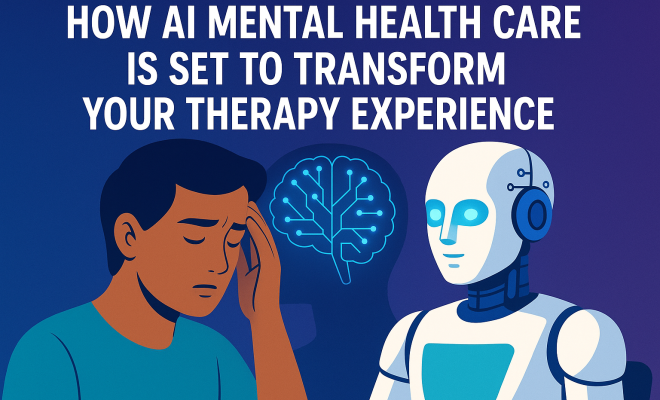
The integration of AI mental health care into general practice is not just a theory anymore; it’s happening. With advancements in technology, artificial intelligence is evolving as a crucial tool for enhancing mental healthcare access, personalization, and efficiency. As we explore this fascinating realm, we’ll uncover the various facets of AI in mental health, looking at how it can improve patient experiences and outcomes while keeping clinicians actively involved in the process.
The Rise of AI in Mental Healthcare
Over the past few years, there has been a surge in the adoption of AI technologies in various aspects of healthcare, and mental health is no exception. According to a report from the World Health Organization, mental health disorders affect 1 in 4 individuals globally, highlighting an urgent need for effective solutions. Enter AI — a tool that has the potential to bridge gaps in mental health services, particularly in underserved areas.
AI mental health care encompasses a range of applications, from chatbots and conversational agents to clinical decision support systems. These technologies are designed to assist healthcare professionals by providing ongoing support for patients, improving diagnostic accuracy, and personalizing treatment plans based on individual needs.
Enhancing Accessibility and Engagement
One of the most significant advantages of AI mental health tools is their ability to provide continuous support between appointments. For many patients, the journey to mental wellness can feel isolating, especially between therapy sessions. AI tools can fill this gap, offering resources, coping strategies, and emotional support around the clock.
For instance, AI-powered chatbots can engage with patients via text or messaging applications, providing immediate responses to concerns or questions. These devices don’t replace human clinicians but serve as a bridge, ensuring that patients don’t feel abandoned between visits. This constant engagement can help individuals manage their symptoms more effectively, ultimately leading to improved outcomes.
In addition to chatbots, AI can also support mental health through mobile applications that encourage users to track their moods and thoughts. These apps often incorporate gamification elements, which can make mental health management more engaging. According to research, users who self-monitor their mental health are more likely to adhere to treatment and report better overall well-being.
Personalization Through AI
Personalized care is at the heart of effective mental health treatment. With AI, clinicians can leverage patient data to tailor interventions and recommendations. AI algorithms can analyze various factors — from patient history to real-time behavior — to create individualized care plans.
For example, AI can track a patient’s progress over time, identifying patterns or changes in behavior that may indicate a need for adjustment in treatment. This level of personalization ensures patients receive the most effective care, improving their chances of recovery.
Additionally, it’s worth noting that as AI systems learn from continuous data input, they can evolve and adapt to emerging mental health trends. A 2021 study highlighted that AI-driven platforms that adapt to user feedback have shown improvements in user satisfaction and treatment outcomes. Personalized care, therefore, is not static; it represents a dynamic approach to mental health that adjusts to individual needs over time.
Screening for High-Risk Patients
Another critical application of AI in mental health care is its ability to screen for high-risk patients. Early detection of mental health issues can significantly impact treatment outcomes, especially for conditions like depression or anxiety. AI tools can analyze responses from screening questionnaires or digital interaction patterns to identify individuals who may need immediate attention.
Take, for instance, the use of predictive algorithms that scan for warning signs of suicide risk or the onset of psychosis. By analyzing subtle digital signals — such as changes in communication frequency or language patterns — AI can alert clinicians to potential crises before they escalate. This proactive approach could save lives and improve the overall quality of care.
Moreover, recent studies suggest that integrating AI screening tools into primary care settings can identify mental health issues earlier than traditional methods. A study published in the Journal of Medical Internet Research revealed that AI screenings in primary care settings increased early intervention rates by over 25%. This shows that AI has the potential not only to improve outcomes but also to reduce the societal burden of untreated mental health conditions. (See: World Health Organization on mental health.)
Automating Repetitive Tasks
Clerical and repetitive tasks consume significant time for healthcare providers, often detracting from patient care. AI can help alleviate this burden by automating administrative tasks, such as scheduling appointments, documenting patient interactions, and billing. By streamlining these processes, clinicians can focus on what they do best: providing care and supporting their patients.
For example, AI-driven software can handle appointment reminders and follow-ups, reducing no-show rates and ensuring patients are staying engaged with their treatment plans. Additionally, by automating documentation, AI gives clinicians more time to connect with patients directly, leading to a more fulfilling therapeutic relationship.
Some practices have reported a 40% decrease in administrative workload after the implementation of AI systems. This not only improves efficiency but also enhances job satisfaction for healthcare providers, allowing them to spend more time on patient interaction rather than paperwork.
The Controversies and Concerns
Despite the promising advancements, the introduction of AI in mental health care is not without controversy. There are valid concerns regarding privacy, data security, and the ethical implications of using AI to make healthcare decisions. Patients may feel uncomfortable sharing sensitive information with an algorithm, raising questions about trust and transparency.
Moreover, the idea of AI predicting mental health crises can be unsettling. Many people fear the implications of machines making life-altering decisions or potentially misinterpreting data. It’s crucial for mental health professionals to address these concerns openly, ensuring patients feel safe and understood in their interactions with AI tools.
Experts recommend that mental health practitioners remain transparent about how AI tools work and the data they collect. By fostering a transparent dialogue about AI usage, clinicians can build trust, allowing patients to feel more comfortable engaging with these technologies. A recent survey found that 67% of patients would be more willing to use AI tools if their clinicians provided clear information about privacy and data usage.
The Human Element Remains Vital
While AI can provide valuable support and insights, the human element of mental health care cannot be overstated. Patients require empathy, understanding, and compassion — qualities that machines cannot replicate. It’s essential to view AI as an augmentative tool rather than a replacement for human clinicians.
AI mental health care should be used to enhance the clinician-patient relationship, allowing healthcare providers to devote more time to direct patient interactions. The blend of human touch and AI efficiency can create a more robust mental health care system that prioritizes patient needs.
Additionally, training clinicians to effectively integrate AI tools into their practice is vital. Educational programs focusing on the collaborative use of AI can help clinicians understand how to leverage these technologies while maintaining their essential human connection with patients. Experts suggest that continuous training and collaboration between tech developers and mental health professionals can lead to better outcomes.
Real-World Applications of AI in Mental Health
Several organizations and startups are already implementing AI mental health care solutions with promising results. For instance, Woebot is a chatbot designed to provide mental health support through conversations. Using cognitive behavioral therapy principles, Woebot engages users in dialogue, offering coping strategies and emotional support.
Another example is Predictive Health, which uses AI algorithms to analyze patient data for identifying those at risk of mental health crises. By flagging high-risk individuals, healthcare providers can intervene early, enhancing patient safety and treatment effectiveness.
Moreover, the partnership between AI and traditional therapies is gaining traction. Therapists are beginning to use AI-generated insights from patient data to inform their sessions. For example, certain platforms can analyze a patient’s journaling entries for mood patterns and provide therapists with a summary, enhancing their understanding and approach in therapy sessions.
The Future of AI Mental Health Care
The future of AI in mental health care looks bright, with continued research and development paving the way for innovative solutions. As technology advances, we can expect more sophisticated AI tools that will enhance diagnostic accuracy, streamline processes, and improve patient outcomes. (See: National Institute of Mental Health statistics.)
Moreover, as public awareness and acceptance of AI in healthcare grow, we may see broader integration of these technologies within mental health practices. The potential for AI to analyze vast amounts of data and identify patterns that humans may overlook could revolutionize how we understand and treat mental health disorders.
According to a report from McKinsey, AI could potentially reduce mental health treatment costs by up to 30%. This reduction in costs, combined with improved access to care, could democratize mental health services, making them available to a much larger population.
Emerging research suggests that combining AI with virtual reality (VR) therapies could provide immersive treatment experiences. VR can simulate environments where patients can confront their fears in a controlled setting, while AI can provide real-time feedback on their emotional responses, offering a multifaceted approach to therapy.
FAQs about AI Mental Health Care
What is AI mental health care?
AI mental health care refers to the use of artificial intelligence technologies to assist in diagnosing, treating, and supporting individuals with mental health conditions. This can include chatbots, predictive analytics, and personalized treatment plans based on patient data.
How can AI improve access to mental health care?
AI can improve access to mental health care by providing resources and support 24/7, particularly in underserved areas where mental health professionals may be scarce. AI tools can also facilitate remote consultations and monitoring, making it easier for patients to receive help.
Are AI mental health tools reliable?
While AI mental health tools can provide valuable insights and support, they should not replace professional clinical judgment. They are most effective when used in conjunction with traditional therapy and under the guidance of licensed mental health professionals.
How do privacy concerns affect AI in mental health care?
Privacy concerns are significant when it comes to AI in mental health care. Patients may hesitate to share personal information with AI systems due to fears about data security and misuse. Ensuring robust privacy measures and transparency about data use is essential to build trust.
Will AI replace therapists in the future?
AI is unlikely to replace therapists but will serve as a complementary tool in mental health care. The therapeutic relationship relies on empathy and human connection, which AI cannot replicate. Instead, AI can enhance the therapist’s practice by providing insights and automating routine tasks. AI therapy apps explained offers useful background here.
Emerging Trends in AI Mental Health Care
As AI continues to evolve, several key trends are emerging in the field of mental health care. One notable trend is the increased use of natural language processing (NLP) to analyze patient interactions. By employing NLP, AI can better understand the nuances of human language, allowing for more effective sentiment analysis and support.
For instance, AI applications can analyze therapy session transcripts to identify recurring themes or emotional states that may need further exploration. This can enable clinicians to tailor their therapeutic approaches more precisely to the needs of their patients.
Another emerging trend is the integration of AI with wearable technology. Devices like smartwatches can monitor physiological indicators such as heart rate and sleep patterns, providing valuable data for mental health assessments. AI can analyze this data alongside traditional mental health metrics to offer a more holistic view of a patient’s mental well-being. (See: Associated Press news on AI in healthcare.)
AI’s Role in Crisis Intervention
Crisis intervention is a critical area where AI can make a substantial impact. AI tools can be programmed to recognize specific triggers or indicators of a mental health crisis. For instance, if a user displays signs of severe distress through their interactions with a chatbot, the system can automatically escalate the situation to a human professional or provide emergency resources.
Research has shown that timely interventions can significantly reduce the likelihood of negative outcomes in crisis situations. AI systems can act quickly and efficiently, providing immediate support while ensuring that a trained professional is involved as needed. This could be especially beneficial for individuals who may be reluctant to seek help directly.
Challenges and Limitations of AI in Mental Health
While the potential benefits of AI in mental health care are promising, there are also significant challenges and limitations to consider. One major hurdle is the issue of data bias. If AI systems are trained on datasets that do not adequately represent diverse populations, the recommendations or insights generated may not be applicable to all patients.
Additionally, the effectiveness of AI algorithms depends heavily on the quality and quantity of data available. In mental health, where patient experiences can be highly subjective and variable, obtaining comprehensive and high-quality data is challenging.
Moreover, the rapid evolution of technology can outpace regulatory frameworks, leading to ethical dilemmas regarding responsibility and accountability in AI-driven mental health care. As the field progresses, collaboration between technologists, clinicians, and policymakers will be essential to ensure that the deployment of AI tools aligns with ethical standards and best practices.
Future Research Directions
The future of AI mental health care is ripe for exploration and research. Investigating the long-term effects of AI-assisted therapies on patient outcomes will be crucial. Research should focus on understanding how to best integrate AI tools into existing therapeutic frameworks and whether these tools have lasting impacts on mental health recovery.
Additionally, studies examining the efficacy of AI in different cultural contexts can help identify how AI tools can be adapted to be more inclusive and sensitive to varied patient populations. Understanding demographic differences in response to AI interventions will be key to developing more personalized and effective mental health care solutions.
Conclusion: Embracing the Change
The integration of AI mental health care into general practice is an exciting development that promises to enhance access, personalization, and efficiency in mental health treatment. While challenges and concerns exist, the potential benefits outweigh the drawbacks. By embracing AI as a complement to traditional therapeutic practices, we can create a more effective mental health care system that meets the needs of patients and practitioners alike.
“`
Trending Now
Frequently Asked Questions
How is AI being used in mental health care?
AI is being integrated into mental health care through applications like chatbots, conversational agents, and clinical decision support systems. These technologies assist healthcare professionals by providing ongoing support, improving diagnostic accuracy, and personalizing treatment plans based on individual patient needs.
What are the benefits of AI in therapy?
The benefits of AI in therapy include enhanced accessibility, continuous support between appointments, and personalized treatment. AI tools can provide resources, coping strategies, and emotional support around the clock, helping patients feel less isolated during their mental wellness journey.
Can AI replace therapists?
No, AI is not intended to replace therapists. Instead, it acts as a complementary tool that enhances the therapeutic experience by providing additional support and resources while keeping human clinicians actively involved in patient care.
How does AI improve mental health outcomes?
AI improves mental health outcomes by offering personalized treatment plans, increasing engagement through continuous support, and enhancing diagnostic accuracy. This integration helps ensure that patients receive timely and effective interventions tailored to their specific needs.
What role does AI play in accessibility to mental health services?
AI plays a critical role in increasing accessibility to mental health services, particularly in underserved areas. By providing support through digital platforms, AI tools can reach individuals who may not have access to traditional therapy, bridging gaps in mental health care.
What’s your take on this? Share your thoughts in the comments below — we read every one.