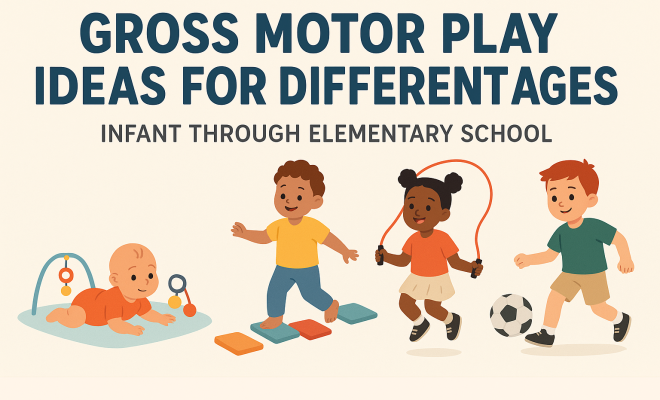
“Gross Motor Play Ideas for Different Ages: Infant Through Elementary School”
“`html
When it comes to childhood development, gross motor skills are fundamental. These skills include the larger movements that involve arms, legs, and the entire body, enabling children to perform tasks like running, jumping, climbing, and throwing. As parents and educators, fostering these skills can be both fun and engaging, but it requires creativity and understanding of what activities suit various age groups. In this article, we’ll explore a variety of gross motor play ideas tailored for children from infancy through elementary school, ensuring every child can develop their physical abilities while having a great time.
Understanding Gross Motor Skills
Before diving into specific activities, it’s crucial to understand what gross motor skills are and why they matter. These skills develop as babies grow, laying the groundwork for coordination, balance, and overall physical fitness. For infants, gross motor development begins with simple movements like lifting their heads or rolling over. As children grow, they start engaging in more complex activities, culminating in the ability to run, jump, and navigate their environments effectively.
According to the Centers for Disease Control and Prevention (CDC), gross motor skills can be categorized into two main areas: locomotor skills (like walking and running) and non-locomotor skills (like balancing and twisting). Encouraging these skills through play is essential not only for physical health but also for cognitive and social development. As children engage in gross motor activities, they learn about their bodies, develop confidence, and improve their social skills through interaction with peers.
Gross Motor Play Ideas for Infants (0-12 months)
In the early months, play is primarily about exploration and sensory experiences. Here are some practical gross motor play ideas for infants:
- Tummy Time: This essential activity helps strengthen neck and shoulder muscles. Place your baby on their belly on a soft mat and encourage them to look around and reach for toys. Begin with a few minutes daily, gradually increasing the time as the baby becomes more comfortable.
- Reach and Grab: Position toys just out of reach while your baby is on their tummy or back. This encourages them to stretch or roll to get the toys, promoting movement and coordination.
- Rolling Games: Gently roll your baby from side to side. This helps them learn to control their body movements and promotes balance. You can also practice rolling a soft ball to encourage the baby to reach for it.
- Sitting Up: As your baby develops, support them in sitting up. Place cushions around them for safety and encourage reaching for toys placed at various distances to promote stability and core strength.
Gross Motor Play Ideas for Toddlers (1-3 years)
By the time children reach toddlerhood, their gross motor skills are rapidly evolving. They’re ready to explore their newfound abilities. Here are some engaging activities:
- Obstacle Courses: Create a simple obstacle course using pillows, soft furniture, or tunnels. Encourage your toddler to crawl, climb, and maneuver through the setup. This not only promotes physical skills but also encourages problem-solving.
- Dance Parties: Play music and have dance sessions where toddlers can jump, sway, and spin freely. This activity fosters rhythm and coordination, and it’s a great way for them to express themselves.
- Ball Games: Roll a soft ball back and forth. As the child grows more confident, introduce kicking, throwing, and catching. This helps develop hand-eye coordination and introduces basic sports skills.
- Nature Walks: Take your toddler on walks where they can explore different terrains, like grass, sand, and gravel. Collecting leaves or sticks along the way can also stimulate curiosity and engagement with their surroundings.
Gross Motor Play Ideas for Preschoolers (3-5 years)
Preschoolers are bursting with energy and curiosity. At this stage, they’re capable of more complex movements. Here are some fantastic gross motor play ideas:
- Jumping and Hopping: Set up a safe area where kids can jump on soft surfaces like grass or mats. Introduce games like hopscotch, where they can jump from square to square, helping to develop balance and coordination.
- Balloon Volleyball: Blow up a balloon and play a game of volleyball indoors or in a safe outdoor area. This fun activity encourages reaching, hand-eye coordination, and teamwork.
- Animal Movements: Encourage children to mimic animal movements, such as crawling like a bear or hopping like a frog. This not only promotes gross motor skills but also sparks their imagination.
- Parachute Play: Use a colorful parachute for group activities that involve lifting, lowering, and running underneath. It enhances cooperation and teamwork while building strength and coordination.
Gross Motor Play Ideas for Early Elementary (6-8 years)
As children enter elementary school, their physical skills continue to advance, and they’re ready for more structured play. Here are some engaging activities:
- Sports and Games: Introduce structured sports like soccer, basketball, or swimming. Team sports not only build gross motor skills but also encourage social interaction and teamwork.
- Scavenger Hunts: Organize scavenger hunts that require kids to walk, run, and climb to find items. This can be done indoors or outdoors, promoting physical activity while adding an element of adventure.
- Yoga and Stretching: Introduce simple yoga poses that promote balance, strength, and flexibility. This can be a calming activity that also enhances body awareness.
- Relay Races: Set up relay races with various stations that require different movements, such as hopping, skipping, or balancing an object. This promotes fitness and encourages friendly competition.
The Importance of Outdoor Gross Motor Play
Outdoor play is crucial for developing gross motor skills. Natural environments present unique challenges that indoor settings often lack. Climbing trees, running on uneven surfaces, and playing on playground equipment help children enhance their balance, agility, and coordination. According to the American Academy of Pediatrics, outdoor play has mental health benefits, including reducing stress and promoting overall well-being. (See: CDC milestones for child development.)
Encouraging outdoor play can also set the stage for lifelong habits. Children who engage in physical activities from a young age are more likely to value fitness as they grow. They learn to appreciate nature, develop resilience, and gain confidence in their abilities.
Incorporating Technology: Balance and Caution
While technology can pose challenges to physical play, it can also be integrated thoughtfully into gross motor activities. Interactive games that encourage movement, like virtual reality games or motion-sensing games, can motivate children to be active. However, it’s essential to balance screen time with ample opportunities for unstructured play.
Experts recommend that children aged 2 to 5 should have no more than one hour of screen time per day, while children aged 6 and older should have consistent limits on the amount and type of media they consume. Encouraging active play during screen time can help keep kids physically engaged. For example, consider using an interactive dance game that gets kids moving while having fun.
Adapting Activities for All Abilities
Every child develops at their own pace, and it’s essential to adapt gross motor play activities to accommodate varying abilities. Children with physical disabilities may benefit from modified activities or the use of adaptive equipment. For example, using lightweight balls or larger targets can help children participate more fully in ball games.
In inclusive environments, consider activities that promote cooperation and teamwork, allowing all children to contribute. Pairing children with varying abilities during play fosters empathy and understanding, creating a positive space for everyone.
Safety Considerations for Gross Motor Play
Safety is paramount when engaging in gross motor play. Always supervise children, especially during physical activities that involve climbing or running. Here are some key safety tips:
- Check Equipment: Ensure that playground equipment is age-appropriate and well-maintained. Regularly inspect outdoor areas for potential hazards like broken glass or sharp objects.
- Use Soft Surfaces: Whenever possible, encourage play on soft surfaces like grass, sand, or mats to minimize injury risk during falls.
- Encourage Proper Attire: Make sure children wear appropriate clothing and footwear for physical activities. Avoid flip-flops or loose clothing that may cause tripping.
- Teach Safe Practices: Educate children about safe play practices, such as not pushing or shoving during games and taking turns.
Frequently Asked Questions about Gross Motor Play Ideas
What are some easy gross motor activities I can do at home?
Some easy gross motor activities you can do at home include setting up a mini obstacle course, playing catch with a soft ball, having dance parties, or using pillows for jumping and climbing. You can also encourage your child to help with gardening tasks, like digging or planting, which involve various movements.
How can I encourage gross motor skills in a small space?
If you have limited space, consider activities that require minimal equipment, such as yoga, stretching, or simple dance routines. Use furniture creatively, like having your child climb over cushions or crawl under tables. Even activities like playing with a large beach ball can promote movement without needing much space.
Are there any specific toys that can enhance gross motor skills?
Yes! Toys like push toys, ride-on toys, and balance bikes can significantly enhance gross motor skills. Additionally, balls of various sizes, climbing structures, and even simple things like jump ropes can encourage movement and skill development. Look for toys that promote active play rather than sedentary activities. (See: NIH resources on gross motor skills.)
How can I tell if my child is developing gross motor skills appropriately?
Monitoring your child’s gross motor skill development involves observing their ability to perform age-appropriate physical tasks. For example, by age 2, they should be able to run and jump with both feet. By age 3, they should be able to kick a ball and climb stairs with assistance. If you have concerns, consult a pediatrician for a more accurate assessment.
What role does play have in developing social skills in gross motor activities?
Play is a fundamental way for children to learn social skills. Activities that involve teamwork, like relay races or group games, teach children how to cooperate, communicate, and resolve conflicts. Gross motor play also allows children to practice sharing space, taking turns, and respecting others’ boundaries, all of which are essential social skills.
The Lifelong Impact of Gross Motor Play
Promoting gross motor skills from infancy through elementary school is vital for a child’s overall development. Through a variety of engaging activities, children can build physical strength, improve coordination, and develop social skills. By incorporating outdoor play, adapting activities for all abilities, and maintaining safety, we can create rich environments where children thrive. Remember, the goal is to make play enjoyable and engaging, laying the foundation for a lifetime of physical activity and health.
The Future of Gross Motor Play in Education
As educational philosophies evolve, the emphasis on physical activity in schools is gaining traction. Schools are increasingly recognizing the importance of physical education in nurturing well-rounded children. This shift includes incorporating more active breaks into classroom settings, which can boost concentration and enhance learning outcomes.
Moreover, there’s a growing trend to integrate play-based learning into the curriculum. This approach not only supports the development of gross motor skills but also fosters creativity, critical thinking, and problem-solving abilities. Schools are exploring innovative methods, such as using outdoor classrooms, to combine nature with physical activity, thus enhancing children’s overall learning experience.
Community Resources for Gross Motor Play
Many communities offer resources that support gross motor development. Local parks and recreation departments often provide structured programs focused on physical activity, sports leagues, and outdoor adventure camps. Libraries may host movement-based story times or play groups that emphasize physical play.
Furthermore, connecting with other parents and caregivers can lead to organized playdates and community events that prioritize movement and active engagement. By leveraging community resources, you can create a supportive network that encourages healthy play habits among children.
Exploring Cultural and Seasonal Gross Motor Play Ideas
Gross motor play can also be expanded by incorporating cultural and seasonal elements. Different cultures have unique outdoor games and activities that can introduce kids to diverse traditions while developing their motor skills. For example, traditional games like “Tag” or “Duck Duck Goose” have variations around the world. Exploring these can enrich children’s understanding of global cultures while keeping them physically active. (See: WHO facts on physical activity.)
Seasonal activities can also provide fresh challenges and excitement for children. In the fall, for instance, raking leaves can become a fun gross motor activity where kids can jump into piles, promoting movement and enjoyment. Winter can bring snowball fights or sledding, which are excellent for developing coordination and strength. Spring can be a time for planting gardens or flying kites, encouraging running and arm movements. Summer is perfect for swimming, running through sprinklers, or organizing outdoor field days with various games.
Innovative Gross Motor Play Ideas for Home and School
Realizing that not all children learn the same way, it’s beneficial to incorporate innovative approaches to gross motor play both at home and in educational settings. One idea is to use everyday household items creatively. For instance, tape a line on the floor to create a balance beam, or use cardboard boxes for climbing and crawling challenges. This not only encourages movement but also imaginative play.
In classrooms, teachers can implement “movement breaks,” where students engage in a quick dance or a series of stretches to refocus their energy before returning to learning. This not only promotes physical activity but enhances concentration and learning retention. Additionally, consider integrating movement into academic lessons. For example, when teaching about shapes, you might have kids form those shapes with their bodies or use their arms to measure distances in a fun, interactive way.
Incorporating Feedback and Assessment into Gross Motor Activities
While engaging in gross motor play activities, it’s essential to observe children and provide feedback that supports their development. Consider creating a checklist of gross motor skills to monitor progress over time. This can include milestones such as hopping on one foot, balancing on one leg, or throwing a ball accurately. Sharing this feedback with children helps them understand their achievements and areas for improvement.
Encouraging self-assessment is also valuable. Ask children how they feel about their performance during activities, what they enjoyed, and what they found challenging. This can foster a sense of ownership over their development and motivate them to set personal goals for improvement. By incorporating these elements into gross motor play, you’ll not only enhance physical skills but also support social and emotional growth.
“`
Trending Now
Frequently Asked Questions
What are gross motor skills in children?
Gross motor skills involve larger movements that engage the arms, legs, and body, such as running, jumping, and climbing. These skills are crucial for overall physical development and are foundational for activities that require coordination and balance.
Why are gross motor skills important for infants?
Gross motor skills are vital for infants as they support essential movements like lifting their heads and rolling over. These skills help lay the groundwork for future physical activities and contribute to cognitive and social development.
What activities promote gross motor skills in toddlers?
Activities like climbing on playground equipment, playing with balls, and dancing encourage gross motor skill development in toddlers. These activities enhance their coordination, balance, and physical confidence while also being enjoyable.
How can I encourage gross motor play in preschoolers?
To encourage gross motor play in preschoolers, engage them in activities like obstacle courses, jumping games, and group sports. These activities not only improve their physical abilities but also foster social interaction and teamwork.
What are some gross motor play ideas for elementary school children?
For elementary school children, consider activities like organized sports, dance classes, and outdoor games such as tag or capture the flag. These activities help refine their gross motor skills while promoting fitness and social skills.
What did we miss? Let us know in the comments and join the conversation.