Emotional Intelligence vs. Social Skills: A Student’s Guide
“`html
Understanding the distinctions between emotional intelligence and social skills is crucial for students navigating the complexities of interpersonal relationships in academic settings. These two concepts, while interrelated, serve different functions in social interactions and personal development. The current educational landscape emphasizes the importance of both emotional intelligence and social skills, equipping students not only with academic knowledge but also with the tools they need to succeed in life beyond the classroom. In this article, we’ll explore the definitions, key differences, practical applications, and ongoing relevance of emotional intelligence versus social skills.
1. Defining Emotional Intelligence
Emotional intelligence (EI) refers to the ability to recognize, understand, and manage one’s own emotions and the emotions of others. This concept was popularized by psychologist Daniel Goleman in the 1990s, who identified five key components: self-awareness, self-regulation, motivation, empathy, and social skills. The self-awareness aspect involves recognizing one’s feelings and how they affect thoughts and behavior. Self-regulation encompasses managing emotions in healthy ways, while motivation typically refers to harnessing emotions to pursue goals.
Empathy plays a crucial role in EI, allowing individuals to understand and share the feelings of others, thus facilitating deeper connections. Lastly, social skills are essential for managing relationships and navigating social networks. In a school context, students with high emotional intelligence are often better at coping with stress, collaborating with peers, and resolving conflicts, which directly impacts their academic success and overall well-being.
2. Understanding Social Skills
Social skills, on the other hand, pertain to the abilities that enable individuals to communicate effectively and interact positively with others. These skills include verbal and non-verbal communication, active listening, teamwork, and conflict resolution. Unlike emotional intelligence, which is more about emotional awareness and management, social skills focus on the practical aspects of interacting with others in various settings.
For students, strong social skills can lead to better friendships, improved group work, and enhanced ability to engage in classroom discussions. Skills such as making eye contact, understanding body language, and responding thoughtfully to peers are all part of the social skill set. As they develop these skills, students are likely to find it easier to navigate the social complexities of school life, which can profoundly influence their educational outcomes.
3. Key Differences Between Emotional Intelligence and Social Skills
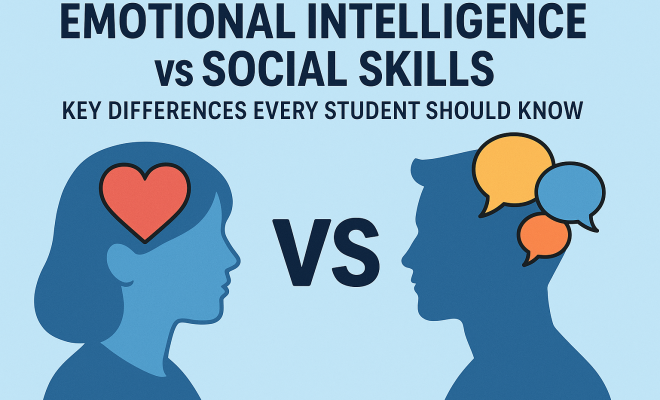
The distinction between emotional intelligence and social skills can be subtle but important. At their core, emotional intelligence involves understanding and managing emotions, whereas social skills are about the application of these emotional insights in social situations. Emotional intelligence serves as a foundation for social skills; someone who understands their emotions and can empathize with others is more likely to develop effective social interactions.
Additionally, emotional intelligence is often seen as an internal process, while social skills are external and observable behaviors. For example, a student might feel anxious about speaking in front of a class (an emotional intelligence aspect) but may develop the social skill of public speaking to overcome that anxiety. Understanding this distinction can help educators tailor programs that address both areas, fostering well-rounded development in students.
4. The Importance of Emotional Intelligence in Education
Emotional intelligence has a profound impact on educational success. Research has shown that students with high EI tend to perform better academically. This correlation may be attributed to their ability to handle stress, collaborate with classmates, and seek help when needed. For instance, a student who can identify feelings of frustration when faced with a challenging math problem is more likely to employ self-regulation techniques, such as taking a break or asking a teacher for assistance.
Moreover, emotional intelligence fosters resilience, a vital trait in today’s competitive educational environments. Students who can cope with setbacks and maintain motivation are better equipped to overcome academic obstacles. Schools that integrate EI development into their curricula often report improved student behavior, reduced bullying incidents, and a more supportive school culture.
5. How Social Skills Contribute to Academic Success
Social skills are equally essential in the educational landscape. They not only facilitate positive interactions with peers and teachers but also enhance learning experiences. Students adept in social skills are typically more engaged in group projects, able to express their ideas clearly, and open to feedback, which contributes to a collaborative learning environment. (See: NIH article on emotional intelligence.)
Furthermore, strong social skills can lead to better networking opportunities. Students who excel in building relationships often find it easier to connect with mentors and peers who can provide guidance and support throughout their educational journey. In a recent study, students with strong social skills were found to have higher graduation rates and better prospects for post-secondary education.
6. Strategies to Enhance Emotional Intelligence
Educators and parents can implement various strategies to help students enhance their emotional intelligence. One effective approach is incorporating emotional literacy into the curriculum. This can involve activities like role-playing, where students practice identifying and discussing emotions in various scenarios. Additionally, mindfulness practices such as meditation can aid students in developing better self-awareness and self-regulation skills.
Another strategy is to create a supportive classroom environment where students feel safe to express their emotions. Encouraging open discussions about feelings and providing constructive feedback can significantly contribute to students’ emotional growth. Teachers can also model emotional intelligence by openly discussing their own feelings and demonstrating how to handle them appropriately.
7. Improving Social Skills in Students
Similar to emotional intelligence, social skills can be taught and improved through deliberate practice. Schools can offer workshops that focus on communication techniques, including active listening and assertiveness training. Group activities that require collaboration and cooperation can also be beneficial, as they provide students with hands-on experience in navigating social dynamics.
Additionally, mentorship programs can help students observe and practice social skills in real-world contexts. Pairing students with older peers or community members can provide valuable insights and feedback. Educators can encourage students to reflect on their social interactions, discussing what went well and what could be improved, fostering an environment of continuous growth.
8. The Role of Emotional Intelligence and Social Skills in Future Success
The significance of emotional intelligence and social skills extends beyond academic settings; they are crucial for success in the workplace and personal relationships. Employers increasingly prioritize these attributes, recognizing that employees with strong EI and social skills contribute to better teamwork, communication, and conflict resolution.
In fact, a study by the World Economic Forum identified emotional intelligence as one of the top skills for the future job market. As automation and artificial intelligence continue to reshape the workforce, human traits like empathy, adaptability, and interpersonal communication become invaluable. Students who cultivate these skills during their formative years are better positioned to thrive in their careers and personal lives.
9. The Intersection of Emotional Intelligence and Social Skills
Understanding how emotional intelligence and social skills interplay is vital for holistic student development. These two areas are not mutually exclusive; rather, they complement and enhance one another. A student with high emotional intelligence can utilize that understanding to improve their social skills, leading to more meaningful interactions and lasting relationships.
Moreover, as students learn to navigate their own emotions, they become more adept at empathizing with peers, which enhances their social capabilities. Schools that recognize this interconnectedness can design curricula that balance emotional and social learning, fostering a comprehensive skill set that prepares students for future challenges.
10. Real-World Applications of Emotional Intelligence and Social Skills
Emotional intelligence and social skills are not just theoretical concepts; they have real-world applications that extend into various domains of life. In workplaces, for instance, employees with high emotional intelligence are often seen as better leaders. They can motivate teams, navigate conflicts, and create a positive work environment. A study by TalentSmart found that emotional intelligence is responsible for 58% of job performance in various roles.
In personal relationships, emotional intelligence fosters deeper connections. Individuals who can express their emotions clearly and empathize with their partners are generally more satisfied in their relationships. This ability to communicate emotions and understand others contributes to healthier, more resilient relationships. (See: Harvard Business School on emotional intelligence.)
Furthermore, in community settings, social skills play a crucial role in civic engagement. Those with strong social skills tend to participate more actively in community service and local governance. They can effectively communicate their ideas and collaborate with others to address community issues.
11. Statistics Highlighting the Importance of EI and Social Skills
Several studies underscore the importance of emotional intelligence and social skills. For example, research from the Consortium for Research on Emotional Intelligence in Organizations shows that EI accounts for a staggering 60% of performance in leadership roles. Additionally, a study published in the journal Emotional Intelligence indicated that high EI is linked to lower levels of stress and burnout among employees.
In educational settings, a report by the Collaborative for Academic, Social, and Emotional Learning (CASEL) revealed that students participating in social-emotional learning programs showed an 11% improvement in academic performance compared to their peers who did not participate. This highlights the tangible benefits of integrating EI and social skills training into the educational curriculum.
12. Challenges in Developing Emotional Intelligence and Social Skills
While the benefits of emotional intelligence and social skills are clear, developing these abilities can pose challenges. For many students, especially those from different cultural backgrounds, the norms and expectations surrounding emotional expression and social interaction can vary significantly. This cultural context can hinder their ability to connect with peers effectively.
Additionally, some students may face personal barriers, such as anxiety or past trauma, which can impact their emotional expression and social engagement. Educators must be aware of these challenges and strive to create an inclusive environment that recognizes and supports diverse emotional and social experiences.
13. FAQs about Emotional Intelligence vs Social Skills
What is the primary difference between emotional intelligence and social skills?
The primary difference lies in their focus: emotional intelligence is about understanding and managing emotions, while social skills are about effectively interacting with others using that emotional insight.
Can emotional intelligence be learned?
Yes, emotional intelligence can be developed over time through practices such as self-reflection, mindfulness, and social interaction. Training programs and workshops can also support the growth of EI.
How can teachers assess emotional intelligence and social skills in students?
Teachers can assess these skills through observations in the classroom, feedback from peers, and structured assessments like self-report questionnaires or peer evaluations. They can also create scenarios for role-playing exercises to observe how students handle various emotional and social situations.
Why are emotional intelligence and social skills important for future careers?
Many industries prioritize emotional intelligence and social skills as they lead to better teamwork, enhanced communication, and improved problem-solving abilities. These soft skills are increasingly recognized as critical to success, especially in collaborative work environments.
How can parents support the development of EI and social skills at home?
Parents can support their children’s development by modeling emotional awareness, encouraging open discussions about feelings, and providing opportunities for social interaction through group activities and playdates. Engaging in community activities that require teamwork can also help build these skills.
14. Strategies to Integrate EI and Social Skills Training
Schools can implement a comprehensive approach to integrate emotional intelligence and social skills training into their curriculum. Programs can be designed to blend both areas, focusing on scenarios that require students to apply emotional insights to enhance their social interactions. For instance, role-playing exercises that involve resolving conflicts can simultaneously boost empathy and communication skills.
Additionally, group activities that promote collaboration can foster an environment where students practice both emotional regulation and effective social skills. This could include teamwork in sports, community service projects, or collaborative arts and crafts activities that encourage emotional expression and social connection.
15. Emotional Intelligence and Social Skills in Diverse Cultures
When considering emotional intelligence and social skills, it’s essential to acknowledge the influence of cultural factors. Different cultures have varying norms regarding emotional expression and social interaction, affecting how EI and social skills are perceived and developed. For example, in some cultures, emotional restraint is valued more than open expression, which may impact a student’s comfort level in discussing emotions.
Educators should be culturally responsive and adapt their teaching practices to accommodate this diversity. Incorporating culturally relevant examples and scenarios in lessons can help students understand and appreciate different emotional and social norms, fostering a more inclusive learning environment.
16. The Future of Emotional Intelligence and Social Skills Development
As we move forward, the importance of emotional intelligence and social skills is expected to grow even further. Organizations are increasingly recognizing the value of these attributes in leadership roles, customer service, and team dynamics. Future educational frameworks will likely place a stronger emphasis on these skills, integrating them into STEM and other traditionally rigid curricula.
With the rise of digital communication and virtual learning environments, the challenge will be ensuring that emotional intelligence and social skills continue to be cultivated. This might involve innovative approaches to teaching these skills online, using technology to simulate social interactions and emotional scenarios that students can navigate collaboratively.
17. Conclusion
It’s clear that both emotional intelligence and social skills play vital roles in a student’s academic and personal success. By emphasizing the development of these skills, educators can equip students with the tools they need to navigate their current environments and future endeavors. Understanding the differences and connections between emotional intelligence vs social skills is not just an academic exercise; it’s a pathway to fostering well-rounded individuals ready to face the world.
“`
Trending Now
- our breakdown of unlocking social skills: how role-play transforms social pragmatics in middle school
- Empowering Young Minds: 9 Ways to Enhance Pragmatic Language Development in Preschool
- this guide on decoding language: how pragmatics, semantics, and syntax shape communication
Frequently Asked Questions
What is the difference between emotional intelligence and social skills?
Emotional intelligence (EI) involves recognizing and managing one’s own emotions and those of others, while social skills focus on effective communication and positive interactions. EI encompasses components like empathy and self-regulation, whereas social skills are about navigating social networks and relationships.
Why is emotional intelligence important for students?
Emotional intelligence is crucial for students as it helps them manage stress, collaborate effectively, and resolve conflicts. High EI contributes to better academic performance and overall well-being, allowing students to thrive in both academic and personal settings.
How can students improve their social skills?
Students can enhance their social skills by practicing effective communication, engaging in group activities, and seeking feedback from peers. Participating in social events and developing active listening skills also play a significant role in improving social interactions.
What are the components of emotional intelligence?
Emotional intelligence consists of five key components: self-awareness, self-regulation, motivation, empathy, and social skills. These elements work together to help individuals understand their emotions and manage relationships effectively.
Can emotional intelligence and social skills be learned?
Yes, both emotional intelligence and social skills can be developed through practice and education. Students can engage in activities that promote self-reflection, empathy, and effective communication to enhance these essential abilities.
Agree or disagree? Drop a comment and tell us what you think.