Boost K-12 Success: The Power of Emotional Intelligence in Education
“`html
Understanding Emotional Intelligence in Education
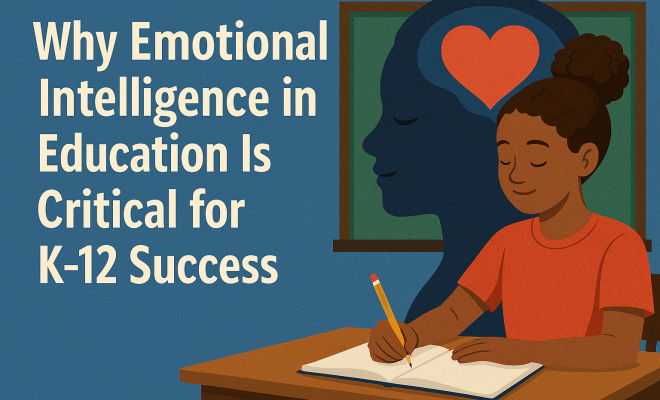
Emotional intelligence (EI) refers to the ability to recognize, understand, and manage our own emotions while also being able to recognize and influence the emotions of others. In the realm of education, emotional intelligence is increasingly acknowledged as a vital component of student development. The K-12 education system serves as a critical period for developing these skills, as students navigate complex interpersonal dynamics and emotional challenges.
The inclusion of emotional intelligence in education helps cultivate not only academic success but also social competencies that are essential for success beyond the classroom. This article will delve into the importance of emotional intelligence in education, particularly focusing on teaching emotional regulation through a K-12 framework.
The Roots of Emotional Intelligence
Emotional intelligence, a term popularized by psychologist Daniel Goleman in the mid-1990s, encompasses five key components: self-awareness, self-regulation, motivation, empathy, and social skills. These elements work together to facilitate interactions and decisions across various contexts. Understanding these fundamentals is crucial for educators seeking to implement emotional intelligence practices in classrooms.
At the heart of emotional intelligence is self-awareness, which allows individuals to recognize their emotions and the impact those emotions have on behavior. This self-awareness leads to self-regulation, enabling students to manage their emotions effectively and maintain control in stressful situations. In a classroom setting, this might involve managing frustration during a challenging math problem or expressing sadness in a healthy manner.
Motivation, the third component, drives individuals to achieve goals for personal reasons rather than external rewards. In an educational context, fostering intrinsic motivation can help students remain engaged and committed to their learning journey. Empathy is the ability to understand and share the feelings of others, a skill that enhances collaboration and communication in diverse groups. Lastly, social skills encompass the ability to build and maintain relationships, essential for teamwork and conflict resolution.
The Importance of Emotional Regulation
Emotional regulation is a subset of emotional intelligence and involves managing one’s emotional experience and responses to situations. In a school environment, students often encounter stressors, from academic pressures to social dynamics. Teaching students how to regulate their emotions can lead to improved focus, better decision-making, and healthier relationships with peers and teachers.
Research shows that students with high emotional regulation skills tend to perform better academically and are less likely to engage in disruptive behaviors. By cultivating these skills, educators can create a more positive and productive learning environment.
Integrating Emotional Intelligence into K-12 Curriculum
Integrating emotional intelligence into the K-12 curriculum can take several forms, ranging from formal programs to informal teaching moments. Here are some practical insights for educators looking to implement emotional intelligence teaching frameworks:
- Dedicated Curriculum Modules: Schools can introduce specific lessons focused on emotional intelligence, including activities that promote self-awareness, empathy, and emotional regulation.
- Mindfulness Practices: Incorporating mindfulness practices such as meditation or deep-breathing exercises can help students learn to manage their emotions and focus their attention.
- Social-Emotional Learning (SEL): SEL programs can provide a structured approach to teaching emotional intelligence. These programs often include activities and lessons designed to enhance emotional awareness and regulation skills.
- Teacher Training: Educators themselves must be equipped to model emotional intelligence. Professional development workshops can help teachers understand EI components and strategies for integrating them into their teaching.
Real-World Examples of Emotional Intelligence in Action
One notable example of a school successfully implementing an emotional intelligence framework is the Collaborative for Academic, Social, and Emotional Learning (CASEL). CASEL provides a variety of resources and tools to integrate SEL into educational settings. Schools that have adopted CASEL’s framework have reported improvements in student behavior, academic performance, and overall school climate.
Another example is the MindUP program, developed by the Goldie Hawn Foundation. This program teaches children about brain function and emotional regulation while incorporating mindfulness techniques. Schools utilizing MindUP have seen significant increases in students’ emotional well-being and engagement. (See: Emotional Intelligence Overview.)
Challenges in Teaching Emotional Intelligence
While the benefits of teaching emotional intelligence in education are clear, challenges can arise during implementation. One challenge is the lack of training and resources available for teachers. Many educators may not feel equipped to teach emotional intelligence skills, particularly if they have not received formal training. This highlights the necessity for ongoing professional development focused on emotional intelligence.
Additionally, measuring emotional intelligence can be complex. While academic performance is relatively easy to quantify, emotional skills may require more nuanced evaluation methods. Educators must find creative and effective ways to assess students’ emotional growth, which can sometimes be a daunting task.
The Role of Parents and the Community
Emotional intelligence extends beyond the classroom walls. Parents and community members play an essential role in fostering emotional regulation and intelligence in children. Schools should encourage collaboration and communication with families to reinforce the emotional skills taught in school. Engaging parents in workshops or providing resources on emotional intelligence can help create a supportive environment for students.
Communities can also contribute by developing programs that promote emotional intelligence, such as youth mentorship initiatives and after-school activities that emphasize teamwork and empathy. These community programs can provide valuable reinforcement for the emotional skills students learn in school.
Current Relevance and Future Implications
The relevance of emotional intelligence in education has only become more pronounced in recent years. The COVID-19 pandemic has highlighted the emotional challenges students face as they navigate disruptions to their daily lives. Many students are dealing with increased anxiety, isolation, and uncertainty, making emotional regulation skills more critical than ever.
Looking ahead, emotional intelligence in education is poised to play a significant role in shaping future educational practices. As schools increasingly recognize the importance of social-emotional learning, the integration of emotional intelligence into curricula will likely expand. As a result, educators, policymakers, and communities must prioritize emotional intelligence as a fundamental aspect of K-12 education.
Conclusion: The Path Forward
Teaching emotional regulation through emotional intelligence is not merely an educational trend; it’s essential for fostering well-rounded, resilient students. As society continues to evolve, so too must our educational frameworks. By prioritizing emotional intelligence in education, we equip students with the tools they need to navigate both academic and personal challenges successfully.
Ultimately, the path forward involves collaborative efforts between educators, parents, and communities to create an environment that values emotional intelligence. Through intentional teaching and support, we can help students cultivate the skills necessary for lifelong success — both in school and beyond.
Deepening the Understanding of Emotional Intelligence in Education
To fully grasp the role of emotional intelligence in education, it’s helpful to break down its multifaceted impact. Emotional intelligence not only shapes individual student outcomes but also influences the classroom atmosphere and school culture.
Impact on Classroom Dynamics
Classrooms are social environments where students interact with one another and their teachers. High emotional intelligence promotes positive interactions, leading to a collaborative and inclusive classroom culture. Students with strong emotional intelligence can navigate social situations more adeptly, reducing instances of bullying and conflict. For example, when students can identify and express their emotions, they are less likely to engage in negative behavior that disrupts learning for themselves and their peers.
Building Resilience Through Emotional Intelligence
Educational settings often present challenges that can lead to frustration and stress. Emotional intelligence equips students with the tools to develop resilience. By learning to manage their emotions effectively, students can bounce back from setbacks more quickly. Programs that encourage emotional intelligence teach skills such as reframing negative thoughts, practicing self-compassion, and setting realistic goals. For instance, a student who faces a poor test score can use their emotional intelligence to analyze the situation, understand their feelings, and create an action plan for improvement without succumbing to despair.
Statistical Evidence of EI Benefits in Education
Numerous studies underscore the advantages of emotional intelligence within educational contexts. According to a meta-analysis conducted by the American Psychological Association, students who participated in social-emotional learning programs showed an 11-percentile-point gain in academic achievement compared to their peers who did not receive such training. Another study found that schools implementing emotional intelligence frameworks saw a 20% reduction in disciplinary referrals. These statistics highlight the tangible benefits that emotional intelligence can bring to both academic performance and overall school climate. (See: CDC on Emotional Well-Being in Youth.)
Comparing Different Approaches to Emotional Intelligence Education
There are several frameworks and methodologies for teaching emotional intelligence within K-12 education. A comparative analysis of these approaches can illuminate effective practices:
Character Education vs. Social-Emotional Learning
Character education focuses on instilling core values such as respect, responsibility, and fairness in students. While it overlaps with emotional intelligence, character education primarily emphasizes moral development. On the other hand, social-emotional learning (SEL) explicitly targets emotional intelligence skills, including self-awareness and relationship management. Schools that incorporate both approaches can create a well-rounded educational experience that fosters moral character alongside emotional intelligence.
Mindfulness Programs vs. Traditional EI Training
Mindfulness programs, such as those derived from Buddhist principles, teach students to remain present and aware of their thoughts and feelings. While traditional emotional intelligence training may include discussions and role-playing, mindfulness emphasizes experiential learning through meditation and reflection. Research has demonstrated that mindfulness can significantly enhance emotional regulation and resilience in students, complementing traditional EI frameworks.
FAQs About Emotional Intelligence in Education
What is emotional intelligence in education?
Emotional intelligence in education refers to the ability of students to recognize, understand, and manage their emotions and the emotions of others. It encompasses skills like empathy, emotional regulation, and effective communication, all of which are critical for success in the classroom and beyond.
How can emotional intelligence improve academic performance?
Students with high emotional intelligence tend to have better focus, improved relationships with peers and teachers, and enhanced motivation. This leads to a positive classroom environment and a greater likelihood of academic success.
What role do teachers play in developing students’ emotional intelligence?
Teachers are pivotal in modeling emotional intelligence behaviors and creating an emotionally supportive classroom. They can introduce SEL curricula, utilize mindfulness practices, and engage in continuous professional development to enhance their emotional intelligence skills.
Are there specific programs that focus on emotional intelligence in schools?
Yes, there are several programs dedicated to fostering emotional intelligence in schools, such as the Collaborative for Academic, Social, and Emotional Learning (CASEL) framework, MindUP, and the PATHS program. These initiatives provide structured lessons and activities for students to develop their emotional intelligence skills.
How can parents support the development of emotional intelligence in their children?
Parents can reinforce emotional intelligence at home by encouraging open discussions about feelings, modeling empathetic behavior, and providing opportunities for children to engage in social activities. Teaching children how to label their emotions and providing strategies for emotional regulation can be particularly beneficial.
Future Directions for Emotional Intelligence in Education
As we look toward the future, the integration of emotional intelligence training in education will likely gain more traction. Schools may begin to adopt a holistic approach that combines academic learning with emotional and social development. This might include the establishment of dedicated emotional intelligence laboratories where students can practice skills in real-life scenarios.
Additionally, technology may play a significant role in promoting emotional intelligence. Interactive apps and online platforms designed to enhance emotional awareness and regulation can make learning engaging and effective. The use of virtual reality scenarios to simulate social interactions and challenges may also emerge as a powerful tool for building emotional intelligence among students.
Final Thoughts
Emotional intelligence in education is not just a buzzword; it’s a fundamental component of preparing students for the complexities of life beyond school. By investing in emotional intelligence frameworks, educational institutions can cultivate a generation of emotionally resilient and socially adept individuals. This approach not only benefits students academically but also empowers them to contribute positively to society.
Integrating Emotional Intelligence at Home
While schools play a crucial role in developing emotional intelligence, the influence of parents and caregivers cannot be underestimated. Families have the unique opportunity to reinforce what students learn in school and provide additional contexts for application. By integrating emotional intelligence practices at home, parents can create a consistent learning environment.
Practical Strategies for Parents
Here are several ways parents can help nurture emotional intelligence in their children:
- Encourage Emotional Expression: Create an open environment where children feel safe expressing their feelings. Use everyday situations to discuss emotions, allowing kids to articulate their feelings and develop vocabulary around emotions.
- Model Empathetic Behavior: Demonstrate empathy in your everyday interactions. Discuss scenarios where you feel empathy for others, helping children learn to recognize emotions in others.
- Use Storytelling: Read books or watch movies together that explore complex characters and situations. Discuss characters’ emotions and motivations, fostering a deeper understanding of emotional dynamics.
- Implement Family Check-Ins: Regular family meetings or check-ins can provide a space for everyone to share their feelings, discuss challenges, and celebrate successes. This practice reinforces open communication.
Emotional Intelligence and Mental Health
Emotional intelligence significantly intersects with mental health. Studies show that individuals with high emotional intelligence are better equipped to handle stress, anxiety, and other mental health challenges. In educational settings, fostering emotional intelligence can lead to a decrease in mental health issues among students.
For instance, a study published in the journal *Child Development* found that children who participated in SEL programs were less likely to experience anxiety and depression. By teaching students to recognize their emotions and manage them effectively, schools can help preemptively address mental health issues.
Building a Supportive School Environment
Creating a school environment that promotes emotional intelligence involves everyone—administrators, teachers, parents, and students. Here are some strategies schools can implement to support emotional intelligence development:
- Inclusive Policies: Develop school policies that emphasize emotional well-being. This can include anti-bullying measures, mental health resources, and programs that celebrate emotional intelligence.
- Peer Support Groups: Establish peer mentoring programs where older students support younger ones in developing social-emotional skills. This fosters a sense of community and belonging.
- Collaboration with Mental Health Professionals: Partner with counselors or psychologists to provide workshops for students and staff, reinforcing emotional intelligence concepts within a supportive framework.
Conclusion: A Comprehensive Approach
Emotional intelligence in education will continue to evolve as research and our understanding of student needs develop. By adopting a comprehensive approach that includes parents, community, and mental health professionals, schools can create an environment that nurtures emotional growth alongside academic achievement. This holistic focus prepares students not just for tests but for life, ensuring they have the skills necessary to thrive in an ever-changing world.
“`
Trending Now
- the complete explanation
- Understanding Why ADHD Students Face Challenges in Pragmatic Language Skills
- Unlocking Social Skills: How Role-Play Transforms Social Pragmatics in Middle School
- our breakdown of empowering young minds: 9 ways to enhance pragmatic language development in preschool
- Decoding Language: How Pragmatics, Semantics, and…
Frequently Asked Questions
What is emotional intelligence in education?
Emotional intelligence in education refers to the ability to recognize, understand, and manage emotions, both in oneself and in others. It plays a crucial role in student development, helping cultivate academic success and essential social competencies within the K-12 education system.
Why is emotional intelligence important for students?
Emotional intelligence is important for students because it aids in developing self-awareness, self-regulation, and empathy. These skills help students navigate interpersonal dynamics and emotional challenges, leading to improved academic performance and better social interactions both in and out of the classroom.
How can emotional intelligence be taught in schools?
Emotional intelligence can be taught in schools through structured programs that focus on its five key components: self-awareness, self-regulation, motivation, empathy, and social skills. Educators can incorporate activities and discussions that encourage students to reflect on their emotions and practice emotional regulation.
What are the benefits of emotional intelligence in K-12 education?
The benefits of emotional intelligence in K-12 education include enhanced academic success, improved social skills, better emotional regulation, and increased motivation among students. By fostering these skills, educators help prepare students for challenges beyond the classroom, promoting overall well-being.
Who popularized the concept of emotional intelligence?
The concept of emotional intelligence was popularized by psychologist Daniel Goleman in the mid-1990s. His work emphasized the importance of understanding and managing emotions in personal and professional contexts, laying the groundwork for its integration into educational practices.
What’s your take on this? Share your thoughts in the comments below — we read every one.