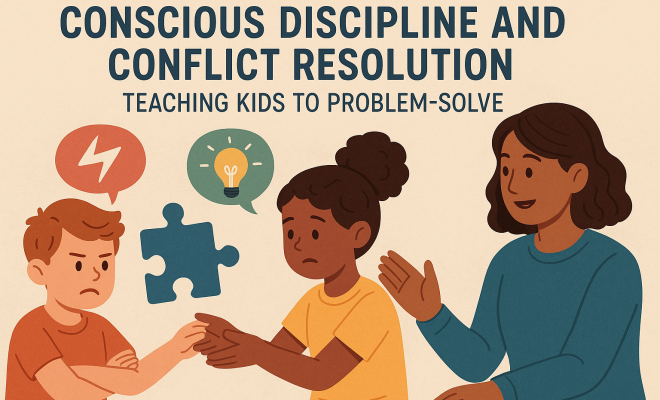
Conscious Discipline and Conflict Resolution: Teaching Kids to Problem-Solve
“`html
Introduction
Conflict is a natural part of human interaction, especially among children. As they navigate friendships, school dynamics, and their own emotions, disagreements and misunderstandings are bound to arise. Teaching kids effective conflict resolution skills is essential for their emotional and social development. This is where the concept of conscious discipline comes into play. By fostering an environment of safety, connection, and problem-solving, conscious discipline equips children with the tools they need to address conflicts constructively. In this article, we’ll explore the principles of conscious discipline and provide actionable strategies for teaching kids to solve their own problems.
Understanding Conscious Discipline
Conscious discipline is an innovative, trauma-informed approach created by Dr. Becky Bailey. It emphasizes social-emotional learning, self-regulation, and positive discipline strategies. Rather than relying on traditional punitive measures, conscious discipline focuses on building strong relationships, promoting safety, and teaching emotional intelligence. This framework is not merely about managing behavior; it’s about transforming the way children perceive themselves and others.
At the core of conscious discipline is the belief that children need to feel safe and connected before they can learn effectively. Dr. Bailey outlines that self-regulation is a prerequisite for learning self-control. This means that, before a child can understand how to resolve conflicts with others, they must first understand and manage their own feelings. Conscious discipline is a holistic approach, addressing cognitive, emotional, and social aspects of child development.
The Importance of Conflict Resolution Skills
Conflict resolution skills are crucial for children as they foster essential life skills such as empathy, communication, and critical thinking. In a world where collaboration is increasingly necessary—whether in school, work, or personal relationships—teaching kids how to handle disputes effectively prepares them for future challenges.
By developing these skills early on, children learn to navigate their emotions and understand differing perspectives. They become more adept at finding common ground and fostering cooperation, leading to healthier relationships and a stronger sense of community. Furthermore, conflict resolution skills can significantly reduce the incidence of bullying and aggression, as children who can articulate their needs and feelings are less likely to resort to harmful behaviors.
Key Principles of Conscious Discipline
Conscious discipline is built on several key principles that guide its practices. These principles help create a safe and nurturing environment where children can learn and grow. They include:
- Safety: Physical and emotional safety is foundational to learning. Children must feel secure in their environment to express themselves and engage with others.
- Connection: Building relationships is vital for children’s social and emotional development. Strong connections with adults and peers provide a support system that encourages risk-taking and learning.
- Problem-Solving: Rather than focusing on punishment, conscious discipline promotes a problem-solving mindset. Children are guided to understand their feelings, identify the problem, and explore solutions.
- Emotional Intelligence: Recognizing and managing emotions is a core component of conscious discipline. Children are taught to label their feelings, understand their triggers, and develop coping strategies.
Practical Strategies for Teaching Conflict Resolution
When it comes to implementing conscious discipline in conflict resolution, there are several effective strategies that educators and parents can adopt:
Create a Safe Environment
The first step in teaching conflict resolution through conscious discipline is to establish a physically and emotionally safe environment. This can be accomplished by:
- Setting clear expectations for behavior.
- Modeling respectful communication and emotional regulation.
- Providing a predictable routine that helps children feel secure.
When children feel safe, they are more likely to express themselves openly and engage in problem-solving discussions. Consider creating a “safe space” in your classroom or home where children can take a break when they feel overwhelmed.
Teach Emotional Vocabulary
Helping children develop an emotional vocabulary is crucial for effective conflict resolution. When children can articulate their feelings, they are better equipped to communicate their needs during a conflict. Encourage kids to use specific words to describe their emotions, such as “frustrated,” “disappointed,” or “excited.” Activities like emotion charades or using picture cards that depict different feelings can be beneficial.
Model Conflict Resolution
As a parent or educator, it’s vital to model healthy conflict resolution in your interactions with others. Children learn by observing adult behavior. When conflicts arise, narrate your thought process as you work towards a resolution. For example, you might say, “I’m feeling frustrated because we’re not agreeing. How can we solve this together?” This not only demonstrates problem-solving but also normalizes conflict as a part of relationships. (See: positive youth development strategies.)
Use Role-Playing Activities
Role-playing is an engaging way to teach children about conflict resolution. Create scenarios that are age-appropriate and relevant to their experiences, such as disagreements over toys or sharing. Encourage children to act out the conflict and then explore different resolutions. By stepping into various roles, kids can develop empathy and understanding for others’ perspectives, which is crucial for resolving disputes.
Encourage Peer Mediation
Involving peers in conflict resolution can be an effective strategy. Train older students or siblings in mediation techniques so they can help younger children navigate disputes. This not only empowers the older children but also provides younger kids with relatable models for resolving conflicts. Peer mediation fosters collaboration and helps children appreciate diverse viewpoints.
Establish a Problem-Solving Process
Teach children a clear problem-solving process they can follow when disagreements arise. One effective method is to use the acronym “CARES”:
- C: Calm down. Take deep breaths and regain composure.
- A: Address the problem. Clearly state what the problem is.
- R: Reflect on feelings. Share how each party feels about the situation.
- E: Explore solutions. Brainstorm potential resolutions together.
- S: Select a solution. Agree on a solution that works for everyone involved.
This structured approach gives children a tangible method to resolve conflicts, making it easier for them to navigate future disagreements independently.
Practice Active Listening
Active listening is a fundamental skill in conflict resolution. Teach children to listen to each other without interruption and to paraphrase what they hear to ensure understanding. This practice not only helps resolve conflicts but also builds empathy and respect. You could say, “Can you repeat what your friend said? How do you think they feel?” This encourages children to validate each other’s feelings and perspectives.
Integrating Conscious Discipline into Daily Life
To reinforce the principles of conscious discipline in conflict resolution, it’s essential to integrate these practices into daily routines. Here are some ways to do so:
In the Classroom
Educators can weave conscious discipline into the classroom environment by:
- Creating morning circles where students share feelings and set intentions for the day.
- Implementing classroom agreements that promote respect and collaboration.
- Using story time to discuss conflict resolution themes and role models.
At Home
Parents can adopt similar strategies at home. Regular family meetings can provide a platform for discussing feelings, expectations, and resolutions. Additionally, using family activities to practice problem-solving can reinforce these lessons in a low-stakes environment.
In Community Programs
Community organizations can also benefit from conscious discipline. Training staff in conflict resolution techniques and providing workshops for families can create a community-wide understanding of these principles. This systemic approach ensures that children encounter consistent messages across various environments.
The Current Relevance of Conscious Discipline
In today’s world, where social-emotional learning is gaining recognition within educational frameworks, conscious discipline is more relevant than ever. The rise in mental health awareness among children and adolescents highlights the importance of providing them with tools to manage their emotions and relationships. Schools and parents are increasingly seeking effective strategies to address behavioral issues and foster emotional growth, making conscious discipline a timely and necessary approach.
Moreover, as society grapples with challenges surrounding bullying, anxiety, and conflict in various forms, empowering children with conflict resolution skills can lead to a more compassionate and understanding future generation. The conscious discipline approach prioritizes emotional intelligence, equipping children with the ability to navigate not just their current environment but also their future interactions.
Case Studies: Successful Implementation of Conscious Discipline
To truly understand how conscious discipline works in real-life settings, let’s look at a few notable case studies from schools and communities that have adopted this approach.
Case Study 1: A School in California (See: child development and learning.)
A public elementary school in California incorporated conscious discipline into their curriculum. Teachers received extensive training on the principles of conscious discipline and implemented them throughout the school year. The school reported a 35% decrease in behavioral referrals and a 40% increase in student engagement. Teachers noted that students were more willing to express their emotions and were better at resolving conflicts with peers. They attribute this change to the safe environment established through conscious discipline practices.
Case Study 2: Community Programs in New York
A community center in New York began offering workshops on conscious discipline to both parents and children. After six months of implementing these strategies, they noticed a significant improvement in parent-child relationships and a reduction in disruptions during community events. Parents reported that their children were using the conflict resolution strategies discussed in the workshops to resolve disputes at home. This collaborative approach not only improved individual family dynamics but also fostered a sense of community among participants.
Statistics Supporting Conscious Discipline
Research and statistics highlight the effectiveness of conscious discipline in various settings. For instance:
- A study conducted by the Collaborative for Academic, Social, and Emotional Learning (CASEL) found that students who participated in social-emotional learning programs, including conscious discipline, showed a 23% increase in academic performance.
- Data from the National Center for Education Statistics (NCES) indicates that schools implementing social-emotional learning frameworks experience a 10% decrease in bullying incidents.
- Moreover, a survey from the American Psychological Association reports that 75% of educators who implemented conscious discipline techniques observed improved classroom behavior.
Common Challenges in Implementing Conscious Discipline
While the principles of conscious discipline are powerful, they do not come without challenges. Educators and parents may face several obstacles when trying to implement these strategies:
Resistance to Change
One of the primary challenges is resistance to change from both staff and students. Traditional disciplinary methods have been ingrained in educational systems for years, and shifting mindsets can take time. Ongoing training, open discussions, and showcasing the benefits of conscious discipline can help overcome this resistance.
Consistency Across Environments
Another challenge is ensuring consistency in the application of conscious discipline principles at school and home. Parents and educators must work together to reinforce the same techniques and language, promoting a unified approach to conflict resolution.
Lack of Resources
Sometimes, educators may encounter a lack of resources or training. Investing in comprehensive training programs and providing necessary materials can help support staff in successfully implementing conscious discipline.
Frequently Asked Questions (FAQ)
What age group is conscious discipline suitable for?
Conscious discipline is appropriate for children of all ages, from preschoolers to adolescents. The techniques can be adapted to fit various developmental stages.
How can parents reinforce conscious discipline at home?
Parents can reinforce conscious discipline by modeling emotional intelligence, using a consistent problem-solving approach, and creating an emotionally safe home environment where feelings can be openly discussed.
Is conscious discipline only applicable in schools?
No, conscious discipline can be applied in various settings, including homes, community programs, and extracurricular activities. Its principles are universal and can be beneficial in any context where children interact.
How long does it take for conscious discipline to show results?
The timeline for seeing results can vary based on the environment and the individuals involved. Some schools report improvements in behavior and emotional engagement within a few months, while others may take a full school year.
Can conscious discipline be integrated with other teaching methods?
Yes, conscious discipline can complement other teaching methods, such as restorative practices or traditional academic curricula. Its emphasis on emotional intelligence and conflict resolution enhances overall educational experiences.
How does conscious discipline affect academic performance?
Research indicates that students who engage with conscious discipline practices often show improved academic performance. As emotional regulation and social skills develop, students tend to concentrate better, participate more actively in class, and develop a more positive attitude toward learning.
What role do parents play in the success of conscious discipline?
Parents are crucial in reinforcing the principles of conscious discipline at home. Their involvement helps to create a consistent experience for children, enabling them to practice what they learn in school within a familiar context. This involvement includes open discussions about emotions, modeling healthy interpersonal interactions, and participating in family problem-solving activities.
Are there any online resources for learning more about conscious discipline?
Yes, there are numerous online resources available for parents and educators interested in conscious discipline. The official Conscious Discipline website offers webinars, training materials, and a community forum for sharing experiences. Additionally, social media platforms often have groups dedicated to sharing tips and experiences related to conscious discipline, providing valuable support and insights.
The Future of Conscious Discipline
As we look to the future, the principles of conscious discipline are likely to become increasingly integrated into educational practices and parenting approaches. With a growing emphasis on mental health and emotional well-being, more schools are recognizing the need for frameworks that not only address behavioral issues but also promote overall psychological resilience among students.
Furthermore, as society continues to grapple with various social challenges—ranging from increased mental health issues among youth to rising incidences of bullying—conscious discipline offers a blueprint for fostering a more empathetic and emotionally intelligent generation. Awareness of the importance of social-emotional learning is likely to grow, and conscious discipline will play a pivotal role in shaping how we educate and support children in navigating their complex social worlds.
Conclusion
Teaching children conflict resolution skills through conscious discipline is an investment in their future. By providing them with the tools to understand and manage their emotions, communicate effectively, and solve problems collaboratively, we prepare them for success in all aspects of life. As adults, we have a responsibility to model and reinforce these principles, creating a supportive environment where children can thrive emotionally and socially. The techniques explored here are not just methods; they are pathways to fostering a generation of empathetic, resilient, and capable individuals.
“`
Trending Now
Frequently Asked Questions
What is conscious discipline?
Conscious discipline is a trauma-informed approach developed by Dr. Becky Bailey that emphasizes social-emotional learning and self-regulation. It focuses on building strong relationships and promoting safety while teaching children emotional intelligence, enabling them to manage their feelings and resolve conflicts constructively.
Why are conflict resolution skills important for children?
Conflict resolution skills are essential for children as they help develop empathy, communication, and critical thinking. These skills enable kids to navigate disagreements effectively, fostering collaboration and stronger relationships in their social environments, such as school and friendships.
How can I teach my child conflict resolution skills?
To teach your child conflict resolution skills, create a safe and supportive environment where they can express their feelings. Use role-playing scenarios to practice problem-solving, encourage open communication, and model effective conflict resolution strategies in your interactions with others.
What are the principles of conscious discipline?
The principles of conscious discipline include fostering safety and connection, promoting self-regulation, and teaching emotional intelligence. This approach transforms how children perceive themselves and others, prioritizing relationship-building over traditional punitive measures to effectively manage behavior.
How does conscious discipline help children manage their emotions?
Conscious discipline helps children manage their emotions by teaching them self-regulation techniques and emotional intelligence. By creating an environment of safety and connection, children learn to understand their feelings and how to express them appropriately, which is crucial for resolving conflicts.
What did we miss? Let us know in the comments and join the conversation.