Catch Mercury’s 2026 Eastern Elongation: A Skywatcher’s Guide
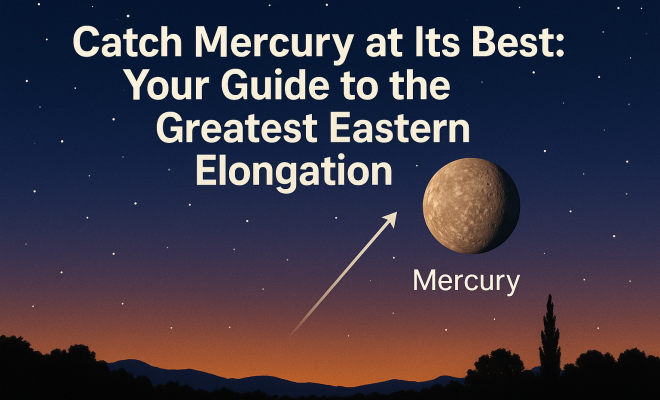
On June 15, 2026, skywatchers will experience a spectacular event: Mercury at greatest eastern elongation. This phenomenon places Mercury at a fantastic 25 degrees away from the Sun, making it one of the best opportunities to spot the innermost planet in the evening sky. With its positioning aligning it with Venus, Jupiter, and the Moon, this rare celestial lineup will create an awe-inspiring sight that you won’t want to miss. In this article, we’ll explore the significance of this event, how to observe it, and why it matters to both novice and seasoned astronomers.
1. Understanding Mercury’s Movement
To appreciate the beauty of Mercury’s greatest eastern elongation, you first need to understand the planet’s orbit. Mercury orbits the Sun at an average distance of about 36 million miles (58 million kilometers), completing a revolution in just 88 Earth days. Its rapid orbit means that it moves quickly across the sky, often making it a tricky target for observers. Greatest eastern elongation occurs when Mercury reaches its maximum separation from the Sun, offering a rare chance to see it clearly against the backdrop of twilight.
This year, Mercury will reach this position on June 15, a date that is particularly favorable for viewing. The timing is crucial because, during greatest eastern elongation, the planet will be illuminated by the Sun, making it brighter and easier to spot. The 25-degree separation from the Sun means that Mercury will sit high enough in the sky after sunset to avoid being lost in the Sun’s glare.
2. Why Greatest Eastern Elongation Matters
Many casual observers may wonder why they should care about Mercury’s greatest eastern elongation. For one, this event represents a prime opportunity for both new and experienced stargazers to engage with the night sky. It’s a reminder of the dynamic and ever-changing nature of our solar system. Additionally, such events often bring communities together, spurring interest in astronomy and encouraging public outreach programs.
From a scientific perspective, observing Mercury during this elongation helps astronomers gather valuable information about its surface and atmosphere. Every observation contributes to our understanding of this enigmatic planet, which, due to its proximity to the Sun, presents unique challenges for study. With its thin atmosphere and extreme temperature variations, Mercury remains one of the less understood bodies in our solar system.
3. Getting Ready for the Show
As you prepare to witness Mercury at greatest eastern elongation, a few key details will enhance your experience. First, ensure you have a clear view of the western horizon, as that’s where the planet will make its appearance shortly after sunset. It’s advisable to find a location away from city lights, where light pollution won’t hinder your view.
Timing is critical. On June 15, plan to be outside around 30 minutes after sunset—for most locations, this will be around 8:30 PM local time. With the twilight sky providing the perfect backdrop, Mercury will shine brightly, making it easier to distinguish from other celestial bodies. Bring binoculars or a small telescope for a better view, as they can reveal more details about the planet’s surface.
4. Lineup with Other Celestial Bodies
One of the most captivating aspects of this particular greatest eastern elongation is Mercury’s alignment with Venus, Jupiter, and the Moon. This rare celestial gathering creates a breathtaking scene in the sky, often referred to as a conjunction. Each of these planets has its own unique characteristics that will make this viewing experience even more fulfilling.
Venus, often called the “Evening Star,” will shine brightly just above Mercury, providing a stunning contrast. Jupiter, the largest planet in our solar system, will also be visible, adding to the lineup’s richness. The Moon, positioned nearby, will provide a beautiful visual anchor for observers. Together, these celestial bodies create a harmonious display that is not just awe-inspiring but also educational, as viewers can draw connections between the planets’ positions and their orbits.
5. Tips for Observing Mercury
Observing Mercury can be tricky, but with the right tips and tricks, you can make the most of this event. First, familiarize yourself with the sky by using a stargazing app or a star chart. These tools can help you identify the surrounding stars and constellations, making it easier to locate Mercury and its celestial companions. (See: Wikipedia article on Mercury.)
For those who want to capture this moment, consider bringing a camera with a good zoom. Long exposure shots can yield stunning images of Mercury alongside the Moon and other planets. Additionally, if you’re equipped with a telescope, take time to adjust the focus to get a clearer view of Mercury’s surface.
6. Community Engagement and Skywatching Events
The excitement surrounding Mercury’s greatest eastern elongation often extends beyond individual observation. Many astronomy clubs and planetariums host skywatching events during this time, inviting the public to join in on the experience. These gatherings not only provide access to telescopes and expert guidance but also foster a sense of community among astronomy enthusiasts.
Check local listings for events in your area; many organizations will host educational talks or interactive sessions, making the experience even richer. Sharing this event on social media can also spark conversations and encourage others to look up at the night sky, reinforcing the collective joy that comes with observing astronomical phenomena.
7. Comparing Mercury’s Visibility Throughout the Year
It’s interesting to note how Mercury’s visibility changes throughout the year. The planet experiences several elongations, both eastern and western, each providing unique viewing opportunities. However, greatest eastern elongation usually offers the best chances for evening observers. In contrast, greatest western elongation occurs when Mercury is visible in the early morning sky, allowing for a different set of viewing experiences.
Each elongation has its own charm, but many prefer the evening event because it allows for a more leisurely observation after the day winds down. In a year where Mercury experiences multiple elongations, knowing which ones are best suited for viewing can keep your skywatching calendar filled.
8. The Emotional Connection to Astronomy
Events like Mercury’s greatest eastern elongation remind us of our connection to the universe. They offer an opportunity to reflect on our place in the cosmos and the vastness that lies beyond our planet. For many, observing celestial events becomes a moment of introspection, wonder, or even inspiration. It’s a powerful reminder that while we are a small part of the universe, we share in its beauty and mystery.
Whether you’re a casual observer or a dedicated astronomer, the simple act of looking up at the sky can evoke a sense of awe that transcends the everyday. Take a moment to share your experience with others, fostering a sense of community and connection in the pursuit of understanding our universe.
9. Final Thoughts on Mercury’s Greatest Eastern Elongation
As June 15 approaches, mark your calendar for Mercury’s greatest eastern elongation. This date presents not just an opportunity to observe a planet but a chance to engage with the night sky in a profoundly meaningful way. Whether you’re sharing this experience with family, friends, or fellow enthusiasts, it’s a moment that captures the wonder and curiosity we all have for the universe.
Don’t miss out on this incredible opportunity to see Mercury shine brilliantly against the backdrop of Venus, Jupiter, and the Moon. So grab your telescope or binoculars, gather your loved ones, and prepare for an unforgettable evening of stargazing. The sky is waiting, and Mercury is ready to dazzle you!
10. Scientific Significance of Mercury
Mercury is not only the smallest planet in our solar system but also the least explored. Unlike Earth, it has no moons and a highly eccentric orbit. Studying Mercury helps astronomers understand more about the formation of the solar system. Its surface resembles that of the Moon, filled with craters from impacts, yet it also possesses unique geological features that indicate volcanic activity. The more we observe Mercury, the better we can understand planetary formation and solar system dynamics.
Data gathered from missions like MESSENGER (MErcury Surface, Space ENvironment, GEochemistry, and Ranging) has shown that Mercury has a magnetic field, which is unusual for a planet of its size. This has led scientists to reevaluate theories about planetary formation and the conditions necessary for the development of magnetic fields. (See: NASA's overview of Mercury.)
11. Telescope Recommendations for Mercury Observation
If you’re looking to enhance your experience observing Mercury, investing in a telescope can make a significant difference. Refractor telescopes with a minimum aperture of 60mm are excellent for beginners, providing clear images of Mercury and its phases. If you’re more advanced or passionate about astronomy, consider a larger reflector telescope, as they capture more light and offer higher magnification, revealing finer details of Mercury’s surface.
For those who prefer a more portable option, binoculars with a magnification of 8x to 10x can be very effective, especially when viewing Mercury during greatest eastern elongation. Make sure to use a tripod for stability, as even slight movements can make it challenging to keep the planet in view.
12. Enhancing Your Experience with Stargazing Apps
In today’s digital age, stargazing apps can significantly enhance your observation experience. Apps like SkySafari, Star Walk, and Stellarium can help you identify celestial objects and provide information on their positioning in real-time. Most apps allow you to input your location and give you an accurate map of the night sky, helping you track Mercury and its companions effortlessly.
Some apps even offer augmented reality features, where you can point your device at the sky, and it will highlight planets and stars, making it easier to locate them. This high-tech approach can enrich your understanding of the cosmos while you enjoy the simplicity of watching the stars.
13. Frequently Asked Questions (FAQs)
What is greatest eastern elongation?
Greatest eastern elongation is the position of Mercury when it’s at its furthest distance from the Sun in the evening sky, making it easier to spot after sunset.
How often does Mercury reach greatest eastern elongation?
Mercury reaches greatest eastern elongation several times each year, typically occurring about three to four times annually. Each event offers a unique viewing experience due to its changing position in the sky.
Can I see Mercury without a telescope?
Yes, Mercury can be visible to the naked eye during greatest eastern elongation, provided you have a clear view of the horizon and minimal light pollution. However, binoculars or a telescope will enhance the experience and reveal more details.
What time is best to view Mercury at greatest eastern elongation?
The best time to view Mercury is approximately 30 minutes after sunset, when the sky is still twilight, but the planet is sufficiently separated from the Sun’s glare.
Is it safe to look at Mercury with a telescope?
Yes, it’s safe to observe Mercury with a telescope during greatest eastern elongation, as long as you’re not looking at the Sun. Use proper equipment to avoid any risk of damage to your eyes.
What should I do if the weather is cloudy?
If clouds obstruct your view of Mercury on June 15, try again on subsequent evenings. Mercury will remain visible for several weeks, though it may not be as prominently positioned as it is during greatest eastern elongation. (See: Scientific articles on Mercury.)
Why is Mercury difficult to observe?
Due to its proximity to the Sun and quick orbit, Mercury is often lost in the Sun’s glare, making it challenging to observe. Its small size and lack of atmosphere also contribute to its elusive nature.
14. The Cultural Significance of Mercury in History
Throughout history, Mercury has held a special place in various cultures. In Roman mythology, Mercury was the messenger of the gods, known for his speed and agility. The planet’s swift orbit around the Sun mirrored the Roman god’s quick movements, making it a fitting symbol for communication and travel.
In astrology, Mercury governs communication, intellect, and reasoning. Astrologers believe that the positioning of Mercury can influence how we think and express ourselves. Understanding its cycles can be particularly beneficial for those interested in astrology, as it encourages reflection on one’s communication style during significant events like greatest eastern elongation.
15. The Impact of Light Pollution on Observation
Light pollution is a growing concern for stargazers everywhere. Urban areas often have excessive artificial light, which can obscure the visibility of celestial objects, including Mercury. To truly appreciate this astronomical event, it’s important to be aware of your surroundings and consider traveling to darker areas for better viewing conditions.
Communities are beginning to address light pollution through initiatives aimed at reducing artificial lighting. These efforts not only benefit stargazers but also contribute to the preservation of wildlife that relies on natural light patterns. Being part of the solution can enhance your skywatching experiences while advocating for a healthier planet.
16. Future Mercury Elongations to Watch For
While June 15, 2026, is a significant date for viewing Mercury at greatest eastern elongation, there are several other elongations to mark on your calendar. Mercury will reach greatest eastern elongation again on September 13, 2026, and January 15, 2027. Each event varies slightly in terms of visibility and alignment, making them all worth noting. By planning ahead, you can ensure you don’t miss any opportunities to observe this fascinating planet.
17. Conclusion
Mark your calendars and prepare to witness Mercury at greatest eastern elongation on June 15, 2026. This astronomical event is a fantastic opportunity for stargazers of all levels to connect with the universe and deepen their understanding of one of our solar system’s most mysterious planets. Whether you share the experience with friends, family, or fellow astronomy enthusiasts, this moment in time is one that deserves to be celebrated. Don’t forget to look up, and happy stargazing!
Trending Now
Frequently Asked Questions
When is the best time to see Mercury's greatest eastern elongation?
The best time to see Mercury's greatest eastern elongation will be on June 15, 2026. On this date, Mercury will be positioned 25 degrees away from the Sun, making it visible in the evening sky shortly after sunset.
What is the significance of Mercury's greatest eastern elongation?
Mercury's greatest eastern elongation is significant because it allows observers to see the planet clearly against the twilight sky. This event highlights the dynamic nature of our solar system and provides an excellent opportunity for both novice and seasoned astronomers to engage with celestial phenomena.
How does Mercury's orbit affect its visibility?
Mercury orbits the Sun quickly, completing a revolution in just 88 Earth days. This rapid orbit means it moves across the sky swiftly, making it challenging to spot. Greatest eastern elongation provides a rare opportunity to see it clearly when it is illuminated and positioned away from the Sun's glare.
What other celestial bodies will be visible with Mercury during its elongation?
During Mercury's greatest eastern elongation on June 15, 2026, it will align with Venus, Jupiter, and the Moon. This rare celestial lineup will create a stunning sight in the evening sky, making it an event not to be missed by skywatchers.
How can I best observe Mercury during its greatest eastern elongation?
To best observe Mercury during its greatest eastern elongation, find a location with a clear view of the western horizon after sunset. Look for Mercury high in the sky, as its 25-degree separation from the Sun will make it brighter and easier to spot against the twilight backdrop.
What did we miss? Let us know in the comments and join the conversation.