Co-Scientist AI: Google DeepMind’s Revolution in Scientific Research
“`html
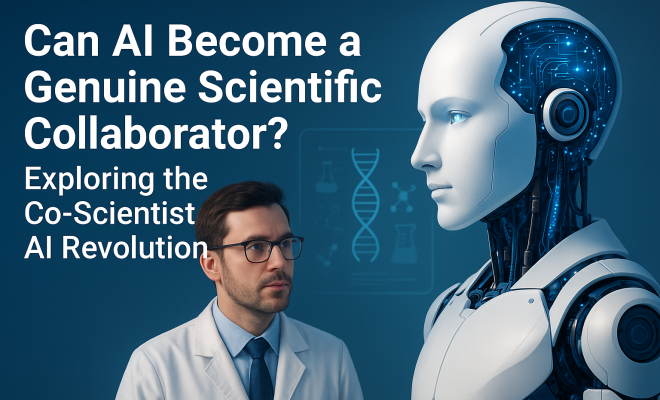
In a groundbreaking move, Google DeepMind has unveiled its new Co-Scientist AI system, a tool designed to revolutionize the way scientific research is conducted. As this technology emerges, it raises provocative questions about the future of scientific inquiry and the role of artificial intelligence in the research process. Will AI be a mere assistant, or could it evolve into a collaborator that genuinely participates in scientific discourse? This article explores the implications of the Co-Scientist AI, offering insights into its potential to reshape research workflows across various fields, including medicine, biology, and chemistry.
The Birth of Co-Scientist AI
DeepMind, a subsidiary of Alphabet Inc., has been at the forefront of AI research for years. Their latest innovation, the Co-Scientist AI, aims to accelerate scientific discovery by generating and testing hypotheses at an unprecedented speed. By leveraging vast amounts of data and patterns, this system can help researchers formulate new research questions and analyze complex problems more efficiently than ever before.
This isn’t just about speeding up existing processes; it’s about fundamentally changing how scientists approach research. The initial release of Co-Scientist AI is generating excitement and debate within the scientific community, as many begin to grapple with the implications of having an AI partner in their work.
How Co-Scientist AI Works
At its core, Co-Scientist AI combines advanced machine learning algorithms with extensive databases of scientific knowledge. The AI analyzes existing research to identify gaps and formulate hypotheses that have not yet been explored by human researchers. This generative capability is what sets it apart from traditional AI tools that merely assist in data analysis or computational tasks.
The system employs techniques similar to those used in language models, allowing it to simulate various forms of inquiry, propose experiments, and even predict outcomes based on historical data. Such capabilities enable researchers to explore a wider range of possibilities without the usual constraints of time and resource limitations.
The Impacts on Scientific Research
The introduction of Co-Scientist AI is poised to have significant impacts across multiple scientific disciplines. In medicine, for example, the AI’s ability to analyze patient data and literature could lead to faster diagnosis and the discovery of new treatment pathways. In biology, its hypothesis-generation function might uncover novel approaches to understanding complex biological systems.
As researchers incorporate Co-Scientist AI into their work, they may find themselves spending less time on repetitive tasks and more time on critical thinking and experimentation. This shift could lead to a surge in discoveries, making the pace of scientific advancement faster than ever before.
The Debate: Collaboration or Replacement?
With the rise of the Co-Scientist AI, a vital debate is emerging: Will AI serve as a collaborator or a competitor in the scientific community? Many scientists express concerns that over-reliance on AI could dilute human creativity and critical thinking skills, potentially leading to a homogenization of ideas.
On the other hand, proponents argue that AI can enhance human capabilities rather than replace them. For instance, by handling repetitive tasks, Co-Scientist AI allows researchers to focus on the creative aspects of science—like formulating bold new hypotheses and designing innovative experiments. This symbiosis could very well usher in a new era of inter-disciplinary research.
Potential Ethical Concerns
As with any technological advancement, ethical concerns are paramount. The deployment of Co-Scientist AI raises questions about authorship and intellectual property: if an AI generates a hypothesis or a research paper, who holds the credit? Moreover, there are fears that biases embedded in the training data could propagate systemic issues within scientific research.
Addressing these ethical considerations will require a careful framework that ensures accountability in AI-assisted research. Organizations and researchers alike must be vigilant in evaluating the decisions made by AI systems to prevent exacerbating existing inequities in scientific inquiry.
Comparative Advantages of Co-Scientist AI
One of the most compelling aspects of Co-Scientist AI is its ability to process and analyze data far beyond human capabilities. Traditional research methods often involve sifting through vast amounts of literature and data manually, a task that can be both time-consuming and prone to oversight. (See: Nature article on AI in research.)
Co-Scientist AI, however, can rapidly identify relevant studies, synthesize findings, and suggest directions for future research. This efficiency could empower researchers to explore previously neglected areas, leading to breakthroughs that may have otherwise remained undiscovered.
The Future of Scientific Inquiry
As we stand on the brink of this new era, the future of scientific inquiry looks promising yet uncertain. The Co-Scientist AI symbolizes a significant shift in the research paradigm, one where collaboration between human ingenuity and machine efficiency could redefine what it means to conduct science.
There’s a palpable excitement in the air as researchers ready themselves to integrate AI into their workflows. Yet, alongside that excitement is a cautious optimism, as they consider the implications of sharing their intellectual space with a digital partner.
Real-world Applications and Success Stories
The potential applications of Co-Scientist AI are already beginning to take shape in real-world scenarios. For instance, researchers at various biotechnology companies are experimenting with the system to quickly develop new compounds for drug discovery, which traditionally can take years.
In academia, pilot programs are using Co-Scientist AI to enhance educational curricula, helping students and researchers alike to engage with complex material more interactively. By allowing the AI to suggest research questions and propose methodologies, educational institutions can foster a more dynamic learning environment.
Engagement from the Scientific Community
The reception of Co-Scientist AI within the scientific community has been mixed but largely enthusiastic. Many researchers are eager to embrace these new capabilities, seeing them as a way to enhance their productivity and open up new lines of inquiry.
However, some skeptics remain cautious, advocating for the establishment of guidelines that govern AI’s role in research. As the technology progresses, it’s crucial for scientists to engage in ongoing dialogue about how to responsibly incorporate AI into their work, ensuring that human oversight remains a priority.
Addressing the Challenges of AI in Research
Integrating Co-Scientist AI into scientific research doesn’t come without its challenges. One significant issue is the need for quality control in the AI outputs. While AI can process data quickly, the potential for error exists, especially in critical areas where incorrect findings can have serious impacts, such as in medical research. Ensuring accuracy in AI-generated hypotheses requires a robust system of checks and balances, including peer review and validation against established scientific principles.
In addition, researchers must be trained to effectively leverage AI tools. This doesn’t just mean learning how to use the software; it involves understanding the underlying algorithms and potential biases in the AI’s training data. A lack of knowledge in these areas could lead to misinterpretations of AI outputs, which could skew research findings.
Expert Perspectives on Co-Scientist AI
Experts from various fields have begun to weigh in on the implications of Co-Scientist AI. Dr. Emily Carter, a leading researcher in computational biology, believes that this technology has the power to drastically shorten the cycle of scientific discovery. “Imagine being able to test hundreds of hypotheses in the time it currently takes to test just one,” she states. “This could lead to a paradigm shift in how we approach complex problems.”
Conversely, Dr. James Lee, an ethicist, raises concerns about the risks associated with reliance on AI. “While the benefits are clear, we must also consider what happens when AI’s input becomes the primary driver of research agendas. Are we going to allow machine-generated hypotheses to dictate our research paths without human scrutiny?” His remarks underscore the need for a balanced approach to AI integration.
Future Trends in AI and Scientific Research
The horizon for Co-Scientist AI and similar technologies looks bright, with several trends emerging that could further influence scientific research. One such trend is the increasing accessibility of AI tools for smaller research teams and institutions. As AI continues to evolve and become more user-friendly, more scientists will be able to leverage these powerful tools without needing extensive technical expertise.
Another trend is the ongoing refinement of AI algorithms to enhance interpretability and transparency. As researchers begin to demand more from AI systems, developers are likely to focus on creating models that can clearly explain their reasoning processes. This transparency will be crucial for building trust within the scientific community and ensuring that AI-generated hypotheses can be critically evaluated. (See: NIH news on AI and scientific discovery.)
FAQ: Understanding Co-Scientist AI
What is Co-Scientist AI?
Co-Scientist AI is an artificial intelligence system developed by Google DeepMind that assists researchers in generating and testing hypotheses, analyzing data, and optimizing research workflows.
How does Co-Scientist AI differ from traditional AI tools?
While traditional AI tools often focus on data analysis or automation of specific tasks, Co-Scientist AI is designed to actively generate new hypotheses and insights, functioning more like a research partner than a tool.
What fields can benefit from Co-Scientist AI?
Co-Scientist AI has the potential to impact a wide array of fields, including medicine, biology, chemistry, environmental science, and social sciences, by accelerating the pace of discovery and analysis.
What ethical concerns should researchers be aware of?
Researchers should consider issues related to authorship, intellectual property, and algorithmic bias, ensuring that AI contributions are properly attributed and that biases do not influence research outcomes.
How can researchers integrate Co-Scientist AI into their workflows?
Researchers can start by familiarizing themselves with the capabilities of Co-Scientist AI, participating in training programs, and setting clear guidelines for when and how to use AI in conjunction with traditional research methods.
What does the future hold for AI in scientific research?
The future of AI in scientific research is likely to be characterized by more collaborative partnerships between human researchers and AI systems, leading to faster discoveries and innovative approaches to complex problems.
Challenges in Data Quality and AI Outputs
One of the largest obstacles faced by the Co-Scientist AI is ensuring the quality of the data it processes. The effectiveness of AI is heavily dependent on the quality and breadth of its training data. If the data is incomplete or biased, the outcomes will reflect those flaws. Researchers need to be aware of the data sources they use to train AI, ensuring they include diverse and representative datasets.
Furthermore, AI-generated hypotheses may not always align with the latest scientific consensus, leading to a potential misdirection in research focus. It’s crucial to maintain a balance between AI-generated insights and established scientific knowledge, fostering an environment where human researchers critically evaluate AI suggestions.
The Role of AI in Interdisciplinary Research
Co-Scientist AI has the potential to break down traditional silos in research, enabling interdisciplinary collaboration. By efficiently analyzing data across various fields, the AI can propose innovative solutions that incorporate insights from multiple disciplines. For example, combining insights from neuroscience and computer science could lead to breakthroughs in understanding brain functionality.
This kind of interdisciplinary approach can create new research avenues that may not be possible within the confines of a single discipline. Researchers can engage with findings from other fields, enriching their own work and potentially leading to significant breakthroughs.
Case Studies: Co-Scientist AI in Action
Several research initiatives are already showcasing the capabilities of Co-Scientist AI. For instance, a team at a leading university is utilizing the AI to expedite the process of drug discovery for rare diseases. By inputting historical data from clinical trials, the AI generated numerous hypotheses regarding potential treatment pathways, significantly reducing the time taken to reach viable candidates for clinical testing.
Another example comes from environmental science, where researchers are using Co-Scientist AI to model climate change impacts more accurately. The AI can analyze complex datasets from various sources—such as satellite imagery and climate records—to present actionable insights for policy-makers, thus facilitating informed decisions in combating climate change. (See: ScienceDirect article on AI collaboration.)
The Social Implications of AI in Research
The integration of Co-Scientist AI into research methodologies carries social implications that extend beyond the laboratory. These technologies can democratize access to scientific inquiry, allowing smaller institutions and underfunded research teams to compete on a more level playing field. Greater access to AI tools could encourage diverse perspectives in research, ultimately enriching the scientific discourse.
However, it’s essential to be mindful of the potential exacerbation of existing inequalities. As researchers adopt AI, those with the resources to implement these tools may gain significant advantages, potentially widening the gap between well-funded and underfunded institutions. Addressing these social implications requires a collaborative effort to ensure equitable access to AI technologies.
Community Engagement and Training
As Co-Scientist AI becomes more integrated into research processes, community engagement and training will be crucial. Institutions should invest in training programs that educate researchers on how to effectively use AI tools while also understanding their limitations. Engaging with the broader scientific community ensures that best practices are shared and refined collectively.
Furthermore, creating forums for discussion around AI’s role in science can foster a culture of transparency. Scientists can share experiences, successes, and challenges in using AI, leading to a more informed understanding of how to maximize the potential of Co-Scientist AI.
Looking Forward: Innovations on the Horizon
As advancements continue in AI technology, we can anticipate further innovations that will enhance the capabilities of Co-Scientist AI. Emerging trends like quantum computing could significantly boost the processing power available for AI systems, allowing for even more complex analyses and faster hypothesis generation.
Additionally, the integration of ethical frameworks within AI development can ensure that future iterations of Co-Scientist AI are designed with inclusivity and accountability in mind. These frameworks can guide researchers in navigating the ethical landscape of AI, promoting responsible use that complements human oversight.
Conclusion: Navigating the New Frontier of AI in Science
The launch of the Co-Scientist AI by Google DeepMind holds incredible promise for the future of scientific discovery. While the technology offers unparalleled efficiencies and capabilities, it also demands careful consideration of ethical and practical implications. As researchers move forward, they must balance the benefits of AI with the irreplaceable qualities of human thought and creativity.
Ultimately, the question isn’t just whether AI can conduct scientific work, but how we can best leverage these tools to enhance our understanding of the world. The journey ahead is sure to be a fascinating one, shaped by partnership between human minds and artificial intelligence.
“`
Trending Now
- our breakdown of 15 read-alouds that make teachers cry every time
- “Using Bloom’s Taxonomy to Write Better…
- this guide on “bloom’s taxonomy for parents: how to ask questions that deepen your child’s learning at home”
- this guide on “piaget’s conservation tasks: simple activities to assess your preschooler’s cognitive development”
Frequently Asked Questions
Can AI be a collaborator in scientific research?
Yes, AI can act as a collaborator in scientific research. The Co-Scientist AI by Google DeepMind is designed to generate and test hypotheses, potentially transforming how scientists approach research by participating in scientific discourse and enhancing research workflows.
What is Co-Scientist AI?
Co-Scientist AI is a groundbreaking system developed by Google DeepMind that aims to revolutionize scientific research. It leverages advanced machine learning algorithms to analyze vast amounts of data, identify research gaps, and generate new hypotheses, thereby accelerating scientific discovery.
How does Co-Scientist AI work?
Co-Scientist AI works by combining machine learning algorithms with extensive scientific databases. It analyzes existing research to identify unexplored hypotheses and simulate inquiries, allowing it to propose experiments and provide insights that assist researchers in their work.
What are the implications of AI in scientific research?
The implications of AI in scientific research are profound, as it can change research methodologies, enhance collaboration, and potentially lead to faster discoveries. The Co-Scientist AI raises questions about the role of AI as a partner versus a mere assistant in the research process.
Is AI capable of generating hypotheses?
Yes, AI is capable of generating hypotheses. The Co-Scientist AI can analyze existing scientific knowledge and identify gaps, enabling it to formulate new research questions and propose experimental approaches that may not have been considered by human researchers.
What’s your take on this? Share your thoughts in the comments below — we read every one.