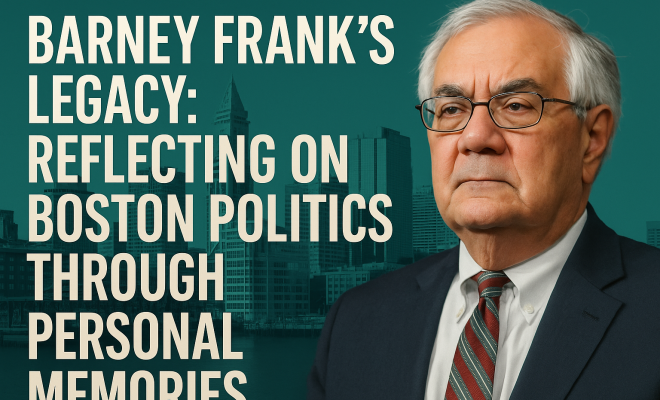
Barney Frank’s Legacy: Boston Politics & Personal Memories
“`html
The recent memorial service for Barney Frank was not just a tribute to a prominent political figure; it served as a poignant reminder of the complex tapestry of Boston politics. Frank, who represented Massachusetts in Congress for over three decades, was a key player in shaping the political landscape of the city and the nation. His legacy invites us to reflect on the evolution of the Democratic Party, urban development, and the ongoing struggles for social justice in Boston. As we revisit Frank’s life and career, we uncover the deep connections between his story and the broader story of Boston’s political history.
The Personal Touch in Political Legacy
A memorial service is often a place for personal stories and remembrances, and Frank’s was no exception. Family, friends, and colleagues shared anecdotes that highlighted not only his political accomplishments but also his humanity. One particularly touching moment came from a close family member, who reminisced about Frank’s early days in Boston politics, emphasizing his commitment to the city and its inhabitants.
This personal reflection is vital because it humanizes a figure often seen merely as a political strategist or legislator. By sharing how Frank navigated the city’s power structures, those close to him painted a picture of a man deeply invested in the welfare of his community. These stories underscore how personal relationships and political alliances can shape the arc of a career in the murky waters of Boston politics.
Barney Frank and the Political Establishment
To understand Barney Frank’s role in Boston, it’s essential to contextualize him within the city’s political establishment. Former Mayor Kevin White, who served from 1968 to 1984, was a mentor and ally to Frank. Their shared vision of an inclusive Boston helped shape policies that aimed to uplift marginalized communities. Together, they worked towards urban renewal, navigating the complexities of the Boston Redevelopment Authority (BRA), which was often criticized for its heavy-handed approach to gentrification.
Frank’s tenure in Congress allowed him to influence significant legislation affecting urban development, housing, and civil rights. He was not just a representative but a voice for those who often felt unheard in political circles. His work intersected with the BRA’s initiatives, advocating for a balance between development and community needs. This relationship illustrates how Frank’s legacy is intertwined with the institutional forces that have shaped Boston’s neighborhoods.
The Evolution of Boston’s Political Landscape
Frank’s impact on Boston politics is most evident when analyzing the city’s evolution over the last few decades. The political landscape has shifted dramatically since Frank first took office in 1981. Boston has seen the rise of more progressive voices, leading to a reimagining of what Boston politics can be. Today’s leaders draw inspiration from Frank’s boldness and commitment to social equity.
Moreover, the city has seen the emergence of diverse candidates who reflect the demographics of its residents, a stark contrast to when Frank began his career. This change is indicative of a broader national trend, where traditional power dynamics are challenged, and new voices are given a platform. Frank’s legacy can be seen as a catalyst for these shifts, as he paved the way for future generations to engage in Boston politics.
Power Struggles in Boston: A Historical Context
The struggles for power within Boston’s political sphere are not new; they are part of the city’s rich history. The political machinations of the early 20th century, especially during the era of the Irish and Italian political machines, laid the groundwork for the contentious political environment that Frank navigated. His entrance into politics was not merely a career choice; it was a continuation of a legacy of advocacy that has characterized Boston’s history.
As we reflect on these power struggles, it’s crucial to acknowledge that Frank was often at the crossroads of these tensions. He fought against the establishment while also being a part of it, blending reformist ideals with the realities of political necessity. In many ways, his journey mirrors the ongoing fight for representation and equity within Boston’s political narrative.
Barney Frank and Urban Renewal
Urban renewal remains a contentious issue in Boston, a topic that Frank frequently addressed during his time in office. The city’s redevelopment efforts have often come under fire for displacing long-time residents and contributing to gentrification. Frank recognized these challenges and worked tirelessly to advocate for policies that would mitigate these effects. (See: Barney Frank's biography on Wikipedia.)
His approach to urban renewal was multifaceted. He sought to leverage his position in Congress to secure funding for community-driven projects and affordable housing initiatives. Frank understood that true urban renewal must include the voices of those directly affected by these changes. The stories shared at his memorial highlighted his commitment to ensuring that development served the community rather than merely corporate interests.
The Legacy of a Reformist
Frank’s legacy is firmly rooted in his reputation as a reformist. His stance on various issues, from financial regulation to LGBTQ rights, illustrates his unwavering commitment to progressive values. As a member of the House Financial Services Committee, he was instrumental in crafting the Dodd-Frank Wall Street Reform and Consumer Protection Act in response to the 2008 financial crisis. This legislation aimed to prevent future economic downturns and protect consumers, showcasing his dedication to reform. (explore social justice tools)
The lessons learned from Frank’s approach to reform can guide current and future leaders in Boston politics. His belief in accountability and transparency remains relevant, especially in a political climate where trust in government is often lacking. Frank’s model of advocacy reminds us that meaningful change requires not only bold ideas but also the political will to implement them.
Engaging the Next Generation of Leaders
As we honor Frank’s legacy, we must also consider how to inspire the next generation of leaders in Boston. The city is at a pivotal moment, facing challenges related to climate change, social justice, and economic inequality. Engaging young people in the political process is essential to ensure that their voices are heard in shaping the future of the city.
Programs aimed at fostering political engagement, such as internships, mentorships, and education initiatives, can empower youth to take an active role in Boston politics. Frank’s story serves as an inspiration for these future leaders, demonstrating that passion and perseverance can effect real change. The continued relevance of his work emphasizes the need for a new wave of advocates who can carry his torch into the future.
Barney Frank’s Impact Beyond Boston
While Frank’s influence is deeply felt in Boston, his impact extends far beyond the city’s borders. His work on national issues, particularly in finance and civil rights, has resonated with a broader audience. As one of the first openly gay members of Congress, he also paved the way for LGBTQ representation at a national level, influencing policy discussions that continue to evolve.
Frank’s advocacy for marriage equality, anti-discrimination laws, and healthcare reform has left an indelible mark on American politics. These issues are not confined to Boston; they resonate across the nation as society grapples with questions of equity and justice. His legacy serves as a reminder that local politics can have national implications, and the fight for progressive change knows no geographic boundaries.
Reflections on a Political Legacy
In the end, Barney Frank’s memorial service was more than a farewell to a political giant; it was an opportunity to reflect on the intricate relationship between personal and political narratives in Boston. The stories shared during the service connected the dots between Frank’s life and the city’s broader political struggles, revealing a landscape marked by both triumphs and challenges.
As we look to the future of Boston politics, it’s crucial to remember the lessons of Frank’s life. His commitment to advocacy, reform, and community engagement provides a roadmap for those who aspire to lead. Boston’s political history is rich and complex, and Frank’s legacy is a vital part of that story. As we honor his memory, we must also commit to carrying forward his vision of an equitable and just society.
Barney Frank’s Political Philosophy
Barney Frank’s political philosophy was rooted in pragmatism and a deep sense of social responsibility. He believed that effective governance requires a balance between idealism and the practicalities of political life. This approach made him a skilled negotiator, capable of bridging divides and finding common ground, even with those who held opposing views. Frank often emphasized the importance of listening to constituents, which he believed was essential for crafting policies that truly served the people.
His pragmatic approach to politics was particularly evident during his handling of the financial crisis. While many called for strict regulations, Frank understood the complexities of the financial system and advocated for solutions that would stabilize the economy without stifling growth. His ability to navigate these complexities speaks volumes about his understanding of the intersection between policy and the lived experiences of ordinary people.
Challenges Faced by Barney Frank
Throughout his career, Frank faced numerous challenges that tested his resolve. He was often subject to intense scrutiny and criticism, particularly due to his outspoken nature and advocacy for progressive causes. Frank was also one of the first openly gay politicians, which introduced an entirely new set of challenges, both from within the political establishment and from the public. Despite this, he remained steadfast in his beliefs and continued to push for change, often using his platform to advocate for LGBTQ rights and social justice issues. (See: New York Times obituary of Barney Frank.)
His candid style sometimes led to confrontations in Congress, but it also made him a beloved figure among many constituents who appreciated his authenticity. Frank’s ability to connect with people on a personal level often helped him overcome these challenges, reinforcing the idea that politics is as much about relationships as it is about policies.
Barney Frank’s Contributions to LGBTQ Rights
Barney Frank’s legacy in the LGBTQ community is profound. As one of the first openly gay members of Congress, he played a pivotal role in advocating for LGBTQ rights and protections at a time when such discussions were often marginalized. His courage in being openly gay while serving in a high-profile political position helped pave the way for subsequent generations of LGBTQ leaders.
Frank was a staunch supporter of the 2010 repeal of “Don’t Ask, Don’t Tell,” which allowed LGBTQ individuals to serve openly in the military. Furthermore, he was instrumental in the fight for marriage equality, supporting initiatives that sought to legalize same-sex marriage across the nation. His tireless advocacy brought attention to issues affecting the LGBTQ community, changing the political landscape for future activists and politicians.
Analyzing Frank’s Influence on Economic Policy
During his time in Congress, Frank was known for his keen insights into economic policy, particularly regarding housing and finance. His work on the Dodd-Frank Act was transformative, reshaping the regulatory landscape of the financial industry following the 2008 crisis. This legislation not only aimed to curb risky behavior among banks but also sought to protect consumers from predatory practices.
Statistics show that after the implementation of the Dodd-Frank Act, there has been a notable decline in abusive lending practices. Studies indicate that mortgage delinquencies and foreclosures dropped significantly in the years following the act’s enactment, illustrating Frank’s effectiveness in advocating for consumer protection. Beyond simply regulating financial institutions, Frank’s policies aimed to empower the average American, ensuring that financial systems worked for everyone, not just the wealthy elite.
The Role of Community Engagement in Frank’s Work
A core aspect of Barney Frank’s political philosophy was community engagement. He understood that for policies to be effective, they needed to be informed by the experiences and needs of the constituents they were meant to serve. Frank often held town hall meetings to solicit feedback, making himself accessible to the public. This practice fostered a sense of trust and transparency between him and the people of Boston.
During his tenure, Frank was known for taking a stand on hot-button issues such as healthcare reform and housing policy based on community input. For instance, his support for expanding access to healthcare was heavily influenced by constituent stories about the struggles they faced in affording healthcare services. This connection to the community remains a model for how politicians today can engage with their constituents effectively.
Lessons from Frank’s Bipartisan Approach
One of the hallmarks of Frank’s career was his ability to work across party lines. He often collaborated with Republican counterparts to achieve meaningful legislation, illustrating that compromise does not equate to weakness but rather strength in governance. His efforts to build coalitions on issues like housing finance reform helped to foster a more stable political environment, balancing ideological divides with practical solutions.
This bipartisan approach is increasingly crucial in today’s polarized political climate. Frank’s legacy underscores the importance of dialogue and cooperation, reminding current and future leaders that progress is often best achieved through collaboration rather than confrontation.
FAQs about Barney Frank and Boston Politics
What was Barney Frank’s role in Boston politics?
Barney Frank served as a representative for Massachusetts in Congress from 1981 to 2013, where he played a crucial role in shaping policies related to finance, housing, and social justice. He was known for his advocacy for marginalized communities and his efforts to balance urban development with community needs. (See: BBC report on Boston politics.)
How did Barney Frank influence the Democratic Party?
Frank was instrumental in pushing the Democratic Party towards more progressive ideals, particularly regarding economic policy, LGBTQ rights, and social justice. His candid approach and willingness to tackle controversial issues helped inspire a new generation of leaders within the party.
What legacy did Barney Frank leave in LGBTQ rights?
As one of the first openly gay members of Congress, Frank was a pioneering figure in the fight for LGBTQ rights. His advocacy contributed to significant legislative changes, including the repeal of “Don’t Ask, Don’t Tell” and the push for marriage equality, making him a key figure in the advancement of LGBTQ rights in America. top lesson plan resources offers useful background here.
What were some key legislative achievements of Barney Frank?
Some of Frank’s most notable legislative achievements include the Dodd-Frank Wall Street Reform and Consumer Protection Act, which aimed to stabilize the financial system, and various housing and civil rights initiatives that sought to promote equity and justice in urban development.
How did Barney Frank engage with younger political leaders?
Frank actively mentored young politicians and engaged with the next generation through various programs and initiatives aimed at fostering political engagement. He believed in the importance of ensuring that young voices were heard in shaping the future of Boston and beyond.
What challenges did Barney Frank face in his political career?
Frank faced significant challenges throughout his career, including scrutiny related to his outspoken nature and being one of the first openly gay members of Congress. Despite these obstacles, he remained committed to advocacy and progressive change, often using his experiences to inform his policies and connect with constituents.
How did Frank’s urban development policies impact Boston residents?
Frank’s urban development policies focused on creating affordable housing and preserving community spaces, which directly impacted many Boston residents. His advocacy for community-driven projects helped ensure that redevelopment efforts considered the needs of long-time residents, thereby reducing displacement often associated with gentrification.
What can current leaders learn from Barney Frank’s approach to politics?
Current leaders can learn the importance of community engagement, bipartisanship, and a pragmatic approach to governance from Frank’s career. His focus on listening to constituents, building coalitions, and advocating for social justice provides a model for effective leadership in today’s political landscape.
“`
Trending Now
Frequently Asked Questions
What was Barney Frank's role in Boston politics?
Barney Frank served as a U.S. Congressman representing Massachusetts for over three decades, playing a crucial role in shaping Boston's political landscape. His work focused on urban development, social justice, and the evolution of the Democratic Party, establishing him as a key figure in the city's political history.
How did Barney Frank influence social justice in Boston?
Barney Frank was instrumental in advocating for social justice in Boston through his policies aimed at uplifting marginalized communities. His collaboration with former Mayor Kevin White helped promote urban renewal and inclusivity, leaving a lasting impact on the city's approach to social issues.
What personal stories were shared at Barney Frank's memorial service?
At Barney Frank's memorial service, family, friends, and colleagues shared personal anecdotes that highlighted his humanity and commitment to Boston. These stories provided insight into his early political days and his deep investment in the welfare of the community, beyond his political achievements.
Who were Barney Frank's key political allies?
One of Barney Frank's key political allies was former Mayor Kevin White, who served from 1968 to 1984. Their partnership focused on creating an inclusive Boston and addressed urban development challenges, showcasing how their shared vision influenced policies that benefited the city's marginalized populations.
What is the legacy of Barney Frank in American politics?
Barney Frank's legacy in American politics is marked by his significant contributions to social justice, urban development, and the Democratic Party's evolution. His work in Congress and his personal connections within Boston politics illustrate his commitment to fostering community welfare and progressive change.
What’s your take on this? Share your thoughts in the comments below — we read every one.