
The Brutal Truth: Why AI in Education Could Be Wrecking Our Kids’ Minds
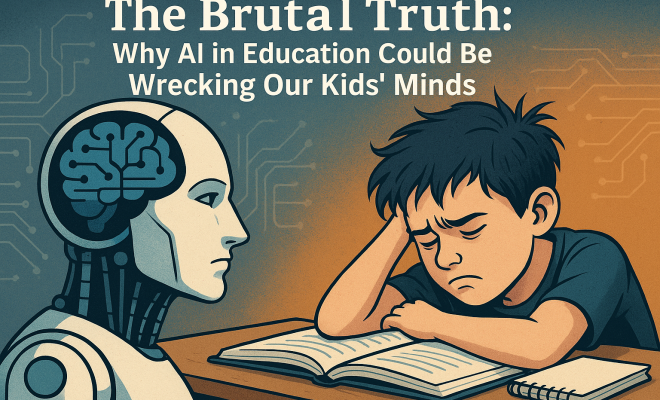
It feels like barely yesterday that generative AI burst onto the scene, promising to revolutionize everything from creative work to customer service. Education, naturally, was quickly flagged as a prime candidate for its transformative power. Yet, as colleges pour millions into these tools and tech companies vie for a slice of the academic pie, a troubling question lingers: Is any of this actually helping students learn? More importantly, could it be doing the opposite?
The conversation around AI in education is getting heated, and for good reason. We’re talking about the future of learning, the development of young minds, and the very foundation of critical thinking. What’s becoming increasingly clear is that the rapid adoption of AI has far outpaced our understanding of its pedagogical impact. This isn’t just a minor oversight; it’s a fundamental disconnect from decades of research in the science of learning. And it’s prompting some serious pushback from parents, educators, and even major school districts.
Consider the recent actions of giants like New York City and Los Angeles school districts. They’ve slammed the brakes, implementing moratoriums on student-facing generative AI tools for the upcoming 2026-27 school year. Why? Because the concerns are mounting, the evidence of benefit is thin, and the potential for harm to cognitive development is too great to ignore. This isn’t just about making classrooms more efficient; it’s about understanding how humans truly learn, and whether AI is helping or hindering that process. Let’s dive into the core issues.
1. The Unsettling Lack of Research: A Blind Leap of Faith
One of the most concerning aspects of AI’s rapid integration into education is the shocking lack of robust, independent research into its actual benefits for student learning. Think about it: before a new textbook is adopted, before a new teaching methodology is widely implemented, there are usually years, if not decades, of studies, pilot programs, and peer-reviewed analysis. With generative AI, it feels like we’ve skipped straight to mass deployment.
An opinion piece in Inside Higher Ed highlighted this glaring gap, noting that despite significant investment by colleges, the evidence base for AI’s positive impact on learning outcomes is incredibly limited. Some early studies, in fact, are even hinting at the opposite – that unguided use of these tools could actually impede learning. This isn’t just a minor point; it’s a critical red flag. We’re essentially conducting a massive, uncontrolled experiment on our students, with their cognitive development as the stakes, all without a clear understanding of the long-term consequences. Where is the evidence-based decision-making that the science of learning demands?
2. Parental and Expert Concerns: Voices of Caution Emerge
It’s not just academics raising alarms; parents and educational experts are voicing significant apprehension. The moratoriums enacted by major school districts like New York City and Los Angeles aren’t arbitrary decisions; they’re direct responses to these growing concerns. Parents worry about everything from over-reliance on technology to the potential erosion of fundamental skills like critical thinking, problem-solving, and original writing. These aren’t irrational fears; they’re grounded in a common-sense understanding of how children develop.
Experts in child development and cognitive psychology echo these sentiments. They point out that key stages of learning involve struggle, effort, and the active construction of knowledge. If AI tools bypass these essential steps, what are we sacrificing? The worry isn’t just about cheating; it’s about whether students are truly internalizing information and developing the intellectual muscles they need for complex thought. The science of learning emphasizes active engagement, and passive consumption via AI might be detrimental.
3. Public Opinion: A Resounding ‘No’ to Unguided AI
If you want to gauge the public mood, sometimes a straightforward poll tells you everything you need to know. An NBC News poll conducted in September 2026 revealed a stark reality: most American adults believe AI will do more harm than good in education. This isn’t a nuanced finding; it’s a clear statement of distrust and concern. The numbers are even more telling when it comes to specific uses: a mere 7% of those polled approved of AI’s use for content generation.
This widespread skepticism isn’t coming from a place of Luddite resistance to technology. It stems from an intuitive understanding that education is fundamentally about human development, not just information delivery. When the public, across demographics, expresses such strong reservations, it should serve as a wake-up call to educators and policymakers alike. Ignoring these concerns would be a grave mistake, especially when the science of learning offers a clear framework for evaluating educational interventions. (See: U.S. Department of Education on technology.)
4. The Contrast with Established Cognitive Psychology: A Rushed Adoption
One of the most profound critiques of AI’s current trajectory in education is how it diverges from decades of established cognitive psychology on how humans learn. The science of learning isn’t a new field; it’s a rich body of knowledge built on rigorous research into memory, attention, problem-solving, and knowledge acquisition. We know, for instance, that active recall, spaced repetition, interleaved practice, and elaboration are incredibly effective strategies. We also know that simply being given an answer, or having a task completed for you, often leads to superficial learning, if any at all.
Generative AI, in its current unguided form, often encourages a passive approach, where students prompt the AI and receive a ready-made output. This bypasses the very cognitive processes that are crucial for deep learning and retention. It’s a stark contrast to the principles that guide effective pedagogy, principles that have been refined and validated over many years. The rush to adopt AI without aligning it with these core tenets of the science of learning is, frankly, alarming. For more context, see the importance of college degrees in the AI job market.
5. Cognitive Development Concerns: Are We Stifling Essential Skills?
The human brain is a remarkable organ, and its development, particularly during childhood and adolescence, is a complex process. Learning isn’t just about accumulating facts; it’s about building neural pathways, developing problem-solving strategies, fostering creativity, and strengthening critical thinking. Many experts worry that an over-reliance on generative AI could short-circuit these vital developmental processes.
If students always have an AI to generate ideas, write essays, or solve complex problems, when do they get the chance to struggle, to think deeply, to make mistakes and learn from them? These struggles are not obstacles to learning; they are integral to it. They build resilience, foster independent thought, and develop the metacognitive skills necessary for lifelong learning. The science of learning stresses the importance of productive struggle, and AI, if not carefully managed, could rob students of these crucial opportunities.
6. The ‘Black Box’ Problem: Understanding AI’s Inner Workings
Another significant issue arises from the ‘black box’ nature of many AI algorithms. Educators and students often don’t understand how a generative AI tool arrives at its answers or outputs. This lack of transparency can be problematic for learning. In traditional education, understanding the process is often as important, if not more important, than the final answer. Teachers guide students through steps, explain reasoning, and provide feedback on methodologies.
With AI, the process is largely opaque. This makes it difficult for students to learn how to think, rather than just what to think. It also poses challenges for educators in assessing true understanding versus AI-generated regurgitation. The science of learning emphasizes explicit instruction and clear feedback on processes, which can be undermined when the cognitive work is outsourced to an inscrutable machine.
7. Equity and Access: Widening the Digital Divide?
While some argue AI could democratize education, there’s a strong counter-argument that unguided adoption could exacerbate existing inequalities. Access to sophisticated AI tools, reliable internet, and devices varies significantly across socioeconomic lines. Will schools in affluent districts be able to invest in the best AI tools and the necessary training for teachers, while underfunded schools lag further behind?
Moreover, the skills needed to effectively prompt and utilize AI – often called ‘prompt engineering’ – are themselves a form of literacy. If only certain students receive adequate instruction in these areas, or if the tools themselves are designed with inherent biases, then AI could widen, rather than narrow, the digital divide. Ensuring equitable access and effective, guided use is a critical challenge that the rapid deployment of AI has largely ignored, flying in the face of inclusive educational practices.
8. The Risk of Over-Reliance and Skill Atrophy
Imagine a student who never learns to do long division because they always have a calculator. Or one who never learns to spell because autocorrect always fixes their mistakes. While these tools have their place, an over-reliance on them can lead to skill atrophy. The same concern applies to generative AI.
If students consistently rely on AI to brainstorm ideas, structure arguments, or even write entire drafts, when do they develop their own innate abilities in these areas? The risk is that fundamental skills crucial for academic success and critical engagement in the world will simply wither away. The science of learning tells us that skills are developed through practice, repetition, and effortful engagement. If AI removes that effort, it removes the opportunity for skill development.
9. The Urgent Need for Pedagogical Research and Ethical Frameworks
Given all these concerns, the path forward is clear, though perhaps challenging: we need a massive, coordinated effort to conduct rigorous pedagogical research into AI’s impact on learning. This isn’t about shunning technology; it’s about understanding it and harnessing it responsibly, guided by the principles of the science of learning. We need studies that investigate long-term effects, compare AI-integrated learning to traditional methods, and identify best practices for ethical and effective use. (See: New York Times on AI in education.)
Simultaneously, educational institutions and policymakers must develop robust ethical frameworks for AI use. This includes guidelines on data privacy, algorithmic bias, academic integrity, and ensuring that AI tools serve as aids to human learning, rather than substitutes for it. Without this foundational work, we risk creating a generation of students who can produce impressive AI-generated outputs, but lack the underlying cognitive skills that truly define an educated mind. The current moratoriums are not a rejection of progress, but a necessary pause to ensure that any progress we make truly benefits our students.
The excitement around AI is understandable, but when it comes to education, we simply cannot afford to proceed without caution and careful consideration. Our children’s cognitive futures depend on it. It’s time to slow down, listen to the experts, and prioritize the science of learning above the siren song of technological novelty. For more context, see how AI makes college degrees more valuable.
10. The Illusion of Learning: Performance vs. Competence
One critical distinction often overlooked in the rush to adopt AI is the difference between performance and competence. A student might be able to generate a well-written essay using an AI, which represents a high level of performance on that specific task. However, if they didn’t engage in the cognitive processes of brainstorming, outlining, drafting, and revising themselves, have they truly developed the underlying competence in writing?
The science of learning tells us that true competence comes from active engagement and the internal construction of knowledge. When AI tools facilitate impressive outputs without requiring the student to do the heavy lifting, it creates an illusion of learning. Students might believe they understand a concept or possess a skill because they can produce a polished artifact, when in reality, their internal grasp of the material or mastery of the skill remains superficial. This gap between apparent performance and actual competence can be incredibly damaging, as it masks areas where genuine learning needs to occur and prevents students from identifying and addressing their own learning gaps.
11. The Role of the Educator: From Knowledge Imparter to AI Facilitator?
The rapid rise of AI also forces us to rethink the evolving role of the educator. For centuries, teachers have been seen as primary sources of knowledge, facilitators of discussion, and evaluators of understanding. With AI capable of generating information, personalized explanations, and even grading, where does that leave the human teacher?
If AI is used unwisely, it could diminish the human element of education, reducing teachers to mere managers of AI tools. However, a more optimistic, and research-backed, view suggests that AI could free teachers from mundane tasks, allowing them to focus on higher-order pedagogical functions. This means more time for individualized mentorship, fostering critical dialogue, teaching complex problem-solving strategies that AI can’t yet replicate, and nurturing socio-emotional development. The key is that teachers need extensive training and support to integrate AI effectively, transforming their role from knowledge imparter to a sophisticated guide who teaches students how to interact with, evaluate, and critically use AI as a tool for their own learning, rather than as a crutch.
12. AI and the Development of Creativity and Original Thought
Creativity and original thought are hallmarks of human intelligence and crucial skills for the 21st century. Many generative AI tools are designed to produce novel content – text, images, code – that can appear creative. But is it truly fostering creativity in the student using it?
True creativity often stems from a deep understanding of a domain, the ability to synthesize disparate ideas, and the willingness to experiment and fail. If students rely on AI to generate creative solutions or ideas, they might bypass the mental processes that build these capacities. For instance, an AI can generate a poem, but the act of a student struggling to find the right metaphor or structure for their own feelings builds a different kind of creative muscle. The risk is that students become adept at prompting AI for “creative” outputs, without developing their own internal wellspring of original thought. The science of learning emphasizes that creativity is often an iterative process, built on foundational knowledge and practice, not simply conjured by a machine.
13. Long-Term Societal Implications: Beyond the Classroom
The impact of AI in education extends far beyond individual student outcomes; it has profound societal implications. If a generation of students graduates with diminished critical thinking skills, an over-reliance on AI, and a reduced capacity for original thought, what kind of workforce and citizenry will we have? For more context, see how a faculty contract confronted AI in education. (See: Research on AI and learning outcomes.)
Consider the future of innovation: Will we still produce groundbreaking scientists, artists, and entrepreneurs if the foundational cognitive struggles that foster these abilities are outsourced? What about civic engagement and democratic discourse? A society that relies on AI to filter and generate information risks becoming less discerning, more susceptible to misinformation, and less capable of independent judgment. The goal of education isn’t just to prepare students for jobs; it’s to prepare them to be active, thoughtful, and contributing members of society. Uncritical adoption of AI in education could undermine these broader societal goals, creating a dependency that reshapes human capabilities in ways we haven’t fully considered.
Frequently Asked Questions about AI and the Science of Learning
Q1: What exactly is the “science of learning” and why is it so important for evaluating AI in education?
The science of learning is an interdisciplinary field that draws on cognitive psychology, neuroscience, education, and other disciplines to understand how humans acquire knowledge, skills, and understanding. It’s crucial for evaluating AI in education because it provides an evidence-based framework for effective teaching and learning. Instead of guessing what works, we rely on decades of research that tells us about memory formation, attention, problem-solving, and skill acquisition. If an AI tool doesn’t align with these established principles (e.g., promoting active recall, productive struggle, or metacognition), then its educational value is questionable, regardless of how technologically impressive it is.
Q2: Can AI ever genuinely enhance learning, or is it always detrimental?
AI isn’t inherently detrimental; it has the potential to genuinely enhance learning if used thoughtfully and ethically. For instance, AI can personalize learning paths, provide immediate feedback on basic tasks, or help teachers identify struggling students. The key is alignment with the science of learning. If AI is designed to support active learning strategies, provide targeted practice, or free up teachers for deeper interactions, it can be a powerful tool. The danger lies in using AI as a shortcut to bypass the cognitive effort required for deep learning, or as a replacement for human interaction and critical thought.
Q3: How can educators identify if an AI tool is genuinely beneficial for student learning?
Educators should look for AI tools that: 1) Align with established principles of the science of learning (e.g., promoting active recall, spaced practice, error analysis). 2) Provide transparency about how they generate responses, allowing students to understand the process, not just the answer. 3) Require active engagement from the student, rather than passive consumption. 4) Offer opportunities for personalized, adaptive feedback that guides learning. 5) Have independent, peer-reviewed research supporting their effectiveness in improving learning outcomes, not just efficiency. If a tool simply generates content for students, it’s likely bypassing essential learning processes.
Q4: What is “productive struggle” and why is it important in the context of AI?
Productive struggle refers to the effortful process students engage in when grappling with challenging concepts or problems that are just beyond their current abilities. It’s crucial because this struggle is where genuine learning and cognitive development happen. It builds resilience, fosters problem-solving skills, and strengthens neural pathways. AI poses a risk to productive struggle if it too easily provides answers or completes tasks for students, removing the very challenge that leads to deeper understanding and skill mastery. The goal should be for AI to scaffold learning, offering support when needed, but still allowing students to experience and learn from the struggle.
Q5: How do we balance technological innovation with the foundational principles of education?
Balancing innovation with foundational principles requires a “learning-first” approach. This means that any new technology, including AI, should be evaluated primarily on its ability to enhance student learning outcomes, not just its novelty or efficiency. We need robust research, pilot programs, and ethical discussions before widespread adoption. Educators, policymakers, and tech developers must collaborate to ensure AI tools are designed with pedagogical principles in mind, acting as intelligent assistants that augment human learning, rather than replacing essential cognitive processes or human interaction. It’s about asking, “How does this technology help students learn better?” before asking, “How can we use this technology?”
Trending Now
- This One Thing Proves College Degrees Are MORE Important Than Ever in the AI Job Market
- our breakdown of the shocking truth: ai makes college degrees more valuable, not less
- the complete explanation
- This One Contract Clause Could Save Teachers From AI Overreach
- this guide on this one contract reveals the future of teacher salary trends 2026 and beyond
Frequently Asked Questions
How is AI affecting education?
AI's rapid integration into education has raised concerns about its impact on student learning. While it promises to enhance efficiency, many educators worry it may hinder cognitive development due to a lack of robust research supporting its benefits.
What are the risks of using AI in schools?
The primary risks of using AI in schools include potential harm to students' cognitive development, the possibility of undermining critical thinking skills, and the unsettling lack of independent research to validate its effectiveness in educational settings.
Why are some school districts banning AI tools?
School districts like New York City and Los Angeles are banning AI tools due to growing concerns about their impact on learning outcomes, the thin evidence of benefits, and the potential negative effects on students' cognitive skills.
What do parents think about AI in education?
Many parents are increasingly concerned about the implementation of AI in education. They worry it could disrupt their children's learning processes and cognitive development, prompting calls for more thorough research and cautious adoption.
Is AI helping or hindering student learning?
Current discussions suggest that AI may be hindering student learning more than helping it, as the rapid adoption of these tools outpaces our understanding of their pedagogical effects, leading to significant concerns among educators and parents.
Have you experienced this yourself? We'd love to hear your story in the comments.



