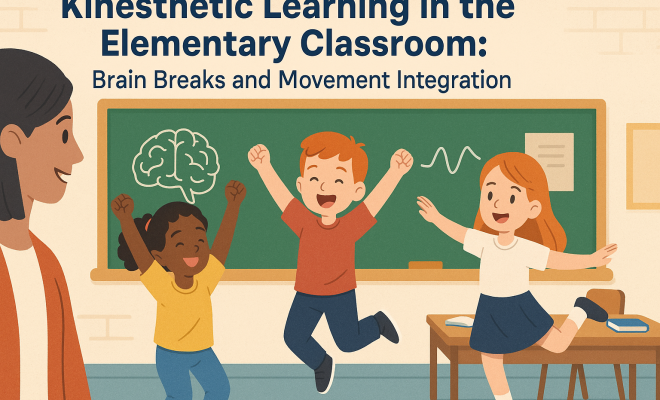
“Kinesthetic Learning in the Elementary Classroom: Brain Breaks and Movement Integration”
“`html
In the realm of education, the term kinesthetic learning often emerges as a beacon for teachers seeking to engage students more effectively. This approach, which emphasizes physical activity and movement, has proven to be immensely beneficial in elementary classrooms. Especially in an age where children are increasingly distracted by technology and sedentary lifestyles, integrating movement into learning can revitalize the traditional educational model.
Understanding Kinesthetic Learning
At its core, kinesthetic learning is a style of learning where individuals learn best through physical activities rather than passive listening or reading. This concept is rooted in the notion that many students, particularly younger ones, absorb information better when they are physically engaged. Research has shown that movement stimulates the brain, enhances memory retention, and boosts overall academic performance.
According to educational theorist Howard Gardner, who introduced the theory of multiple intelligences, kinesthetic learning is one of the key intelligences. He argued that individuals who learn best through physical activity often excel in areas like sports, dance, and other hands-on tasks. This perspective highlights the necessity of recognizing diverse learning styles within the classroom.
The Importance of Movement in Learning
Incorporating movement into the learning process isn’t merely a trend; it’s a profound acknowledgment of how our brains function. Studies reveal that physical activity can enhance cognitive processing, improve attention spans, and reduce behavioral issues in children. For instance, a study published in the Journal of Physiology found that children who engage in regular physical activity perform better in academic tasks compared to their sedentary peers.
Moreover, movement can aid in emotional regulation. Children with attention deficits or behavioral challenges often find that physical activity helps them manage their emotions better. When they can move their bodies, they often become more focused and ready to learn. This intersection of physical activity and emotional health is essential for fostering a conducive learning environment.
Brain Breaks: A Key Component
One of the most effective ways to integrate kinesthetic learning in elementary classrooms is through ‘brain breaks.’ These are short bursts of movement or physical activity designed to refresh students’ minds and bodies between learning sessions. They can last anywhere from a few seconds to a few minutes and serve as a transition between subjects or activities.
Research indicates that brain breaks can significantly improve concentration and classroom behavior. For example, a study conducted in a North Carolina elementary school found that implementing just five minutes of physical activity between lessons resulted in a remarkable 20% increase in on-task behavior. Teachers reported that students returned to their work with increased focus and enthusiasm.
Brain breaks can take many forms, from simple stretching exercises to interactive games that promote teamwork and collaboration. Importantly, they can be tailored to fit the unique needs and interests of students, ensuring that every child is engaged and energized.
Types of Brain Breaks
There’s a plethora of options when it comes to brain breaks. Here are some popular types:
- Stretching Exercises: Simple stretches can help alleviate physical discomfort and increase blood flow. Teachers can lead the class in stretches that target major muscle groups.
- Dance Parties: Playing a short, upbeat song and allowing students to dance can lift spirits and energize the classroom.
- Mindfulness Activities: Incorporating deep breathing or meditation can help students center themselves and refocus.
- Movement Games: Quick games like Simon Says or Freeze Dance encourage movement while also fostering social interaction.
- Outdoor Breaks: If time allows, taking students outside for a brief walk can refresh their minds and bodies.
These activities are not just fun; they are essential for re-engaging students and enhancing their learning experiences.
Movement Integration Across the Curriculum
Moving beyond brain breaks, there are many ways to integrate movement throughout various subjects. For example:
- Math: Use physical objects like blocks or counting beans to teach addition and subtraction through hands-on activities.
- Reading: Implementing literacy games that involve movement, such as acting out stories or creating word scavenger hunts, can reinforce reading skills.
- Science: Conducting experiments that require physical involvement, like building models or conducting simple chemistry reactions, can make learning more tangible.
- Social Studies: Role-playing historical events or cultures can provide immersive learning experiences.
The key is to create activities that are not only educational but also enjoyable. When students are active participants in their learning, they are more likely to retain information. (See: CDC on physical activity and education.)
Challenges and Misconceptions
While the benefits of kinesthetic learning are clear, it’s not without its challenges. Some educators may hesitate to embrace this approach due to misconceptions about the effectiveness of traditional teaching methods. The belief that children should remain seated and quiet to learn can be a significant barrier.
Additionally, some educators may feel overwhelmed by the prospect of integrating movement into their lessons, fearing it would disrupt the flow of instruction. However, research shows that the opposite is often true—integrating movement can enhance learning and engagement.
Teachers can combat these misconceptions by showcasing the positive outcomes of kinesthetic methods. Sharing success stories, student testimonials, and relevant research can encourage more educators to experiment with movement in their teaching.
Creating a Kinesthetic-Friendly Classroom
To foster an environment conducive to kinesthetic learning, there are several strategies educators can implement:
- Flexible Seating: Allowing students to choose how they sit—whether on yoga balls, standing desks, or traditional chairs—can enhance their comfort and focus.
- Movement Zones: Designate areas in the classroom for movement, whether that’s a corner with exercise mats or space for interactive activities.
- Active Learning Tools: Incorporate tools like balance boards, fidget spinners, or even simple props that encourage movement during lessons.
- Routine Integration: Make movement a consistent part of the daily schedule, rather than an occasional break, to reinforce its importance.
By creating a learning environment that embraces physical activity, teachers can help children thrive academically and socially.
The Role of Technology
In today’s digital world, technology can also play a role in promoting kinesthetic learning. With the emergence of interactive learning platforms and educational apps, teachers can combine physical movement with digital tools. For instance, apps that require students to move to answer questions or explore their surroundings can integrate learning with physical activity.
Virtual reality (VR) and augmented reality (AR) technologies offer innovative avenues for kinesthetic learning. These technologies can create immersive environments that allow students to explore complex subjects physically. Imagine a biology lesson where students can ‘walk’ through the human body or a history lesson that transports them to ancient civilizations.
However, it’s crucial to strike a balance. While technology can enhance kinesthetic learning, reliance on screens must be moderated to ensure that students also engage in direct physical activities.
Current Relevance and the Future of Kinesthetic Learning
As educators and policymakers recognize the limitations of traditional teaching methods, the relevance of kinesthetic learning continues to grow. The COVID-19 pandemic underscored the importance of flexibility and adaptability in education, prompting many educators to rethink their approaches. With an increased focus on mental and physical health in schools, kinesthetic methods are gaining traction.
Looking ahead, the future of kinesthetic learning seems promising. Educators are increasingly emphasizing social-emotional learning alongside academic goals. The understanding that children’s mental health directly impacts their learning outcomes underscores the necessity of integrating movement into education.
Moreover, as educational practices evolve, schools are beginning to adopt more holistic approaches that incorporate physical health into academic success. This trend is not just about keeping children active; it’s about fostering a love for learning and a sense of well-being.
Kinesthetic Learning: Real-World Applications
Kinesthetic learning isn’t limited to the classroom; it extends into various real-world applications that can significantly enrich students’ lives. For instance, in vocational training programs, hands-on learning is essential. Fields such as nursing, engineering, and culinary arts require a kinesthetic approach to ensure that students acquire practical skills. In these environments, students engage in simulations or actual practice, which reinforces their learning through direct experience.
Additionally, kinesthetic learning is prevalent in sports education. Coaches employ various drills and physical activities to teach strategies, techniques, and teamwork. This immersive experience not only improves skills but also cultivates a deeper understanding of the sport, leading to better performance in competitive settings.
Moreover, kinesthetic learning is instrumental in improving life skills. Activities like cooking, gardening, or crafting require physical involvement and can teach valuable lessons about responsibility, patience, and creativity, further emphasizing the importance of movement in learning across different contexts.
Statistics on Kinesthetic Learning
Understanding the impact of kinesthetic learning can be underscored through various statistics:
- According to a study by the American Association for Health Education, students who engage in physical activity outperform their peers in standardized tests by an average of 10-20%.
- Research from the University of Illinois found that students who participated in kinesthetic learning activities showed a 15% improvement in memory retention compared to those who received traditional instruction.
- A survey conducted by the National Center for Learning Disabilities revealed that 70% of teachers believe that incorporating movement into lessons enhances student engagement and learning outcomes.
- Studies have shown that children who are physically active for at least 60 minutes a day are 20% more likely to show improved academic performance.
These statistics highlight that kinesthetic learning is not only beneficial but also essential for student success in today’s educational landscape.
Expert Perspectives on Kinesthetic Learning
Experts in education and child development advocate for the integration of kinesthetic learning in classrooms. Dr. John Ratey, an associate clinical professor of psychiatry at Harvard Medical School, emphasizes the connection between movement and brain health. He states, “Movement is a powerful tool for enhancing cognitive performance and emotional well-being.” By prioritizing physical activity, educators can leverage this powerful tool to improve learning outcomes.
Additionally, Dr. Stuart Brown, the founder of the National Institute for Play, argues that play is a vital aspect of learning, stating, “Play is not just an activity; it is a fundamental way of learning.” This perspective aligns closely with kinesthetic learning principles, reinforcing the idea that hands-on experiences are essential for cognitive development and knowledge retention.
FAQ about Kinesthetic Learning
What is kinesthetic learning?
Kinesthetic learning is a style of learning that involves physical activity and hands-on experiences, allowing individuals to learn best through moving and engaging their bodies.
How does kinesthetic learning benefit students?
Kinesthetic learning improves memory retention, enhances focus, boosts engagement, and helps with emotional regulation. It can also foster a positive attitude towards learning.
Can kinesthetic learning be integrated into all subjects?
Absolutely! Kinesthetic learning can be integrated into subjects like math, science, reading, and social studies through hands-on activities, games, and physical engagement.
What are some effective kinesthetic activities for the classroom?
Effective kinesthetic activities can include movement games, role-playing, outdoor explorations, and interactive projects. Teachers can tailor activities to fit the subject matter and the interests of students.
How can parents support kinesthetic learning at home?
Parents can support kinesthetic learning by encouraging active play, providing hands-on learning experiences, and participating in physical activities together. Engaging children in household tasks that require movement, like cooking or gardening, can also enhance kinesthetic learning.
Additional Considerations for Kinesthetic Learning
While the benefits of kinesthetic learning are clear, there are additional considerations to keep in mind. For instance, educators should be mindful of the space available for movement. Not all classrooms are designed for extensive physical activity; therefore, creative solutions are needed. Teachers can rearrange furniture, use outdoor spaces, or even take activities to the halls when necessary.
Another consideration is the varying levels of comfort among students. Some children might feel self-conscious about participating in physical activities, particularly in larger groups. Teachers can create a supportive atmosphere by encouraging participation without pressure. Emphasizing that everyone learns differently and acknowledging various comfort levels can foster inclusivity.
Furthermore, assessment methods should adapt to incorporate kinesthetic learning. Traditional tests may not accurately reflect the understanding of students who excel in a hands-on learning environment. Educators can consider project-based assessments, where students demonstrate their knowledge through creative and physical methods, which aligns with kinesthetic learning principles.
Benefits of Kinesthetic Learning Beyond Academics
Kinesthetic learning offers advantages that extend far beyond academic achievement. Engaging in physical activities promotes overall health and well-being, which is particularly crucial in today’s fast-paced and often sedentary lifestyle. Regular movement has been shown to reduce stress and anxiety, which can create a more positive learning environment.
Moreover, kinesthetic learning helps develop essential life skills. Working collaboratively on group activities fosters teamwork and social skills, while individual hands-on projects enhance problem-solving and critical thinking abilities. These skills are invaluable not only in academic settings but also in everyday life and future career paths.
Another significant aspect is the development of motor skills. Participation in kinesthetic activities can improve fine and gross motor skills, which are fundamental for a child’s physical development. As children manipulate objects or engage in physical tasks, they refine their coordination and dexterity, which can support broader physical activities and sports as they grow.
Kinesthetic Learning Strategies for Parents at Home
Parents can play a pivotal role in supporting kinesthetic learning outside of school. Here are some strategies they can utilize:
- Create a Learning Space: Dedicate an area in your home for learning that encourages movement. This space can include materials for arts and crafts, building blocks, or even a small area for physical activities.
- Incorporate Learning into Daily Routines: Turn everyday activities into learning experiences. Cooking can become a math lesson (measuring ingredients), while gardening can teach biology and responsibility.
- Encourage Active Play: Make time for physical activities, whether through sports, dance, or simply playing outside. This not only supports kinesthetic learning but also encourages a healthy lifestyle.
- Turn Screen Time into Active Time: If your child enjoys digital devices, seek out apps and programs that encourage movement, such as interactive games that require physical activity.
By integrating these strategies, parents can reinforce the principles of kinesthetic learning and help their children thrive academically and personally.
Conclusion: Embracing Kinesthetic Learning
The evidence supporting kinesthetic learning in elementary education is robust and compelling. By recognizing the unique needs of all learners and integrating movement into the curriculum, educators can create dynamic classrooms where children thrive. The journey of education is not merely about imparting knowledge; it’s about nurturing engaged, well-rounded individuals who can navigate the complexities of the world.
As you consider your teaching methods or the learning environments for the children in your life, remember the profound impact that movement can have on learning. By embracing kinesthetic learning, we’re not just teaching—we’re inspiring.
“`
Trending Now
Frequently Asked Questions
What is kinesthetic learning?
Kinesthetic learning is a style of learning where individuals learn best through physical activities rather than passive listening or reading. It emphasizes the importance of movement in the learning process, allowing students to absorb information more effectively by engaging physically.
How does movement help students learn better?
Movement enhances cognitive processing, improves attention spans, and boosts memory retention. Studies show that children who engage in regular physical activity perform better academically compared to sedentary peers, making movement a crucial component in effective learning.
What are brain breaks in the classroom?
Brain breaks are short, intentional breaks from academic activities that incorporate physical movement. They help re-energize students, improve focus, and enhance overall learning by allowing children to release pent-up energy and refocus their attention.
Why is kinesthetic learning important for young students?
Kinesthetic learning is vital for young students as it aligns with their natural tendencies to explore and engage physically. It recognizes diverse learning styles, helping to accommodate students who may struggle with traditional, passive learning methods.
What are the benefits of integrating movement in the classroom?
Integrating movement in the classroom can lead to improved academic performance, better emotional regulation, and reduced behavioral issues. It acknowledges how children's brains function, fostering a more engaging and effective learning environment.
What did we miss? Let us know in the comments and join the conversation.