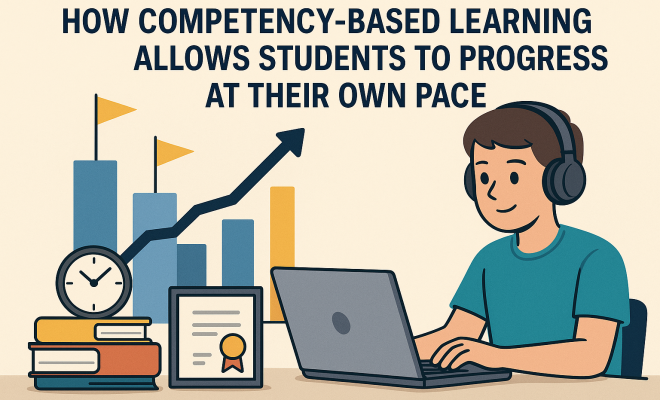
“How Competency-Based Learning Allows Students to Progress at Their Own Pace”
“`html
In a world where education is often a one-size-fits-all approach, competency-based learning (CBL) is emerging as a viable alternative that allows students to progress at their own pace. This innovative educational model focuses on students mastering specific skills and knowledge rather than merely completing a set amount of time in the classroom. CBL has gained traction in recent years, particularly in higher education and vocational training, due to its potential to create more personalized learning experiences.
Understanding Competency-Based Learning
Competency-based learning is an educational approach where students advance upon demonstrating their mastery of specific competencies. Unlike traditional models that emphasize time spent in class or completing assignments, CBL assesses a student’s understanding of the subject matter. This flexibility allows learners to take control over their education.
The foundation of CBL lies in clearly defined learning outcomes. These outcomes specify the skills and knowledge students should acquire by the end of the course. Students progress through lessons, assessments, and learning activities at their own pace, which can lead to a deeper understanding of the material and higher retention rates.
The Historical Context of CBL
Competency-based learning is not a new concept. Its roots can be traced back to the 1960s and 1970s in the United States when educators began to explore the idea of outcomes-based education. The push for a more individualized learning experience gained momentum in the decades that followed, with various educational institutions experimenting with different variations of CBL.
In recent years, advancements in technology and online learning platforms have played a crucial role in the resurgence of CBL. With the rise of MOOCs (Massive Open Online Courses) and other online learning resources, CBL has become more accessible, allowing learners from diverse backgrounds to engage with the content at their own pace.
Key Principles of Competency-Based Learning
Several key principles underpin competency-based learning:
- Individualized Learning Paths: Each student has a unique learning journey, and CBL allows for customized educational experiences based on individual needs and interests.
- Mastery Learning: Students are not promoted to the next level until they demonstrate proficiency in the current material. This focus on mastery helps to ensure that students have a solid understanding before moving on.
- Flexible Assessment: CBL employs various assessment methods tailored to different learning styles. This can include project-based assessments, portfolios, or traditional testing.
- Real-World Relevance: CBL often emphasizes practical, real-world applications of knowledge and skills, making learning more relevant and engaging for students.
The Role of Technology in CBL
Technology significantly enhances the effectiveness of competency-based learning. Learning management systems (LMS) and online platforms facilitate personalized learning experiences by tracking individual progress and offering tailored resources. For instance, platforms like Canvas and Moodle allow educators to create and manage competency-based curricula efficiently.
Additionally, technology enables students to access a vast array of resources, including instructional videos, interactive quizzes, and discussion forums. This variety allows learners to engage with the material in ways that best suit their learning preferences, whether through visual aids, discussions with peers, or hands-on projects.
The Benefits of Competency-Based Learning
Competency-based learning offers numerous advantages that make it an appealing option for both students and educators:
- Flexibility: Students can learn at their own pace, which is particularly beneficial for those who may need more time to grasp complex concepts.
- Heightened Engagement: CBL fosters a sense of ownership over learning, leading to increased motivation and engagement among students.
- Reduced Knowledge Gaps: By allowing students to master skills before moving on, CBL minimizes the risk of knowledge gaps that can arise in traditional educational models.
- Preparation for the Workforce: CBL often emphasizes practical skills and knowledge that directly translate to real-world job requirements, better preparing students for their careers.
Challenges and Barriers to Implementation
Despite its many benefits, implementing competency-based learning can be met with challenges. One significant barrier is the resistance to change from traditional educational practices. Many educators are accustomed to conventional teaching methods and may be hesitant to adopt new approaches. (See: Competency-Based Education Overview.)
Another challenge lies in the need for proper training and resources. Educators must be equipped with the skills to effectively design and implement CBL curricula. Additionally, institutions may face logistical hurdles, such as aligning their grading systems with competency-based assessments.
Current Relevance and Future Outlook
As the demand for personalized education continues to grow, the relevance of competency-based learning is more pronounced than ever. Recent trends indicate that both students and employers are increasingly seeking educational models that emphasize skill mastery over seat time. According to a 2020 report by the U.S. Department of Education, competency-based education programs are gaining traction in higher education, with many institutions adopting CBL frameworks.
Looking forward, the future of competency-based learning appears promising. As technological advancements continue to evolve, CBL will likely become even more integrated with online learning platforms. Additionally, the growing emphasis on lifelong learning suggests that this educational model will play a vital role in adult education and workforce training.
Competency-Based Learning in Different Educational Settings
Competency-based learning can be applied across various educational settings, from K-12 schools to higher education institutions and vocational training programs. In K-12 settings, CBL allows teachers to individualize instruction based on students’ unique learning needs, helping to close achievement gaps.
Higher education institutions have also embraced CBL, particularly in fields such as nursing, education, and technical training. For example, Western Governors University (WGU) is a fully online, competency-based university that allows students to progress as they demonstrate mastery of their subjects.
Vocational training programs are increasingly adopting CBL to equip students with the skills needed to enter the workforce. By focusing on practical competencies, these programs can better prepare students for the demands of their chosen careers.
Practical Insights for Educators and Institutions
For educators and institutions looking to implement competency-based learning, several practical insights can guide the process:
- Define Clear Competencies: Establishing well-defined learning outcomes is crucial to the success of CBL. Competencies should be specific, measurable, and aligned with industry standards.
- Utilize a Variety of Assessments: Employ diverse assessment methods that cater to different learning styles. This variety can include projects, presentations, and digital portfolios.
- Emphasize Continuous Feedback: Provide students with ongoing feedback to help them identify areas for improvement and celebrate their successes.
- Leverage Technology: Implement learning management systems and online resources to facilitate personalized learning experiences and track student progress.
Competency-Based Learning vs. Traditional Learning Models
When comparing competency-based learning to traditional learning models, the differences are stark. Traditional education primarily focuses on the time students spend in class and their completion of assignments. In contrast, CBL prioritizes actual learning and demonstrates proficiency. This pivot has significant implications for how students experience learning.
For instance, in a traditional classroom, a student who struggles with a concept may still be required to progress to the next topic simply based on the semester timeline. In a CBL framework, that same student would have the opportunity to spend additional time mastering the concept before moving on, leading to a more solid foundation for future learning.
In terms of assessment, traditional models might use one-time exams to evaluate student knowledge, which can create pressure and doesn’t always reflect a student’s true understanding. CBL, on the other hand, allows for ongoing assessments, giving students multiple opportunities to demonstrate their competency. This approach can lead to a more accurate assessment of student learning and capabilities. (See: Higher Education Competency-Based Learning.)
Statistics and Research Supporting CBL
Research into competency-based learning has shown promising results. A report from the RAND Corporation found that students in CBL programs often perform better than their peers in traditional programs. The study highlighted that students in CBL environments had higher rates of course completion and demonstrated better retention of knowledge over time.
Furthermore, the research indicated that CBL was particularly effective for non-traditional students, including adult learners and those balancing work and family commitments. The flexibility of CBL allows these learners to fit education into their busy lives, thus increasing access to higher education and career advancement opportunities.
Expert Perspectives on Competency-Based Learning
Educational experts are increasingly advocating for competency-based learning as a means to improve educational outcomes. Dr. Rose L. Ahlquist, an education researcher and consultant, states that “CBL empowers learners to take control of their own educational pathways, fostering greater engagement and ownership.” Her insights emphasize how CBL not only benefits students academically but also helps develop critical life skills.
Another expert, Dr. Mark S. Johnson, who specializes in adult education, notes that “the future of work demands a workforce skilled in specific competencies, making CBL an essential component of modern education systems.” His perspective highlights the importance of aligning educational models with the evolving needs of the job market, further justifying the shift towards CBL.
Frequently Asked Questions about Competency-Based Learning
What types of assessments are used in competency-based learning?
Assessments in CBL can take various forms, including project-based assessments, portfolios, peer assessments, and traditional tests. The key is that assessments are designed to provide a clear picture of a student’s mastery of the specific competencies.
Is competency-based learning suitable for all students?
CBL can be beneficial for many types of learners, particularly those who thrive in self-directed environments. However, it may be less effective for students who prefer more structured, traditional teaching methods. Each student’s learning style should be considered when implementing CBL.
How can parents support their children in a competency-based learning environment?
Parents can support their children by encouraging self-directed learning and helping them set personal goals. Open communication with teachers about their child’s progress and challenges can also be beneficial. Additionally, fostering a positive attitude towards learning and resilience in the face of challenges can greatly enhance a child’s experience in a CBL environment.
What are some examples of schools using competency-based learning?
Many institutions have successfully implemented CBL, such as Summit Public Schools and the New Hampshire Department of Education, which has integrated CBL across its public schools. These examples showcase the versatility and effectiveness of CBL in different educational contexts.
Assessing the Impact of Competency-Based Learning
As CBL continues to evolve, assessing its impact on educational outcomes is essential. Studies show that students in CBL environments not only demonstrate improved academic performance but also exhibit enhanced critical thinking skills. A study published in the Journal of Education Psychology indicated that students engaged in CBL scored significantly higher on assessments measuring problem-solving and analytical abilities compared to those in traditional settings. (See: Learning and Developmental Disorders.)
Moreover, the connection between CBL and student satisfaction cannot be overlooked. Surveys conducted across various competency-based programs reveal that students feel more satisfied with their educational experiences when they have the autonomy to dictate their learning pace. This sense of agency is crucial, as higher levels of satisfaction often correlate with better retention rates in both academic settings and professional environments.
Implementation Strategies for Institutions
If your institution is considering the shift to competency-based learning, here are some effective implementation strategies:
- Start Small: Instead of overhauling the entire curriculum, consider piloting CBL in a specific program or course to gather insights and make adjustments as needed.
- Engagement with Stakeholders: Involve teachers, students, and parents in discussions about CBL. Their input can provide valuable perspectives and foster a sense of community support for the transition.
- Professional Development: Invest in training for educators to ensure they have the knowledge and skills necessary to effectively facilitate CBL. Ongoing professional development can help teachers refine their instructional strategies.
- Feedback Mechanisms: Establish systems for gathering feedback from students and teachers throughout the implementation process. This will help identify areas for improvement and ensure the CBL experience is continually evolving.
Global Perspectives on Competency-Based Learning
CBL isn’t limited to the United States; it’s gaining traction worldwide. Countries like Canada, Australia, and the United Kingdom are introducing CBL in various educational contexts. For instance, in Canada, the Alberta government has encouraged schools to adopt CBL as part of their curriculum framework, emphasizing the importance of skill development in fostering employability.
In Australia, the vocational education sector has embraced CBL as a means to bridge the skills gap identified by industry leaders. Reports indicate that CBL in vocational training has led to increased job placement rates, showcasing its effectiveness in real-world applications.
The Role of Policy in CBL Adoption
Policy plays a critical role in the adoption and success of competency-based learning. Supportive policies can create an environment conducive to innovation in educational practices. Policymakers are beginning to recognize the potential of CBL in preparing students for the complexities of modern work environments. Initiatives aimed at funding CBL pilot programs and developing resources for educators can greatly enhance the effectiveness of its implementation.
Furthermore, collaboration between educational institutions and industry can ensure that the competencies being taught align with the skills needed in the workforce. This alignment is crucial for creating a responsive education system that meets the evolving demands of the job market.
Conclusion: The Future of Learning
Competency-based learning stands out as a transformative approach that empowers students to take charge of their educational journeys. By emphasizing mastery of skills and knowledge, CBL allows learners to progress at their own pace, ultimately leading to a more engaging and effective educational experience. As institutions continue to adapt to the changing landscape of education, CBL is poised to play a crucial role in shaping the future of learning.
“`
Trending Now
Frequently Asked Questions
What is competency-based learning?
Competency-based learning (CBL) is an educational approach that allows students to progress at their own pace by mastering specific skills and knowledge. Unlike traditional models that focus on time spent in class, CBL emphasizes demonstrating understanding and mastery of subject matter.
How does competency-based learning work?
In competency-based learning, students advance through lessons and assessments upon demonstrating mastery of defined competencies. This model provides flexibility, letting learners control their educational journey and often leading to deeper understanding and higher retention of material.
What are the benefits of competency-based learning?
The benefits of competency-based learning include personalized learning experiences, the ability for students to progress at their own pace, and improved mastery of subjects. CBL can lead to better retention rates and a more engaged learning process.
When did competency-based learning start?
Competency-based learning originated in the 1960s and 1970s in the United States, focusing on outcomes-based education. The approach has evolved over the decades, gaining popularity with technological advancements and the rise of online learning platforms.
Why is competency-based learning gaining popularity?
Competency-based learning is gaining popularity due to its ability to provide personalized education tailored to individual student needs. The growth of online learning platforms and MOOCs has made CBL more accessible, allowing diverse learners to engage with the model effectively.
What’s your take on this? Share your thoughts in the comments below — we read every one.