Occupational Therapy for Proprioception Deficits in Children
“`html
Understanding Proprioception: The Body’s Hidden Sense
Proprioception is often overlooked, yet it plays a crucial role in how children interact with their environment. Essentially, proprioception refers to the body’s ability to sense its position and movement in space. This sense is critical for coordination, balance, and physical awareness. When children have proprioception deficits, they struggle to perceive where their limbs are located, which can lead to difficulties with motor skills and everyday activities.
For many, proprioception is as natural as breathing, but for some children, it’s a constant challenge. Imagine a child who has trouble learning to ride a bike or who frequently bumps into furniture. These experiences can stem from proprioceptive issues, causing frustration and affecting their confidence.
The Role of Occupational Therapy in Addressing Proprioception Deficits
Occupational therapy (OT) is a therapeutic approach that helps individuals engage in meaningful activities through the enhancement of their skills and abilities. For children with proprioception deficits, OT provides tailored interventions to improve sensory processing, motor skills, and overall functioning.
Occupational therapists assess each child’s unique needs, designing specific programs that cater to their challenges. These interventions can be vital in helping children regain their confidence and independence.
Identifying Proprioception Deficits: Signs and Symptoms
Recognizing proprioception deficits in children isn’t always straightforward. Parents and educators should be on the lookout for several signs:
- Clumsiness or frequent stumbling
- Difficulty with balance, such as trouble standing on one foot
- Challenges in activities requiring fine motor skills, like writing or buttoning clothes
- Difficulty understanding personal space, leading to intrusive behaviors
- High or low sensitivity to touch and movement
- Avoidance of physical activities due to fear of falling or getting hurt
If any of these signs sound familiar, an occupational therapist can provide a detailed evaluation to confirm if proprioception deficits are at play.
The Assessment Process: What to Expect
The journey to addressing proprioception deficits typically begins with an assessment by an occupational therapist. This assessment is comprehensive and nuanced, focusing on the child’s strengths and challenges. The therapist will often observe the child in various settings, both structured and unstructured, to gather insights about their movements and interactions.
During the assessment, the therapist may incorporate standardized tests that measure sensory processing abilities, motor skills, and overall development. This helps in identifying specific proprioceptive challenges, which can result from various conditions such as autism spectrum disorders, developmental coordination disorder, or sensory processing disorder.
The insights gained during this phase are crucial for developing a tailored intervention plan that suits the unique needs of each child.
Personalized Intervention Plans: Tailoring Therapy to Meet Needs
Once the assessment is complete, occupational therapists create personalized intervention plans. These plans are aimed at improving proprioceptive feedback through various strategies and activities. Key components of these plans often include:
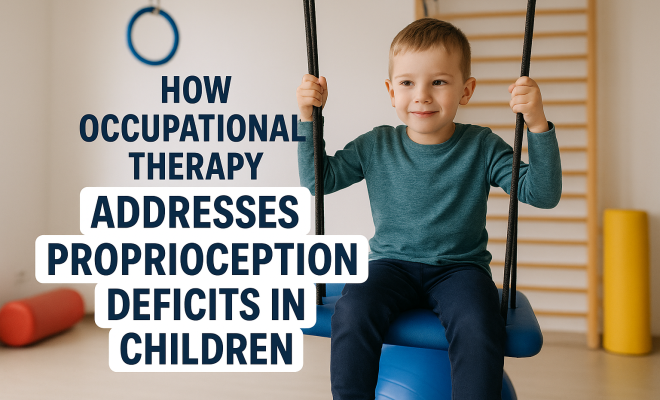
- Movement Activities: Engaging children in play-based activities that stimulate their proprioceptive systems. This could include jumping on trampolines, climbing, or swinging.
- Weighted Items: Utilizing weighted vests or blankets can provide constant proprioceptive input, helping children feel more grounded and secure in their movements.
- Fine Motor Skill Development: Activities like cutting, drawing, and building with blocks enhance hand-eye coordination and control.
- Body Awareness Exercises: These exercises help children understand their body’s position through games and playful movements that integrate various body parts.
OT interventions focus on both individual and group settings, allowing children to practice their skills in different environments, which further enhances their learning and retention. (See: Understanding proprioception in children.)
The Importance of Play in Occupational Therapy
Many parents may wonder why play is integral to occupational therapy for proprioception deficits. The answer lies in the fact that play is a natural mode of learning for children. Through play, they can explore their environment, test their limits, and learn about their bodies.
Occupational therapists cleverly incorporate play into their therapy sessions, using it as a vehicle for practice and learning. Activities such as obstacle courses, ball games, or even simple tag can offer rich proprioceptive input while children have fun. This playful approach not only keeps children engaged but also helps them build essential skills without the pressure of traditional learning environments.
Family Involvement: A Crucial Component of Success
To maximize the effectiveness of occupational therapy for proprioception deficits, family involvement is essential. Parents and guardians play a pivotal role in supporting their child’s therapy journey. Occupational therapists often educate families about proprioception and the specific challenges their child faces.
Involving the family can also help in creating a supportive home environment where therapy goals can be reinforced. For example, parents can create opportunities for proprioceptive activities at home, like playing with playdough, engaging in rough-and-tumble play, or setting up a mini obstacle course.
Moreover, establishing strong communication between families and therapists ensures that everyone is on the same page, fostering a collaborative approach to helping the child succeed.
Current Relevance: The Rise of Occupational Therapy for Children
In recent years, there has been a growing recognition of the importance of occupational therapy for children with proprioception deficits. As awareness of sensory processing disorders increases, more families are seeking therapeutic interventions. Additionally, schools are starting to implement sensory-friendly practices and incorporate OT services into their special education programs.
Research has shown that early intervention is critical; children who receive therapy sooner tend to experience better outcomes. For instance, a study published in the journal Developmental Medicine & Child Neurology found that early OT interventions significantly improve children’s motor skills and overall development.
As a result, the demand for occupational therapy services is expected to grow, paving the way for more specialized training and resources for therapists. The evolution of telehealth has also made occupational therapy more accessible, allowing children to receive therapy remotely, thus breaking down geographical barriers to access.
Success Stories: Transformative Outcomes of Occupational Therapy
The impact of occupational therapy on children with proprioception deficits can be life-changing. Many families share success stories that highlight the transformative effects of targeted interventions. For example, one parent recounts how her child, previously hesitant to participate in physical activities, gained confidence and improved social skills after a few months of OT sessions.
Another family noted that their child, who once struggled with daily tasks like dressing and grooming, became more independent after engaging in therapy that focused on enhancing proprioceptive awareness. These stories underscore the significance of occupational therapy in fostering not just physical skills, but also emotional and social growth.
Understanding the Science Behind Proprioception Deficits
Proprioception is primarily facilitated by specialized neurons known as proprioceptors, which are located in muscles, tendons, and joints. These receptors send continuous feedback to the brain about the body’s position and movement. When there are deficits in proprioception, it can be due to a malfunction in these receptors or the processing centers in the brain that interpret the information they’re sending. Conditions like dyspraxia and developmental coordination disorder can reflect these underlying issues, causing children to struggle with tasks that require coordinated movement.
Recent studies have shown that proprioceptive deficits can also be influenced by factors such as spinal alignment and muscular strength. For instance, children with poor core strength may find it especially challenging to maintain balance and control, further exacerbating their proprioceptive difficulties. This underscores the importance of a holistic approach in therapy, which may include strengthening exercises alongside proprioceptive training. (See: CDC on proprioception and development.)
Advanced Techniques in Occupational Therapy for Proprioception Deficits
Occupational therapists continuously explore new techniques and interventions to support children with proprioception deficits. Some advanced techniques include:
- Therapeutic Listening: This technique involves using specially designed music that incorporates various sound frequencies. This can help enhance auditory processing and, in turn, improve proprioceptive feedback by engaging the brain’s sensory pathways.
- Vestibular Stimulation: Activities that promote vestibular input, such as swinging or spinning, can enhance proprioceptive responses. Therapists might create specific exercises that integrate both proprioceptive and vestibular stimulation to maximize benefits.
- Environmental Modifications: Adjusting a child’s environment can also play a critical role. For instance, creating soft landing zones or padded areas for play can encourage risk-taking, which is essential for developing proprioceptive skills.
These advanced techniques show how OT is evolving to meet the needs of children with proprioception deficits by providing a multi-faceted approach to therapy.
Statistics on Proprioceptive Deficits and Therapy Outcomes
Understanding the prevalence and impact of proprioception deficits can help frame the conversation around occupational therapy. Recent surveys indicate that about 1 in 20 children experience significant proprioceptive challenges that affect their daily activities. Furthermore, research from the American Occupational Therapy Association (AOTA) highlights that early intervention can lead to up to a 60% improvement in motor skills and sensory integration when therapy is initiated before age 6.
Additionally, longitudinal studies suggest that children who receive consistent OT often show considerable improvement in social interactions, academic performance, and overall quality of life. For example, a study published in the Journal of Occupational Therapy found that children who participated in targeted proprioceptive interventions were able to increase their participation in school-based activities by nearly 50% within six months of therapy.
FAQs About Occupational Therapy and Proprioception Deficits
What is proprioception, and why is it important?
Proprioception is the sense that allows us to perceive the position and movement of our body parts. It is essential for coordinated movement, balance, and performing everyday tasks. Without adequate proprioception, individuals may struggle with basic activities like walking, running, or even sitting still.
How can I tell if my child has proprioception deficits?
Look for signs such as clumsiness, difficulty with balance, challenges in fine motor tasks, and inconsistent personal space awareness. If your child exhibits these symptoms, it may be beneficial to consult an occupational therapist for a comprehensive evaluation.
What types of activities can help improve proprioception at home?
Activities like jumping on a trampoline, playing with playdough, engaging in roughhousing, and utilizing weighted items can provide valuable proprioceptive input. Encouraging participation in sports or physical activities can also be beneficial.
How long does occupational therapy typically last for proprioception deficits?
The duration of occupational therapy varies widely based on the individual child’s needs and goals. Some children may see improvements within a few months, while others may require ongoing support for years. Regular assessments can help determine the best course of action.
Are there any risks associated with proprioception deficits?
Yes, children with proprioception deficits may be at a higher risk for injuries due to falls and accidents, as they may not accurately judge their body’s position in space. This risk underscores the importance of early intervention and consistent therapy to help manage and improve these challenges.
Exploring the Long-term Impact of Proprioception Deficits
Understanding the long-term effects of untreated proprioception deficits can further emphasize the importance of early intervention and occupational therapy. Children who do not receive adequate support may experience ongoing challenges in various aspects of their lives. For instance, difficulties with proprioception can affect academic performance, as tasks such as writing or participating in physical education become increasingly challenging. This can lead to decreased self-esteem and social withdrawal.
Longitudinal studies indicate that children with untreated proprioceptive issues often develop compensatory strategies that can mask their difficulties temporarily. However, these strategies can lead to chronic pain, fatigue, and even secondary disorders, such as anxiety or depression, as they grow older. Addressing these issues through targeted occupational therapy can improve not just motor skills but also mental and emotional well-being.
Comparative Analysis: Traditional Therapies vs. Occupational Therapy for Proprioception Deficits
When it comes to addressing proprioception deficits, parents often wonder about the most effective approach. Traditional therapies, such as physical therapy, focus primarily on improving strength and mobility. However, they may not adequately address the sensory integration aspects of proprioception. In contrast, occupational therapy takes a more holistic view, integrating sensory processing, motor skills, and emotional support to provide a well-rounded intervention.
For example, while physical therapy may help improve a child’s ability to perform specific movements, occupational therapy focuses on how they can function in their daily lives. This means that OT activities are often designed to be engaging and fun, which encourages children to participate more actively and gain significant benefits. Many parents report that occupational therapy leads to more substantial improvements in social interactions and emotional resilience compared to traditional treatment options.
Future Directions: Innovations in Occupational Therapy for Proprioception Deficits
The field of occupational therapy is continually evolving, with emerging technologies and methodologies offering new ways to support children with proprioception deficits. Virtual reality (VR) and augmented reality (AR) are two areas that show promise for enhancing proprioceptive therapy. These technologies can create immersive environments where children can practice movements and spatial awareness in a safe setting.
Moreover, apps and interactive platforms are being developed to assist therapists in implementing proprioceptive exercises at home, making it easier for families to stay engaged in their child’s therapy journey. These innovations also allow for real-time data collection, enabling therapists to track progress and adjust interventions quickly.
As research continues to explore the intricacies of proprioception and its impact on child development, we can expect even more targeted and effective therapeutic strategies to emerge, benefiting children with proprioceptive deficits.
Conclusion: The Future of Occupational Therapy in Managing Proprioception Deficits
As we understand more about proprioception and its role in child development, the importance of occupational therapy continues to rise. With ongoing research, innovative practices, and increased awareness, there is potential for improved interventions that address proprioception deficits effectively.
For parents, educators, and therapists alike, embracing a multidisciplinary approach can lead to the best outcomes for children struggling with proprioception deficits. By working together, we can help children thrive, ensuring they have the skills and confidence to navigate their world successfully.
“`
Trending Now
Frequently Asked Questions
What is proprioception and why is it important for children?
Proprioception is the body's ability to sense its position and movement in space. It is crucial for children's coordination, balance, and physical awareness. Deficits in proprioception can lead to challenges in motor skills and daily activities, affecting their confidence and interactions with their environment.
How can occupational therapy help children with proprioception deficits?
Occupational therapy (OT) helps children with proprioception deficits by providing tailored interventions to improve sensory processing and motor skills. Occupational therapists assess each child's needs and design specific programs that enhance their abilities, promoting confidence and independence in daily activities.
What are the signs of proprioception deficits in children?
Signs of proprioception deficits in children include clumsiness, difficulty with balance, challenges in fine motor skills, issues with personal space, and sensitivity to touch or movement. These symptoms can affect their ability to engage in physical activities and interact socially.
Why do some children struggle with proprioception?
Some children may struggle with proprioception due to developmental delays, neurological conditions, or sensory processing disorders. These challenges can affect their ability to accurately perceive their body's position, leading to difficulties in coordination, balance, and everyday tasks.
What activities can improve proprioception in children?
Activities that can improve proprioception in children include balance exercises, jumping, climbing, and playing with resistance bands. Engaging in sports, dance, or games that require body awareness can also enhance proprioceptive skills, helping children develop better coordination and confidence.
What’s your take on this? Share your thoughts in the comments below — we read every one.