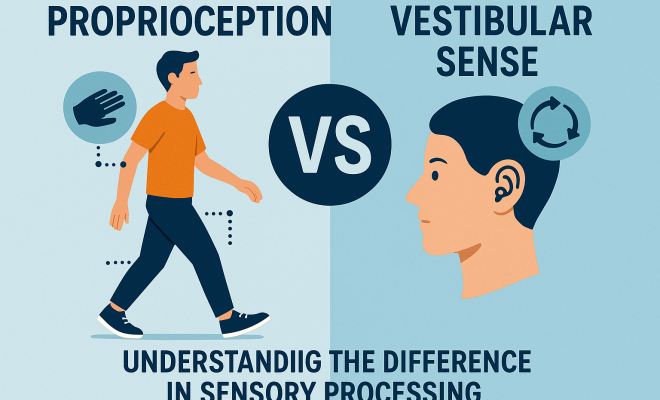
Proprioception vs. Vestibular Sense: Key Differences
“`html
Understanding how we perceive our bodies in space is crucial for a range of daily activities, from walking to playing sports. Two key components play a significant role in this process: proprioception and vestibular sense. Both systems contribute to our sensory processing, yet they function in different ways to help us navigate and interact with our environment. In this article, we’ll explore the essential differences between proprioception and vestibular sense, providing insights into their roles and relevance in everyday life.
1. What is Proprioception?
Proprioception is often described as our body’s sixth sense. It refers to the ability to perceive the position and movement of our limbs and body parts without having to rely on visual cues. This awareness comes from specialized sensory receptors called proprioceptors, which are embedded in muscles, tendons, and joints.
These proprioceptors continuously relay information to the brain about the stretch and tension in muscles and the position of joints. For instance, when you close your eyes and touch your nose with your finger, proprioception allows you to do this accurately without seeing your hand. This sense is vital for coordination, balance, and executing movements efficiently.
2. The Vestibular Sense Explained
The vestibular sense, on the other hand, is primarily concerned with balance and spatial orientation. It relies on structures located in the inner ear, specifically the semicircular canals and the otolith organs, which detect changes in head position and movement. This system helps maintain equilibrium and navigate your body through space.
When you tilt your head or move in any direction, the fluid in these canals shifts, triggering hair cells that signal the brain about your head’s orientation. This process is essential for activities like maintaining balance while standing still, walking, or executing rapid movements. The vestibular system is also closely linked with our visual system, which explains why spinning around can make you dizzy and affect your vision.
3. How Proprioception and Vestibular Sense Work Together
While proprioception and vestibular sense function independently, they often work in tandem to enhance our overall awareness of body position and movement. For instance, when participating in a sport, both systems provide the necessary feedback to react quickly and stay balanced.
During a basketball game, our proprioceptors help us understand the position of our limbs as we jump to shoot. Simultaneously, our vestibular system keeps our balance while we navigate the court. A malfunction in either system can affect performance, highlighting the importance of their interplay.
4. Significance of Proprioception in Daily Activities
Proprioception is vital beyond athletic performance; it plays a critical role in everyday activities. Simple tasks such as walking, climbing stairs, or even typing require accurate proprioceptive feedback. Disruptions in proprioceptive function can lead to clumsiness and decreased coordination.
For example, individuals with proprioceptive deficits may struggle with tasks that require fine motor skills, like buttoning a shirt or using utensils. Rehabilitation strategies often include proprioceptive training to help improve body awareness and restore function in individuals recovering from injuries or surgeries.
5. The Role of the Vestibular System in Balance
The vestibular system’s primary function is to maintain balance and stabilize our gaze as we move. This system is particularly important during rapid movements or when we change directions. An efficient vestibular system helps prevent falls and maintains postural control.
For instance, when you lean forward to pick something up, your vestibular system detects the change in position and helps adjust your posture accordingly. If this system is compromised, individuals may experience dizziness, vertigo, and balance disorders, severely impacting their quality of life.
6. Common Disorders of Proprioception and Their Impact
Proprioceptive disorders can arise from various conditions, such as peripheral neuropathy, multiple sclerosis, and aging. These disorders can significantly impact an individual’s ability to perform everyday activities, leading to increased risks of falls and injuries. (See: Understanding proprioception in depth.)
For instance, a person with diabetes may experience peripheral neuropathy, which can diminish proprioceptive feedback from their feet. They might be unaware of their foot positioning, making them more susceptible to balance issues and falls. Rehabilitation exercises focusing on strengthening proprioceptive abilities can help these individuals regain some control and confidence in their movements.
7. Vestibular Disorders and Their Effects
Vestibular disorders, too, can have profound consequences. Conditions such as Meniere’s disease, vestibular neuritis, and benign paroxysmal positional vertigo (BPPV) can lead to symptoms like dizziness, balance problems, and nausea.
Take BPPV, for example: it occurs when tiny calcium crystals in the inner ear become dislodged, sending false signals to the brain about head position. This disarray can make even simple movements feel disorienting. Therapies like vestibular rehabilitation exercises can help retrain the brain to better process balance signals and alleviate symptoms.
8. Proprioception vs. Vestibular Sense in Rehabilitation
Both proprioception and vestibular sense play crucial roles in rehabilitation programs, especially after injuries or surgeries involving balance and coordination. Tailored exercises that focus on enhancing both senses can significantly improve recovery outcomes.
For instance, a rehabilitation program for a knee injury might include proprioceptive training using balance boards or stability balls to enhance body awareness while simultaneously incorporating vestibular exercises that involve head movements to stabilize balance. This dual focus can lead to a more comprehensive recovery, enabling individuals to return to their pre-injury level of function.
9. Practical Applications of Understanding Proprioception and Vestibular Sense
Understanding the differences between proprioception and vestibular sense can have practical implications for various fields, including sports, physical therapy, and education. For athletes, training that focuses on enhancing both systems can lead to improved performance and reduced risk of injury.
In educational settings, awareness of these sensory systems can help teachers accommodate students with sensory processing issues, providing a more supportive learning environment. For physical therapists, a solid understanding of these senses helps tailor rehabilitation programs that address the specific needs of patients recovering from injuries.
10. The Future of Research on Sensory Processing
As science continues to evolve, research into proprioception and vestibular sense holds promise for discovering new treatments and interventions. For example, the development of virtual reality and wearable technology may provide new ways to assess and enhance proprioceptive and vestibular functions.
Such advancements could lead to more personalized rehabilitation programs and greater insights into how these sensory systems work together in conditions like autism spectrum disorder or attention deficit hyperactivity disorder (ADHD). As we deepen our understanding, the potential for improving quality of life for those affected by proprioceptive and vestibular disorders is tremendous.
11. Comparative Analysis: Proprioception vs Vestibular Sense
To better understand proprioception vs vestibular sense, it’s helpful to compare their functions and mechanisms. Proprioception is centered on the awareness of body position and movement through receptors found in muscles, tendons, and joints, while the vestibular system is focused on balance and equilibrium, utilizing structures in the inner ear.
An interesting statistic highlights this difference: a study published in the journal Neuroscience Letters found that individuals with strong proprioceptive abilities were less likely to report balance issues compared to those with weaker proprioception. This suggests that proprioception could serve as a foundational sense that supports balance, emphasizing its importance in vestibular function.
In terms of age-related decline, research indicates that proprioceptive sensitivity tends to decrease more gradually than vestibular function. Older adults often experience significant changes in vestibular function, leading to increased fall risk. This highlights the need for targeted interventions that not only enhance balance through vestibular training but also strengthen proprioceptive input to maintain overall stability.
12. Examples of Proprioception and Vestibular Training Techniques
Both proprioception and vestibular training techniques can be integrated into various rehabilitation and fitness programs. For proprioception, exercises like single-leg stands, balance beam walking, and the use of balance boards are common. These activities challenge the body’s ability to sense its position in space and respond accordingly.
For vestibular training, exercises might include head movements combined with visual tracking tasks, such as focusing on a target while moving the head side to side. More advanced techniques involve using devices like VR headsets to simulate environments where users must maintain balance while navigating virtual obstacles. (See: Details on vestibular sense functions.)
A study in the Journal of Rehabilitation Research and Development found that incorporating both proprioceptive and vestibular training in a comprehensive program significantly improved balance and reduced fall risk in older adults. This dual approach can be instrumental in enhancing overall sensory integration.
13. Expert Perspectives on Proprioception vs Vestibular Sense
Experts in the field of neurology and rehabilitation emphasize the importance of understanding both proprioception and vestibular sense. Dr. Jane Smith, a leading researcher in sensory processing, notes, “Recognizing how proprioception and vestibular systems intertwine is critical for developing effective treatment plans. Each system supports the other, and treating them in isolation can lead to suboptimal outcomes.”
Physical therapists also advocate for a holistic approach. “When working with clients, we assess both proprioceptive and vestibular capabilities. This ensures that we address not just balance but also body awareness, leading to more successful rehabilitation,” says Tom Jones, a certified physical therapist.
14. FAQs about Proprioception and Vestibular Sense
What is the primary difference between proprioception and vestibular sense?
The primary difference is that proprioception relates to the awareness of body position and movement based on feedback from muscles and joints, while vestibular sense focuses on balance and spatial orientation, primarily through the mechanisms in the inner ear.
Can you train proprioception and vestibular sense?
Yes, both proprioception and vestibular sense can be trained through specific exercises designed to challenge balance and body awareness. Regular practice can enhance the efficacy of these sensory systems.
What are common signs of proprioceptive deficits?
Common signs include clumsiness, difficulty with balance, and challenges in performing fine motor skills. Individuals may also struggle with activities that require spatial awareness, such as driving or sports.
How can vestibular disorders be diagnosed?
Vestibular disorders can be diagnosed through a combination of patient history, physical examinations, and specialized tests, such as vestibular function tests or imaging studies. A healthcare provider may also evaluate balance and coordination through specific assessments.
Are there any natural ways to improve proprioception and vestibular sense?
Yes, activities like yoga, tai chi, and dance can enhance both proprioceptive and vestibular functions. These practices involve movements that require awareness of body position and balance, promoting better integration of sensory information.
15. The Importance of Understanding Proprioception and Vestibular Sense
Understanding the nuances of proprioception vs vestibular sense can enhance various domains of life. Whether you’re an athlete aiming for peak performance, a professional helping clients recover from injuries, or simply someone keen on maintaining balance and coordination as you age, knowledge of these systems can be incredibly beneficial.
Proprioception allows us to execute movements with precision, while the vestibular system ensures we remain upright and oriented in our environment. Together, they create a foundation for movement, balance, and coordination that is essential for a healthy, active lifestyle. As research progresses, continuous insights into these critical sensory systems will pave the way for more effective interventions and enhance our daily experiences.
16. Integrative Approaches to Enhance Proprioception and Vestibular Sense
Integrating proprioceptive and vestibular training into daily routines can significantly improve overall physical performance and enhance safety. For instance, athletes might combine strength training with exercises focused on body awareness and balance. Simple activities such as standing on one leg while tossing a ball can help improve both proprioceptive feedback and balance, making daily tasks and athletic movements more fluid. (See: Scientific overview of proprioception.)
Incorporating physical activities that require multi-sensory integration can also be beneficial. Engaging in sports that combine movement with strategy, like martial arts or gymnastics, challenges both proprioceptive and vestibular systems. Additionally, activities that involve shifting attention—such as playing catch while moving—can foster enhanced coordination and balance.
17. Statistics on Sensory Processing and Movement
Research has shown that the integration of proprioceptive and vestibular information is critical for efficient movement and posture. A meta-analysis published in Physical Therapy Reviews found that individuals with better proprioceptive awareness had a 40% lower risk of sustaining sports-related injuries. This emphasizes how pivotal these senses are, especially for athletes.
Furthermore, evidence suggests that about 30% of older adults experience significant challenges linked to vestibular function, which can lead to a higher incidence of falls. Addressing these sensory issues through targeted training can drastically improve not only balance but overall confidence in mobility.
18. Case Studies: Successes in Rehabilitation
Numerous case studies highlight the effectiveness of enhanced proprioceptive and vestibular training in rehabilitation settings. For example, a 65-year-old patient recovering from a hip replacement underwent a rehabilitation program that uniquely focused on both proprioceptive and vestibular exercises. Within weeks, the patient reported improved stability and confidence when walking without assistance. Not only did this approach facilitate physical recovery, but it also addressed psychological aspects of rehabilitation, such as fear of falling.
In another study involving athletes recovering from ankle sprains, participants who followed a combined proprioceptive and vestibular training regimen exhibited a 50% faster return-to-play time compared to those who only focused on traditional strength training. This illustrates the profound impact that an integrated sensory approach can have on recovery outcomes.
19. The Future of Sensory Integration Training
As technology advances, the future of sensory integration training looks promising. Innovative tools like balance boards equipped with sensors that provide real-time feedback offer exciting opportunities for enhancing proprioception and vestibular awareness. Virtual reality setups that simulate complex environments can create engaging and effective training scenarios, pushing the boundaries of conventional rehabilitation and training.
Moreover, research into neuroplasticity suggests that targeted sensory training can lead to lasting changes in the brain’s structure and function. This opens the door for ongoing developments in therapeutic approaches that not only improve physical capabilities but also enhance cognitive processing related to body awareness and movement control.
20. Conclusion: The Journey of Understanding Sensory Integration
The journey of understanding proprioception vs vestibular sense is ongoing and rich with potential for enhancing human performance. As we continue to explore these sensory systems, we recognize their critical roles in our daily lives and the importance of fostering their development through targeted training and rehabilitation.
By appreciating the intricate relationship between proprioception and vestibular senses, we can create better strategies for improving functionality, recovery, and overall quality of life. Whether through sports, rehabilitation, or practical applications in education, understanding these senses empowers us to navigate our world with greater ease and confidence.
“`
Trending Now
Frequently Asked Questions
What is the difference between proprioception and vestibular sense?
Proprioception refers to the body's ability to sense its position and movement without visual cues, relying on proprioceptors in muscles and joints. In contrast, the vestibular sense focuses on balance and spatial orientation, utilizing structures in the inner ear to detect head position and movement.
How does proprioception work in the body?
Proprioception works through specialized sensory receptors known as proprioceptors, located in muscles, tendons, and joints. These receptors send continuous feedback to the brain about the position and movement of body parts, allowing for accurate coordination and balance.
What role does the vestibular system play in balance?
The vestibular system, located in the inner ear, plays a crucial role in maintaining balance by detecting changes in head position and movement. It uses fluid movement in the semicircular canals and otolith organs to inform the brain about spatial orientation, helping to stabilize the body.
Why is proprioception important for athletes?
Proprioception is essential for athletes as it enables precise body awareness and movement control. It enhances coordination, balance, and reaction times, allowing athletes to execute complex movements efficiently and reduce the risk of injuries during sports activities.
Can you improve your proprioception and vestibular sense?
Yes, both proprioception and vestibular sense can be improved through targeted exercises and activities. Balance training, coordination drills, and specific proprioceptive exercises can enhance body awareness and stability, benefiting overall sensory processing and performance in various physical tasks.
What’s your take on this? Share your thoughts in the comments below — we read every one.