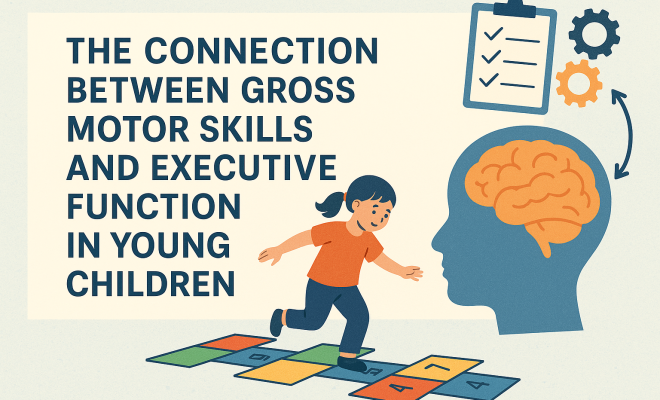
“The Connection Between Gross Motor Skills and Executive Function in Young Children”
“`html
When we think about child development, we often focus on cognitive milestones or emotional growth. However, an often-overlooked aspect is the interplay between gross motor skills and executive function. Understanding this connection can have profound implications for how we approach early childhood education and support the overall development of young children. In this article, we’ll explore the relationship between gross motor skills and executive function in young children, backed by research and expert insights.
Understanding Gross Motor Skills
Gross motor skills refer to the abilities required to control large movements of the arms, legs, and entire body. These skills are essential for everyday tasks like walking, running, jumping, and climbing. They form the foundation for many physical activities and play a crucial role in a child’s overall physical development.
For infants and toddlers, gross motor development typically follows a predictable sequence. Infants first gain control of their head and neck, then progress to rolling, sitting, standing, and walking. By age three, children often demonstrate improved coordination and balance, allowing them to engage in more complex activities like running and jumping. The development of these skills is critical, not just for physical abilities, but also for their cognitive and social-emotional development.
The Role of Executive Function
Executive function is a set of cognitive processes that includes working memory, cognitive flexibility, and inhibitory control. These processes enable children to plan, focus attention, remember instructions, and juggle multiple tasks successfully. Essentially, executive function acts as the brain’s command center, helping children navigate the complexities of everyday life.
Research suggests that strong executive function skills are linked to better academic performance, social skills, and emotional regulation. In young children, these skills develop rapidly but can vary significantly based on environmental factors, experiences, and individual differences.
The Connection Between Gross Motor Skills and Executive Function
Research has begun to illuminate the connection between gross motor skills and executive function. Studies indicate that children who are adept at gross motor activities tend to perform better on tasks requiring executive function. For instance, a study published in the journal *Child Development* found that children with better-developed gross motor skills exhibited stronger executive function abilities.
One possible explanation for this connection is that engaging in physical activities enhances cognitive functioning. As children navigate their physical environments, they must use planning, coordination, and self-regulation—key components of executive function. Activities like running, jumping, and playing sports require them to make quick decisions, adjust their actions, and remember rules, all of which cultivate executive function skills.
Practical Implications for Parents and Educators
Recognizing the link between gross motor skills and executive function offers actionable insights for parents and educators. Encouraging physical play can enhance both motor development and cognitive skills. Here are several strategies to promote gross motor skills while supporting executive function:
- Encourage Outdoor Play: Provide children with ample opportunities to engage in outdoor activities. Climbing structures, running games, and sports not only build gross motor skills but also require children to think critically and strategize.
- Incorporate Movement into Learning: Integrate physical activity into lessons. For example, use games that involve movement to teach math concepts or storytelling. This approach helps reinforce learning while enhancing motor skills.
- Promote Cooperative Play: Encourage children to play team sports or engage in group activities. These settings foster social skills and require children to use executive function skills to cooperate, communicate, and follow rules.
- Model Physical Activity: Demonstrate the importance of physical activity by being active yourself. Whether it’s going for a walk, playing catch, or dancing, showing enthusiasm for movement can inspire children to engage in physical activities.
Research Findings on Gross Motor Skills and Executive Function
Several significant studies have contributed to our understanding of the connection between gross motor skills and executive function. One notable study led by researchers from the University of North Carolina examined preschool children and found a substantial correlation between their physical activity levels and their executive function skills. Children who participated in structured physical activities showed improvements in working memory and cognitive flexibility.
Another study published in the *Journal of Experimental Child Psychology* revealed that children who engaged in more gross motor activities demonstrated better inhibitory control. Inhibitory control is a critical aspect of executive function that helps children resist impulses and stay focused on tasks. These findings suggest that enhancing gross motor skills can directly impact a child’s ability to manage their behavior and attention. (See: CDC on gross motor skills development.)
Case Studies: Effective Programs and Interventions
There are several programs and interventions that have successfully integrated gross motor skill development with executive function training. For instance, the *CATCH* program (Coordinated Approach to Child Health) is designed to promote physical activity and healthy eating among children. This program has shown impressive results in not only improving physical health but also enhancing cognitive and social-emotional outcomes.
Another example is the *Brain Gym* program, which focuses on physical exercises that promote brain development and cognitive functioning. Activities in this program aim to enhance coordination and balance, which in turn supports executive function skills. Evaluations of the program have indicated improvements in attention, focus, and overall cognitive performance among participating children.
The Role of Play in Developing Gross Motor Skills and Executive Function
Play is a foundational aspect of childhood that serves as a primary avenue for learning. Through play, children develop gross motor skills while also exercising their executive function. For instance, when children engage in pretend play, they not only practice physical movements but also learn to plan scenarios, take turns, and navigate social interactions—integral components of executive function.
Additionally, unstructured playtime allows children to explore their environments, take risks, and make choices. This freedom fosters creativity and problem-solving skills, essential for developing executive function. Parents and educators should recognize the value of play as a learning tool and strive to create an environment that encourages both physical activity and imaginative exploration.
Long-Term Implications of Strong Gross Motor Skills and Executive Function
The benefits of developing gross motor skills and executive function extend far beyond childhood. Research indicates that children with strong executive function skills are more likely to succeed academically and socially throughout their lives. They are better equipped to handle challenges and adapt to changing circumstances.
Moreover, children who develop gross motor skills early on may also be more enthusiastic about physical activity as they grow older. This enthusiasm can lead to a lifelong commitment to health and fitness, reducing the risk of obesity and related health issues. As a result, fostering these skills can contribute to better overall quality of life and wellbeing.
Parental Involvement: Strategies for Supporting Development
Parents play a critical role in facilitating the development of gross motor skills and executive function in their children. Here are some effective strategies:
- Engage in Regular Physical Activities: Make physical activity a family routine. Whether it’s biking, hiking, or playing sports, consistent involvement encourages children to develop their gross motor skills.
- Set Up a Safe Environment: Create a safe space for children to explore and practice their physical skills. This could include a backyard with climbing equipment or a nearby park for running and playing.
- Encourage Goal Setting: Help children set achievable physical goals, such as learning to ride a bike or mastering a new sport. This approach fosters motivation and reinforces executive function through planning and persistence.
- Celebrate Achievements: Recognize and celebrate your child’s milestones in both gross motor skills and executive function development. Positive reinforcement boosts confidence and encourages continued effort.
Understanding the Distinct Types of Executive Function
To effectively support the development of executive function in children, it’s crucial to understand its distinct components: working memory, cognitive flexibility, and inhibitory control. These components work together to help children manage their thoughts, actions, and emotions in varied situations.
Working Memory: This is the ability to hold and manipulate information in one’s mind over short periods. For example, when a child is asked to follow a multi-step instruction, their ability to remember and sequence those steps relies heavily on working memory.
Cognitive Flexibility: This refers to the capacity to switch between thinking about two different concepts or to think about multiple concepts simultaneously. It’s essential for problem-solving and adapting to new situations. Children displaying strong cognitive flexibility can better handle changes in routine or unexpected outcomes.
Inhibitory Control: This is the skill that allows a child to suppress impulses and resist distractions. It helps them stay focused on tasks and wait for their turn in games or group activities. Such control is pivotal during learning activities where maintaining attention is necessary.
The interplay among these components highlights the importance of comprehensive approaches that engage children physically and cognitively. By crafting activities that require the use of all three aspects, caregivers can effectively bolster executive function development alongside gross motor skills. (See: NIH on learning and development.)
Statistics Highlighting the Importance of Physical Activity
Statistics show that physical activity plays a fundamental role in children’s health and cognitive development. According to the Centers for Disease Control and Prevention (CDC), only 24% of children ages 6 to 17 meet the recommended 60 minutes of physical activity each day. This lack of engagement can have significant consequences on their developmental outcomes, including executive function.
Research published in the *Journal of Developmental Psychology* indicates that children who engage in regular physical activity exhibit higher levels of executive function. Specifically, a study found that for every additional hour of physical activity per week, children improved their performance on cognitive tests by approximately 10%. These findings underscore the necessity of incorporating movement into daily routines for optimal child development.
Expert Perspectives on the Connection Between Movement and Learning
Experts in child development emphasize the critical role that gross motor skills play in fostering executive function. Dr. Adele Diamond, a leading researcher in cognitive development, argues that the development of executive function is profoundly linked to physical activity. In her work, she suggests that activities requiring movement can enhance cognitive processes, encouraging children to think strategically and problem-solve.
Educational psychologist Dr. David Danielson also supports this view, noting that children who engage in physical play are often better equipped to handle classroom demands. He states, “Movement is not just about physical engagement; it’s about cognitive engagement as well. When children move, they think, and when they think, they learn.” Such endorsements from experts highlight the need for educational systems to prioritize physical education as part of a holistic approach to learning.
FAQs About Gross Motor Skills and Executive Function
What are gross motor skills?
Gross motor skills involve the large muscle groups of the body, allowing for movements like running, jumping, and climbing. These skills are essential for various activities in everyday life.
How do gross motor skills influence executive function?
Gross motor skills influence executive function by requiring children to plan, make decisions, and self-regulate during physical activities. Engaging in these activities sharpens cognitive functions that are critical for learning and development.
What age do children typically develop gross motor skills?
Gross motor skills begin to develop in infancy, with significant milestones usually reached by age 3. Continuous development occurs throughout early childhood as children engage in various physical activities.
Can improving gross motor skills enhance academic performance?
Yes, research indicates that children who develop strong gross motor skills are often better at tasks requiring executive function, which can lead to improved academic performance.
How can I support my child’s gross motor skills at home?
You can support your child’s gross motor skills by providing opportunities for outdoor play, engaging in physical activities together, and encouraging them to try new sports or movement-based games.
The Importance of Routine and Structure
Creating a structured routine for children can greatly enhance their ability to develop both gross motor skills and executive function. A consistent schedule helps children know what to expect, reducing anxiety and allowing them to allocate cognitive resources to learning new skills rather than to navigating uncertainty.
For example, setting aside specific times for active play each day not only reinforces the importance of physical activity but also helps children practice self-regulation. They learn to transition smoothly between activities, a skill that directly relates to cognitive flexibility and inhibitory control. Regular routines can include morning stretches, afternoon playtime, or evening family sports—each of which reinforces both physical and cognitive development.
Technology’s Role in Developing Gross Motor Skills
With the rise of technology, many parents and educators have turned to apps and interactive games designed to promote physical activity. These tools can be effective in engaging children, especially those who may be reluctant to participate in traditional forms of exercise.
For instance, active video games that require players to move, dance, or jump can foster gross motor skill development while still being entertaining. Many of these games are designed to require quick thinking and adaptability, directly linking to executive function skills. The key is to balance screen time with outdoor and physical play, ensuring that children get a well-rounded approach to their activity levels.
Creating a Supportive Community for Development
Building a community that values physical activity and cognitive development can significantly impact children’s growth. Parents, educators, and caretakers can collaborate to create environments where gross motor skills and executive function are prioritized. This could include organizing community sports leagues, physical activity events, or play groups focused on cooperative games.
Involving local schools and organizations in promoting active lifestyles creates a supportive network that recognizes the importance of physical development. When communities come together to advocate for healthy behaviors, children benefit from a unified message that emphasizes the connection between physical activity and cognitive functioning.
Conclusion: A Holistic Approach to Child Development
The connection between gross motor skills and executive function is an essential consideration in early childhood development. By fostering an environment that promotes physical activity, play, and cognitive engagement, parents and educators can support the holistic growth of children. Understanding this relationship not only enhances academic and social outcomes but also lays the groundwork for a healthier, more active lifestyle in the future.
As we move forward, it’s crucial to continue researching and advocating for programs that integrate physical development with cognitive skills. By prioritizing gross motor skills alongside executive function, we can create a brighter future for our children, empowering them to thrive both in school and beyond.
“`
Trending Now
- this guide on 15 read-alouds that make teachers cry every time
- “Using Bloom’s Taxonomy to Write Better Learning Objectives for Lesson Plans”
- this guide on “piaget’s conservation tasks: simple activities to assess your preschooler’s cognitive development”
- “Proprioception Activities for Kids: 25 Sensory Diet Ideas to Improve Body Awareness”
Frequently Asked Questions
What are gross motor skills in young children?
Gross motor skills refer to the abilities required to control large movements of the arms, legs, and body, essential for activities like walking, running, and jumping. These skills develop in a predictable sequence and are crucial for a child's physical, cognitive, and social-emotional development.
How do gross motor skills affect executive function?
Research indicates that the development of gross motor skills is closely linked to executive function, which includes cognitive processes like working memory and inhibitory control. Improved gross motor abilities can enhance children's executive function, aiding in planning, attention, and task management.
Why are gross motor skills important for child development?
Gross motor skills are vital for physical development and play a significant role in cognitive and social-emotional growth. Mastering these skills helps children engage in complex activities, fostering independence and confidence in their physical capabilities.
What is executive function in young children?
Executive function encompasses cognitive processes such as working memory, cognitive flexibility, and inhibitory control. These skills are crucial for planning, focusing attention, and managing multiple tasks, serving as the brain's command center in navigating daily life.
How can parents support gross motor skills and executive function?
Parents can support gross motor skills and executive function by providing opportunities for physical play, encouraging activities that require coordination and balance, and engaging in games that promote cognitive skills, such as memory and attention-focused tasks.
Agree or disagree? Drop a comment and tell us what you think.