Overcoming Irreversibility: A Key Cognitive Milestone
“`html
When we think about children developmental milestones, many parents often focus on physical achievements or spoken words. However, a significant cognitive milestone that deserves attention is the concept of irreversibility, particularly how children overcome it as they grow. Understanding this aspect helps parents and educators gauge a child’s cognitive progress and navigate the complex world of childhood development.
What is Irreversibility in Child Development?
Irreversibility is a term coined by developmental psychologist Jean Piaget, who studied how children understand the world around them. Essentially, it refers to a child’s inability to mentally reverse a sequence of events or actions. For instance, a young child might recognize that a ball of clay can be flattened but may struggle to understand that it can be reshaped into a ball again. This cognitive inability can be a source of frustration for parents and educators alike.
In Piaget’s theory, irreversibility is primarily observed in the preoperational stage, which typically encompasses ages 2 to 7. During this period, children engage in symbolic play but often lack the ability to perform operations mentally. As they approach the concrete operational stage (ages 7 to 11), children start to overcome irreversibility, leading to a greater understanding of the world.
The Stages of Overcoming Irreversibility
Understanding when children overcome irreversibility can be broken down into developmental stages:
- Preoperational Stage (Ages 2-7): As mentioned, this is when children are most defined by their inability to mentally reverse actions. They may see a change in shape but can’t comprehend that the original form is still intact.
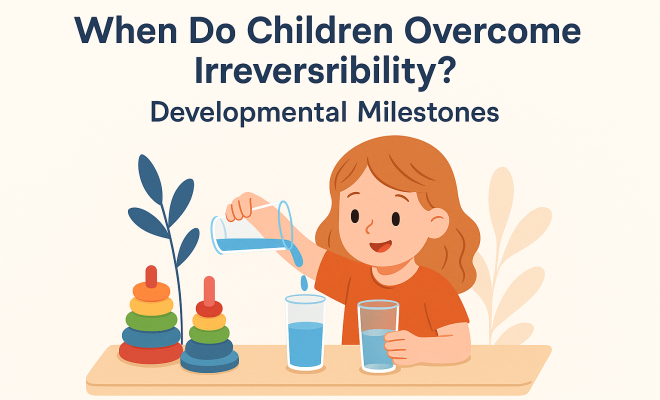
- Concrete Operational Stage (Ages 7-11): At this stage, children start to grasp the concept of reversibility. They can understand that actions can be reversed, such as pouring water from a tall glass to a short one and back again.
- Formal Operational Stage (Ages 12+): Beyond the ages of 11, children develop the ability to think abstractly. This includes understanding complex reversibility, not only in physical forms but also in logical reasoning and problem-solving.
Recognizing these developmental stages can help parents and educators better support children as they navigate through their cognitive growth.
Signs That Children Are Overcoming Irreversibility
As children develop, certain signs indicate they are beginning to overcome irreversibility:
- Flexible Thinking: Children start to demonstrate the ability to think more flexibly. For example, they might successfully rearrange furniture in a playroom and visualize how it would look in different configurations.
- Problem-Solving Skills: The emergence of problem-solving skills is another key indicator. Children may approach problems creatively, trying different methods until they find a solution, showcasing their growing ability to mentally reverse actions.
- Understanding of Conservation: As children learn about the conservation of mass and volume, they begin to grasp that altering an object’s shape doesn’t change its overall amount. This understanding is vital for overcoming the concept of irreversibility.
These signs can vary from child to child, but they signify a critical turning point in cognitive development.
The Role of Play in Overcoming Irreversibility
Play is an essential component of childhood development and serves as a vital tool for overcoming irreversibility. Engaging in various forms of play allows children to experiment, manipulate, and explore their environment safely.
Through imaginative play, such as pretending to cook or build structures, children can practice their understanding of actions and their reversibility. For example, when a child plays with clay, they can mold it into various shapes and then return it to its original form, reinforcing the concept that changes can be reversed. (See: Jean Piaget's theory of development.)
Furthermore, engaging in group play or games that require turn-taking can also foster cognitive flexibility. Children learn from their peers, observe how different actions lead to different results, and gradually come to understand that many actions are reversible.
Practical Tips for Parents and Educators
Supporting children as they overcome irreversibility is crucial for their cognitive development. Here are some practical tips for parents and educators:
- Encourage Exploration: Allow children to engage in hands-on activities where they can manipulate objects, such as building blocks or art supplies. Provide opportunities for them to experiment and explore different outcomes.
- Ask Open-Ended Questions: When engaging with children, ask questions that stimulate their thinking. For example, instead of asking, “Is this a circle?” You could ask, “What happens if we squish this circle? Can we make it round again?” This encourages them to think about reversibility.
- Incorporate Problem-Solving Activities: Activities such as puzzles, mazes, or building challenges can help children practice their problem-solving skills. Encourage them to think creatively and explore different solutions.
- Model Reversibility: Demonstrate reversible actions in daily life. For instance, when cooking, you can show how to mix ingredients and then separate them back into their original forms or discuss how you can rearrange furniture and return it to its original setup.
By actively engaging children in these ways, you can help facilitate their understanding of reversibility.
The Importance of Social Interaction
Social interaction plays a crucial role in cognitive development, particularly in overcoming irreversibility. Children learn a great deal from their peers, and collaborative activities can enhance their understanding of concepts related to reversibility.
Through group activities, children can observe how others approach problems and see the various ways actions can be reversed. For example, during a group art project, one child might realize they can paint over a mistake, effectively demonstrating the reversibility concept.
Moreover, discussions in playgroups or classrooms can lead to verbalizing thoughts about reversibility. Children may express their understanding or confusion, allowing for guidance and clarification from adults and peers.
Current Relevance of Understanding Irreversibility
In today’s fast-paced educational environment, understanding cognitive milestones like irreversibility is more important than ever. With an increasing emphasis on early childhood education and developmental assessment, parents and educators must be aware of these stages to help children thrive.
With the rise of digital learning tools and screen time, many children may miss out on hands-on learning experiences that encourage exploration and cognitive flexibility. It’s essential to ensure that children have balanced learning opportunities that include physical play and problem-solving activities.
Additionally, recognizing when children struggle with concepts related to irreversibility can provide insight into their overall cognitive development. Early identification of challenges can lead to more effective interventions, ensuring that children receive the support they need to succeed.
The Connection Between Irreversibility and Other Developmental Milestones
While irreversibility is a significant cognitive milestone, it’s essential to understand its connection with other developmental milestones. For instance, language development goes hand-in-hand with cognitive milestones. As children learn to express their thoughts and feelings, they also begin to grasp concepts such as cause and effect, which relates directly to understanding reversibility. Children who can articulate their thoughts might find it easier to understand that certain actions can be reversed, as they can verbalize the process.
Additionally, social-emotional development plays a role in overcoming irreversibility. Children who feel secure and confident in their environment are more likely to take risks in learning. This might involve experimenting with different actions, knowing that they can be reversed if need be. The relationship between these milestones is complex, and supporting one can positively influence others. (See: Child developmental milestones.)
Expert Perspectives on Children Developmental Milestones
Many child development experts emphasize the importance of recognizing milestones like irreversibility. Dr. Lisa Miller, a child psychologist, notes, “Understanding how children develop cognitively helps us provide the right support at the right time. Every child is unique, and while milestones give us a framework, they shouldn’t dictate a child’s potential.” This perspective encourages parents and educators to focus on individual development rather than strictly adhering to age-based expectations.
Moreover, Dr. John Thompson, an educational researcher, highlights the role of environment in cognitive development. “A stimulating environment where children can play, explore, and engage with others enhances their understanding of complex concepts like reversibility. The more they interact with their surroundings, the better equipped they are to navigate challenges.” This insight reminds us that the context in which a child learns significantly impacts their cognitive growth.
Statistics on Cognitive Development Milestones
Research into child development provides valuable statistics that can help parents and educators understand the importance of cognitive milestones:
- According to a study published in the *Journal of Child Development*, approximately 80% of children begin to show signs of understanding reversibility by age 7.
- Data from the National Institute for Early Education Research indicates that children who engage in frequent play-based learning activities are 30% more likely to demonstrate advanced problem-solving skills by age 5.
- A longitudinal study revealed that children who develop strong cognitive skills in the early years, including an understanding of concepts like irreversibility, are more likely to perform better in academic settings later on, with a 25% higher likelihood of achieving high grades by middle school.
These statistics highlight the importance of fostering an environment that nurtures cognitive development and the understanding of critical concepts like irreversibility.
Frequently Asked Questions (FAQ)
What are children developmental milestones?
Children developmental milestones are specific skills or abilities that children typically achieve at certain ages as they grow. These milestones include physical, cognitive, social, and emotional skills, providing a framework for understanding child development.
At what age do children start to understand irreversibility?
Children typically begin to show signs of understanding irreversibility between the ages of 7 and 11, as they transition from the preoperational stage to the concrete operational stage according to Piaget’s theory.
How can I help my child understand the concept of reversibility?
Engage your child in hands-on activities that involve manipulating objects, such as playdough or water play. Ask open-ended questions and provide opportunities for problem-solving, allowing them to experiment with actions and their reversibility.
What role does play have in cognitive development?
Play is a critical aspect of cognitive development, offering children a safe space to explore, experiment, and learn. Through play, children develop problem-solving skills, creativity, and a better understanding of concepts such as irreversibility.
How do social interactions impact cognitive development?
Social interactions help children learn from their peers and adults, providing opportunities to practice cognitive skills in a collaborative environment. These interactions can reinforce concepts like reversibility and improve overall cognitive flexibility. (See: Understanding cognitive development in children.)
Resources for Parents and Educators
Understanding children developmental milestones can be enhanced with the right resources. Here are some valuable tools:
- Books: Titles like “The Whole-Brain Child” by Daniel J. Siegel and Tina Payne Bryson offer insights into cognitive development and how parents can support their children.
- Online Courses: Websites such as Coursera and Udemy provide courses on child development that can help parents and educators gain a better understanding of cognitive milestones.
- Workshops: Local community centers or parenting groups often host workshops on child development, offering practical advice and support from professionals.
- Developmental Screening Tools: Tools from organizations like the CDC provide checklists for tracking developmental milestones to help identify any potential concerns early.
Creating a Supportive Learning Environment
To foster cognitive development effectively, creating an engaging and supportive learning environment is essential. Here are some tips to consider:
- Design a Learning Space: Create a designated area in your home or classroom that is safe, organized, and filled with age-appropriate materials that stimulate exploration and creativity.
- Limit Screen Time: While technology can provide educational benefits, it’s crucial to balance screen time with hands-on activities that encourage physical interaction and cognitive engagement.
- Encourage Curiosity: Foster a sense of wonder by encouraging children to ask questions and seek answers. Respond to their inquiries with enthusiasm and provide resources that help satisfy their curiosity.
- Be Patient: Every child develops at their own pace. Celebrate their achievements, no matter how small, and provide reassurance and support as they navigate new concepts.
The Future of Child Development Understanding
As our understanding of child development evolves, the emphasis on early cognitive milestones like irreversibility is changing educational approaches. More schools are adopting play-based learning strategies, recognizing that these methods enhance children’s understanding and retention of complex concepts. Researchers continue to explore how different factors, such as culture and family dynamics, influence cognitive development.
It’s crucial for parents and educators to stay informed about the latest research and trends in child development. By keeping abreast of new findings, they can implement strategies that promote cognitive growth, ensuring that children reach their full potential. This commitment to understanding and supporting developmental milestones will create a brighter future for the next generation.
Conclusion: The Path Towards Overcoming Irreversibility
Ultimately, overcoming irreversibility is a vital aspect of children developmental milestones. Understanding when and how children make this cognitive leap can help parents and educators foster an environment conducive to growth. By encouraging play and exploration, engaging in problem-solving, and promoting social interaction, we can support children as they develop a more complex understanding of the world around them.
As children learn to navigate concepts of reversibility, they will not only enhance their cognitive skills but also develop resilience, creativity, and critical thinking abilities that will serve them throughout their lives. By being aware of this journey, we can better prepare the next generation to tackle the challenges of tomorrow.
“`
Trending Now
Frequently Asked Questions
What is the concept of irreversibility in child development?
Irreversibility is a cognitive limitation in children where they cannot mentally reverse a sequence of actions. Coined by psychologist Jean Piaget, it typically occurs during the preoperational stage (ages 2-7), affecting how children understand changes in objects, like reshaping clay.
At what age do children overcome irreversibility?
Children generally begin to overcome irreversibility as they transition into the concrete operational stage, around ages 7 to 11. During this period, they start to understand that actions can be reversed, enhancing their cognitive abilities.
How does Piaget's theory explain cognitive development in children?
Piaget's theory outlines cognitive development through stages, including the preoperational and concrete operational stages. He emphasizes that children develop the ability to think logically and understand concepts like reversibility as they grow, fundamentally shaping their understanding of the world.
What are the stages of child development according to Piaget?
Piaget's stages of child development include the sensorimotor stage (birth-2 years), preoperational stage (2-7 years), concrete operational stage (7-11 years), and formal operational stage (11 years and up). Each stage marks significant cognitive advancements, including the understanding of irreversibility.
Why is understanding irreversibility important for parents?
Understanding irreversibility helps parents and educators gauge a child's cognitive progress and navigate developmental challenges. Recognizing when children struggle with this concept can inform teaching strategies and enhance their learning experiences.
What did we miss? Let us know in the comments and join the conversation.