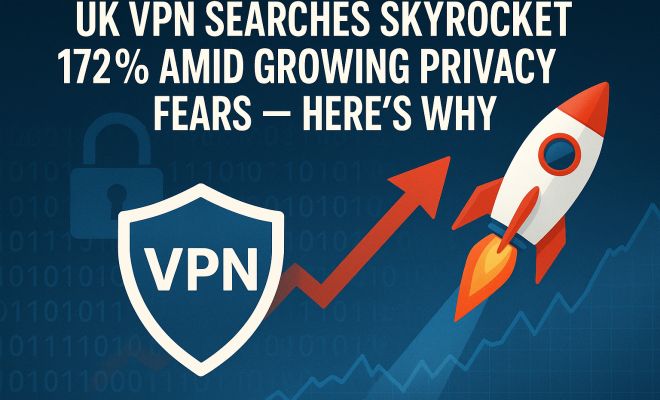
UK VPN Searches Soar 172% Amidst Escalating Privacy Concerns
“`html
The digital landscape is evolving, and with it, the way users perceive their online privacy. A recent study has unveiled a staggering 172% increase in UK VPN searches, and this surge is closely tied to rising concerns over privacy regulations concerning social media and tracking practices. This dramatic shift reflects a growing unease among internet users regarding their security and personal data protection. As the online world grapples with changing rules and heightened scrutiny, it’s vital to explore the factors behind this trend.
The Surge in UK VPN Searches
According to the study, which analyzed 53 weeks of UK Google Trends data alongside 270 monthly observations spanning from January 2004 to June 2026, the increase in UK VPN searches is not merely a transient spike. Instead, it illustrates a significant and measurable demand for virtual private networks (VPNs), indicating a serious shift in consumer behavior. The findings underscore how external events, particularly those related to privacy concerns, influence public interest in digital security tools.
The Role of Social Media Regulations
In recent months, social media platforms have come under greater scrutiny regarding how they handle user data. New regulations aimed at protecting user privacy have emerged, prompting many users to reconsider how their information is being used and whether they’re adequately protected. Issues like age verification on platforms, targeted advertising, and data collection practices have ignited debates about surveillance and personal privacy.
For example, the controversy surrounding major platforms like Facebook and Twitter has made headlines. Reports of data leaks and unauthorized data use have further fueled skepticism among users. As a result, many individuals are turning to VPNs as a way to shield their online activities from prying eyes, both from corporations and government agencies.
Understanding VPNs and Their Appeal
So, what exactly is a VPN, and why is it so appealing right now? A VPN, or virtual private network, enables users to create a secure connection to another network over the Internet. It masks the user’s IP address, making their online actions virtually untraceable. This is particularly valuable in an age where data breaches have become alarmingly common. VPNs offer a practical tool for enhancing online security, bypassing geo-blocked content, and maintaining anonymity.
The appeal of VPNs has never been more apparent. As more people become acutely aware of their digital footprint, the urgency to adopt protective measures grows. This is reflected in the current wave of searches for VPN services — users want to ensure their privacy is safeguarded amidst increasing vulnerability.
Privacy and Surveillance: A Growing Concern
The need for privacy in the digital age is not a new concept, but recent events have amplified these concerns significantly. With a plethora of data collection practices in place, users are increasingly conscious of how their data is being utilized. The Cambridge Analytica scandal was a wake-up call for many, revealing the extent to which personal information could be exploited for political campaigning and advertising strategies.
Moreover, ongoing discussions about government surveillance and the implications of data collection have heightened public anxiety. The Snowden revelations in 2013 opened a Pandora’s box of concerns about how the government tracks online activity. Since then, a growing number of individuals have sought to secure their online presence, leading to this recent surge in UK VPN searches.
The Emotional Component: FOMO and Digital Security
Fear of Missing Out (FOMO) isn’t just confined to social events; it’s also profoundly relevant in the digital realm. As news reports highlight data breaches and privacy violations, the urgency to adopt VPNs skyrockets. Users who see their peers taking steps to safeguard their online presence might feel pressured to do the same. This emotional component plays a pivotal role in the current spike in UK VPN searches.
People want to stay ahead of potential threats, and when they hear about increased scrutiny on online privacy, they rush to arm themselves with tools like VPNs. The emotional response to privacy breaches can lead to swift action, which is exactly what the data from the study illustrates. (See: BBC article on online privacy concerns.)
Potential Consequences of Increased VPN Usage
While the increase in UK VPN searches highlights a heightened awareness of online privacy, it also raises questions about the potential consequences of widespread VPN usage. On one hand, increased VPN adoption can lead to a more secure internet environment, as users take proactive steps to protect their data. On the other hand, it could create challenges for content providers and law enforcement agencies, as anonymity can complicate efforts to regulate harmful content or criminal activity.
Moreover, the surge in VPN usage can lead to a fragmented internet experience. For instance, streaming services often employ geo-restrictions, limiting access based on geographic locations. If vast numbers of users employ VPNs to bypass these restrictions, companies may respond by tightening their access controls, leading to a cat-and-mouse scenario between providers and users.
Expert Opinions on VPN Usage Trends
To gain deeper insights into the current trend, experts in cybersecurity and privacy law have weighed in. Many agree that the significant increase in UK VPN searches reflects a broader societal shift toward valuing privacy. Cybersecurity analyst Dr. Jane Holloway notes, “As more individuals recognize the vulnerabilities in their online presence, they are instinctively seeking ways to protect themselves. This is an essential evolution in digital awareness, and VPNs play a crucial role in that process.”
Privacy advocates also emphasize that while VPNs can enhance security, they are not a panacea. “Using a VPN is a step in the right direction, but users should also be aware of their digital hygiene, including using strong, unique passwords and enabling two-factor authentication whenever possible,” states privacy consultant Tom Avery.
What This Means for Consumers
The rise in UK VPN searches indicates that consumers are taking their digital security seriously. However, it also serves as a reminder that not all VPNs are created equal. As users evaluate their options, they should consider various factors, including the reputation of the provider, speed, privacy policies, and cost.
- Reputation: Research the VPN provider’s history and any past security incidents.
- Privacy Policy: Understand what data the VPN keeps and how it uses it.
- Speed and Performance: Look for a VPN that doesn’t significantly affect your internet speed.
- Cost: Compare pricing and features to find a VPN that suits your budget while meeting your security needs.
As more consumers dive into the world of VPNs, informed choices will be crucial to ensure their online privacy is genuinely protected.
The Future of Privacy and VPN Adoption
Looking ahead, the landscape of online privacy is bound to keep evolving. With ongoing debates about data protection laws, internet governance, and ethical data usage, users will need to stay informed about their rights and the tools available to them. The current spike in UK VPN searches may just be the beginning of a more significant movement toward prioritizing privacy and security in the digital age.
As technology advances, there’s potential for even more user-friendly privacy solutions to emerge. One can only hope that as society grapples with these pressing issues, both technology and policy will adapt to create a safer online environment for everyone.
Regional Variations in VPN Adoption
Interestingly, the surge in UK VPN searches isn’t uniform across the country. Certain regions show significantly higher interest than others, which can be attributed to various socio-economic factors, awareness levels, and local incidents regarding privacy breaches. For instance, urban areas with higher populations of tech-savvy individuals tend to see more searches compared to rural regions.
In London, for instance, the demand for VPNs has skyrocketed, possibly reflecting the city’s status as a tech hub. A report by Statista indicated that 45% of Londoners have used a VPN at some point, compared to only 20% in more rural areas like Northern Scotland. The reasons for this discrepancy could range from access to information about digital privacy to the heightened exposure to cyber threats in densely populated urban centers.
The Economic Impact of VPN Services
The rise in UK VPN searches has not only boosted individual privacy but has also implications for the digital economy. VPN providers have witnessed a surge in subscriptions, leading to increased revenue. According to a report from Market Research Future, the VPN market is projected to grow from USD 30 billion in 2021 to USD 70 billion by 2027, with the UK being a significant contributor to this growth.
This growth can also stimulate the creation of jobs within the cybersecurity sector as companies expand to meet the rising demand for privacy services. Furthermore, as businesses recognize the importance of protecting sensitive customer data, they may invest in VPN solutions, fostering a broader cultural shift towards prioritizing security in the workplace. (See: CDC on privacy and safety in digital age.)
Common Misconceptions About VPNs
As the interest in VPNs grows, so do the misconceptions. One of the most widespread myths is that VPNs provide complete anonymity online. While VPNs do mask your IP address, they do not make you entirely invisible. Websites can still track user behavior through cookies and other tracking methods. Users should understand that VPNs are one layer of privacy, not a comprehensive privacy solution.
Another common misconception is that all VPNs are equally effective. This isn’t true, as there are vast differences in performance, security features, and logging practices among various VPN providers. Users should do thorough research before choosing a VPN to ensure it meets their specific needs.
FAQ about VPNs and Their Usage
What is a VPN and how does it work?
A VPN, or virtual private network, encrypts your internet connection and routes it through a server in another location. This process masks your IP address, enhancing your online anonymity and security.
Are VPNs legal in the UK?
Yes, VPNs are legal in the UK. However, using a VPN for illegal activities, such as copyright infringement, remains against the law.
Can a VPN help me access geo-restricted content?
Absolutely. VPNs allow you to connect to servers in different countries, making it possible to access content that may be restricted in your region.
Will using a VPN slow down my internet speed?
Using a VPN can sometimes slow down your connection speed due to the encryption process and the distance to the server. However, many high-quality VPNs minimize this effect and offer fast connections.
Do free VPNs work as well as paid ones?
While free VPNs can offer basic protection, they often come with limitations such as data caps, slower speeds, and fewer security features. Paid VPNs typically provide a more reliable and secure experience.
How can I choose the right VPN for my needs?
Consider factors like privacy policies, speed, server locations, user reviews, and customer support. It’s essential to pick a VPN that aligns with your specific requirements for security and usability.
The Rising Interest in VPNs Among Younger Generations
Another trend worth noting is the increasing interest in VPNs among younger generations, particularly millennials and Gen Z. These groups are generally more digitally savvy and aware of the potential risks posed by online threats and privacy breaches. According to a survey conducted by the Digital Marketing Institute, about 65% of younger users reported that they use a VPN regularly. This is significantly higher than older age groups, indicating a generational shift in how privacy is perceived.
Young people are more likely to engage in online activities that could expose their data, like streaming, gaming, and social media. They’re also more informed about the implications of data collection, leading to a proactive stance on protecting their digital presence. As this demographic continues to grow, their demand for VPN services will likely shape the market, pushing providers to offer tailored solutions that cater to their specific needs. (See: New York Times on data regulations.)
Trends in VPN Technology
The technology behind VPNs is also evolving, with new features and capabilities being introduced regularly. Recent advancements include the use of WireGuard, a next-generation VPN protocol that is gaining popularity due to its speed and efficiency. WireGuard is designed to be simpler and more secure than older protocols like OpenVPN and IKEv2, making it a preferred option for many users looking for a reliable and fast connection.
Furthermore, the rise of multi-device support allows users to connect multiple devices under a single VPN subscription. This capability has become increasingly important as more people work from home and use various devices to access the internet. Providers that offer seamless integration with smart TVs, routers, and mobile devices are becoming more appealing to consumers.
The Role of VPNs in Business Security
As the workforce continues to adopt remote work policies, businesses are increasingly investing in VPN solutions to secure their operations and protect sensitive data. A report from Gartner indicates that 74% of organizations plan to permanently shift to more remote work post-COVID-19, highlighting the importance of secure connections for employees working offsite.
Using a VPN not only safeguards sensitive business communications but also protects the organization’s data from potential breaches. In particular, industries that handle sensitive information, such as finance and healthcare, are more likely to adopt VPNs to ensure compliance with data protection regulations. This trend reinforces the idea that VPNs are becoming an essential tool for both individual users and enterprises alike.
The Environmental Impact of VPN Usage
Another dimension to consider in the conversation about VPNs is their environmental impact. While VPNs enhance privacy and security, they also contribute to increased energy consumption due to data encryption and the operation of servers. A study by the International Energy Agency (IEA) indicates that global data centers—of which VPN servers are a part—account for about 1% of the world’s electricity demand. As the demand for VPN services rises, so does the energy used by these servers.
However, many VPN providers are becoming more aware of their carbon footprint. Some are taking steps to implement green practices, such as using renewable energy sources to power their servers. Consumers are becoming more environmentally conscious, and this trend towards sustainability is influencing their choices in service providers.
Conclusion: A Shift in Digital Awareness
The increase in UK VPN searches is a clear indicator of a broader awareness about digital privacy and security. As users become more informed about the risks associated with their online activities, the demand for effective privacy solutions like VPNs will likely continue to rise. It’s essential for consumers to remain vigilant and proactive about their digital security, making informed choices when selecting VPN services to ensure their online presence remains protected.
“`
Trending Now
Frequently Asked Questions
Why have UK VPN searches increased by 172%?
UK VPN searches have surged by 172% due to rising privacy concerns among users regarding social media regulations and data tracking practices. This significant increase reflects a growing unease about online security and the need for personal data protection.
What factors are driving the demand for VPNs in the UK?
The demand for VPNs in the UK is driven by heightened scrutiny of social media platforms, emerging privacy regulations, and public debates over data collection and surveillance. Users are increasingly seeking VPNs to protect their online activities from corporations and government agencies.
How do social media regulations affect user privacy?
Social media regulations affect user privacy by enforcing stricter rules on data handling and age verification. These changes prompt users to reconsider how their data is used, leading many to seek VPNs for enhanced privacy and security against unauthorized data use.
What are the benefits of using a VPN?
Using a VPN provides numerous benefits, including increased online privacy, secure data transmission, and anonymity while browsing. It allows users to shield their activities from tracking by corporations and government entities, making it a popular choice amid rising privacy concerns.
Are the recent increases in VPN searches a temporary trend?
No, the recent increases in VPN searches are not a temporary trend. The analysis of UK Google Trends data indicates a significant and sustained demand for VPN services, driven by ongoing concerns about online privacy and data security.
Agree or disagree? Drop a comment and tell us what you think.