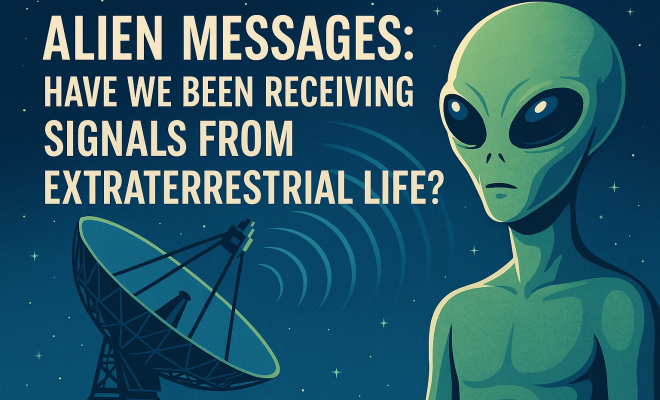
Alien Messages: Have We Been Receiving Signals from Extraterrestrial Life?
“`html
In a groundbreaking turn of events, astronomers have shed light on a peculiar class of cosmic signals that has puzzled scientists for years. The revelation, published on June 15, 2026, posits that these signals might actually be alien messages that have reached Earth without us even realizing their origin. This discovery not only reshapes our understanding of these phenomena but also ignites a profound discussion about humanity’s place in the cosmos. Could it be that we have already been contacted by intelligent extraterrestrial life, and we simply missed the call?
The Mystery of Repeating Cosmic Signals
For decades, scientists have been monitoring cosmic signals created by various astronomical events. Among these signals, a particularly strange group known as Fast Radio Bursts (FRBs) has captured the attention of researchers worldwide. These bursts are intense flashes of radio frequency emissions that last just milliseconds but can release energy equivalent to that of the sun over several days. The origins of these signals have remained largely enigmatic, leading to a flurry of theories ranging from neutron stars to, more intriguingly, the possibility of alien civilizations trying to communicate.
Historically, skepticism has surrounded the idea that extraterrestrial intelligence might be the source of these signals. Many researchers dismissed the notion as fanciful thinking. However, the new research challenges this narrative, suggesting instead that our previous interpretations of the data may have been fundamentally flawed.
A Paradigm Shift in Signal Analysis
The recent research breakthrough involves a novel method for analyzing the patterns of these cosmic signals. By employing advanced algorithms and machine learning techniques, the team was able to differentiate between signals originating from natural cosmic events and those that could be artificially generated—potentially by intelligent life. This shift in methodology opens the door to considering that some of these mysterious bursts may not be random noise but deliberate communications.
Leading astronomers in the study argue that the prior analytical methods were insufficiently nuanced, often conflating artificial signals with natural cosmic phenomena. The implications are staggering. If we have been overlooking signals from advanced civilizations, we may have missed critical communications that have been happening all around us.
Emotional and Controversial Repercussions
The potential that we might have already received alien messages is both exhilarating and unsettling. This study has stirred emotions, ranging from excitement to anxiety, as it raises existential questions about humanity’s place in the universe. How would the public react if the notion of extraterrestrial intelligence became a tangible reality? Would we rush to make contact, or would fear govern our actions?
One of the most poignant reactions to this discovery stems from the concept of ‘fear of missing out’ (FOMO). Many people grapple with the feeling that they have missed opportunities in life, and the idea that we may have overlooked messages from other civilizations only intensifies this sentiment. What might these civilizations want to tell us, and what could we have learned if we hadn’t dismissed their attempts to communicate as mere cosmic noise?
Past Misinterpretations and the Need for a New Framework
Reflecting on the history of scientific inquiry, it is essential to understand that our grasp of the universe is always evolving. The recurring signals from these cosmic phenomena have often been attributed to pulsars—a type of highly magnetized rotating neutron star that emits beams of electromagnetic radiation. However, the research in question highlights the inadequacy of this singular explanation.
Given the multitude of cosmic events occurring across the universe, it is plausible that some signals might originate from intelligent life. The researchers behind this study argue that the key lies in developing a broader framework for interpreting these signals. By adopting a more inclusive approach, we can begin to piece together a more comprehensive understanding of the universe and our role within it.
The Role of Public Perception in Scientific Discovery
Scientific discoveries do not occur in a vacuum; they are often influenced by cultural and societal contexts. The prospect of receiving alien messages has long been a subject of fiction and popular media, feeding into both the hope and fear surrounding extraterrestrial life. This historical context shapes how the public receives new information about potential contact with intelligent beings.
As this study gains traction, the discourse surrounding it may evolve. The emotional responses from the public could influence funding for further research, the priorities of scientific institutions, and even policy decisions on how to approach potential communications with extraterrestrial civilizations. Public engagement with science is crucial; if the masses feel invested in the search for alien life, the momentum behind these investigations could grow exponentially. (See: Fast Radio Bursts on Wikipedia.)
Real-World Applications of the Research
Understanding how to identify alien messages not only has profound implications for astronomy but also enhances our technological capabilities in other fields. For instance, advancements in signal processing and data analysis techniques developed for this research could enhance our abilities in various sectors, such as telecommunications, data security, and artificial intelligence.
Moreover, the realization that we might be receiving signals from intelligent life raises questions about the ethics of responding. If we were to receive a clear message from an extraterrestrial civilization, what would our response be? This question is complex and necessitates a thoughtful approach to ensure that we do not inadvertently expose ourselves to dangers.
The Search for Extraterrestrial Intelligence (SETI)
The Search for Extraterrestrial Intelligence (SETI) has been at the forefront of the quest to find signs of alien life. The organization has employed a variety of techniques to scan the sky for potential signals from advanced civilizations. The new findings suggest that the techniques employed by SETI may need a significant revision based on the new insights into signal analysis.
While SETI has historically focused on seeking deliberate transmissions that resemble human-made signals, they may now need to broaden their scope. This shift could include analyzing more subtle cosmic signals that previously went unnoticed or were deemed too weak to be indicative of intelligent origins. These changes could lead to the discovery of messages we have been overlooking for far too long.
A Call for Collaboration
The new insights into potential alien messages have sparked an urgent call for collaboration among the global scientific community. The complexities and implications surrounding the search for intelligent life extend beyond any one institution or country. Collaborative efforts can leverage diverse expertise and resources to tackle the challenges posed by the quest for understanding our universe.
Joint initiatives would not only improve the methodologies used for analyzing signals but could also create avenues for sharing findings and promoting transparency in research. If we are indeed receiving signals from intelligent civilizations, pooling our resources could enhance our chances of establishing meaningful contact.
The Future of Human Extraterrestrial Communication
As we stand on the cusp of a potential breakthrough in understanding cosmic signals, it’s vital to consider the future of our own communication with extraterrestrial life. What message would we send? Would we communicate in the same language as those who might already be reaching out to us? If we have been receiving alien messages, our response must be carefully crafted, as it could set the tone for interstellar relations.
Scientists and ethicists alike must grapple with the implications of such communication. Ensuring that our response is thoughtful and considerate of the potential consequences of revealing ourselves to other civilizations is essential. The nature of our outreach could define future interactions with intelligent life beyond our planet.
Exploring Historical Context and Cultural Impact
The notion of receiving alien messages is not new; it has been part of human culture for centuries. From early science fiction literature to modern films and television, the idea of extraterrestrial life has captured our imagination. Stories like Carl Sagan’s “Contact” and the popular series “The X-Files” have influenced public perception and sparked interest in the search for life beyond Earth.
These cultural narratives paint a picture of what contacting alien civilizations might look like—often intertwining themes of hope, fear, and curiosity. They reflect our aspirations and anxieties regarding the unknown. In many ways, our cultural understanding of potential extraterrestrial communication shapes how we approach real scientific endeavors today.
Scientific Instruments in the Search for Alien Messages
As we look to the future, it’s worth noting the advancements in technology that can aid in the search for alien messages. Observatories equipped with sophisticated technology—such as the Square Kilometre Array (SKA) and the James Webb Space Telescope—offer unprecedented capabilities in detecting signals from the cosmos. These instruments can analyze vast amounts of data, making them vital in distinguishing between natural and artificial signals.
The SKA, for example, will be the world’s largest radio telescope, capable of exploring the sky with unmatched sensitivity. With its ability to perform large-scale surveys and monitor signals over time, it could uncover patterns that suggest intelligent origins. As technology continues to evolve, so too will our methods for searching for and interpreting potential alien communications. (See: NASA's insights on FRBs.)
Limitations and Challenges
While the prospects of discovering alien messages are exciting, there are challenges that researchers must navigate. One significant hurdle is the vast distances involved in interstellar communication. Even if we receive a signal, it could take years or even centuries for the message to reach us, and any response we send would face the same time delay.
Additionally, there’s the challenge of signal degradation. Over immense distances, signals can weaken, making it difficult to interpret their content accurately. Scientists must develop robust methods to filter out noise and ensure that they can detect genuine messages amidst the cosmic cacophony.
Ethics of Contacting Alien Civilizations
As we consider the implications of receiving alien messages, the ethical dimensions of contacting extraterrestrial life become paramount. Should we respond to signals, and if so, how? The prospect of announcing our presence to the universe raises questions about our intentions and the potential consequences.
Some ethicists argue for a cautious approach. The “prime directive” concept from science fiction suggests that we should avoid interfering with other civilizations. Others posit that making contact could lead to knowledge exchange and mutual benefit. Establishing a framework for how we engage with potential extraterrestrial intelligence is vital, and these discussions must be inclusive, incorporating diverse perspectives from across the globe.
Frequently Asked Questions (FAQ)
What are alien messages?
Alien messages refer to signals or communications that may originate from intelligent extraterrestrial life. These can include radio waves or other forms of electromagnetic radiation that are distinct from natural cosmic phenomena.
How do scientists differentiate between natural signals and alien messages?
Scientists use advanced algorithms and machine learning techniques to analyze patterns in cosmic signals. This helps them identify characteristics that may indicate artificial origins, distinguishing these from random natural events.
What are Fast Radio Bursts (FRBs)?
Fast Radio Bursts (FRBs) are intense, millisecond-long bursts of radio frequency emissions from distant galaxies. Their origins are still largely unknown, and they have been the focus of research regarding potential alien communication.
What is the Search for Extraterrestrial Intelligence (SETI)?
SETI is an organization dedicated to detecting signs of intelligent extraterrestrial life. It utilizes various methods to scan the cosmos for potential signals, primarily focusing on radio waves that might indicate advanced civilizations.
What ethical considerations arise from receiving alien messages?
The ethical considerations include deciding whether to respond to signals, how to frame our communication, and the potential societal impacts of revealing our existence to other civilizations. It raises questions about our intentions and responsibilities in the broader universe.
How might cultural narratives influence scientific discovery related to alien messages?
Cultural narratives shape public perception and interest in extraterrestrial life. They can inspire scientific research but also create biases that affect how scientists approach the search for alien signals. Understanding these influences is crucial for fostering a balanced dialogue about the implications of such discoveries. (See: Scientific research on cosmic signals.)
New Perspectives on Alien Communications
As the search for alien messages becomes more sophisticated, scientists are exploring unconventional theories on why and how extraterrestrial civilizations might communicate. The idea of “silence” as a strategy—akin to the “great filter” hypothesis—suggests that intelligent life may deliberately choose to avoid contact. Some civilizations might recognize the risks of revealing their existence, opting instead for a strategy of remaining undetected. This perspective raises questions about our approach to communication. Are we prepared to handle the responsibilities that come with contact?
Global Reactions to Potential Alien Contact
Different cultures around the world may react distinctly to the possibility of receiving alien messages. For example, societies with strong religious beliefs may perceive contact as a divine sign, while others may view it through a scientific lens. This variance in interpretation could impact how humanity as a whole responds, potentially leading to diverse policies and initiatives aimed at addressing the implications of contact.
Moreover, the involvement of governments and international organizations is crucial. There needs to be a framework for how nations would collaborate in the face of such a discovery. Will there be a united front, or will national interests divide the global response? This scenario underscores the necessity for preemptive discussions about protocols and ethical guidelines.
The Role of Artificial Intelligence in Signal Detection
Artificial intelligence (AI) could revolutionize the search for alien messages. By employing machine learning algorithms, researchers can sift through vast datasets to identify patterns that might indicate extraterrestrial communication. AI can enhance our ability to recognize subtle anomalies in cosmic signals that human researchers might overlook. This technological advancement not only optimizes efficiency but could also significantly improve the accuracy of identifying potential alien communications.
The Future of Science Fiction vs. Scientific Realities
As we navigate the waters between science fiction and scientific reality, the excitement surrounding the potential for alien messages invites a new wave of storytelling in popular culture. Sci-fi narratives often shape public imagination and can influence how we prepare for real-world implications of contact. Films, books, and even video games contribute to our understanding of what an encounter might look like, prompting both intrigue and caution.
For instance, recent science fiction works that address themes of communication with extraterrestrial beings could serve as catalysts for discussions about how humanity might respond to actual contact. These narratives can help lay the groundwork for public engagement and discourse, ultimately shaping our collective approach to the unknown.
Conclusion: The Journey Ahead
In light of the recent discoveries regarding the nature of cosmic signals, the conversation surrounding alien messages is more relevant than ever. As we explore the profound implications of these findings, we find ourselves at a critical juncture. The possibility that we may have received signals from intelligent civilizations invites us to reconsider our understanding of the universe and our place within it.
Moving forward, it’s essential that we approach this topic with both curiosity and caution. While the excitement of potential contact with extraterrestrial life is palpable, we must also remain grounded in ethical considerations and scientific rigor. The journey to understand whether we are truly alone in the universe has just begun, and the implications of this quest will undoubtedly shape the future of our species.
“`
Trending Now
Frequently Asked Questions
What are Fast Radio Bursts and why are they important?
Fast Radio Bursts (FRBs) are intense, brief flashes of radio frequency emissions from space, lasting mere milliseconds. They are important because they may hold clues about cosmic events and could potentially indicate signals from extraterrestrial life, reshaping our understanding of the universe.
Have scientists found evidence of alien messages?
Recent research suggests that some cosmic signals, previously thought to be natural phenomena, could actually be alien messages. This groundbreaking study challenges previous assumptions and proposes that we may have overlooked signs of intelligent extraterrestrial communication.
How do researchers analyze cosmic signals?
Researchers analyze cosmic signals using advanced algorithms and machine learning techniques. This novel approach helps differentiate between natural cosmic events and signals that might be artificially generated, potentially by intelligent life forms.
What is the significance of the new findings about cosmic signals?
The new findings signify a paradigm shift in our understanding of cosmic signals, suggesting that our interpretations of these phenomena may have been flawed. This could mean that humanity has already been contacted by extraterrestrial intelligence without realizing it.
Why have scientists been skeptical about extraterrestrial signals?
Historically, skepticism about extraterrestrial signals stemmed from the belief that the idea was fanciful. Many researchers dismissed the possibility of intelligent life sending signals, but recent studies are beginning to challenge this skepticism and encourage further exploration.
Have you experienced this yourself? We’d love to hear your story in the comments.