Stunning Stanford Graduation Protest: Why Students Walked Out on Google CEO Sundar Pichai
“`html
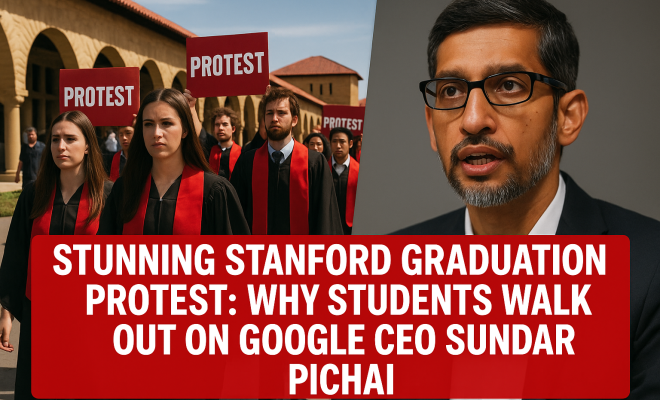
The graduation ceremony at Stanford University in 2026 became the backdrop for a dramatic protest that caught the attention of many. As Google CEO Sundar Pichai began his keynote address, more than 100 graduates stood up and walked out in a powerful display of dissent. This Stanford graduation protest, with around 200 students participating overall, highlights the growing tensions between corporate power and student activism, especially in an age where tech giants wield significant influence over society.
The Scene at Stanford
Graduation day usually represents a moment of celebration and hope for new beginnings. However, for the graduates at Stanford, it was also a moment to express their discontent with the relationship between academia and the tech industry. The atmosphere was charged as students donned their caps and gowns, but as Pichai took the stage, the mood shifted dramatically.
Those who walked out were not just protesting the presence of a corporate leader; they were making a statement about what they perceive as the complicity of elite institutions with corporate interests. The protest served as a vivid reminder that even in celebratory moments, students can and will voice their concerns regarding the broader implications of corporate influence in education and society.
Understanding the Motivations Behind the Walkout
What drove these students to take such a bold stand? At the core, this Stanford graduation protest stems from a growing unease about the tech industry’s role in shaping public discourse and policy. Many of the students who participated in the walkout expressed frustration over the lack of accountability among tech executives and the ethical concerns surrounding their corporate practices.
In recent years, scandals and controversies surrounding major tech companies have sparked significant public outcry. Issues such as data privacy, misinformation, and the monopolistic behaviors of companies like Google raise questions about the responsibilities of tech leaders. By walking out on Pichai, the graduates were pointing to these unresolved issues, insisting that these discussions cannot be overlooked, even during a prestigious graduation ceremony.
The Broader Context of Campus Activism
This Stanford graduation protest is part of a larger trend of activism on college campuses across the nation. The past few years have seen a resurgence in student-led movements addressing everything from climate change to racial justice. Students are increasingly using their voices to challenge authority figures and demand change, reflecting a broader societal shift towards activism.
Besides their immediate concerns about corporate power, many of the protesting students also aimed to raise awareness about how elite institutions can sometimes prioritize corporate interests over their students’ needs. This activism can be seen as a call to action for universities to engage more responsibly with the tech industry, emphasizing transparency and ethical considerations.
Social Media Amplification
The Stanford graduation protest did not just stay confined to the university grounds; it quickly spread across social media platforms. With the advent of smartphones and social media, visually dramatic protests like this can easily be recorded and shared, gaining traction in a matter of hours. Clips of the walkout, along with students’ passionate expressions of dissent, were shared widely, amplifying the protest’s impact.
Platforms like Instagram and Twitter allow for immediate dissemination of such events, transforming local protests into national discussions. The emotional weight of the protest—students visibly rejecting the status quo as a tech titan spoke—resonated with many online, sparking conversations about the influence of the tech industry on education and public policy.
The Symbolism of Graduation Protests
Graduation ceremonies hold immense symbolic value; they represent culmination and transition. The choice to protest during such a significant moment is not random. By choosing this platform, the students framed their dissent as part of their academic journey, signifying that their education includes a commitment to activism and social justice. (See: Stanford graduation protest coverage.)
Moreover, the juxtaposition of graduates walking out on a high-profile tech leader underscores a broader critique of the cozy relationship between universities and corporate titans. It raises questions about whether institutions of higher learning are becoming beholden to corporate interests and whether students feel their education is truly serving their needs or those of the industry.
Responses from the University and Tech Industry
The reaction to the Stanford graduation protest from both the university and the tech industry has been varied. Stanford University officials expressed their understanding of the students’ frustrations but also emphasized that graduation ceremonies are traditional venues for celebrating achievements.
On the other hand, responses from the tech industry, particularly from Google, reflect an acknowledgment of the criticisms but also a commitment to continue engaging with students and academia. Pichai’s presence at the ceremony aimed to illustrate the importance of the relationship between tech and education. However, the walkout raised questions about whether these engagements can ever truly address the concerns that students have about corporate ethics.
Comparing Past Protests
Historically, graduation protests are not new. The 1960s saw significant student activism against the Vietnam War, and more recent movements have addressed issues such as climate change and racial inequality. What sets the Stanford graduation protest apart, however, is its focus on the tech industry, reflecting the contemporary concerns of a generation raised in the digital age.
As student activism has evolved, it has become increasingly intersectional. While previous protests often focused on singular issues, today’s movements frequently consider the intertwined nature of corporate influence, social justice, and environmental sustainability. The Stanford protest exemplifies this evolution, merging concerns about free speech, corporate accountability, and student rights.
The Aftermath: What Comes Next?
In the days following the protest, discussions about its implications continued to reverberate throughout academic and tech circles. Many students expressed hope that their actions would catalyze a broader dialogue about the ethics of technology and the responsibilities of those in power.
Moreover, as conversations about the role of tech in society evolve, institutions may need to reassess their relationship with corporate sponsors. The Stanford graduation protest serves as a reminder that students are not merely passive consumers of education; they are active participants in shaping the narrative about the future of technology and its impact on society.
Lessons for Future Generations
The Stanford graduation protest is a crucial case study for future generations of activists. It demonstrates the power of collective action and the importance of using one’s voice to advocate for change, even in the most unexpected places. Students today are learning that their education is not just about personal achievements; it’s also about understanding the societal implications of their fields and standing up for their beliefs.
Additionally, this event highlights the need for institutions to be responsive and responsible in their engagements with the corporate world. There’s a pressing need for universities to prioritize ethical considerations in these relationships, fostering environments where students feel empowered to express their dissent without fear of repercussions.
The Future of Student Activism
Looking ahead, the Stanford graduation protest may inspire similar actions at other universities. As awareness grows about the impacts of corporate influence on education, students may feel empowered to advocate for more significant changes within their institutions. This could lead to a resurgence of campus activism focused on accountability, transparency, and ethical governance.
Moreover, as tech continues to evolve, so too will the conversations surrounding its implications for society. Students will need to remain vigilant, ensuring that their voices are heard in discussions that affect their lives and futures. The Stanford graduation protest serves as a rallying call for those who believe that activism is an integral part of the educational experience. (See: BBC report on corporate influence.)
A Lasting Impact
In the grand scheme of things, the Stanford graduation protest against Sundar Pichai has illuminated deep-seated concerns about the intersection of academia and corporate power. It has brought to the forefront essential discussions about ethics, accountability, and the role of technology in our lives. As the world watches, the actions of these graduates serve as a reminder that dissent, particularly from within elite institutions, can resonate far beyond campus borders.
Expert Perspectives on Student Activism
To better understand the implications of the Stanford graduation protest, insights from experts in sociology and political science shed light on the significance of student activism in contemporary society. Professor Emily Chen, a sociologist specializing in social movements, notes that today’s college students are increasingly aware of their influence and the power of collective action. “Students have a unique position,” she explains, “in that they can bridge the gap between traditional activism and the digital age, using social media to amplify their voices.”
Dr. Marcus Lee, a political scientist, emphasizes that the current wave of protests reflects a generational shift in values. “Younger generations are prioritizing social justice and ethical governance more than ever before. They’re not just concerned about their careers; they want to ensure that their workplaces, and the systems around them, align with their values,” he says. The Stanford protest is an embodiment of this ethos, symbolizing a decisive break from the complacency that often defines previous generations.
Statistics on Student Activism
Recent surveys show an uptick in student activism across the United States. According to a report from the Higher Education Research Institute, approximately 60% of college students today see themselves as active participants in social movements, compared to 40% in the early 2000s. Additionally, 75% of respondents in a nationwide survey indicated that they believe it is essential for students to engage in activism related to issues such as climate change, racial justice, and corporate accountability.
These statistics highlight the growing trend of students using their platforms to advocate for change, aligning with broader societal movements. The Stanford graduation protest acts as a catalyst, potentially inspiring other campuses to take similar stands against perceived injustices.
Frequently Asked Questions (FAQ)
What was the main reason for the Stanford graduation protest?
The primary reason for the protest was the students’ discontent with the perceived complicity of elite institutions like Stanford with corporate interests, particularly in relation to the tech industry. Students aimed to highlight ethical concerns surrounding corporate practices and demand accountability from tech leaders.
How did social media play a role in the protest?
Social media played a crucial role in amplifying the message of the protest. Clips of the walkout were shared widely on platforms like Twitter and Instagram, allowing the students’ dissent to resonate beyond the university grounds and into national conversations about corporate influence on education.
Are graduation protests common at universities?
While graduation protests are not new, they have become more prevalent in recent years, especially as students become increasingly aware of social and ethical issues facing society. Protests can serve as a powerful platform for students to voice their concerns during significant moments, such as graduation ceremonies.
What impact could this protest have on future student activism?
The Stanford graduation protest may inspire other universities to engage in similar actions, leading to a resurgence of campus activism. As students become more aware of corporate influence in higher education, they might advocate for greater accountability and ethical governance within their institutions.
What should universities learn from the Stanford graduation protest?
Universities should recognize the importance of fostering an environment where students feel empowered to express their concerns and engage in activism. Institutions need to reassess their relationships with corporate sponsors and prioritize ethical considerations, ensuring that student voices are integral to discussions about education and corporate partnerships. (See: University of Washington on education and corporate ties.)
The Role of Alumni in Activism
Another vital element in the ongoing conversation about the Stanford graduation protest is the role of alumni in supporting student activism. Graduates who have gone on to work in various sectors can leverage their experience and connections to advocate for more substantial changes within their alma maters. Alumni can serve as mentors to current students, sharing insights on how to navigate the complexities of corporate relationships and ethical considerations in their respective fields.
Engaging alumni in discussions about the intersection of education, corporate interests, and social justice can help create a more comprehensive support network for student activists. Alumni can also play a significant role in fundraising efforts that prioritize programs and initiatives aimed at promoting ethical education and accountability in corporate partnerships.
Comparative Analysis: Student Protests Globally
The Stanford graduation protest is not an isolated incident; it mirrors student activism trends worldwide. In countries like Chile, students have mobilized against educational inequality, demanding free and quality education. Similarly, students in Hong Kong have taken to the streets to protest against governmental policies perceived as oppressive.
These global movements share a common thread: a determination to challenge systemic injustices and advocate for change. The Stanford protest stands as part of this larger fabric of student activism, reflecting a worldwide awakening among youth about the role they play in shaping their futures and the society around them. Comparatively, the methodologies may vary; for instance, protests in some countries have escalated to violent confrontations with authorities, while others focus on peaceful demonstrations and negotiations.
Potential Consequences for Stanford University
The fallout from the Stanford graduation protest could lead to significant repercussions for the university. As conversations surrounding corporate partnerships grow more intense, Stanford may face pressure to reassess its affiliations with tech giants. This scrutiny could result in enhanced transparency regarding funding sources and the establishment of stricter ethical guidelines governing collaborations between the university and corporate entities.
Additionally, the protest might push Stanford to foster a more inclusive environment that encourages students to engage in activism openly. If the university is perceived as supportive of student voices, it could enhance its reputation, attracting a diverse student body that values social justice and ethical responsibility.
Concluding Thoughts
The Stanford graduation protest is more than just a moment captured in time; it’s a reflection of shifting attitudes among students and a sign of the times. As technology continues to evolve and its impact deepens, students will likely remain at the forefront of challenging the status quo. The future of education, corporate engagement, and social justice will likely be shaped by the actions and voices of empowered students who refuse to remain silent.
“`
Trending Now
Frequently Asked Questions
Why did students protest Sundar Pichai at Stanford graduation?
Students protested Sundar Pichai at the Stanford graduation to express their discontent with the perceived complicity of elite institutions with corporate interests, particularly in the tech industry. The protest highlighted concerns over the ethical practices of tech giants and their influence on public discourse.
What was the atmosphere like during the Stanford graduation protest?
The atmosphere during the Stanford graduation protest shifted dramatically when Sundar Pichai took the stage. While the day typically represents celebration, it became a moment for students to voice their concerns about corporate influence in education, leading to a charged and tense environment.
What are the main issues driving the Stanford graduation walkout?
The main issues driving the Stanford graduation walkout include frustration over the lack of accountability among tech executives, data privacy concerns, misinformation, and the monopolistic behaviors of companies like Google. Students aimed to raise awareness about the broader implications of corporate power in society.
How many students participated in the Stanford graduation protest?
Around 200 students participated in the Stanford graduation protest, with more than 100 graduates standing up and walking out during Sundar Pichai's keynote address. This collective action underscored the growing tensions between student activism and corporate influence.
What does the Stanford graduation protest signify about student activism?
The Stanford graduation protest signifies a growing wave of student activism against corporate power and influence, particularly from the tech industry. It illustrates that students are willing to use significant moments, like graduation, to advocate for accountability and ethical practices within powerful institutions.
Agree or disagree? Drop a comment and tell us what you think.